

In Singapore, electricity tariffs are reviewed quarterly, so prices can shift several times a year depending on global and local conditions.
With ongoing geopolitical tensions and rising energy demand, it shouldn’t come as a surprise to anyone that their electricity bill will be rising in the next few months. In this article, we will explain the key factors that cause electricity tariffs to rise in Singapore.
Read Also: Guide To Choosing The Best Open Electricity Market (OEM) Plan For Your Home
How Electricity Prices Are Determined In Singapore
Electricity tariffs in Singapore are regulated by the Energy Market Authority (EMA) and implemented by SP Services. Prices are reviewed quarterly.
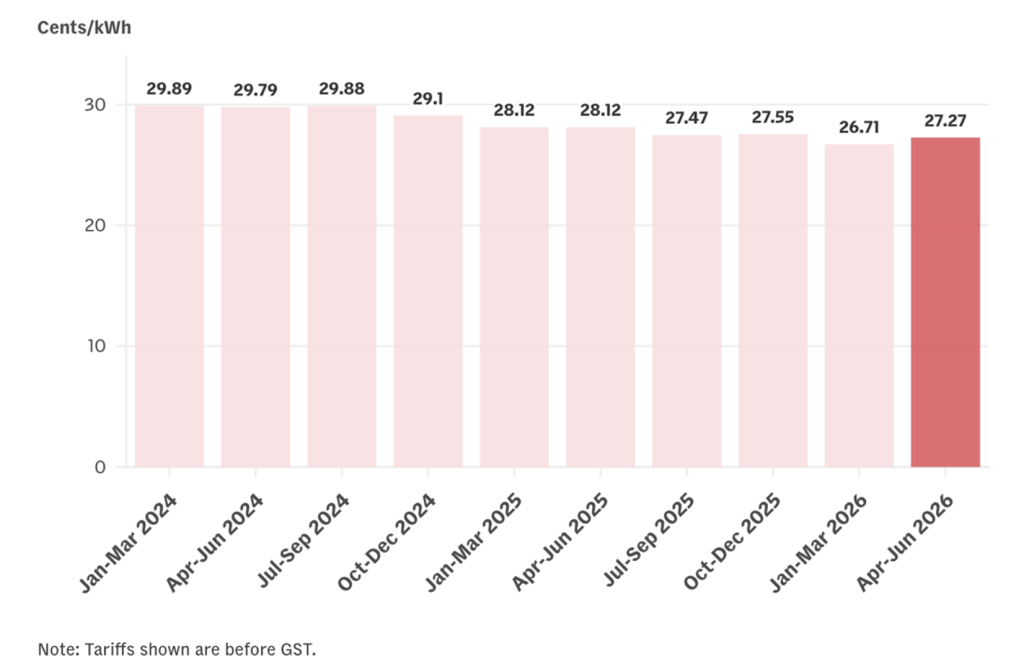
As of 1Q2026, the electricity tariff stands at 26.71 cents per kWh before GST (or 29.11 cents per kWh with GST). According to SP Group, the tariff comprises four main components: energy costs, network costs, the Market Support Services (MSS) fee, and the Market Administration and Power System Operation (Market Admin & PSO) fee.
On 31 March, SP Group announced that electricity prices would rise for the 2Q2026 period (April to June) to 27.27 cents per kWh, 0.56 cents per kWh higher than the 1Q2026 tariff. It also said it expected the electricity tariff to rise in subsequent quarters, as the full impact of elevated natural gas prices begins to be incorporated.
Of these, energy costs dominate, accounting for more than three-quarters of the total tariff. So when prices go up, it is usually because energy itself has become more expensive.
Factor 1: The Biggest Driver: Energy Cost
Singapore generates about 95% of its electricity from imported natural gas. This is the single most important reason why electricity prices here can rise quickly.
Unlike countries with domestic energy resources, Singapore is fully exposed to global energy markets. When oil prices increase, natural gas prices often follow because many gas contracts are tied to oil benchmarks.
Here is how this affects you: when global energy prices spike due to war, supply disruptions or geopolitical tensions, Singapore’s cost of generating electricity rises. This increase is then passed on to households in the next tariff cycle.
There is a slight delay because tariffs are based on average fuel costs from previous months. But if high prices persist, you will eventually feel it in your utility bill.
Factor 2: Network Cost
Electricity does not just need to be generated; it needs to be delivered reliably to homes and businesses. That is where network costs come in.
These costs cover the maintenance and expansion of Singapore’s power grid and are paid to SP Group. While this component is more stable and reviewed annually, it is not immune to increases.
Factor 3: Market Support Services Fee
The Market Support Services Fee is a charge paid to SP Group for the backend services that keep the electricity market running smoothly. Even when consumers buy electricity from a retailer, SP Group still plays an important role in handling functions such as meter reading, billing-related support, data management and the systems needed to operate the retail electricity market.
Factor 4: Market Administration and Power System Operation Fee
The Market Administration and Power System Operation Fee is a charge paid to the Energy Market Company and the Power System Operator for running the systems that keep Singapore’s electricity market and power grid functioning properly. This includes the work involved in operating the wholesale electricity market, where electricity is bought and sold, as well as managing the power system to ensure supply and demand remain balanced and the grid remains stable.
What Can You Do About It?
You cannot control global gas prices or government policies, but you do have some control over how much you pay.
One option is to explore the Open Electricity Market (OEM) plans. Instead of sticking with SP Group’s regulated tariff, you can choose from private retailers offering fixed-price or discount plans.
A fixed-price plan can protect you from rising tariffs, giving you cost certainty. But it also means you will not benefit if prices fall. It is a trade-off, and the right choice depends on your risk tolerance.
The other lever is energy consumption.
Simple habits can make a real difference over time. Using energy-efficient appliances, setting your air conditioning to a slightly higher temperature, and avoiding unnecessary use all add up.
Read Also: With Energy Prices Rising, Does It Make Sense To Lock In An OEM Electricity Plan Now?


Lifestyle
15 Of The Cheapest EV Cars In Singapore


Budgeting 101
7 Ways Being Frugal Is Different From Being Cheap


Street Smart
Singapore Gym Membership Price Guide (2026 Edition)


Street Smart
Singapore Gym Membership Price Guide (2026 Edition)

Bonds and Fixed Income
Complete Guide To Buying Singapore Savings Bonds (SSB) [2026 Edition]


