

When Joycelyn Quek’s father sold fish at the wet market, customers did not need a website, product description or delivery update to trust him.
They could stand in front of the stall, look at the fish, ask what was fresh that day and get a recommendation from someone who knew the trade well enough to say no when the quality was not right.
“If he wasn’t happy with the quality of a fish, he simply wouldn’t sell it,” Joycelyn recalls. “It didn’t matter if that meant losing revenue that day.”
That was how trust was built in the old fishmonger trade: one customer, one recommendation, one honest decision at a time.
For Joycelyn, who now runs Seamonger, the challenge is different. Her customers are often ordering seafood online after work, sometimes for their children, and often without the same confidence an older generation may have had when buying fish from the wet market.
The business she inherited was not just about selling seafood. It was about knowing how to choose it, prepare it, and advise families on what to bring home.
The question she had to answer was, “How do you carry that judgement online?”
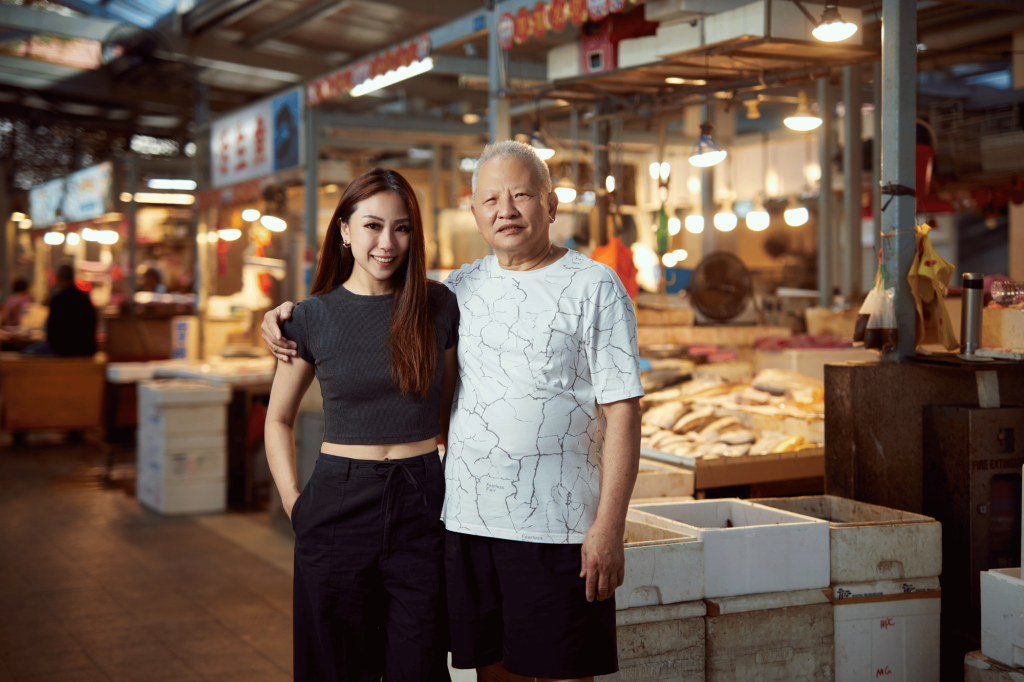
Image: Joycelyn Quek and her father, Jer Mou (Ah Mong)
Motherhood Made The Problem Clearer
Joycelyn grew up around seafood.
“Buying and preparing fish was second nature to me,” she says.
However, becoming a mother changed how she saw the business. Even with her fishmonger background, she found herself struggling with the realities of feeding a family while managing work, parenting and household responsibilities.
“The real turning point came after I became a mother,” she says. “Between work, parenting and household responsibilities, finding the time to buy, clean, portion and store fish wasn’t always easy.”
That realisation surprised her.
“If someone who grew up in a fishmonger family found it challenging, it must feel even more intimidating for parents who didn’t grow up with that knowledge.”
For many Singapore households, especially dual-income families, dinner is often decided around what is fast, familiar and difficult to mess up. Fish may be nutritious, but it comes with more questions: which fish is suitable for children, how much to buy, whether there are bones, how to store it, and what happens if it goes to waste.
Joycelyn says the issue is not that families do not want seafood.
“The barrier wasn’t appetite,” she says. “Families already wanted to eat fish. The barrier was time and mental bandwidth to prepare seafood for their families.”
That insight shaped Seamonger’s Child Fish Packs.
“I wanted my daughter to eat good-quality fish regularly,” she says. “But even with my background in seafood, I didn’t always have the time to buy fish, portion it properly, freeze it, and manage the leftovers.”
The packs are individually portioned and vacuum-sealed, so parents can take out what they need and keep the rest properly stored.
After speaking with parents and customers, Joycelyn found that many were not asking for more seafood options. They wanted reassurance.
“Seafood is a category where reassurance matters a lot,” she says. “Parents want to know that someone knowledgeable has already done the hard work of selecting and preparing the seafood properly.”
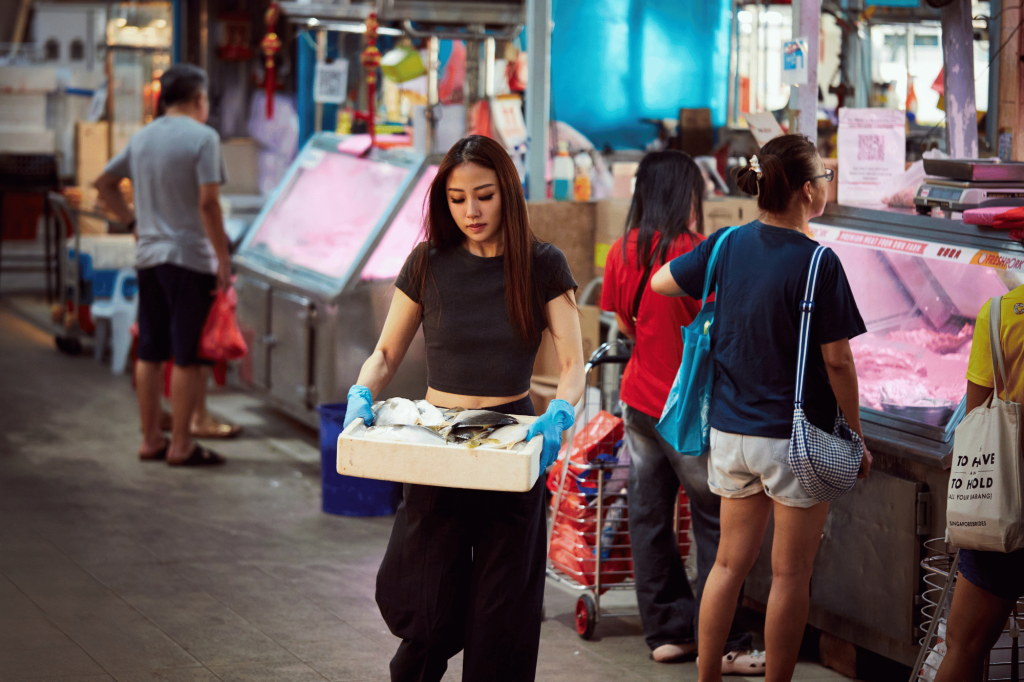
Standardising A Product That Changes Every Day
Moving the trade online also created an operational challenge.
Seafood is not like selling a standard packaged product. Supply changes, sizes vary, and availability can depend on seasonality and conditions.
In a wet market, a fishmonger can explain those differences directly to customers. Online, Seamonger has to create consistency through how seafood is selected, portioned, packed, described and delivered.
“Freshness, consistency, and customer confidence were the hardest parts to standardise,” Joycelyn says.
She does not see standardisation as making every fish identical. That would be unrealistic.
“Seafood isn’t a factory product,” she says. “The challenge is bringing consistency to something that naturally changes every day.”
For Seamonger, this means making sure customers know what to expect when they order again. A first purchase may come from curiosity, marketing or a recommendation. But the second and third orders depend on whether the experience feels reliable.
“In seafood, trust isn’t built through one good marketing campaign,” Joycelyn says. “It’s built one order at a time.”
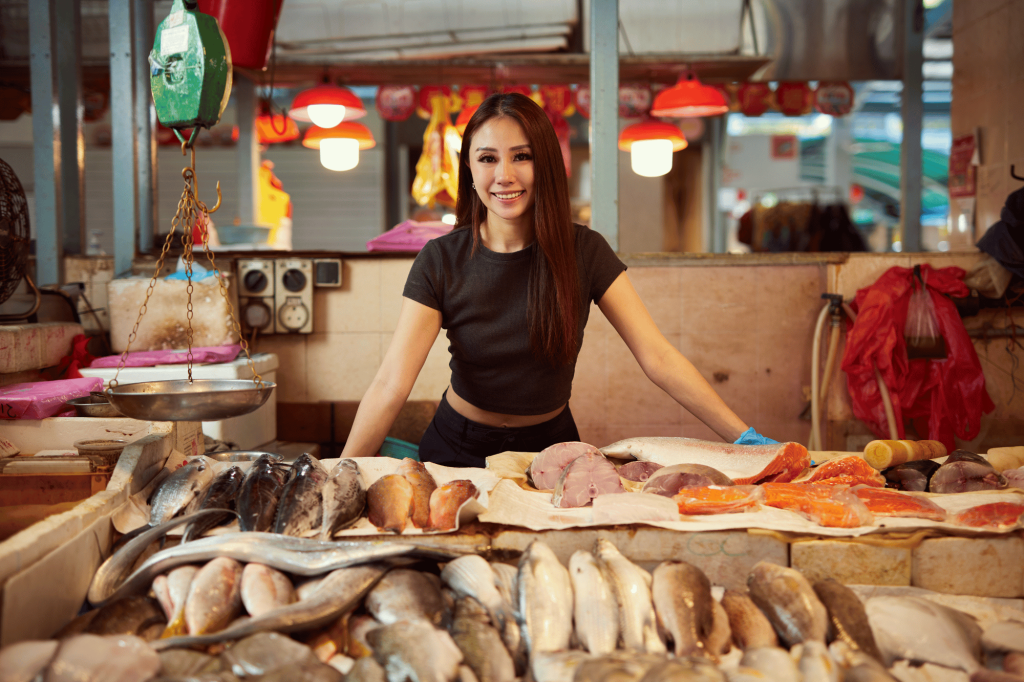
Seamonger’s Real Competitor Is Convenience
At first glance, Seamonger may seem to be competing with wet markets, supermarkets, online grocers and other seafood sellers.
Joycelyn sees it differently.
“Honestly, I think our biggest competitor is convenience,” she says.
The challenge is not only persuading someone to buy fish from one channel instead of another. It is persuading a busy parent that fish is not too much work for a weekday meal.
“Often the bigger challenge is that families default to proteins that feel easier to prepare, such as chicken or eggs,” she says. “Our biggest competitor isn’t another seller. It’s the feeling that fish is too troublesome for a weekday meal.”
This is why portioning matters. If fish can be taken out, cooked and stored with less friction, it has a better chance of becoming part of the weekly routine.
Pricing is part of the same equation. Seafood prices can fluctuate, and for families, wastage can make fish feel even less practical. Joycelyn says Seamonger does not compete only on being the cheapest option, but on helping families buy amounts they can actually use.
“Affordable seafood isn’t only about price per kilogram,” she says. “It’s also about buying the right amount and not wasting it.”
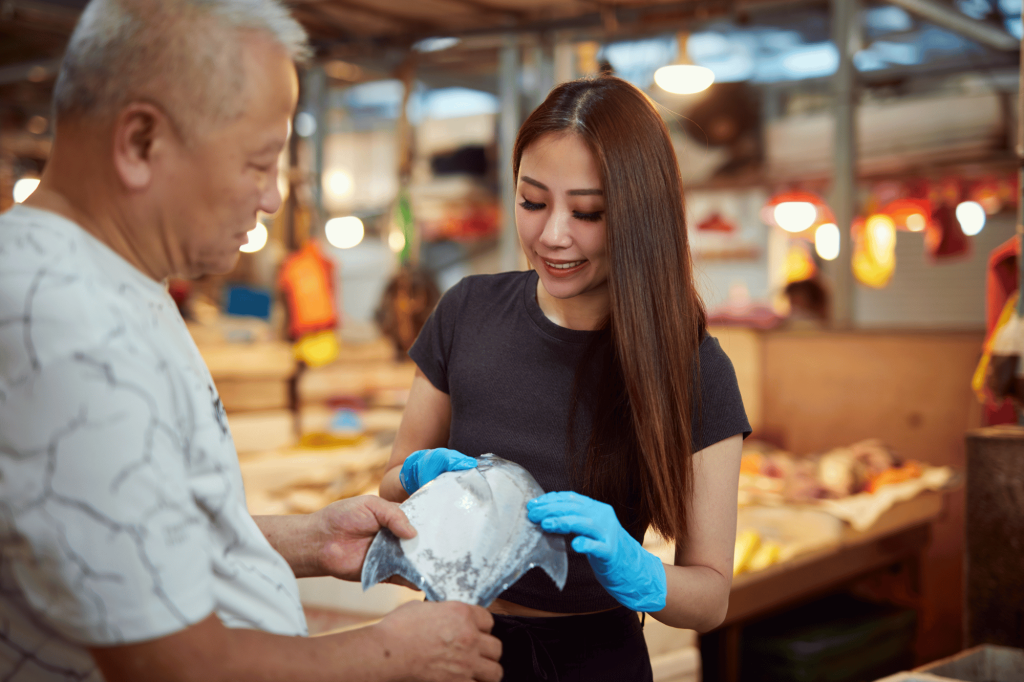
What Joycelyn Kept From Her Father
Even as Seamonger operates online, Joycelyn still talks about the business through lessons she learnt from her father.
One lesson is that freshness is non-negotiable. Another is that reputation is built over time.
“My father didn’t build his reputation through advertising,” she says. “He built it through thousands of small interactions over decades.”
Joycelyn believes this still applies, even if the interaction now happens through a website, delivery experience or customer service exchange.
“The platform may be modern, but the values behind it remain very traditional,” she says. “The website is modern, but the standard behind it is still very old-school.”
For Joycelyn, succession was not about keeping every part of the business unchanged. It was about deciding what had to change so the important parts could survive.
The stall may have moved online. The customer may now be ordering from home instead of asking a fishmonger what to cook for dinner. But the responsibility remains familiar: choosing carefully, selling honestly, and making sure families can trust what reaches their table.
This article was contributed to us by Alpha Story.
Read Also: How Jerry Theseira Built EduGrove By Challenging How Singaporeans Learn Mandarin


Street Smart
Singapore Gym Membership Price Guide (2026 Edition)


