
From Broadcast Media To Education
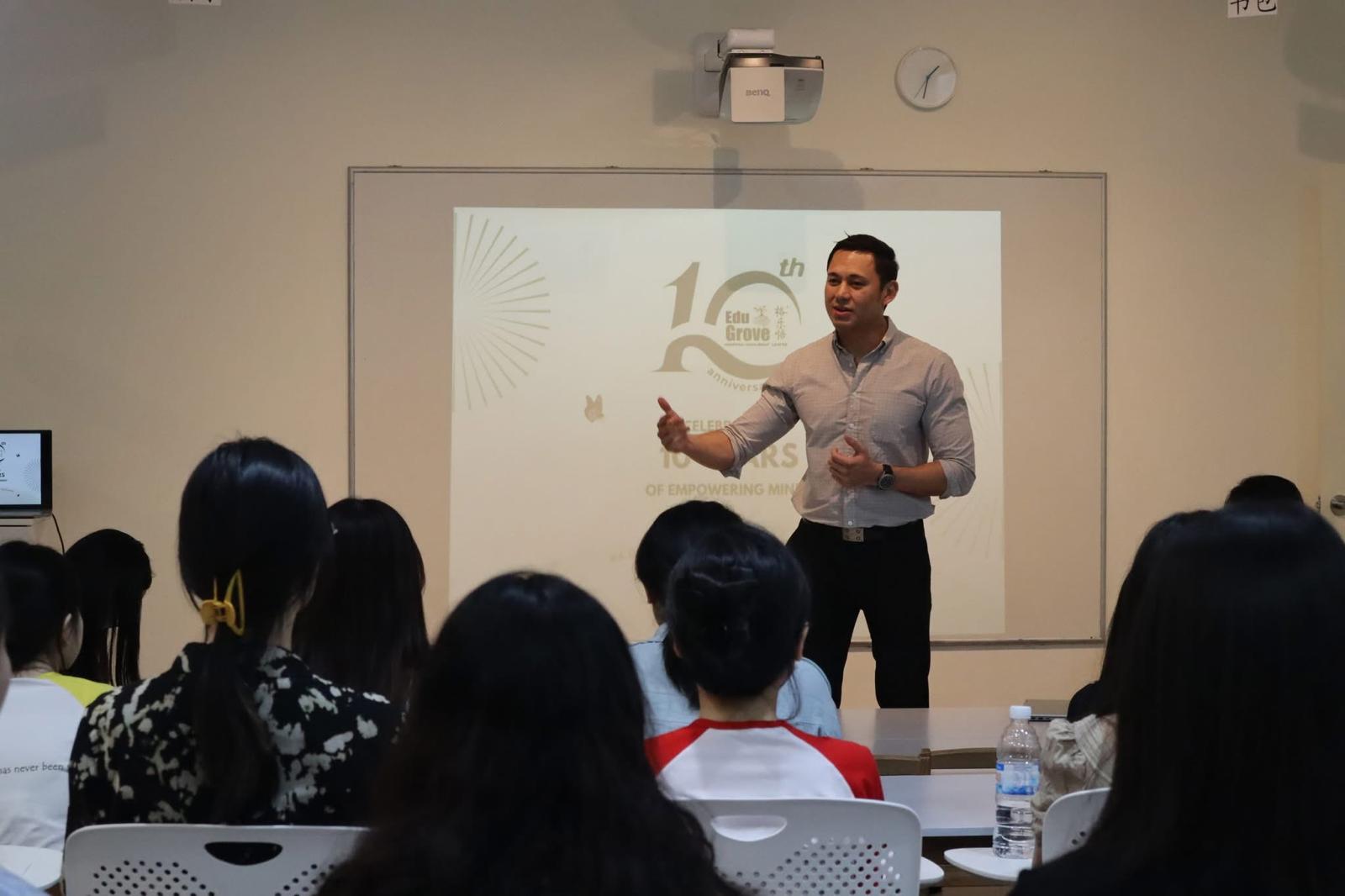
After spending 15 years in broadcast media, Jerry Theseira did not expect his next chapter to be in education, much less Chinese enrichment.
But over the years, through his own struggles with Mandarin, his experiences in the corporate world, and eventually watching his own children navigate Singapore’s education system, he began noticing the same pattern repeating itself again and again.
Children were learning Chinese for examinations, but many were never truly becoming comfortable using the language.
Today, Jerry is the founder of EduGrove, a seven-centre Chinese enrichment brand built around confidence, communication, and self-expression rather than rote memorisation alone. But the journey towards building the company was deeply personal long before it became commercial.
Even while building a successful career in broadcast media, entrepreneurship had always been in the background. Before national service, Jerry had already experimented with running a small F&B business, and later started a media production business while still working full-time.
“I had always been entrepreneurial at heart,” he says. “I realised that if I truly wanted to determine my own future and income potential, I eventually had to build something of my own.”
By the later years of his media career, he was actively searching for a business he could build long-term. Education stood out not only because it was resilient, but also because it felt meaningful.
Growing Up Feeling Out Of Place
Growing up as a Eurasian student taking Chinese as a mother-tongue subject in neighbourhood schools, Jerry often felt disconnected in class.
He still vividly remembers his first day of Primary 3, when his form teacher insisted he belonged in the Malay language class because of his appearance.
“I ended up trying to explain what ‘Eurasian’ meant in broken Chinese and English while the entire class laughed,” he recalls. “As a child, I remember feeling deeply embarrassed and completely out of place.”
Like many students at the time, his experience with Mandarin was heavily tied to memorisation, correction, and fear of making mistakes. Yet it was only years later, during his career in media, that he fully realised how deeply those experiences had shaped him.
While working at Walt Disney Television, Jerry initially struggled with brainstorming sessions and open discussions. Although he considered himself creative, he often found himself hesitant to speak up.
Looking back, he realised much of his education had trained students to focus on “correct answers” rather than communication, confidence, or critical thinking.
“I knew I had ideas,” he says. “But I was often afraid of sounding foolish or being misunderstood.”
As he progressed in his career, he began noticing similar patterns among many Singaporeans around him. At the same time, he also realised that despite years of studying Chinese in school, he was not fully comfortable applying the language in professional settings.
Those reflections stayed with him.
Rethinking How Mandarin Is Taught
The turning point came when Jerry’s own two sons entered primary school.
Despite how much Singapore’s education landscape had evolved, he noticed many children were still experiencing Mandarin the same way he once had: through memorisation, pressure, and anxiety.
At the same time, he was also exposed to a different perspective on language learning through his then-wife, who was a Chinese language teacher. Through her, he saw how storytelling, play, role-play, discussion, and interaction could make language learning feel natural and enjoyable rather than intimidating.
Slowly, the idea for EduGrove started taking shape.
“What if children could learn Mandarin through confidence and communication instead of fear?” he began asking himself.
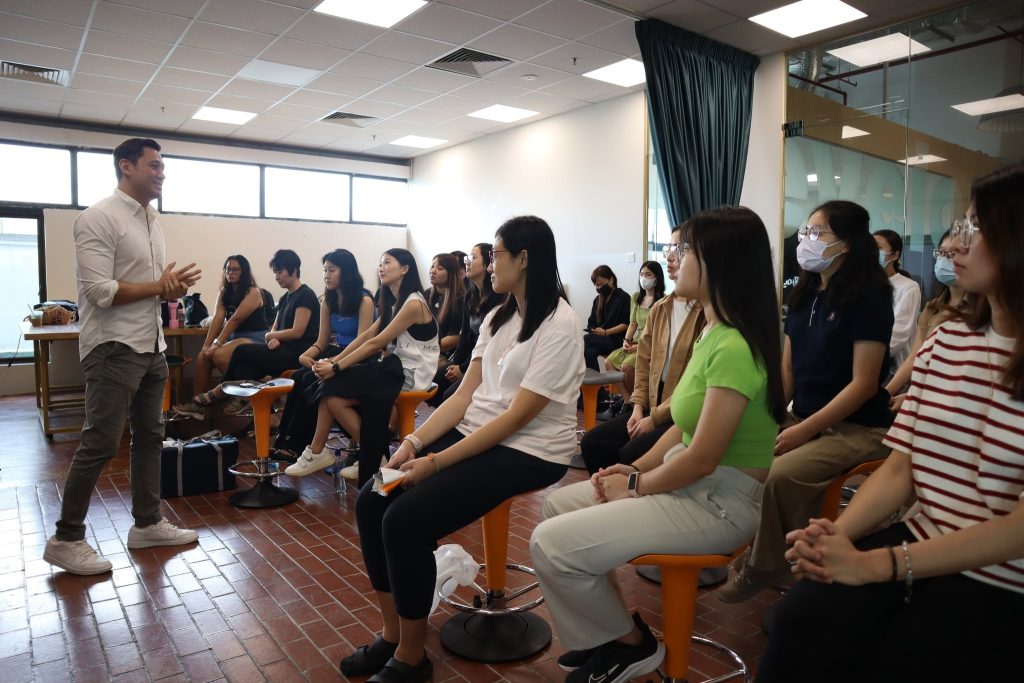
When EduGrove first launched, its approach immediately differed from many traditional tuition centres. Lessons incorporated games, drama, storytelling, presentations, and discussion alongside structured academic learning.
The goal was not simply to help students score better, but to help them feel comfortable expressing themselves in Mandarin.
Building EduGrove Differently
In the early days, building trust was not easy.
Jerry handled almost everything himself, from customer enquiries and operations to marketing and even cleaning the centre. There were also parents who questioned whether a Eurasian founder was the right person to lead a Chinese enrichment business.
But over time, results began speaking for themselves.
Parents noticed their children becoming more willing to speak Mandarin at home. Students who once dreaded Chinese lessons started looking forward to class. Word-of-mouth referrals steadily grew.
Ironically, Jerry believes his non-traditional background eventually became one of EduGrove’s biggest advantages.
“Because I personally struggled with learning Chinese growing up, we designed the programmes from the perspective of what students actually needed emotionally,” he explains. “We wanted Chinese to feel less intimidating, more natural, and more relevant to real life.”
That philosophy also shaped how the business itself grew.
Unlike many education brands, EduGrove expanded slowly and without external investors. It took six years before the company opened its second branch in Katong.
For Jerry, the slower pace was intentional.
“I believed scaling too early without strong systems and culture could do more harm than good,” he says.
Instead of chasing aggressive expansion, he focused heavily on teacher training, curriculum consistency, operational systems, and customer experience before growing further.
More Than Just Better Grades
Today, EduGrove has seven branches across Singapore, but Jerry believes the company’s purpose has remained largely unchanged from the beginning.
While academic performance still matters, he feels many parents today are searching for something deeper than grades alone.
“In many English-speaking households, Mandarin becomes associated with stress and correction,” he says. “Children become afraid of making mistakes, so they stop wanting to speak.”
For Jerry, success is no longer just about helping students perform better academically. It is about helping them develop confidence, curiosity, and the willingness to express themselves naturally in another language.
Looking back, he says the moments that matter most are often the quietest ones.
“It is hearing parents say their child is voluntarily speaking Mandarin at home, picking up Chinese books on their own, or becoming more confident expressing themselves,” he says. “That is when you realise you are making a genuine difference.”
This article was contributed to us by Alpha Story.


Street Smart
Singapore Gym Membership Price Guide (2026 Edition)


