
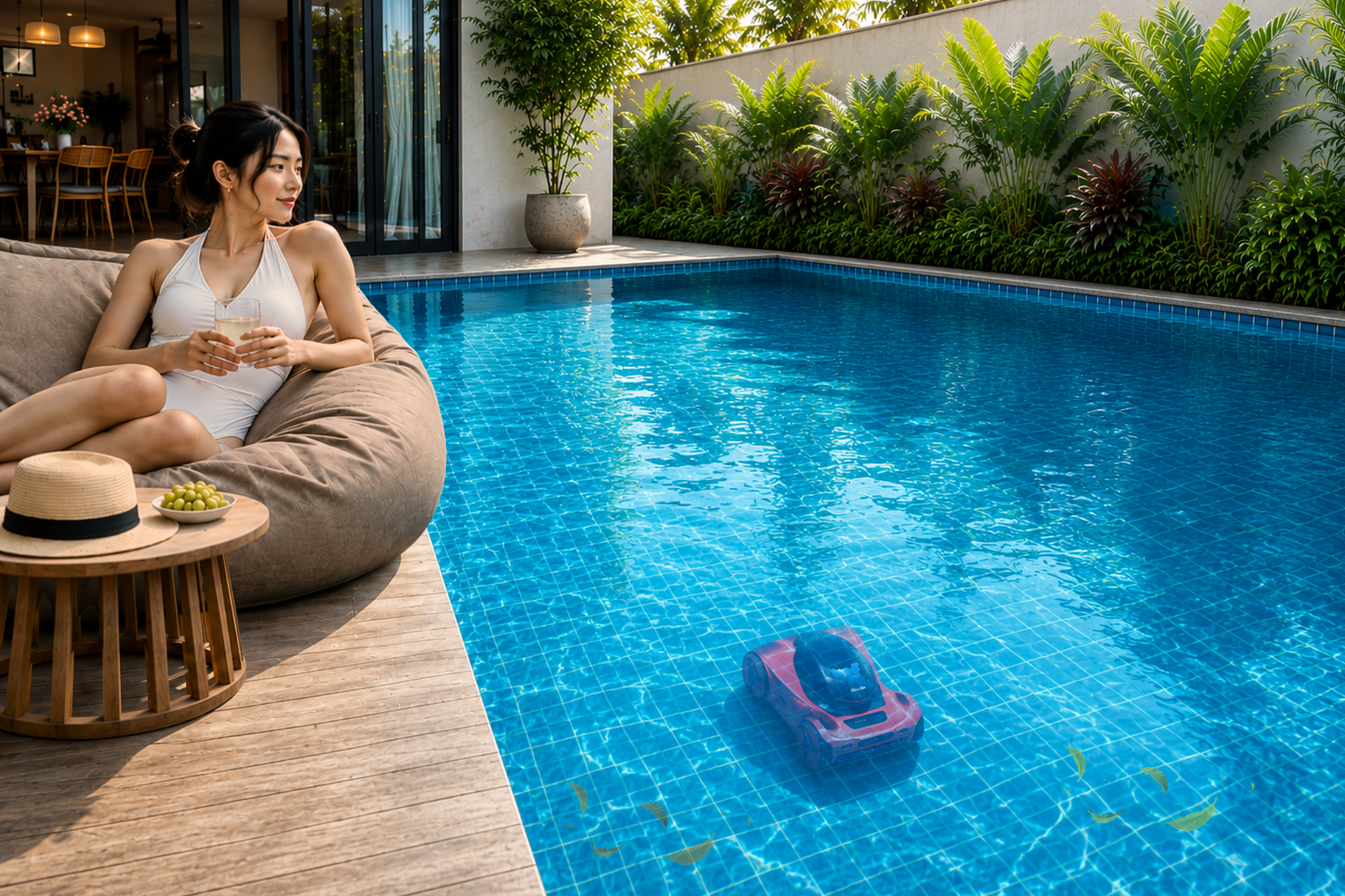
If you already pay for monthly pool maintenance, the question is not only whether your pool gets cleaned. It is whether it stays clean and swim-ready between visits.
A private pool is one of the biggest lifestyle upgrades in a landed home. Yet for many homeowners, cleaning still revolves around a technician visiting once or twice a week. iGarden SEA – a premium sub-brand under Aquatic Facilities Services Pte Ltd – believes that the days between those visits are where robotic cleaning can add practical value.
Singapore’s hot, humid and rainy climate means pool conditions can change quickly. Rain and wind bring leaves and debris into the water, while fine dust and organic matter settle on the floor. Steps, ledges and shallow areas can collect dirt even when the pool looks clear from above.
“In Singapore, pool conditions can change from one day to the next. A scheduled service visit remains essential, but leaves, fine debris and residue do not wait for the next appointment,” said Carlos Choon, Head of Marketing and spokesperson for Aquatic Facilities Services Pte Ltd.
#1 Your Pool May Only Be Clean On Cleaning Day
A maintenance contract remains important for water chemistry, equipment checks and professional servicing. What it may not solve is the daily build-up between scheduled visits.
For families who swim often, the difference between a pool that is cleaned weekly and one that stays consistently clean can be noticeable – especially after heavy rain, windy weather or a weekend of frequent use.
Think of a robotic pool cleaner as the outdoor equivalent of a robot vacuum. It does not replace deeper professional care, but it can keep the pool presentable between service visits.
#2 It Complements Your Pool Technician
A robotic pool cleaner should not replace professional servicing. Pools still need human oversight: water chemistry must be tested, while pumps, filters and other equipment need proper checks.
What the robot can do is take over repetitive underwater cleaning. By handling the floor, walls and waterline more frequently, it allows the technician’s scheduled visit to focus more on water balance, equipment condition and preventive maintenance.
“The aim is not to replace the pool technician. It is to automate the repetitive physical cleaning, so professional visits can concentrate on water chemistry, equipment checks and preventive care,” said Carlos.
#3 Debris Can Become A Cost Issue
Pool cleaning is often treated as a visual concern: if the water looks clear, the pool feels fine; if leaves are visible, it is time to clean.
However, leaves, sediment and organic matter also add to the load on the pool’s filtration system. When debris builds up, filters may require more frequent cleaning, and the wider system has to work harder to circulate and treat the water.
Over time, this may contribute to more servicing and greater wear on pool equipment. For homeowners who have already invested heavily in a private pool, regular physical cleaning is therefore not only about appearance; it can also support the upkeep of the asset.
#4 The Most-Used Areas Are Often The Hardest To Clean
Steps, ledges and shallow areas are where children and families often spend the most time. They are also easy places for dirt to collect.
These areas can be awkward to clean manually and may be missed by cleaners that are designed mainly for the deeper floor of the pool.
The iGarden M1 Series is designed to clean ultra-shallow water areas down to 40cm, including ledges and steps. For households that use these zones regularly, that can be a practical quality-of-life improvement.
#5 What Makes A Robotic Pool Cleaner Different?
A conventional pool vacuum usually needs someone to operate it manually. The work can be physical and time-consuming, and is often done only after the pool already looks dirty.
A robotic pool cleaner works more independently. With the cordless iGarden M1 Series, homeowners charge the unit, place it in the pool and let it navigate the cleaning cycle. The standard M1 models offer five to 10 hours of runtime, depending on the model.
For larger or more demanding pools, the iGarden M1 Pro-125 offers up to 12.5 hours of runtime. Its features include AI-Inverter 2.0 intelligence, dual-pump suction, double-layer filtration, a 4.5-litre debris bin, Turbo Mode and One-Touch Waterline Return for easier retrieval.
The practical benefit is straightforward: the pool can be cleaned more often without someone manually vacuuming it or waiting for the next service visit.
“For a busy household, convenience is not simply a gimmick. If the pool can be cleaned more regularly without manual vacuuming, homeowners are more likely to use and enjoy the asset they have invested in,” said Carlos.
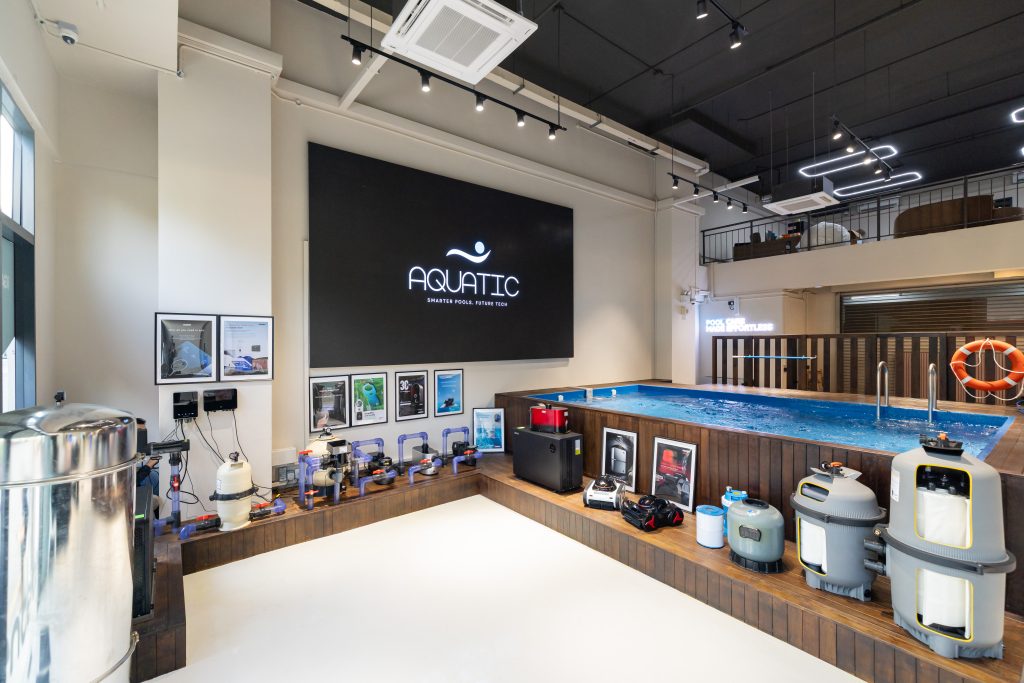
The Aquatic Pool Experience Center features a fully operational 5m x 3m pool where visitors can see the iGarden M1 robotic pool cleaners in action and experience their cleaning performance firsthand.
#6 Is It Worth Paying For?
A robotic pool cleaner is not an impulse buy. It makes more sense when viewed as part of the total cost and effort involved in owning a private pool.
Monthly maintenance fees vary according to pool size, visit frequency and the services included. At the time of writing, iGarden SEA lists the standard M1 Series from S$929 before GST, while the M1 Pro-125 is listed at S$2,050 before GST. Homeowners should compare that upfront cost with how often they use the pool, how quickly debris returns and how much manual cleaning is still required between professional visits.
A robot is more likely to make sense for households that swim several times a week, have trees or open landscaping nearby, regularly find dirt on steps or ledges, travel frequently, or want the pool ready at short notice.
It may offer less value for a small pool that is rarely used, a pool that stays clean between service visits, or a household that already has someone carrying out frequent physical cleaning. In every case, robotic cleaning should complement – not replace – professional water testing and equipment care.
For landed homeowners, the decision comes down to consistency. A private pool is a high-value home asset, but it is also a space the household should be able to enjoy without planning around cleaning day. The useful question is not whether a robot is a novelty, but whether the time saved and the cleaner intervals justify the upfront cost for the way the pool is actually used.
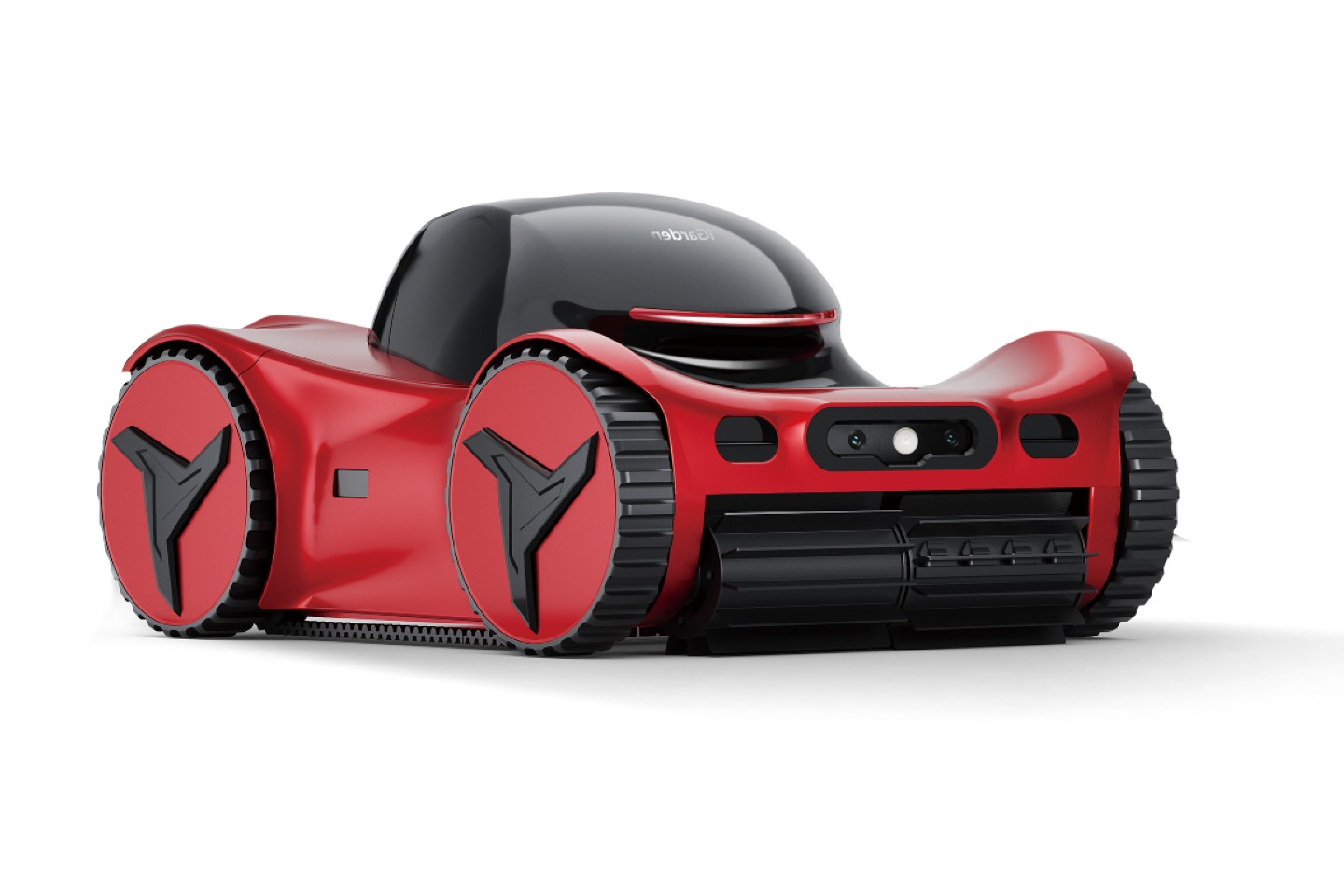
The iGarden M1 Pro-125 robotic pool cleaner. Image courtesy of iGarden SEA.
Where To Learn More
The iGarden M1 Series is available in Singapore through iGarden SEA. Compare the M1 Series models and pricing, view the M1 Pro-125, or book a live demonstration at the Aquatic Pool Experience Center in Singapore.
This article was contributed to us by Alpha Story.
Read Also: How Much Does It Cost To Renovate Your HDB Resale Flat?


Street Smart
Singapore Gym Membership Price Guide (2026 Edition)


