
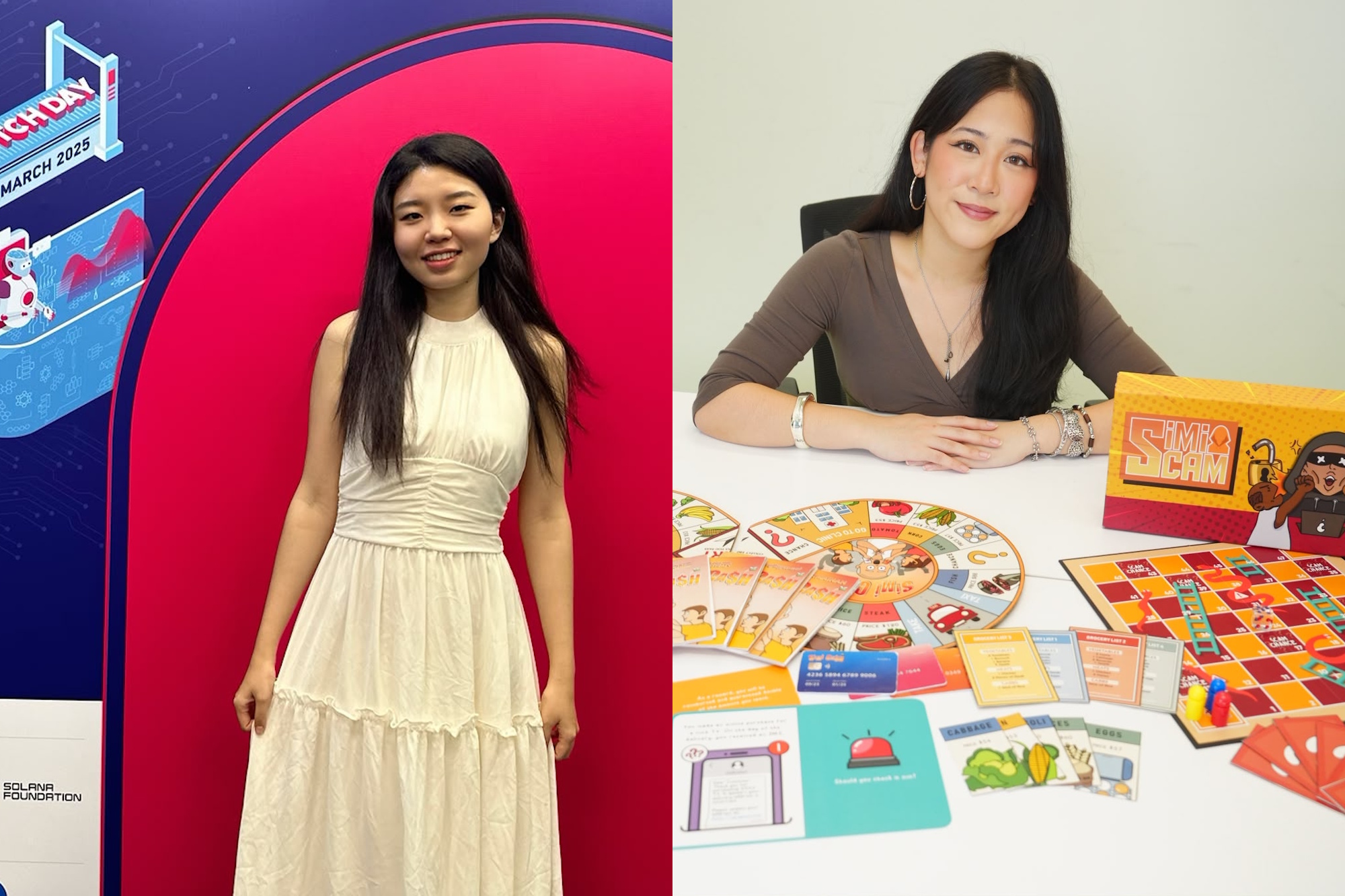
In Singapore, the script for graduates has been the same for decades: polish the résumé, apply for jobs, and secure a stable career. Yet, with technology changing the working world more rapidly than ever, founders AL Hong of Digi-Up! and Zhang Yimei of Clarity Technology chose to write their own stories.
Hong is tackling digital literacy among seniors, while Zhang is developing AI-, neuroscience- and BCI-powered solutions for emotional wellness. Each founder is proof that opportunity is created from conviction, struggle, and imagination.
Finding The Courage To Begin
For Hong, the spark came from her grandparents. Growing up close to them, she saw how seniors struggled with digital literacy in a society racing ahead with new technologies. “Progression without inclusion results in communities being left behind,” explained one of Singapore Polytechnic’s top graduates of 2025 and a Diploma in Media, Arts & Design (DMAD) alumna.
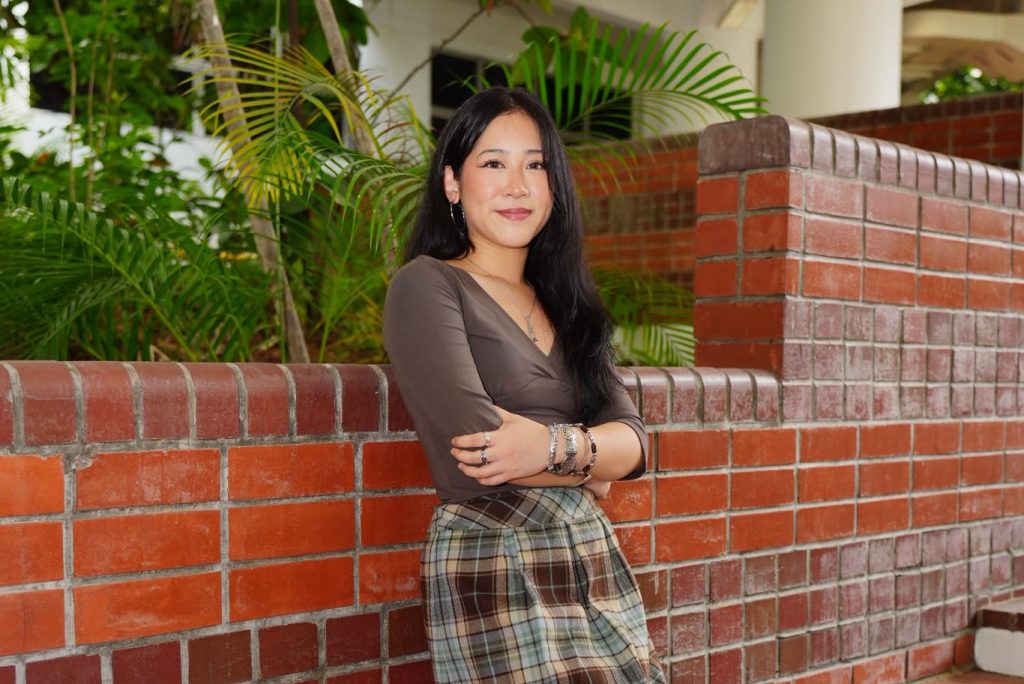
Image provided by: AL Hong
Zhang’s journey began with her own battle against depression and anxiety. After moving from China to Singapore at 14, she excelled academically and in leadership at SMU, graduating with a degree in Information Systems in 2024.
However, behind the achievements, she faced significant emotional struggles, sleepless nights and constant fatigue. “We spend years learning mathematics, science, coding, and professional skills, but most of us are never formally taught how to identify our emotions or regulate stress,” she reflects.
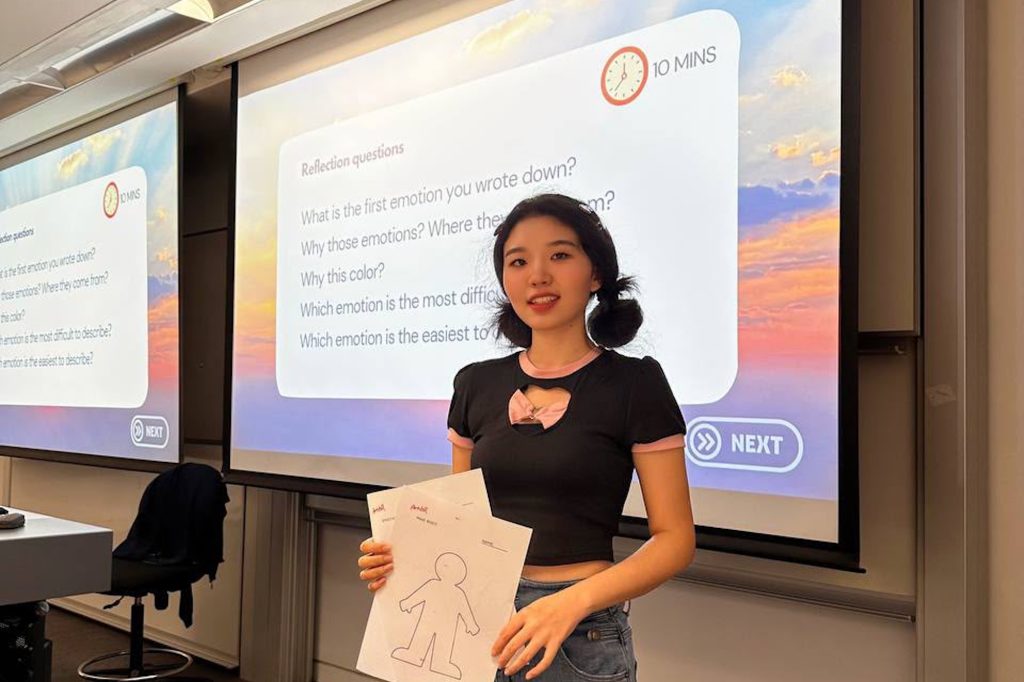
Image provided by: Zhang Yimei
Both founders started by asking: What problem do I see around me that others aren’t solving? Hong saw seniors excluded from digital progress. Zhang saw young people who were struggling to express their emotions. Their answers became the seeds of their companies.
Designing Approachable Solutions
Digi-Up!’s solution was play. “One thing we saw lacking the most was the element of fun,” said Hong, explaining that existing digital initiatives for seniors prioritised education but missed the opportunity for gamification found in programmes targeted at youth and working adults.
In response, Digi-Up! developed board games like SIMI Scam and SIMI Cash that taught seniors about scams and digital finance in a way that was accessible, engaging and memorable. “We wanted to make learning fun and familiar,” Hong says. By using analog games, seniors could learn daunting topics through a medium they already trusted.
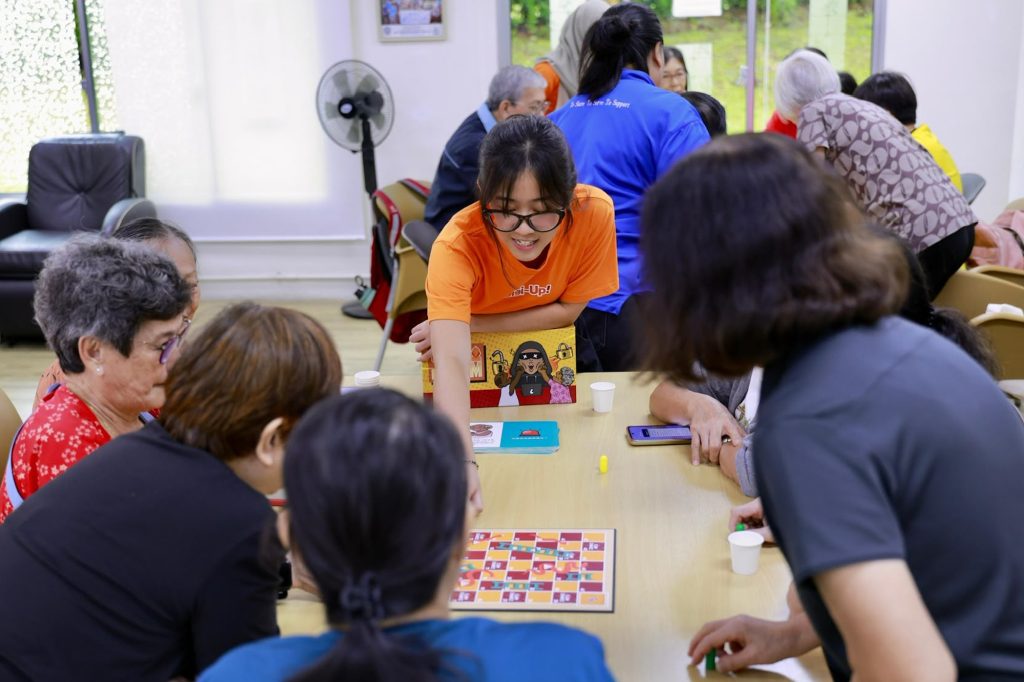
Image provided by: AL Hong
Zhang began with art therapy-inspired workshops, such as the Emotion Wheel exercise, Five-Senses Wellness Experience, and AI-assisted music creation, reaching over 500 participants. “Someone may not want to attend an event labelled ‘mental health intervention,’ but they may be willing to attend a creative relaxation workshop,” she explains.
The workshops also taught Zhang an important lesson. While they created meaningful conversations, emotional wellbeing is an ongoing journey rather than a one-off experience. That insight eventually led Clarity Technology to expand beyond workshops into AI-powered emotional tracking, neuroscience research and brain-computer interface (BCI) technology.
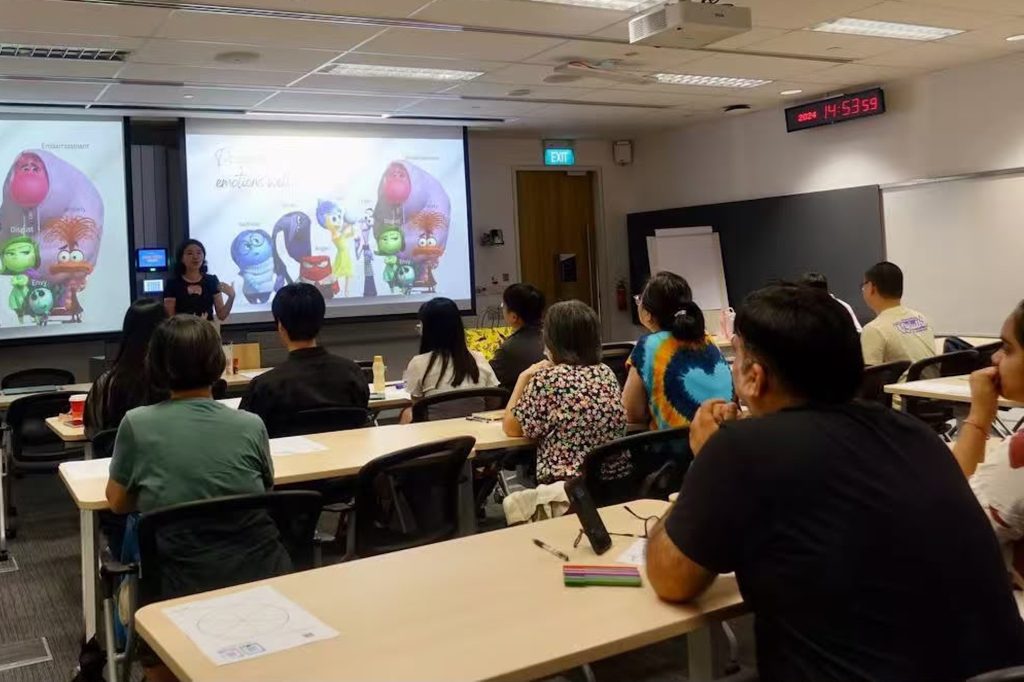
Image of Emotional Wheel workshop provided by: Zhang Yimei
Both realised early experiments were just the beginning. Hong expanded Digi-Up!’s programmes to be senior‑centric and inclusive. Today, Digi-Up! is a social enterprise committed to empowering seniors with the knowledge and confidence to stay safe in the digital world.
Zhang evolved Clarity Technology into a platform combining artificial intelligence (AI), neuroscience, and brain‑computer interface (BCI) technology. Today, Clarity Technology is developing digital emotional wellness tools while also exploring BCI-powered sleep and wellness hardware.
Convincing Others As Young Founders
Hong recalls being mistaken for an intern or dismissed because of her age. “When I started out, I was always the youngest in the room. People assumed I was doing this just for ‘fun’,” she says.
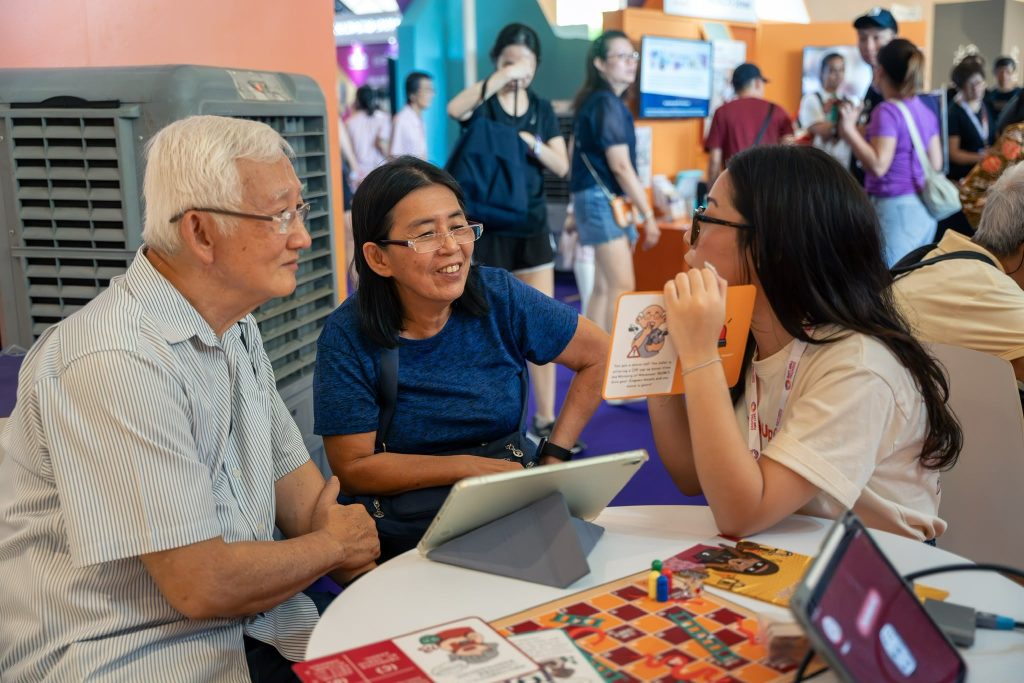
Image provided by: AL Hong
Zhang faced similar scepticism, applying four times before being accepted into SMU’s Business Innovations Generator (BIG) incubation programme in her final year. “I had to refine the business model, clarify the problem and explain the impact more clearly,” said Zhang. “Eventually we were accepted.”
Both learned that credibility comes from persistence and action. Hong found pilot partners who believed in her passion, as well as the potential of the programme. “They saw my age not as a disadvantage, but as a bonus,” she elaborated.
Zhang built trust by organising events, collecting feedback, and improving continuously. Awards and competitions later gave them recognition, but what mattered most was showing value through results. She also made a conscious effort to meet people through networking events with fellow founders, investors, industry partners, and ecosystem stakeholders. Zhang puts it simply: “Credibility does not only come from a job title or academic qualification. When you become friends with someone, and they get to know your story, motivation and personality, trust develops naturally.”
Navigating Ecosystems And Gaps
Singapore’s startup ecosystem provided seed funding, grants, and competitions that helped both ventures get off the ground. Hong credits hackathons and grants for easing the mental load of starting Digi-Up!. She named competitions from Action Community for Entrepreneurship (ACE), National Youth Council (NYC), Singapore Polytechnic, and others.
Zhang highlights the role of SMU BIG, NTU GET Fund, and ACE networking events in shaping Clarity Technology.
Yet both also point to gaps. Hong emphasises the lack of reliable mentorship for young entrepreneurs. “In the first two years of running Digi-Up!, we had no guidance. It was tough. Only recently did we find a mentor, Mint Lim, CEO of School of Concepts, who opened our eyes to opportunities we had missed.”
Zhang notes that while pitching competitions abound, the harder phase comes afterwards when you have to negotiate with investors, structure equity, and make important financial decisions. “Many programmes are designed around pitching an idea or winning a competition. But the harder phase often comes afterwards. How do you acquire customers? How do you manage cash flow? How do you build a team?”
Redefining Career Readiness
Through entrepreneurship, both founders redefined what it means to be “career‑ready.” Hong argues that skills alone are not enough: “What makes you indispensable is the way you think, the way you ideate, how adaptable and efficient you are in applying your ideas, and how you open you are to change.”
Zhang echoes this, saying “I do not believe that every graduate needs to follow one fixed path”, and stating empathically that career readiness should include “the ability to create opportunities, not only apply for them.” Her own journey from founding SMU’s Women in Tech club and Singapore’s first Taylor Swift university club to building Clarity Technology reinforced the lesson that if something doesn’t exist, you can create it.
The Human Impact
The impact of their ventures is not abstract. Zhang recalls an early art therapy-inspired workshop where participants used an Emotion Wheel to reflect on the emotions they had experienced in the past week, and used colours, shapes and patterns to represent how each emotion felt to them.
Participants then shared their drawings, explaining why they had chosen those colours or shapes, and the personal stories behind them. In the process, people who had been complete strangers found themselves sharing experiences they rarely discussed in everyday life.
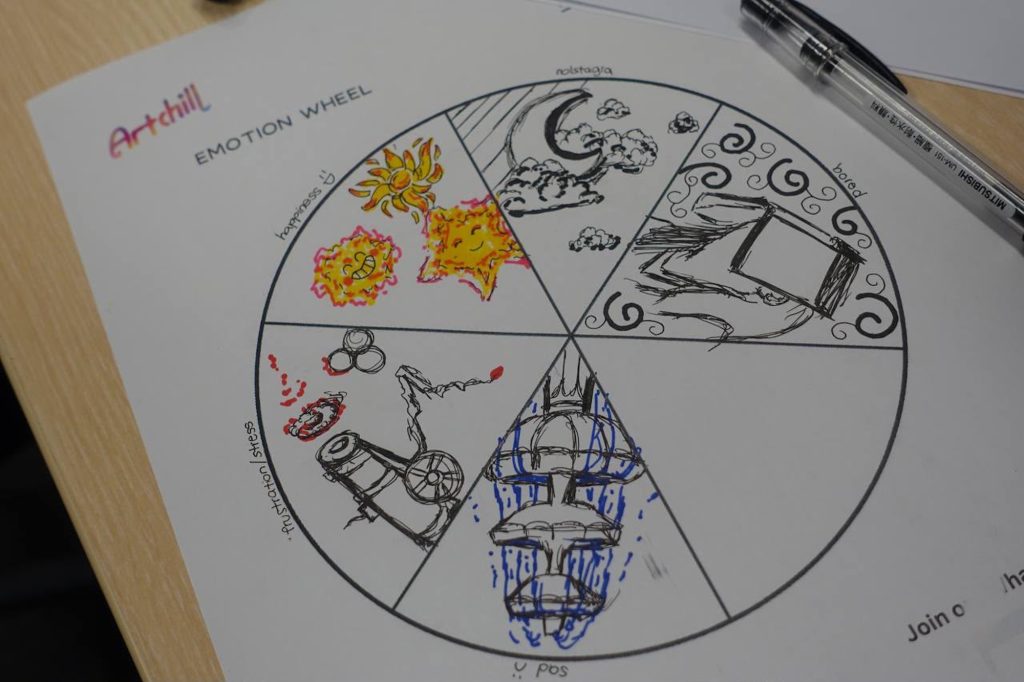
Image provided by: Zhang Yimei
“Sometimes the impact is simply helping someone recognise: ‘I am feeling something, I am allowed to acknowledge it, and I’m not alone’” said Zhang.
She also shares a personal story: a close friend struggling with severe insomnia found relief using Clarity Technology’s wearable sleep‑aid device, which uses low-intensity cranial electrotherapy stimulation. “Seeing someone close to me experience a meaningful improvement with something our team built was incredibly emotional. That is when the mission becomes very real.”
Lessons For Peers
Both founders offer practical advice for graduates considering entrepreneurship. Hong suggests starting small: “Test your paper prototype with friends, list your service online, make a cardboard model. The first obstacle is always yourself — your doubt, your procrastination, your fear.”
Zhang’s advice is not to be distracted by the belief that you need a perfect business plan, funding, or even to quit your job immediately.
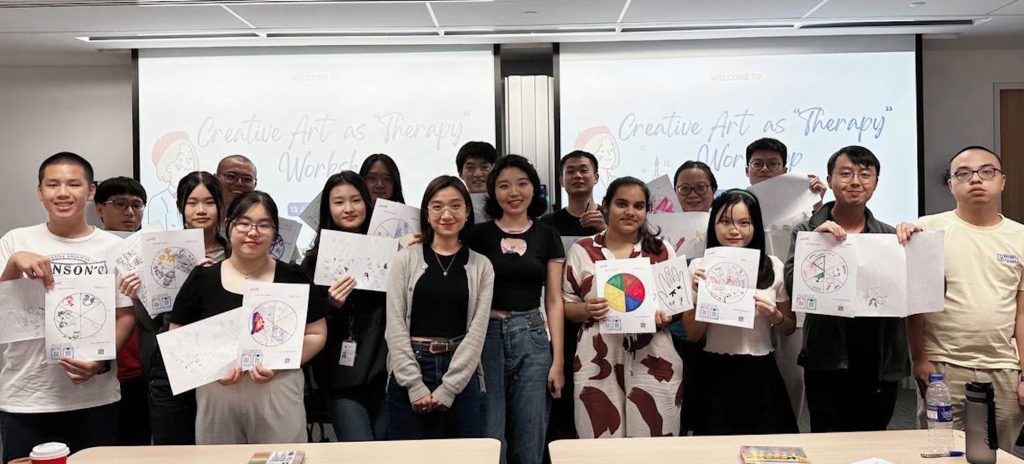
Image provided by: Zhang Yimei
“You don’t have to have everything figured out before you begin. Start with one real problem you genuinely care about, build something small, listen to feedback and allow the journey to evolve.”
She also strongly recommends not doing it alone, since entrepreneurship can be very tiring. “Find like-minded people and build alongside them. You will gain not only a team, but also friendships, memories and a support system.”
Looking Ahead
Digi-Up! continues to expand its senior‑centric programmes, ensuring no elderly person is left behind in Singapore’s digital future.
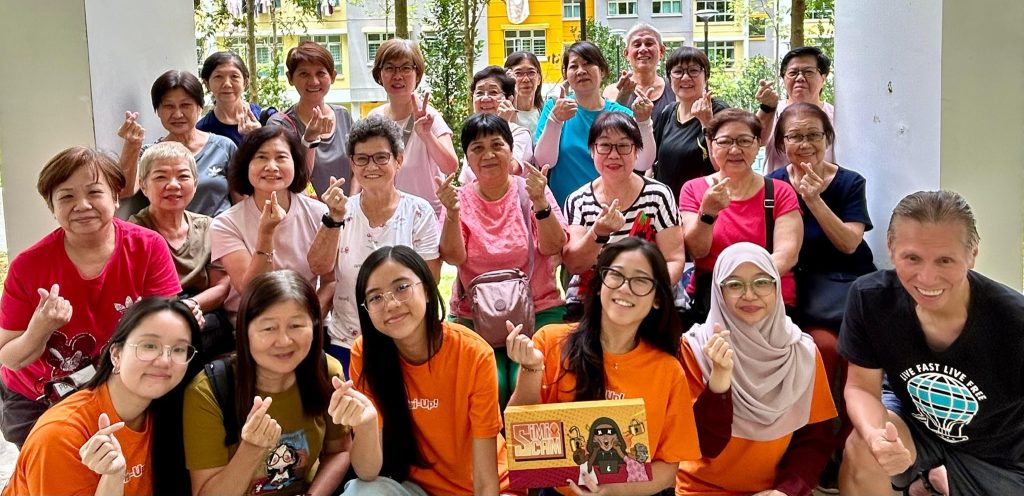
Image provided by: AL Hong
Clarity Technology is developing AI‑powered emotional insights through a digital platform and BCI‑enabled sleep and wellness technology through a wearable device that uses low-intensity microcurrent stimulation to help people relax and calm down.
Both ventures reflect how young Singaporeans are not waiting for jobs to define their careers. They are creating opportunities rooted in empathy, inclusion, and innovation.
As Zhang puts it: “Success is moving from failure to failure without losing enthusiasm.” Hong adds: “Once you get past your own fear, the drive to do more will come like a waterfall.”
Read Also: Give To Gain: Why Giving Back Is At The Heart Of These Women Entrepreneurs’ Success


Lifestyle
15 Of The Cheapest EV Cars In Singapore


Budgeting 101
7 Ways Being Frugal Is Different From Being Cheap

Street Smart
Singapore Gym Membership Price Guide (2026 Edition)


