
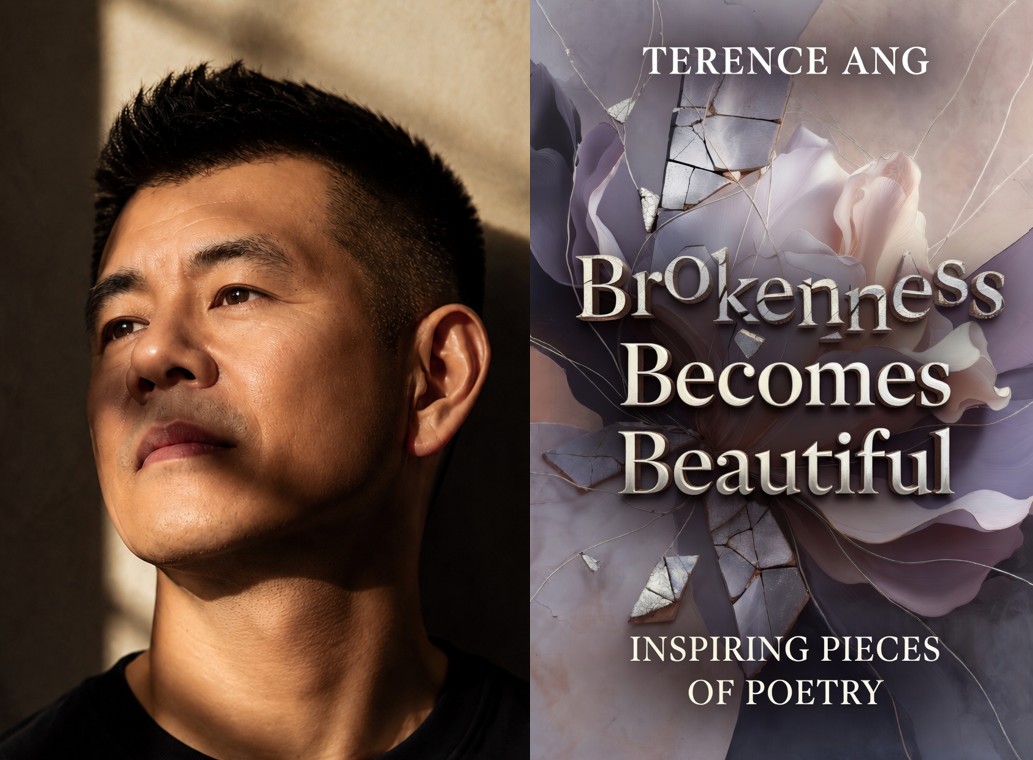
For Terence Ang, voice is more than sound. It is identity, dignity and connection.
Before 2020, communication was one of Terence Ang’s strongest attributes.
He had spent years working across marketing, communications, retail, events and the creative industry — fields where ideas, presentation and people mattered. Being articulate and expressive was not just useful for his work. It was part of how he saw himself.
“Communication was not just part of my job. It was part of my identity,” Terence shares.
Then, in 2020, he suffered a stroke.
The stroke left him with aphasia, a communication disorder that can affect speaking, understanding, reading, writing and word retrieval. For someone whose life and career had been built around words, the change was devastating.
He was still the same person inside. The same thoughts, memories, opinions and emotions were still there. But the words no longer came as easily.
Sometimes, the wrong words came out. Sometimes, nothing came out. Sometimes, he needed far more time than before.
For Terence, one of the hardest parts was the gap between who he knew himself to be and how others might now perceive him.
“I was still Terence on the inside,” he says. “But to other people, I was no longer the same Terence they once knew because I could not communicate the way I used to.”
Relearning Life After Stroke
The stroke did not only affect Terence’s speech.
Physically, he had to adjust to weakness on one side of his body. Tasks that used to be automatic became difficult. He had to relearn how to walk, move, use his hand, dress himself, eat and carry out daily activities that many people take for granted.
Having to relearn these things as an adult was humbling and painful. Every small improvement had to be earned through effort, patience and repetition.
Emotionally, the journey was just as difficult. Terence experienced fear, frustration, sadness, anger, helplessness, loneliness and depression. He also went through mood and behavioural changes that affected daily life and social interactions.
Over time, he had to come to terms with a painful truth: he would never return to exactly who he was before the stroke.
“I had to grieve for the person I used to be, while slowly learning to accept the person I was becoming,” he says.
Writing Became A Way To Speak Again
Terence did not set out to become an author.
At first, writing was simply another way to express himself. Speaking was difficult and frustrating. Writing gave him more time. He could pause, search for the right words, edit, and slowly shape what he wanted to say.
What began as a personal outlet eventually became part of his recovery.
Writing helped him process the stroke, aphasia, fear and uncertainty. It gave structure to confusion. It helped him make meaning out of what had happened.
Over time, Terence realised that his words were reaching others too. Stroke survivors, caregivers, healthcare professionals and readers began telling him that his writing helped them feel less alone or understand stroke recovery differently.
That was when writing became more than healing. It became advocacy.
Through his books, Terence began building awareness around stroke, aphasia, recovery, resilience and the emotional journey that often happens quietly behind the scenes.
Building A Body Of Work, One Book At A Time
Since his stroke, Terence has written several books, each reflecting a different part of his recovery journey.
A Cry in the Dark was his first attempt to tell his own story after stroke. It came from the raw and painful early part of his experience.
Emerging from the Dark allowed him to look beyond himself and share stories of other stroke survivors and caregivers.
Strength in Motion focused on rehabilitation, movement and the importance of continuing to work on recovery.
The Boy and The Man gave him a more visual and reflective way to revisit his stroke experience through a graphic novel format.
Thunderstroke: A Poetry Memoir Inspired by a True Story allowed him to express the emotional and spiritual impact of stroke through poetry.
With each book, Terence was not only building a body of work. He was rebuilding himself.
“I was learning how to be an author living with stroke and aphasia,” he says. “I was learning how to work with my limitations differently.”
This did not come easily. He had to work more slowly than before. He had to rely on structure, discipline, technology, support and patience.
But each project reminded him of something important: his voice was still there, even if it now came through a different path.
The Less Visible Work Behind Being An Independent Author
Writing a book is only one part of the journey.
For an independent author, the work continues long after the manuscript is written. There is editing, design, publishing, marketing, social media, events, interviews, media outreach and coordination with different people.
For Terence, aphasia makes each of these steps more demanding.
Emails take more time. Interviews can be stressful. Speaking can be tiring. Sometimes, he worries about using the wrong words or not being able to express himself clearly.
When possible, he asks for written questions in advance. This gives him time to process what is being asked, organise his thoughts and prepare responses that reflect what he truly wants to say.
There is also the emotional challenge of having to promote his own work.
When you are an independent author, you have to explain why your story matters. That can be difficult when you are already managing communication challenges and self-doubt.
But Terence has learned to adapt.
He uses tools such as speech-to-text, text-to-speech, notes, recorded thoughts and AI-assisted writing tools to organise his ideas. He works in quiet spaces. He gives himself more time. He also relies on trusted people to review, edit and support his work.
Living with aphasia means he may do things differently. It does not mean he cannot do them.
Using AI To Reclaim His Own Voice
Terence’s latest project, Brokenness Becomes Beautiful, marks a new chapter in his recovery and creative journey.
The poetry collection explores self-discovery, self-awareness, self-acceptance, self-love, self-healing, self-care, self-growth and self-empowerment. It is a book shaped by pain, reflection and the long process of becoming whole again after life changes unexpectedly.
But what makes this project especially meaningful is its audiobook.
Instead of engaging a professional narrator, Terence used ElevenLabs AI voice technology to create a digital version of his own voice to narrate the audiobook.
For him, the decision was deeply personal.
A professional narrator may have sounded more polished. But Brokenness Becomes Beautiful came from Terence’s own lived experience. It needed to carry something of him.
“For someone with aphasia, voice is not just sound,” he says. “Voice is identity. Voice is dignity. Voice is confidence. Voice is connection.”
The AI voice is not perfect. It may not deliver every poem exactly as he would if he could speak freely. But perfection was never the point.
What mattered was that the audiobook carried his words in a voice that still felt connected to him.
Learning The Technology Was Part Of The Journey
Creating the audiobook was not as simple as pressing a button.
Terence came across ElevenLabs through Stroke Onward and began exploring whether AI voice technology could help him create an audiobook using a digital version of his own voice.
He had to learn how the software worked, understand its functions, experiment with the tools, make adjustments and produce the voiceover in a way that suited the poems.
As someone who describes himself as technologically challenged, the process required patience. It involved trial and error, as well as physical effort, time and energy.
Aphasia also meant that he needed more time to process, review and adjust the work.
The first time he heard the AI version of his voice reading his words, he felt strange. He was not even sure if it sounded like him. He asked friends to listen, and they told him there was some semblance of him in that voice.
“It was not exactly the old me,” he says. “But it was also not someone else. It was a new version of my voice.”
That moment gave him hope. It reminded him that even after loss, parts of who we are can still be rediscovered in new ways.
Why This Matters Beyond One Audiobook
To the best of Terence’s knowledge, Brokenness Becomes Beautiful may be one of the first known audiobooks by a stroke survivor and author living with aphasia to be narrated using AI voice technology in a digital version of his own voice.
For him, the project shows that AI can be more than a tool for productivity or efficiency.
For people with disabilities or communication challenges, technology can also be about accessibility, dignity and possibility.
Aphasia can make communication tiring and frustrating. Technology cannot remove all the challenges. But it can offer new tools.
AI voice cloning, for instance, can allow someone who struggles to speak clearly to type words and hear them spoken in a voice that sounds like their own. In some cases, it may also help preserve a person’s voice before further decline.
More broadly, tools such as speech-to-text, text-to-speech, communication apps and other assistive technologies can help people express themselves, participate more confidently and remain connected to their communities.
“The important thing is that people know there are options,” Terence says. “There may still be new ways to communicate and be heard.”
Raising Awareness During International Aphasia Awareness Month
June marks International Aphasia Awareness Month, and Terence hopes more people will understand what aphasia really is.
It is not simply about forgetting words or speaking slowly. Aphasia can affect speaking, understanding, reading, writing and word retrieval.
Most importantly, aphasia does not affect intelligence.
A person with aphasia may pause often, speak slowly, use the wrong word or need more time to respond. But that does not mean they do not understand. It does not mean they have nothing to say. It does not mean they are less capable.
For Terence, aphasia can feel like an invisible wall between his mind and his mouth. The thought is there. The feeling is there. The opinion is there. But the words do not always come out smoothly.
What helps is patience.
Speak clearly. Give the person time. Do not rush to finish their sentences unless they want help. Use writing, gestures, pictures or simple choices when needed.
Most importantly, include them in conversations.
People with aphasia still have opinions, emotions, humour, memories and dreams. They are still whole. They are still themselves.
Recognition For The Quiet Battles
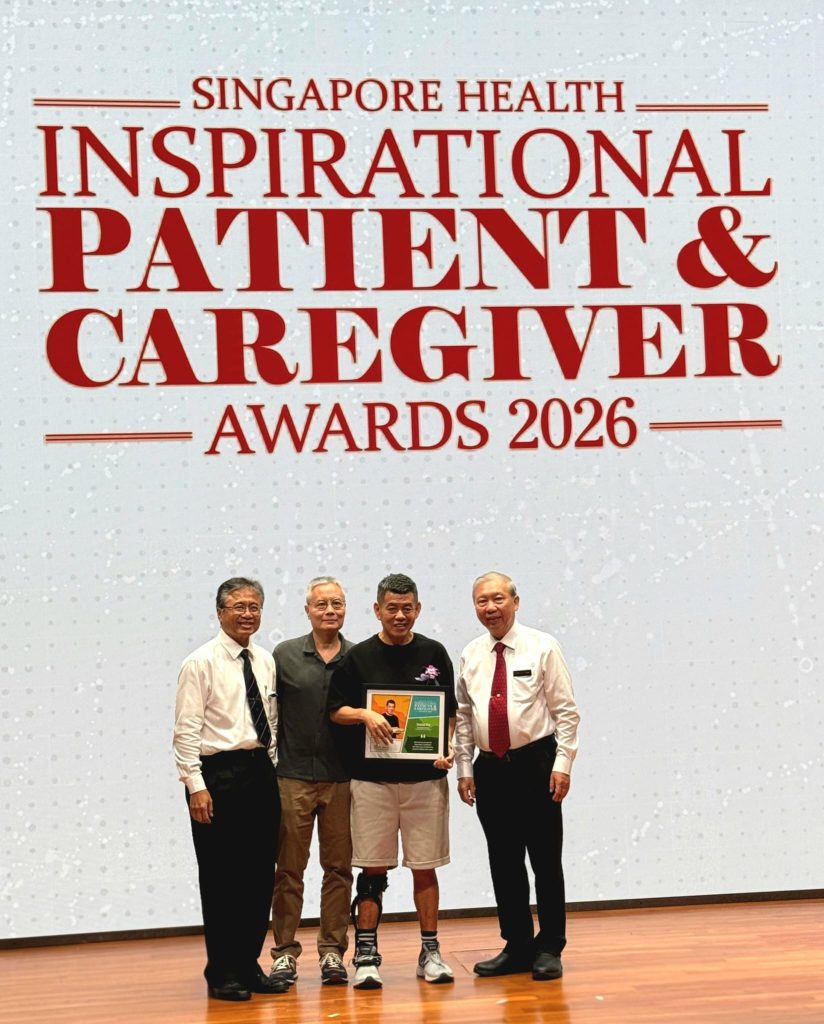
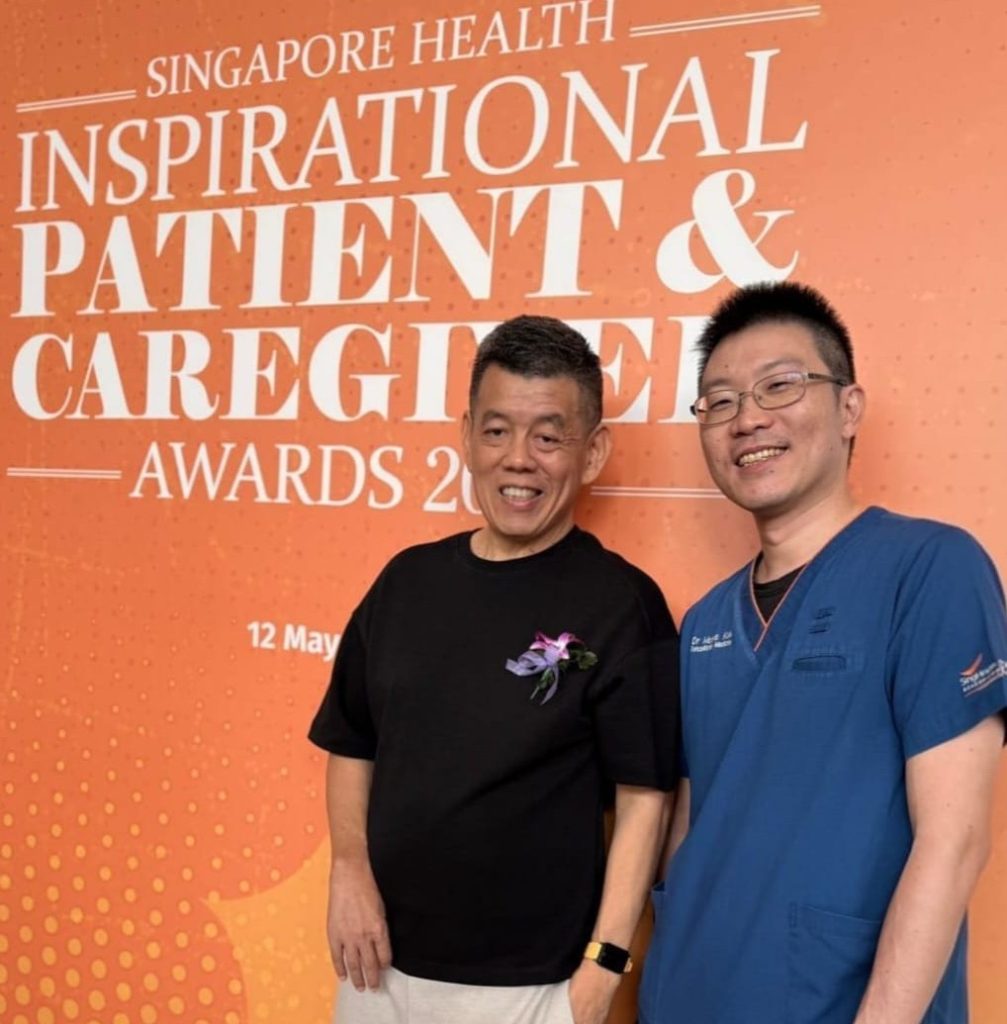
In 2026, Terence received the Inspirational Patient Award at the SingHealth Inspirational Patient & Caregiver Awards.
For him, the award was a great honour. More than that, it was a quiet validation of the journey he had been through.
After stroke, much of recovery happens privately. People may see the books, awards, interviews or public appearances. But they may not see the fatigue, frustration, therapy, emotional struggles and small daily battles behind the scenes.
The award reminded Terence that those quiet battles matter too.
But he does not see the recognition as his alone. He sees it as a tribute to everyone who walked with him, including his rehabilitation doctor, Dr Moses Koh from Sengkang General Hospital, his therapists, caregivers, family, friends and the stroke community.
“Recovery is never a solo journey,” he says. “I am here today because many people helped me, encouraged me, challenged me and reminded me not to give up.”
One Sentence At A Time
Today, consistency still takes effort.
Terence needs a quiet, distraction-free environment to write. He uses notes and keywords to remember what he wants to say. Text-to-speech tools help him listen back to what he has written, so he can hear the flow and check whether the words sound right.
Digital tools and AI-assisted writing tools help him organise, refine and rephrase his ideas. But the thoughts and emotions remain his own. The tools simply help him shape them more clearly.
Therapy and rehabilitation also shaped his mindset. Recovery taught him the importance of repetition, patience and persistence. Writing now follows the same rhythm.
His approach is simple: one step at a time. One sentence at a time. One project at a time.
“I may be slower now,” he says. “But I am still moving.”
There Is Still A Voice, Even When It Comes Differently
For Terence, Brokenness Becomes Beautiful is not only about stroke.
It is about brokenness, discovery, awareness, acceptance, love, healing, care, growth and empowerment. He hopes it reaches people who feel wounded, lost or uncertain.
The audiobook also forms part of a larger conversation about voice, identity, accessibility and the many ways people can continue to express themselves after life changes.
Looking ahead, Terence wants to continue building a platform that brings together writing, art, advocacy and lived experience.
He wants to tell stories that give hope. He wants to continue advocating for stroke survivors and people with aphasia. Most of all, he wants to show that recovery does not always mean returning to who we were before.
Sometimes, it means embracing and discovering who we can become.
“There is life after stroke,” Terence says. “And there is still a voice, even when it comes differently.”
This article was contributed to us by Alpha Story.


