
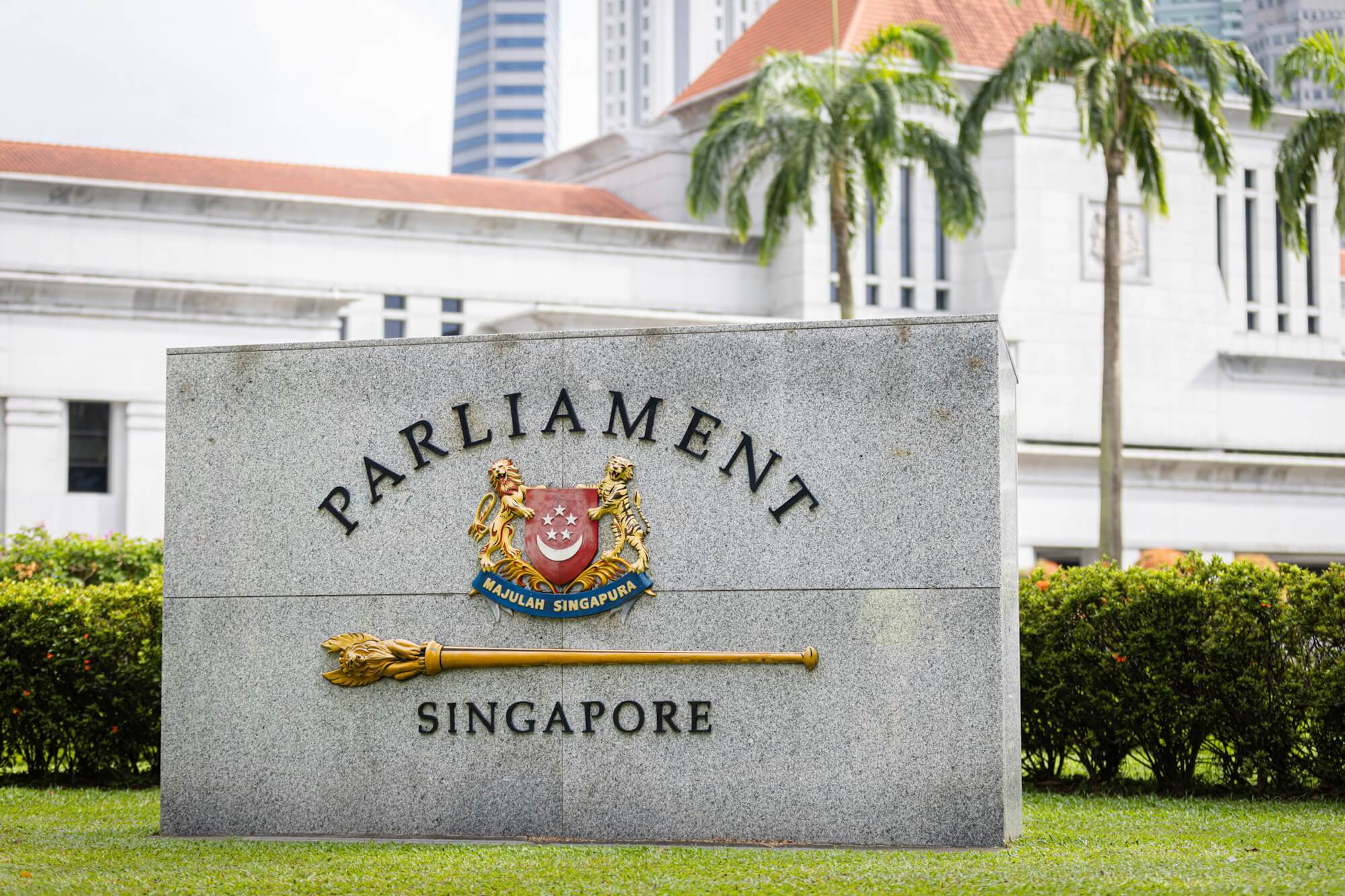
The Economic Strategy Review (ESR) is a comprehensive blueprint outlining long‑term priorities for productivity, innovation, and competitiveness. The ESR was launched last August and is Singapore’s strategic plan to stay competitive in a world that is becoming more contested and fragmented. On 24 June, the Singapore government released the ESR’s final report.
In response to the ESR’s report, the Workers’ Party (WP) tabled a motion titled “An Economy of the Future That Works For All.” The motion triggered an extended debate in Parliament, lasting almost nine hours and saw 24 members of Parliament (MPs) speak. It concluded with the passage of an amended motion, proposed by MP Edward Chia. This amended motion was supported by the majority of Parliament, along with the Nominated MPs present, with all 12 WP MPs voting against it.
The following is a non-exhaustive summary of the debate, focusing only on 6 selected speakers.
The Workers’ Party’s Perspective
WP MP Kenneth Tiong introduced the original motion, which read:
“That this House, notwithstanding the suggestions in the Economic Strategy Review on the future Singapore economy, believes: in a more equal and inclusive economy, with opportunities for entrepreneurs to experiment, households and businesses to succeed, workers to thrive, and ideas and innovation to flourish; and in an economic engine driven by dynamic local companies, healthy domestic demand, and Singaporeans and Singaporean capital venturing abroad.”
He expressed the need for an “updated growth model” that looks beyond the “headline GDP growth figure” to “the structure of growth”. This includes a “real income growth that keeps pace with productivity”, pointing out that overall labour productivity has grown by 2.5% per year from 2016 to 2024, while real mean income only grew at 1.3% per year over the same period.
Fellow WP MP Dr Jamus Lim acknowledged the success of Singapore’s traditional growth model – one that emphasised foreign direct investment and an educated population made up of local and “skilled workers from abroad”. However, he expressed the need for a new model that evolved away from foreign multinational corporations (MNCs) and pivots towards small and medium enterprises (SMEs). He noted that SMEs account for 99% of registered enterprises in Singapore, and provide jobs for 7 in 10 Singaporean workers, but “currently only contribute to half of the economy’s value-added”. He acknowledged that the government is already providing
WP Secretary-General Pritam Singh referred to the ESR’s full report and how it “goes to the heart of what kind of economy… we want Singapore to build for our workers”, especially since “the ESR speaks extensively about jobs and strengthening resilience”. However, he cautioned that “a resilient economy cannot be built on the backs of insecure workers”.
He pointed out that “workers in Singapore have no statutory entitlement to retrenchment benefits”, and that “to receive retrenchment benefits, workers in Singapore are dependent on the goodwill of employers, the terms of their employment contracts, or the strength of their bargaining position after they have already lost their jobs.”
He pushed for legislating retrenchment benefits to ensure that “if restructuring occurs through no fault of their own, they will receive fair and meaningful protection.”
Government’s Response To The WP Motion
People’s Action Party MP Edward Chia proposed an amended motion:
“That this House, in line with the suggestions in the Economic Strategy Review on the future Singapore economy, believes in a more equal and inclusive economy, with opportunities for entrepreneurs to experiment, households and businesses to succeed, workers to thrive, and ideas and innovation to flourish; and in an economy powered by dynamic local companies, global enterprises, healthy domestic and external demand, and Singaporeans and Singaporean capital venturing abroad.”
According to MP Edward Chia’s Facebook post, he proposed these four amendments (highlighted in bold above), because “the aspirations of the motion align with the Economic Strategy Review recommendations and not in spite of it” and “our economy has to be powered by an ecosystem of dynamic local companies and global enterprises”. He added that “we cannot depend on domestic demand alone as our home market alone cannot provide the scale needed for every sector”, and that “Singapore must remain open and competitive”. “This is not a choice between growth and inclusion. An economy that works for all must achieve both.”
Mr Chia previously co-founded Timbre, and is currently the founder of Life Lab Resources, which recycles and transforms food waste.
Mr Jeffrey Siow, Minister for Transport but speaking as Second Minister of Finance, pointed out that “the suggestions from the Workers’ Party are… very much in line with the direction of the ESR”, adding that “we do want an economy with dynamic local enterprises and good jobs for Singaporeans”, though he does acknowledge that “there are some differences over the means of achieving these goals”.
“I want to emphasise that the PAP Government’s economic strategy has always been built around Singaporeans, whether as workers, professionals, investors, entrepreneurs or business owners. Our people, not companies, are at the centre of everything we do.”
He reiterated Mr Chia’s points that “We are not choosing between SMEs and MNCs,” and that “we are not choosing between domestic demand and external markets.” He ended both statements emphasising that “We need both.”
Closing the debate, Dr Tan See Leng, Minister for Trade and Industry (Energy and Industry), reiterated that the debate revealed “substantial common ground”. Summarising it into four points, he said, “We all want fulfilling careers and good outcomes for our fellow Singaporeans. We all want entrepreneurs who are confident and willing to try, innovate and grow. We all want more Singaporean enterprises that are globally successful. And we want Singaporeans to be able to face the future with confidence, even as technology and global competition reshape our economy.”
Dr Tan reiterated that the ESR is guided by three imperatives, “sharpen Singapore’s value proposition; enhance the agility and adaptability of our firms, workers and institutions; and build resilience alongside efficiency,” emphasising that these are not abstract concepts.
He pointed out his own experience as a medical doctor starting a clinic that he “has never regarded global enterprises and local enterprises as opposites.” His experience showed demonstrated how “established global companies helped a home-grown Singapore enterprise to start, establish credibility, and grow.”
The experience also taught him “what Government can, and what Government cannot do.” He elaborated that “government should maintain sound institutions, open markets and clear rules. It should reduce avoidable friction, reduce volatilities in policies, connect businesses to knowledge and markets, and share selected risks where there is a wider economic benefit.”
He described the amended motion as capturing “the full combination that Singapore needs”, and that they “are mutually reinforcing parts of one united economic strategy.”
“We cannot guarantee that every venture will succeed, every job will remain the same, or every transition will be painless,” he acknowledged. “But what we can do is to ensure that Singapore remains a place where every person has a fair chance to try, a pathway to progress, and support to recover from setbacks.”


