

We can track inflation in Singapore in many ways.
One way is the Singapore Consumer Price Index (CPI), which measures average price changes over time for a fixed basket of goods and services commonly purchased by resident households in Singapore.
While the CPI is likely the most comprehensive way to track inflation in Singapore, the editorial team at DollarsAndSense has, since 2019, found a much more simplistic and less scientific way for us to measure inflation in Singapore on our own.
We call this the Old Chang Kee Index.
How We Came Up With the Old Chang Kee Index at DollarsAndSense
Instead of crunching numbers, we’ve been watching the price of two of our favourite local snacks: Old Chang Kee’s Curry Puff and Chicken Wing.

After all, if these everyday treats start costing more, isn’t that inflation we can all feel firsthand?
Just like some economic theories that eventually become widely accepted indicators, the Old Chang Kee Index started as a casual DollarsAndSense office conversation.
It all began in 2019 during a random office discussion about inflation. I can’t recall exactly how the conversation started, but I remember buying Old Chang Kee snacks regularly every afternoon for some time. I used to do this in 2006, when I had my first full-time internship.
I pointed out to my DollarsAndSense colleagues that this combination I like having – one curry puff ($1) and one chicken wing ($1.20)- used to cost me $2.20 a day in 2006. By 2019, prices had noticeably risen and a curry puff cost around $1.50 and a chicken wing $1.70, for $3.20.
While the absolute increment may seem high, it translates to an average annual inflation of about 2.9%, which is relatively reasonable and in line with the overall inflation trend.
By 2024, the cost of my favourite snack combo had risen even further—a curry puff cost $1.90, and a chicken wing was $2.10, bringing the total to $4. In absolute terms, we were paying $0.80 more for the same curry puff-chicken wing combo compared to 2019. This works out to an annualised price increase of about 4.6%. From 2019 to 2024, hawker and fast food prices also rose by about 20%, equivalent to annualised increases of about 3.6% and 3.8%, respectively.
In October 2026, we paid $2 for a curry puff (Curry’O) and $2.30 for a chicken wing at Old Chang Kee’s Tanjong Pagar Plaza outlet, for a total of $4.30. That’s $0.30, or 7.5%, more than our 2024 price check.
Compared to the $3.20 we paid in 2019, the same combo now costs $1.10 more, an increase of about 34.4%. Over approximately seven years, that works out to an annualised price increase of about 4.3%.
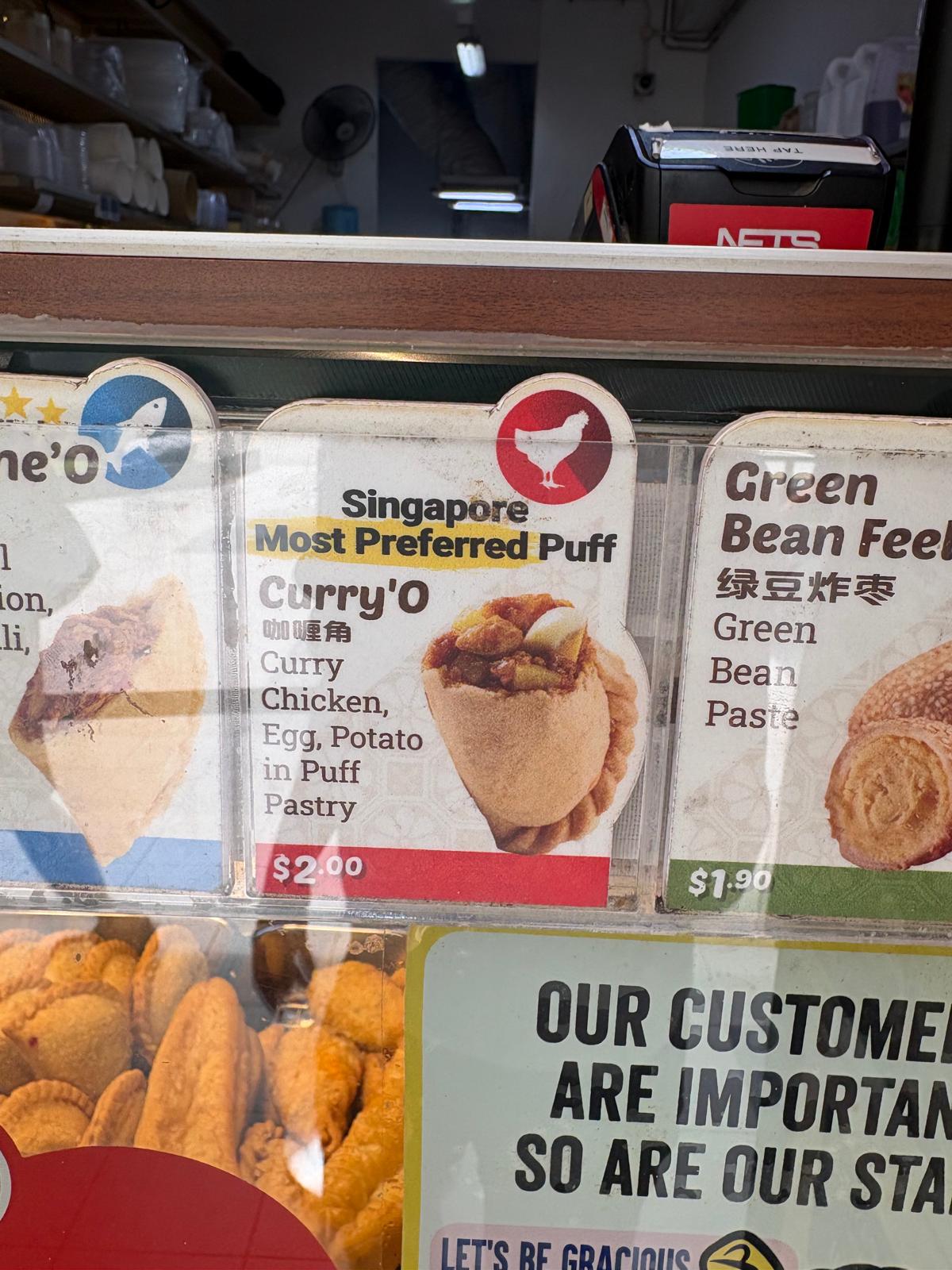
The displayed price of a Curry’O was $2
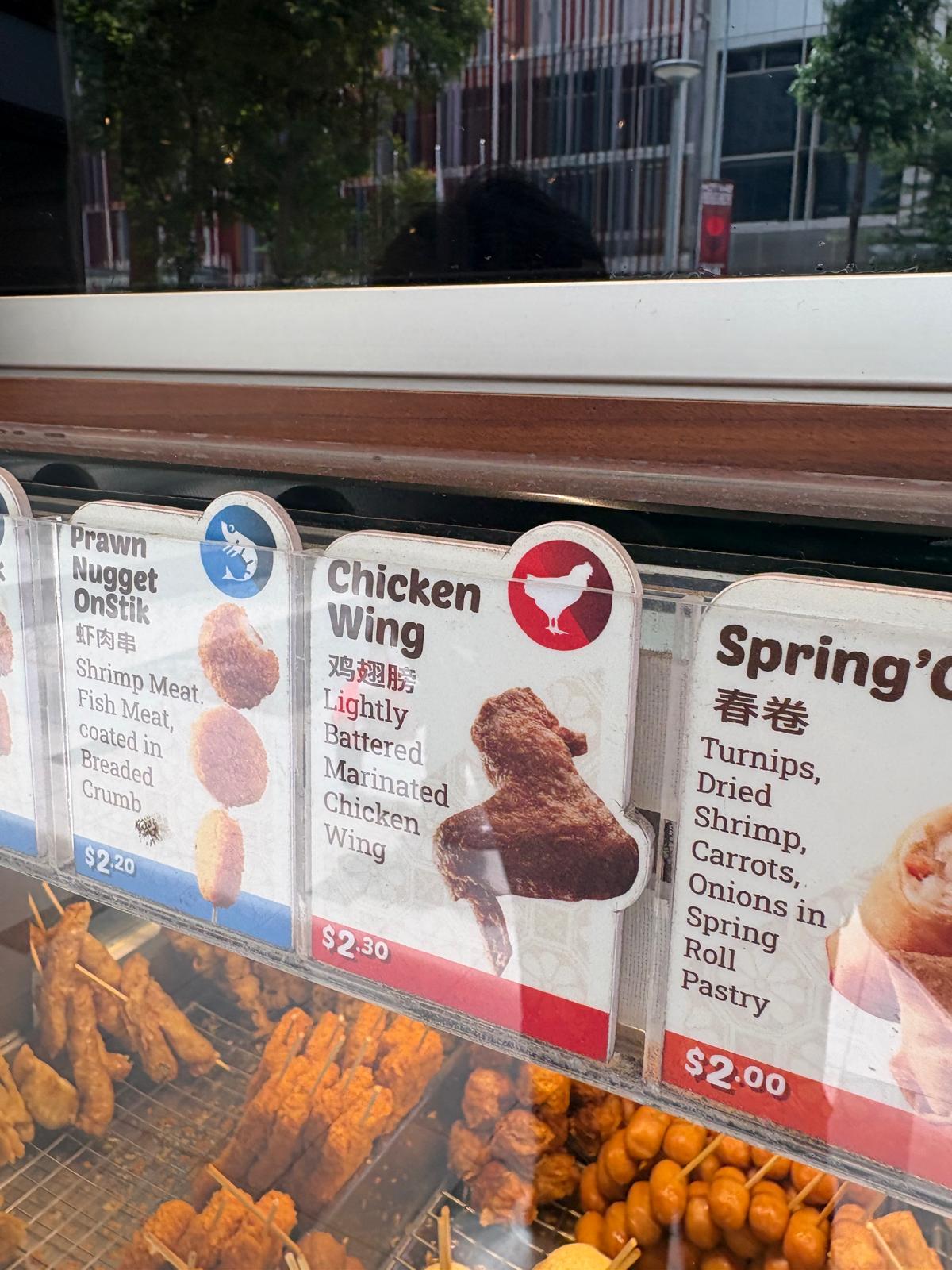
The displayed price of a chicken wing was $2.30.
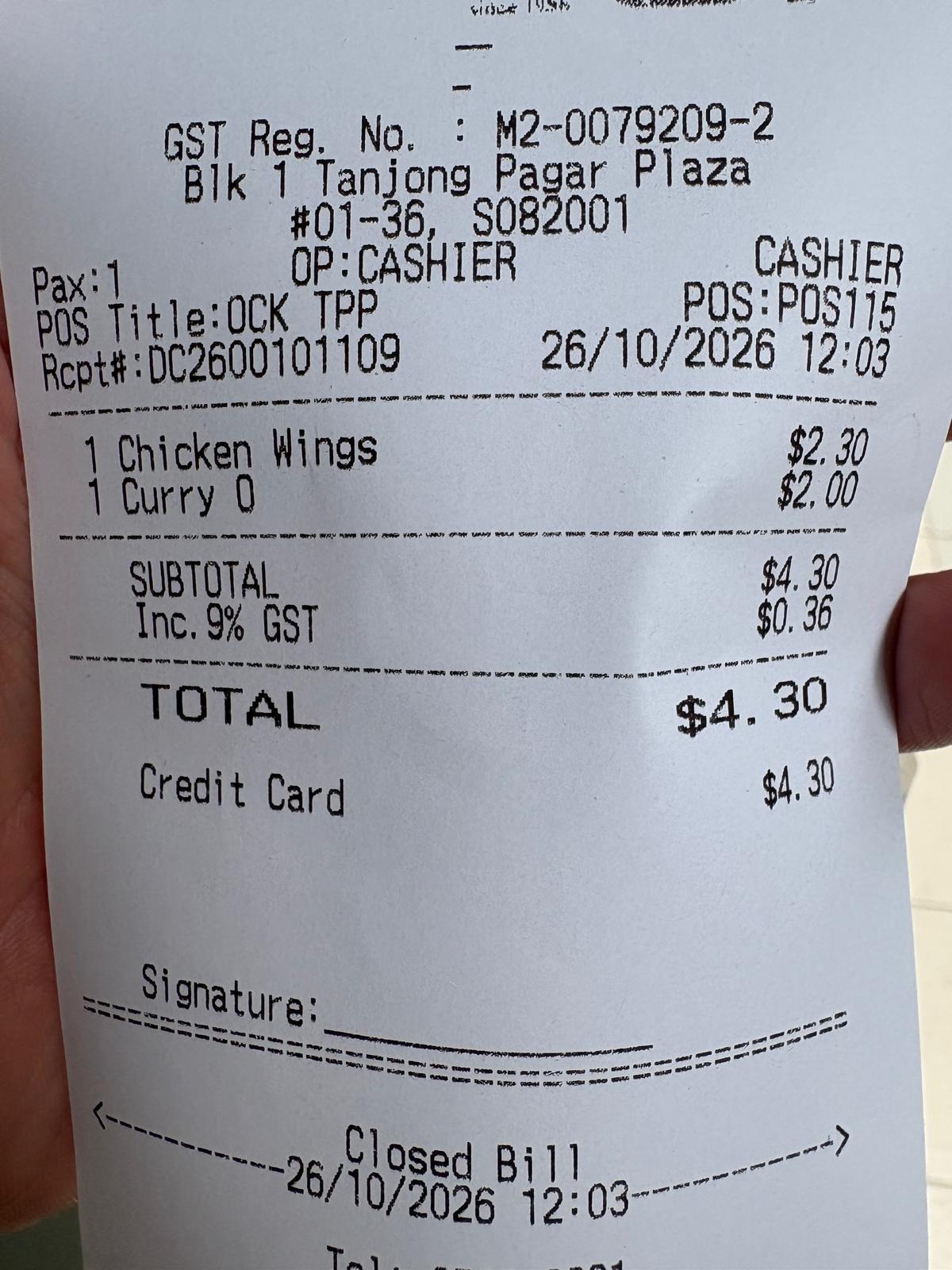
Our receipt dated 26 October 2026 shows a total of $4.30 for one curry puff and one chicken wing, inclusive of GST.
From 2024 to 2026, hawker and fast food prices rose by approximately 2.1% and 2.8% per year, respectively, compared with about 3.7% for our Old Chang Kee combo.
Why Do Old Chang Kee Prices Seem To Track Inflation Quite Well?
We believe this overly simple yet relatable method offers an easy way to observe and explain inflation—especially when it comes to something we all care about: food prices.
First, Old Chang Kee is a popular, well-loved brand in Singapore, known for offering affordable snacks across its outlets. Because it operates on a high-volume, fast-turnover model, its prices need to stay accessible to the average Singaporean. This means that even when prices naturally increase due to inflation, they tend to be gradual and justifiable.

For example, in 2006, it was reasonable for me to pay $1 to satisfy my curry puff cravings. In 2026, $2.30 has become the new $1, more expensive nominally, but still a reasonable amount.
This makes Old Chang Kee’s pricing a surprisingly useful way to track inflation in cooked food at the everyday consumer level. I think you can use any of Old Chang Kee’s traditional favourites (Spring rolls, Fish balls, Carrot cake), and you will find a similar result on how much prices have increased.
Secondly, food prices aren’t just about ingredient costs. Old Chang Kee also faces rising rent and labour costs. In its financial results for the year ended 31 March 2026, the company highlighted rising raw material, labour, and prime-location rental costs as continuing concerns.
Of course, this is by no means a scientific way to measure inflation. Interestingly, the Old Chang Kee Index reasonably tracks Singapore’s inflation rate well. The key caveat? The Consumer Price Index (CPI) includes items like telecommunication equipment and clothing, which declined in price in 2024. While these items help lower overall CPI inflation, they don’t make your curry puff or chicken wing any cheaper.
In the years ahead, we’ll continue keeping an eye on our non-scientific Old Chang Kee Index as a light-hearted yet practical way to track inflation in Singapore—one curry puff at a time.
Advertiser Message


