

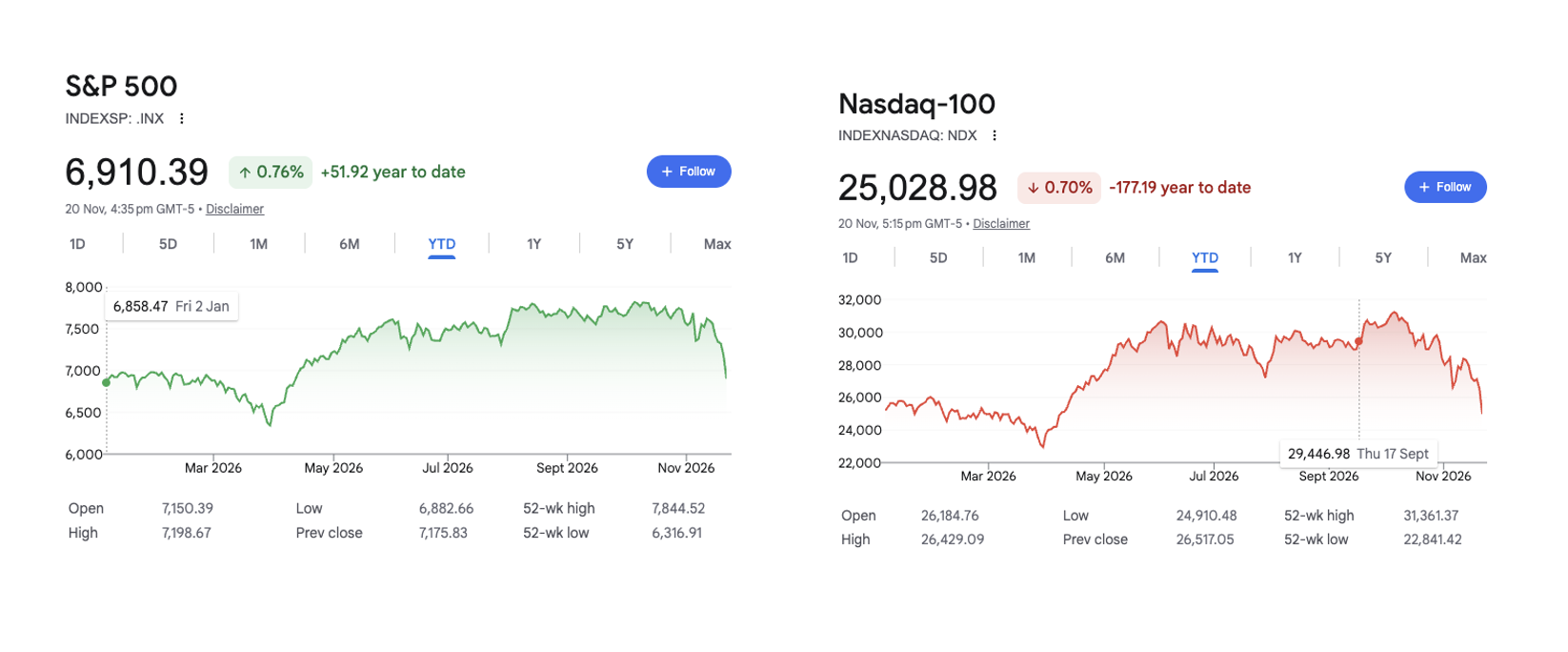
For much of 2026, it seemed like anything associated with artificial intelligence (AI) was a good investment. From semiconductor companies and AI software developers to data centre operators and energy providers, investors poured money into businesses that stood to benefit from the AI revolution.
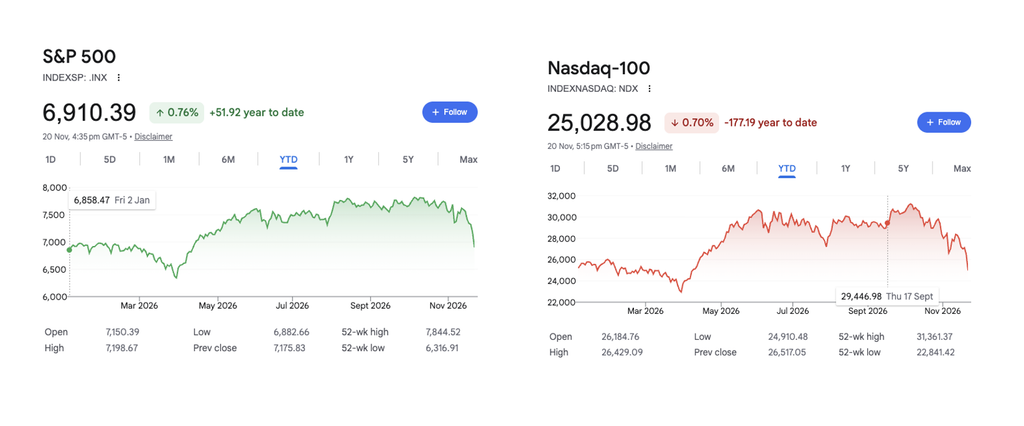
The past few weeks, however, have been a painful reality check. The S&P 500 has given up almost all its 2026 gains, while the technology-heavy Nasdaq-100 has fallen into negative territory for the year.
Ironically, this comes in the same week that Anthropic, the company behind Claude, made its highly anticipated stock market debut. Despite initially surging above its IPO price, the company’s shares fell 8.5% on its second day of trading. It’s now trading at around USD 88, up from its USD 83 IPO price.
Beyond the stock market, AI may also be contributing to slower job growth. Retrenchments have increased in Singapore despite strong GDP growth, while job cuts have continued at major companies worldwide. While not all these job losses can be attributed to AI, it’s worth asking whether the promise of greater productivity through AI is making businesses less reliant on hiring more workers and more willing to invest in technology instead.
For much of the past two years, investors have benefited from this shift even as some workers have lost their jobs. But with AI stocks now tumbling, could both investors and workers find themselves on the losing end of the AI revolution, at least in the short term?
Could The AI Boom Follow The Same Path As The Dot-Com Bubble?
For those old enough to remember the dot-com bubble, some of what we are seeing today may feel familiar.
In the late 1990s, investors were extremely bullish about the internet. Companies that positioned themselves as “internet” or “dot-com” businesses enjoyed soaring valuations, sometimes even before they had established commercially viable business models.
We know how that story ended.
When the dot-com bubble eventually burst, billions of dollars in shareholder wealth were wiped out, and many internet companies went out of business.
Yet the dot-com bubble’s burst did not stop the internet’s growth. Over the next two decades, the internet became an integral part of our daily lives, transforming how we work, communicate and consume information. It also gave rise to some of the world’s most valuable companies today.
In other words, investors were not necessarily wrong about how transformative the internet would be. However, many were simply too optimistic about how quickly businesses could monetise it and how much these businesses were worth at the time. They simply FOMO-ed.
Could We Be Seeing Something Similar With AI Today?
Even if the AI bubble bursts, AI adoption will likely continue to accelerate, both in our daily lives and in the workplace. Businesses that successfully navigate this evolution could become more productive, while the technology fundamentally changes how we live, work, communicate and even think.
None of these outcomes, however, guarantees that investors buying AI stocks at today’s valuations will enjoy good investment returns. In fact, some of the biggest AI companies of the future may not even exist today.
When the dot-com bubble burst in 2000, Google was still a young start-up, while Facebook had yet to be founded. Today, both are among the world’s most valuable companies.
Perhaps the biggest winners of the AI revolution will be neither the companies investors are rushing to buy today nor this generation of workers experiencing it.
Read Also: The Finance World Is Championing AI, But Are We Embracing A Friend Or A Foe?


Bonds and Fixed Income
6 Investments In Singapore That Provide Guaranteed Principal And Returns


