
The launch of the Future of Finance Institute (FFI) earlier this month marks an important milestone in Singapore’s efforts to remain at the forefront of global finance. Established by the Monetary Authority of Singapore (MAS), the institute brings together regulators, banks, technology firms and researchers to accelerate the adoption of emerging technologies across the financial sector. At the Singapore FinTech Festival 2026 (SFF 2026), FFI also announced DBS, OCBC, Standard Chartered and UOB as its launch partners, signalling a collective effort by both the public and private sectors to shape the next phase of financial innovation.
For many Singaporeans, however, discussions about artificial intelligence, tokenisation and digital financial infrastructure can feel disconnected from everyday realities. Most people are far more concerned about household budgets, investing, and daily transactions.
It therefore makes sense to see these initiatives in light of what they are trying to solve. They address longstanding inefficiencies in the financial system and prepare for a future in which money, payments, and financial services become increasingly digital, connected, and intelligent. The initiatives now under the Future of Finance Institute’s umbrella ultimately aim to make financial services faster, safer, and more accessible for consumers and businesses alike.
Building The Financial Infrastructure Of The Future
Many of the most significant developments in finance occur far from the consumer-facing products we interact with every day. Much like a transport network determines how efficiently people travel without passengers needing to understand how roads and signalling systems work, financial infrastructure shapes how quickly, securely and efficiently money moves through the economy.
Despite Singapore’s reputation as a leading financial centre, financial transactions still encounter significant friction. Money and assets frequently move across institutions, markets and jurisdictions that operate on different systems. Information must be reconciled across multiple platforms, while international transactions often involve additional complexity and cost.
Read Also: Why China Is Taking Action Against Offshore Brokers Like Futu, Tiger Brokers & Longbridge
One such initiative is Project Guardian, which explores how asset tokenisation can improve the efficiency of financial markets. While tokenisation is often associated with cryptocurrencies and digital assets, the broader objective is much less speculative. The project seeks to reduce duplication, improve liquidity, and enable transactions to occur more efficiently across different institutions and markets. In practical terms, more efficient financial markets may ultimately translate into lower operational costs and greater accessibility for investors, even if consumers never interact directly with the underlying technology.
The same philosophy underpins Global Layer One (GL1), which seeks to establish common standards for future digital financial networks. Just as the internet became transformative when different networks could communicate using shared protocols, GL1, and the organisation that launched in November around this initiative, aims to foster similar interoperability across financial systems. This reduces the risk that future digital markets become fragmented into disconnected networks. If tokenised assets become more common in the years ahead, this ability for systems to work together seamlessly may prove just as important as the technology itself.
Making Cross-Border Finance Simpler
A recurring theme across many of Singapore’s financial innovation efforts is the need to improve cross-border financial activity.
This reflects Singapore’s position as a global financial and trading hub. Businesses transact internationally every day, investors allocate capital across markets, and consumers increasingly make purchases from overseas merchants. Yet the infrastructure supporting global financial activity often remains slower and more fragmented than its domestic equivalent.
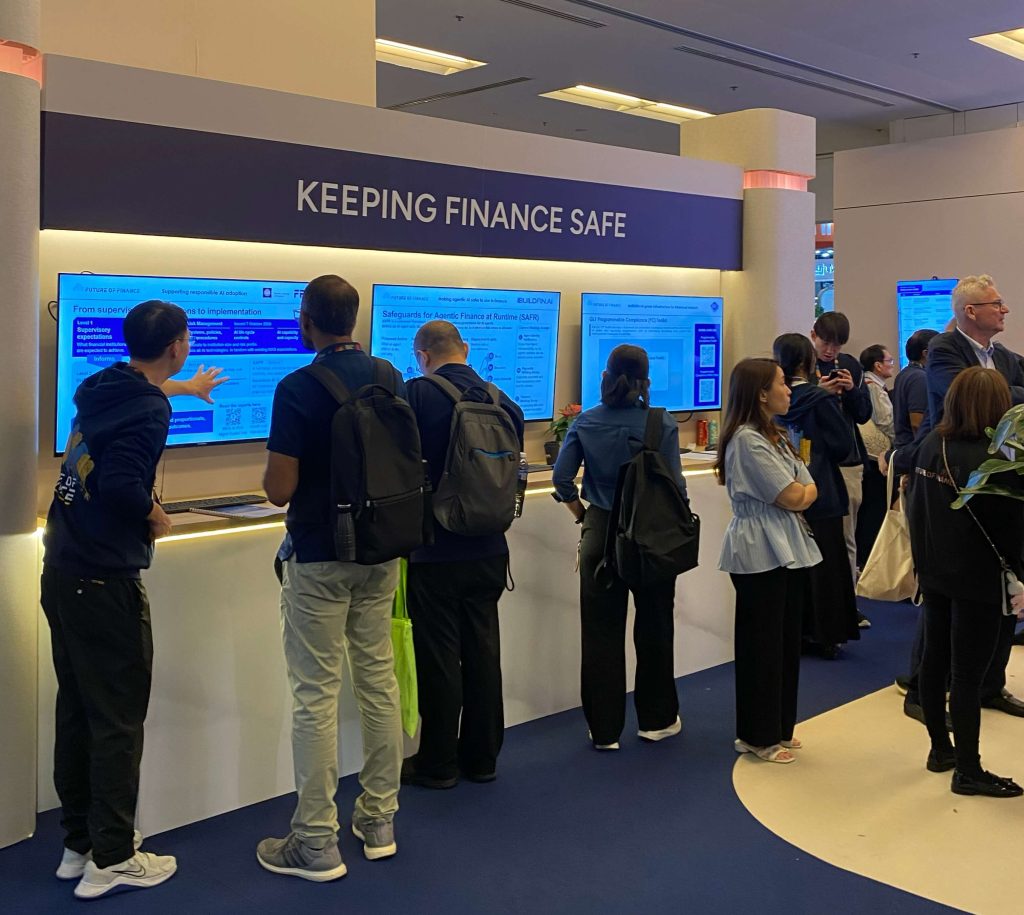
BLOOM, short for Borderless, Liquid, Open, Online and Multi-currency, aims to address this challenge by developing next-generation settlement infrastructure that can support different forms of digital money. Rather than focusing solely on speed, the initiative seeks to create common frameworks that allow institutions operating across different markets and systems to transact more efficiently.
Read Also: What Are CBDCs & Stablecoins, And How They’re Changing The World Of Payments
Project Meridian FX APAC and Project Simbolon tackle similar challenges from different angles. Meridian FX APAC explored ways to make foreign exchange settlement safer and more efficient, while Simbolon examined how independent settlement infrastructures in Singapore and Germany could work together without relying on a single governing platform.
If successful, these projects could eventually contribute to faster international payments, lower transaction costs and more efficient movement of capital across jurisdictions.
Establishing Singapore As A Leading Innovator Of AI In Finance
While tokenisation and digital infrastructure have attracted considerable attention, artificial intelligence may ultimately have a more direct impact on how people experience financial services. In his keynote speech at the SFF 2026 on Wednesday, Deputy Prime Minister Gan Kim Yong announced “three National AI Missions for Financial Services: strengthening financial crime prevention, improving access to financing, and enabling safe agentic transactions.”
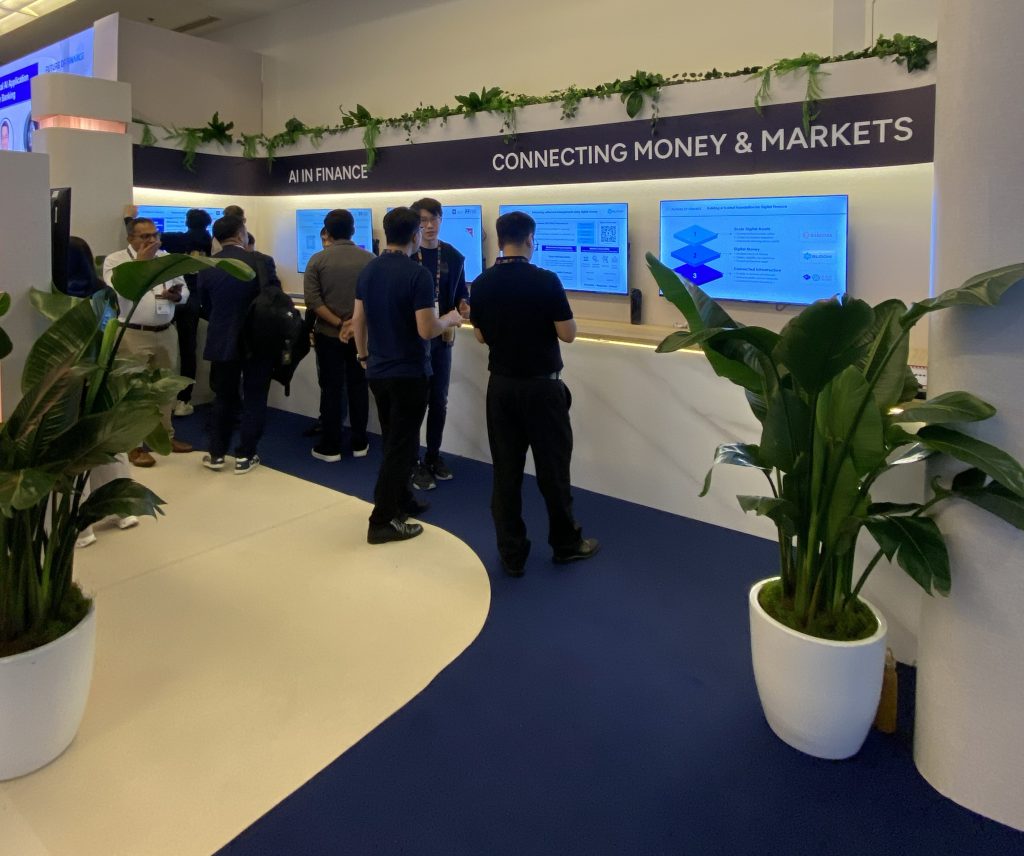
This is reflected in the Future of Finance Institute’s initial focus on AI through initiatives such as PathFin.ai, BuildFin.ai, SafeFin.ai and Project MindForge.
Read Also: Governing AI: How MAS Is Ensuring Responsible Use of Gen AI in Finance Through Project MindForge
PathFin.ai seeks to identify and validate practical AI applications across the financial sector, recognising that the challenge is no longer determining whether AI can be useful, but understanding where it can deliver meaningful value. BuildFin.ai focuses on developing the tools, standards and frameworks necessary to support AI adoption across the industry. Together, they aim to accelerate innovation while ensuring institutions can learn from one another rather than developing solutions in isolation.
Equally important are SafeFin.ai and Project MindForge, which focus on governance, risk management and responsible AI deployment. As AI becomes more deeply embedded in financial services, questions surrounding transparency, reliability and accountability become increasingly important. Consumers may be comfortable interacting with AI-powered financial tools, but only if they trust the systems operating behind them.
Many of these initiatives are also laying the foundations for what MAS describes as agentic finance, where AI systems can move beyond providing information to carrying out certain financial tasks within predefined limits. Future applications could include monitoring risks, optimising payments, comparing financial products or executing routine transactions. Such capabilities remain in their early stages, but they offer a glimpse of how financial services may evolve over the coming decade.

The Future Of Finance May Ultimately Become Invisible
By bringing these several projects under the umbrella of the Future of Finance Institute, they form part of a coherent strategy to modernise the foundations of finance here in Singapore.
What is particularly striking is that the success of these initiatives may eventually render them invisible. We are unlikely to think about interoperability standards when making an international payment, or AI governance frameworks when interacting with a digital financial assistant. Just as few people consider the infrastructure underpinning PayNow or contactless payments today, future innovations may simply become part of the background.
The real measure of success will not be how sophisticated these technologies become, but whether they make financial services meaningfully better. Perhaps payments will become faster and cheaper, and scams and fraud could become easier to prevent. Perhaps financial services will become more accessible and more personalised. These are all possibilities for the future of finance here in Singapore and beyond.


Family Planning
Price Guide To Chinese Enrichment Classes In Singapore


Bonds and Fixed Income
6 Investments In Singapore That Provide Guaranteed Principal And Returns


