

In Singapore, our digital infrastructure is a source of immense convenience in our everyday life. It allows us to do many things with just a few taps, from claiming government benefits like CDC Vouchers online to tracking our parcels on platforms like Shopee, Taobao, Lazada, and Amazon. Unfortunately, this very convenience has become fertile ground for scams. Recent advisories from the Singapore Police Force reveal how fraudsters exploit government payouts and courier notifications to trick victims into surrendering sensitive information.
These scams may appear distinct, but they share a common thread: they prey on trust, urgency, and routine behaviour. Understanding how they work is the first step toward protecting ourselves.
How The Fraudulent Telegram Message Scam Works
The first scam revolves around fraudulent messages impersonating official communications about the GST Voucher scheme. Victims receive Telegram messages using the legitimate infographics created by government agencies, claiming they are eligible for payouts. These messages often accompanied by links to websites that mimic government portals.
The deception lies in the presentation. The messages adopt the authoritative tone of government agencies, using legitimate government nomenclature such as “gov.sg” and the Ministry of Finance logo. By dangling the promise of financial benefits, scammers exploit both trust in public institutions and the somewhat familiar process of claiming similar entitlements like LifeSG Credits and CDC Vouchers.
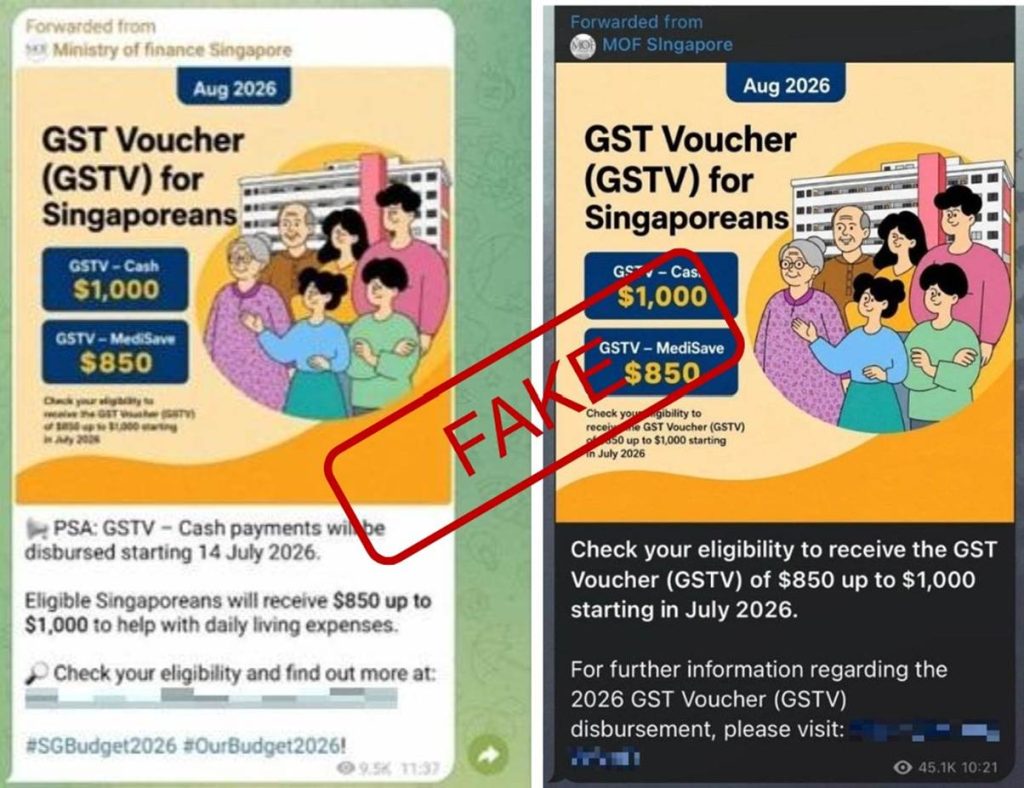
Source: Singapore Police Force
Once victims click the link, they are directed to phishing websites designed to harvest personal details including mobile numbers, names and NRIC numbers. These sites often look convincing, with familiar layouts and official-sounding instructions. Some even go so far as to request Telegram verification codes, allowing the scammers to take over Telegram accounts and spread the same phishing links to the victim’s contacts, exploiting the victim’s own goodwill on top of the official, authoritative tone of the fraudulent messages.
The scam is particularly insidious because it weaponises a combination of Singaporeans’ trust in the government and a familiarity with other similar but distinct digital government services. Unlike CDC Vouchers, GST Vouchers are automatically disbursed every year, without needing any action on our part. These scammers therefore exploit that difference between the two schemes.
As per the Police advisory, you will NEVER be asked to disclose personal credentials or bank log-in details to claim your GSTV – Cash and MediSave payments. Eligible citizens who have previously signed up for the GSTV scheme will automatically receive the payments. The SMS notification from “gov.sg” will only inform you of your benefits. You will not be asked to reply to the SMS, click any links, or provide any information to the sender.
How The Failed Delivery Notification Scam Works
The second scam targets another everyday habit: online shopping. Victims receive SMS or email messages claiming that a parcel delivery has failed or that additional payment is required to release a package.
These messages are similar to the kind of routine notifications many Singaporeans receive from courier companies, such as NinjaVan or J&T Express. Unfortunately, the links provided lead to fake courier websites, where victims are asked to provide credit card details or personal information.
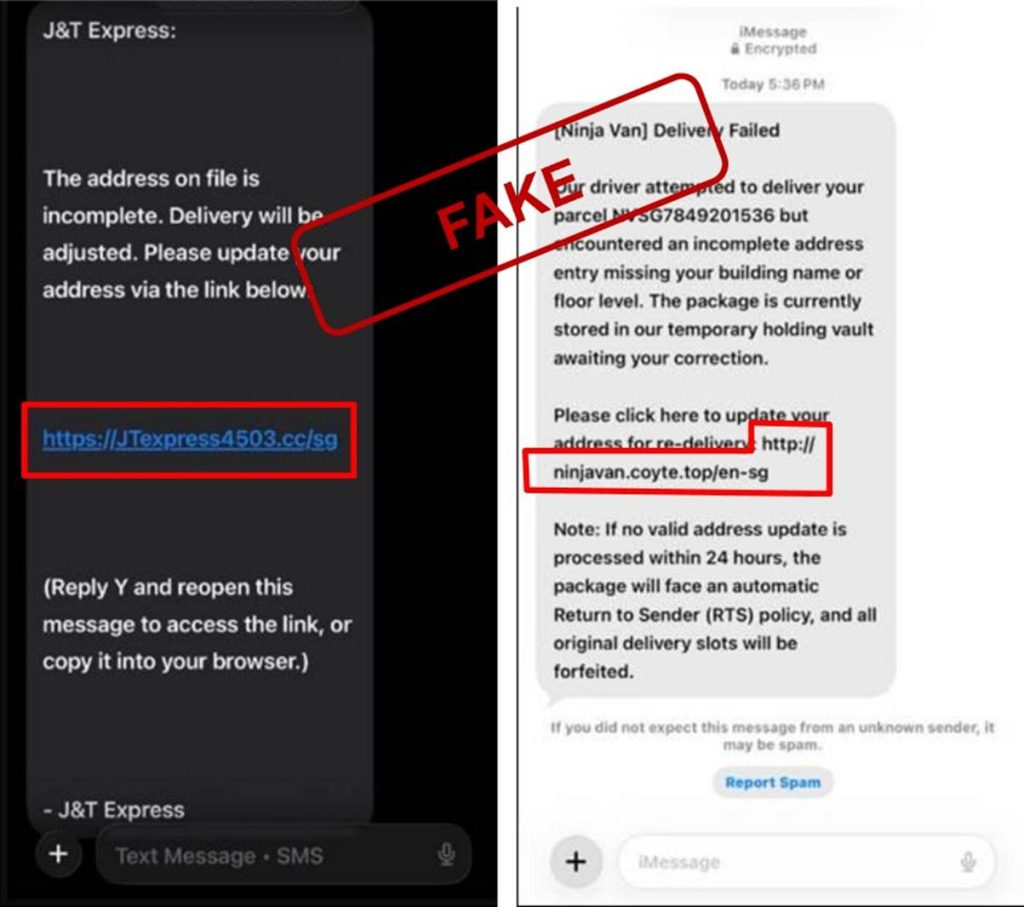
Source: Singapore Police Force
In some cases, a fraudulent “re-delivery fee” transaction with a nominal amount needs to be authorised. Inadvertently authorising this transaction opens the floodgates for more unauthorised transactions to be made to their cards or bank accounts.
The scam exploits the sheer volume of parcel deliveries in Singapore. With e-commerce firmly entrenched in daily life, it is easy for victims to assume that a failed delivery message is genuine. The urgency of “pay now to release your parcel” pushes victims to act quickly, bypassing the caution they might otherwise exercise.
What These Scams Share
Although one scam impersonates government agencies and the other courier companies, their similarities are striking. Both rely on impersonation of trusted institutions, whether it is the Ministry of Finance or a familiar delivery service. Both use urgent, transactional language to pressure victims into immediate action. And both funnel victims to phishing websites designed to harvest sensitive data.
At their core, these scams are not about the specific message but about exploiting trust and urgency. They thrive on routine behaviours — checking government benefits or expecting parcel deliveries — and twist them into traps. The result is the same: account takeover, financial loss, and compromised personal data.
Read Also: Trusted Contacts And Safety Switch: How The Two New CPF Anti-Scam Security Measures Work
Protecting Yourself Against Digital Scams
Awareness is the most powerful defence. By recognising the tactics scammers use, individuals can avoid falling into their traps.
First, always verify the source. Government agencies will never send payout notifications via messaging platforms like Telegram or WhatsApp. Courier companies typically notify through official apps or verified SMS numbers. If a message arrives from an unfamiliar channel, treat it with suspicion.
Second, scrutinise URLs. Links with odd spellings, unfamiliar domains, or excessive characters are red flags.
Third, don’t click on unsolicited links. If you receive a message about a delivery or payout, go directly to the official website or app instead of following the link provided.
Fourth, use multi-factor authentication (MFA). Adding an extra layer of security to banking apps makes it harder for scammers to gain access even if they steal your password.
Finally, report suspicious messages. Calling 1800-255-0000, the Singapore Police hotline, or submitting them online via the ScamShield app helps authorities track evolving tactics and warn others.
Read Also: How The DBS/POSB Phishing Scam Works And How To Avoid Similar Online Scams


Family Planning
Cost Guide To International School Fees In Singapore


