
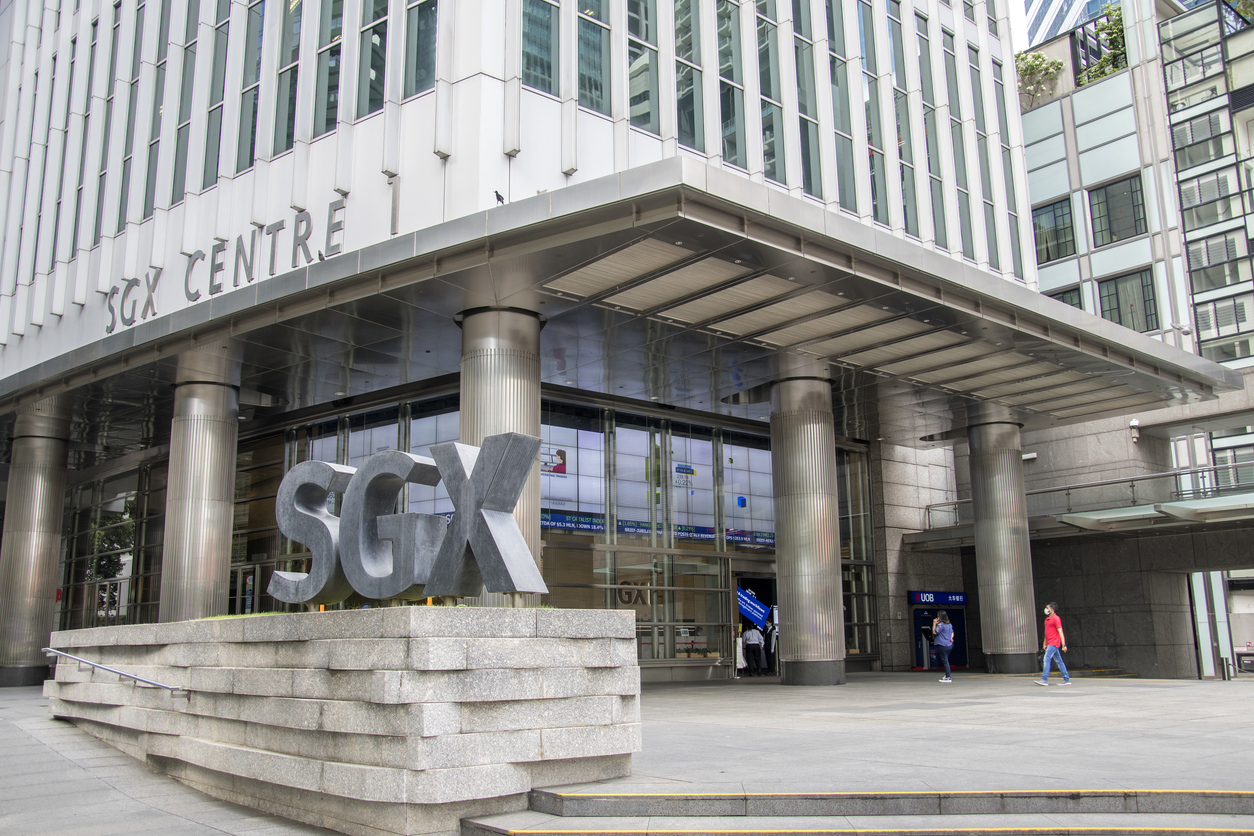
Singapore investors will soon have more options to invest in overseas markets through the Singapore Exchange (SGX), with European asset manager DWS bringing four exchange-traded funds (ETFs) from its Xtrackers platform to Singapore.
Scheduled to commence trading on 13 October 2026, the four ETFs will track the S&P 500, S&P 500 Equal Weight, Nasdaq 100 and MSCI World indices. All four will trade in Singapore dollars during SGX trading hours, giving local investors another way to access US and global equities without trading on overseas exchanges.
The ETFs are Irish-domiciled, allowing them to benefit from a reduced 15% withholding tax on US dividends received by the funds, compared to the standard 30% rate. They are also accumulating ETFs, meaning dividends are automatically reinvested rather than distributed to investors.
All four are eligible for investment using Supplementary Retirement Scheme (SRS) funds, subject to platform and investor eligibility requirements.
| ETF | SGX Ticker | Index Tracked | Annual TER |
| Xtrackers S&P 500 UCITS ETF | XUS | S&P 500 | 0.03% |
| Xtrackers S&P 500 Equal Weight UCITS ETF | EUS | S&P 500 Equal Weight | 0.15% |
| Xtrackers Nasdaq 100 UCITS ETF | XND | Nasdaq 100 | 0.20% |
| Xtrackers MSCI World UCITS ETF | XWR | MSCI World | 0.12% |
In this week’s edition of 4 Stocks This Week, we take a close look at each of these 4 ETFs.
Xtrackers S&P 500 UCITS ETF (SGX: XUS)
The Xtrackers S&P 500 UCITS ETF tracks the S&P 500 Index, which comprises 500 leading US-listed companies and covers approximately 80% of the US stock market’s available market capitalisation. Because the index is weighted by market capitalisation, larger companies account for a larger share of the portfolio.
As of August 2026, Nvidia was the largest constituent at 8.08%, followed by Apple at 7.03% and Microsoft at 5.69%. Together, these three companies accounted for approximately 20.8% of the portfolio, highlighting the influence that a handful of large technology companies have on the broader US market.
| Company | Weightage |
| Nvidia | 8.08% |
| Apple | 7.03% |
| Microsoft | 5.69% |
| Amazon | 3.84% |
| Alphabet (Class A) | 3.01% |
Technology companies accounted for 37.82% of the portfolio, followed by financials at 12.28% and communication services at 9.49%.
The ETF has an annual total expense ratio (TER) of just 0.03%, or about $3 in annual fund expenses for every $10,000 invested. This gives Singapore investors another low-cost option to invest in the S&P 500 through SGX.
Xtrackers S&P 500 Equal Weight UCITS ETF (SGX: EUS)
The Xtrackers S&P 500 Equal Weight UCITS ETF tracks the same 500 companies as the traditional S&P 500 but weights them differently. Instead of giving larger companies a greater weighting, it allocates each company equally when the index is rebalanced.
This reduces the portfolio’s reliance on mega-cap companies such as Nvidia, Apple and Microsoft. As of August 2026, Moderna was the ETF’s largest holding at just 0.58%, compared to Nvidia’s 8.08% weighting in the traditional S&P 500.
| Company | Weightage |
| Moderna | 0.58% |
| Veeva Systems | 0.33% |
| Zebra Technologies | 0.31% |
| Charles River Laboratories | 0.29% |
| DoorDash | 0.29% |
The difference is also reflected in its sector exposure. Industrials accounted for 16.00% of the portfolio, followed by financials at 15.91%, information technology at 14.67% and health care at 13.09%.
For investors concerned about the traditional S&P 500’s concentration in a handful of technology companies, the equal-weight ETF offers an alternative way to invest in the US market. However, it may underperform the traditional S&P 500 when the largest companies lead market gains, while its greater exposure to smaller constituents can introduce different risks.
The ETF has an annual TER of 0.15%, equivalent to approximately $15 in annual fund expenses for every $10,000 invested.
Xtrackers Nasdaq 100 UCITS ETF (SGX: XND)
The Xtrackers Nasdaq 100 UCITS ETF tracks 100 of the largest non-financial companies listed on the Nasdaq Stock Market, including some of the world’s leading technology businesses.
Compared to the S&P 500, the Nasdaq 100 has a much heavier concentration in technology-related companies. As of August 2026, information technology accounted for 58.51% of the portfolio, followed by communication services at 13.68% and consumer discretionary companies at 11.08%.
| Sector | Weightage |
| Information Technology | 58.51% |
| Communication Services | 13.68% |
| Consumer Discretionary | 11.08% |
| Consumer Staples | 6.22% |
| Health Care | 4.01% |
| Industrials | 3.58% |
| Others | 2.85% |
Its largest holdings included Nvidia at 8.52%, Apple at 7.42% and Microsoft at 6.01%, alongside companies such as Micron Technology, Amazon, Advanced Micro Devices and Alphabet.
The ETF provides exposure to businesses involved in artificial intelligence, cloud computing, semiconductors and other areas of technology. However, its concentration in these sectors also makes it more sensitive to developments affecting technology companies. Investors who already own an S&P 500 ETF should also be mindful of the overlap between the two indices, particularly among their largest holdings.
The Xtrackers Nasdaq 100 UCITS ETF has an annual TER of 0.20%, equivalent to approximately $20 in annual fund expenses for every $10,000 invested, assuming the investment value remains unchanged.
Xtrackers MSCI World UCITS ETF (SGX: XWR)
The Xtrackers MSCI World UCITS ETF tracks the MSCI World Index, providing exposure to large and mid-cap companies across developed markets. Unlike the other three ETFs, which focus on US-listed companies, this ETF lets investors diversify across multiple developed markets through a single fund.
However, the index is market-cap weighted, so large US companies continue to dominate its holdings. As of August 2026, its five largest constituents were the same as those of the traditional S&P 500, although their respective weightings were lower.
| Company | Weightage |
| Nvidia | 5.54% |
| Apple | 5.06% |
| Microsoft | 3.89% |
| Amazon | 2.74% |
| Alphabet (Class A) | 2.15% |
Information technology accounted for 29.73% of the portfolio, followed by financials at 16.55% and industrials at 11.09%.
For Singapore investors looking to diversify beyond the US, the MSCI World ETF provides exposure to developed markets without buying multiple country-specific ETFs. However, the index excludes emerging markets such as China and India, and its substantial exposure to US companies means considerable overlap with the S&P 500.
The ETF has an annual TER of 0.12%, equivalent to approximately $12 in annual fund expenses for every $10,000 invested, assuming the investment value remains unchanged.
Read Also: 4 REITs That Raised Over S$3 Billion In 2026 To Expand Their Property Portfolios
Photo Credit: iStock/tang90246


Family Planning
Cost Guide To International School Fees In Singapore


