
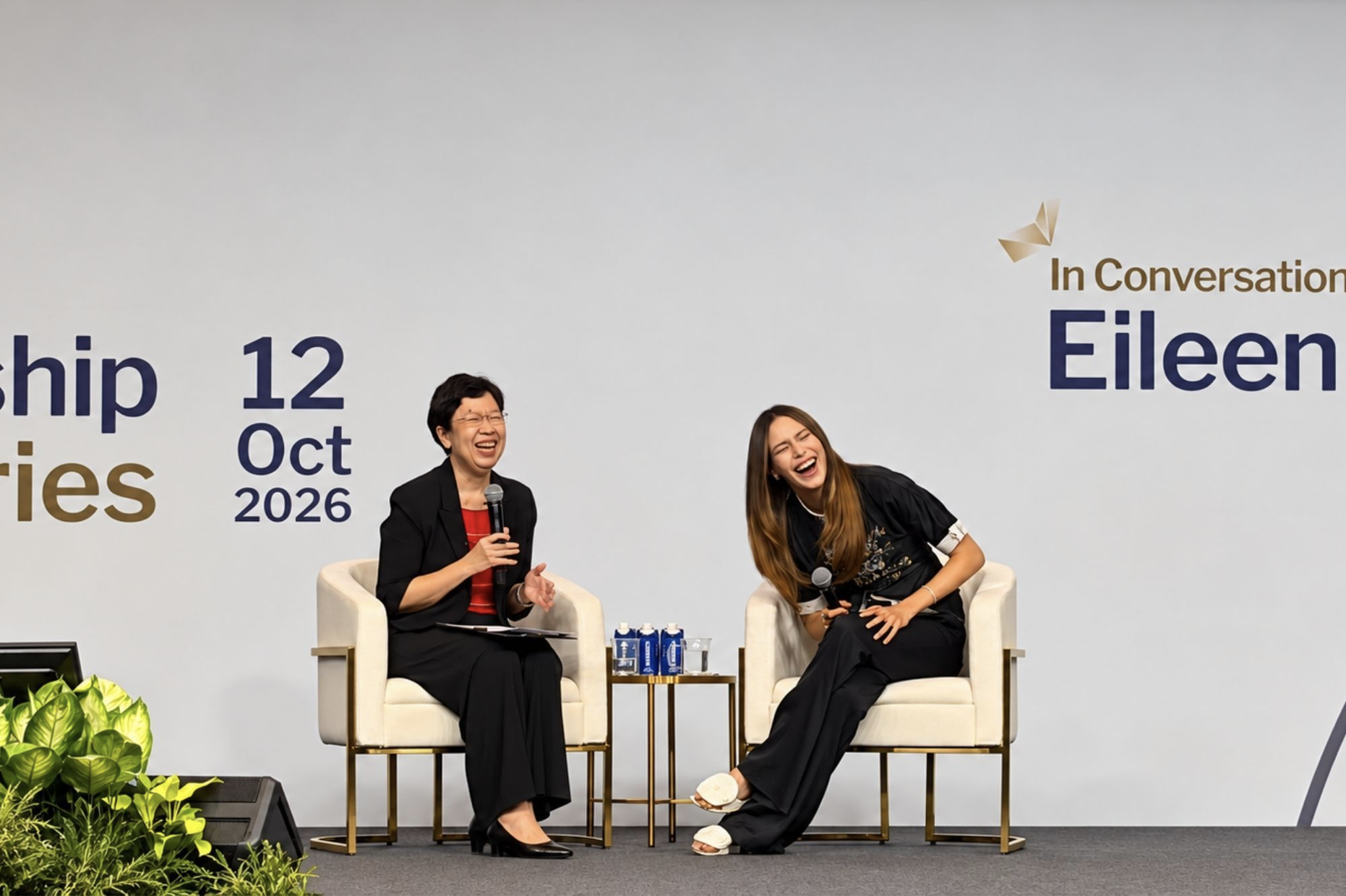
Most of us associate career progress with better salaries, promotions and greater responsibilities. But while we may spend years working towards these milestones, how often do we consider whether they are taking us in the direction we want to go?
At the Karim Family Foundation (KFF) Inspiring Women Leadership Series at Singapore Management University (SMU) on Monday (12 October 2026), Olympic freestyle skier Eileen Gu shared an observation that stood out to us at DollarsAndSense during her conversation with SMU President Professor Lily Kong.
“Actually, working hard is hard, but working hard is not as hard as finding the right direction.”
When asked what she would want to know from her future self, the 23-year-old Olympic champion explained that she already trusted her ability to work hard. What mattered more, at least to her, was understanding which experiences and observations would help her identify the right path to pursue.
For young working professionals, this is also an important question to ask ourselves. Beyond putting in the effort to do well at our current jobs, how do we decide which skills to develop, which opportunities to pursue, and which career goals are worth working toward?
Why Knowing How To Learn Can Take Us Further In Our Careers
During the conversation, Eileen was asked what advice she would give individuals who might not have access to the same opportunities or support systems that helped her succeed.
“I’m not good at skiing because I’m good at doing double corks. I’m good at skiing because I know how to learn,” she explained, emphasising the importance of resilience and adapting to unfamiliar situations.
Eileen also shared how reviewing videos of her skiing in slow motion helps her identify movements she might otherwise miss. How something feels while she is doing it can differ from what is actually happening.
In our own career, we should realise that the skills that make us good at our jobs aren’t always the ones that get us promoted. A marketing executive may excel at executing campaigns, but moving into management requires different capabilities, from leading teams and managing budgets to making strategic decisions.
Similarly, seeking feedback, reviewing project outcomes and understanding what could have been done differently can help us identify areas for improvement at work.
The ability to learn becomes especially important when changing careers, as we may need to develop skills that were not required in our previous roles. However, existing soft skills such as communication, problem-solving and stakeholder management can still be valuable in a different industry.
Rather than pursuing another qualification simply to improve our credentials, we could first identify the skills required for our next role and develop them through new assignments, cross-departmental projects or targeted training.
Career progression is not just about becoming better at what we already do but developing the skills needed to take on what comes next.
Not Every Promotion Or Career Opportunity Is Necessarily The Right Next Step
When discussing how she trains her mind, Eileen explained that she observes her responses to fear, doubt and pressure, while regularly examining what matters to her and the direction she wants to move in. She described this as a form of experimentation, where understanding her own responses helps her make more deliberate decisions.
For working professionals, this could mean looking more closely at what a promotion or new job involves, beyond the salary and title. An opportunity can look attractive on paper while taking us further away from the work we want to do.
Someone offered a managerial position might consider whether they enjoy coaching colleagues, handling difficult situations and being accountable for a team’s performance. These responsibilities are quite different from being recognised for excellent individual work. Being good at our current job does not automatically mean we will enjoy the next role above it.
Likewise, a higher-paying job at another company could involve a narrower scope of work or fewer opportunities to develop skills we want to build. The additional income may still make it worthwhile, but we should understand the trade-off before accepting.
Financial considerations matter, and choosing a better-paying role can be the right decision. The point is to understand what we are choosing: how our daily responsibilities will change, what experience we will gain and whether the opportunity supports our longer-term priorities.
Read Also: Year-End Bonus Or Promotion: Which Is Better For Your Career And Finances?
We Don’t Always Have To Take Big Risks To Try Something New
Eileen described how athletes use large airbag landing surfaces when practising difficult aerial tricks. These provide a safer alternative to landing on snow, allowing skiers to attempt manoeuvres that might previously have been considered too risky.

The same principle can apply when exploring a new career direction. We may not be able to remove the uncertainty, but we can find ways to test an unfamiliar path before making a major commitment.
A side project or freelance assignment, for example, can give us hands-on experience in a field we are considering. It allows us to move beyond liking the idea of the work and find out whether we enjoy doing it, including its less appealing demands.
Similarly, taking on a project outside our usual responsibilities can help us assess whether a different role suits us. The experience may confirm our interest, or reveal that the work is quite different from what we expected.
These experiments will not capture every aspect of a new career. However, they can give us useful information before we leave a job or commit substantial time and money to a change. Discovering that a path doesn’t suit us is also valuable, especially if we can learn that through a smaller commitment.
Career Progress Doesn’t Have To Look The Same For Everyone
Eileen was also asked about her philosophy of creating your own pond rather than competing in crowded ones.
“Stop looking at the other fish. It doesn’t matter,” she said, before adding, “Be your own fish.”
Her point was that success doesn’t always have to be measured against other people’s achievements, because everyone brings different strengths, experiences and perspectives.
The same applies to our careers. While some may aspire to leadership positions, others may prefer developing specialist expertise, exploring different roles or pursuing opportunities outside their current industry. Rather than constantly comparing salaries, job titles or promotions with our peers, perhaps we should focus on whether the opportunities we pursue are helping us build the careers we actually want.
Read Also: Year-End Bonus Or Promotion: Which Is Better For Your Career And Finances?


Family Planning
Cost Guide To International School Fees In Singapore


