

This article was written in collaboration with the Ministry of Trade and Industry (MTI). All views expressed in this article are the independent opinion of DollarsAndSense.sg based on our research, are purely for informational purposes, and should not be relied upon as financial advice. DollarsAndSense.sg is not liable for any financial losses that may arise from any transactions, and readers are encouraged to do their own due diligence. You can view our full editorial policy here.
Electricity bills are back in focus for many Singapore households in 2026.
After several years of energy price fluctuations and periodic tariff adjustments, some families are paying closer attention to how much they spend on utilities each month. For households already managing higher costs due to general inflation, an increase in electricity bills are another recurring expense that can add up quickly, especially for larger families or homes that rely heavily on air-conditioning.
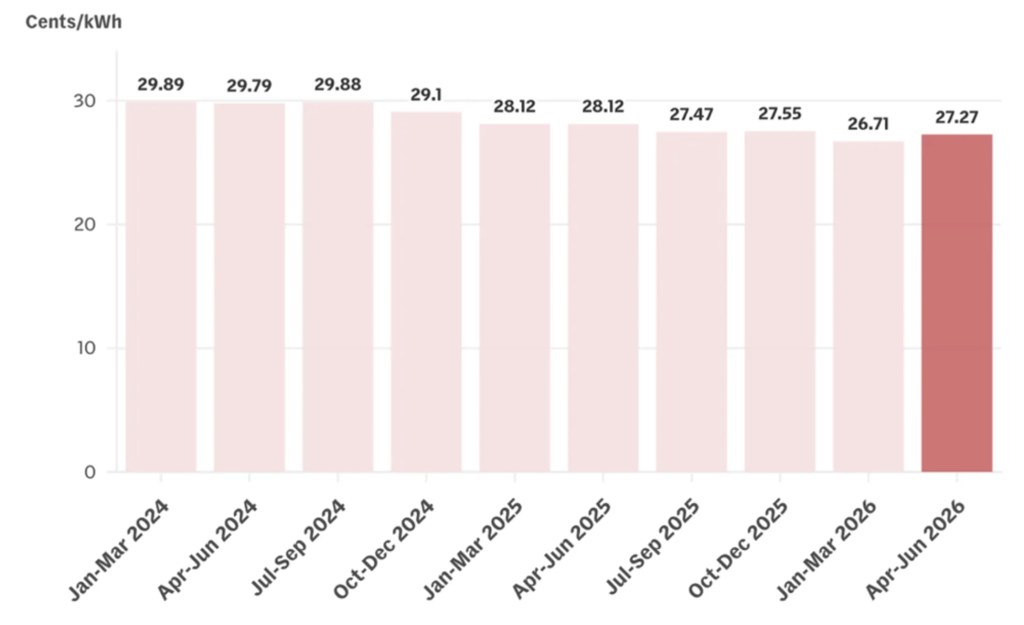
For the period of April to June 2026, the regulated electricity tariff has gone up to 27.27 cents/kWh, up from 26.71 cents/kWh the quarter before, excluding GST.
As such, some households in Singapore who are currently on SP Group’s regulated electricity tariff may wonder, should they switch to an electricity retail contract with a retailer in the Open Electricity Market (OEM) to save on electricity cost? And if they do, is it better to lock in a fixed price plan, or choose a floating rate plan (Discount Off Regulated Tariff Plan) instead?
Read Also: Complete Guide To Choosing The Best Open Electricity Market (OEM) Plan For Your Home
Singapore Households Are Not Limited To The SP Regulated Electricity Tariff
Today, households can choose from a range of electricity retailers and plan structures that best fit their lifestyle and preferences.
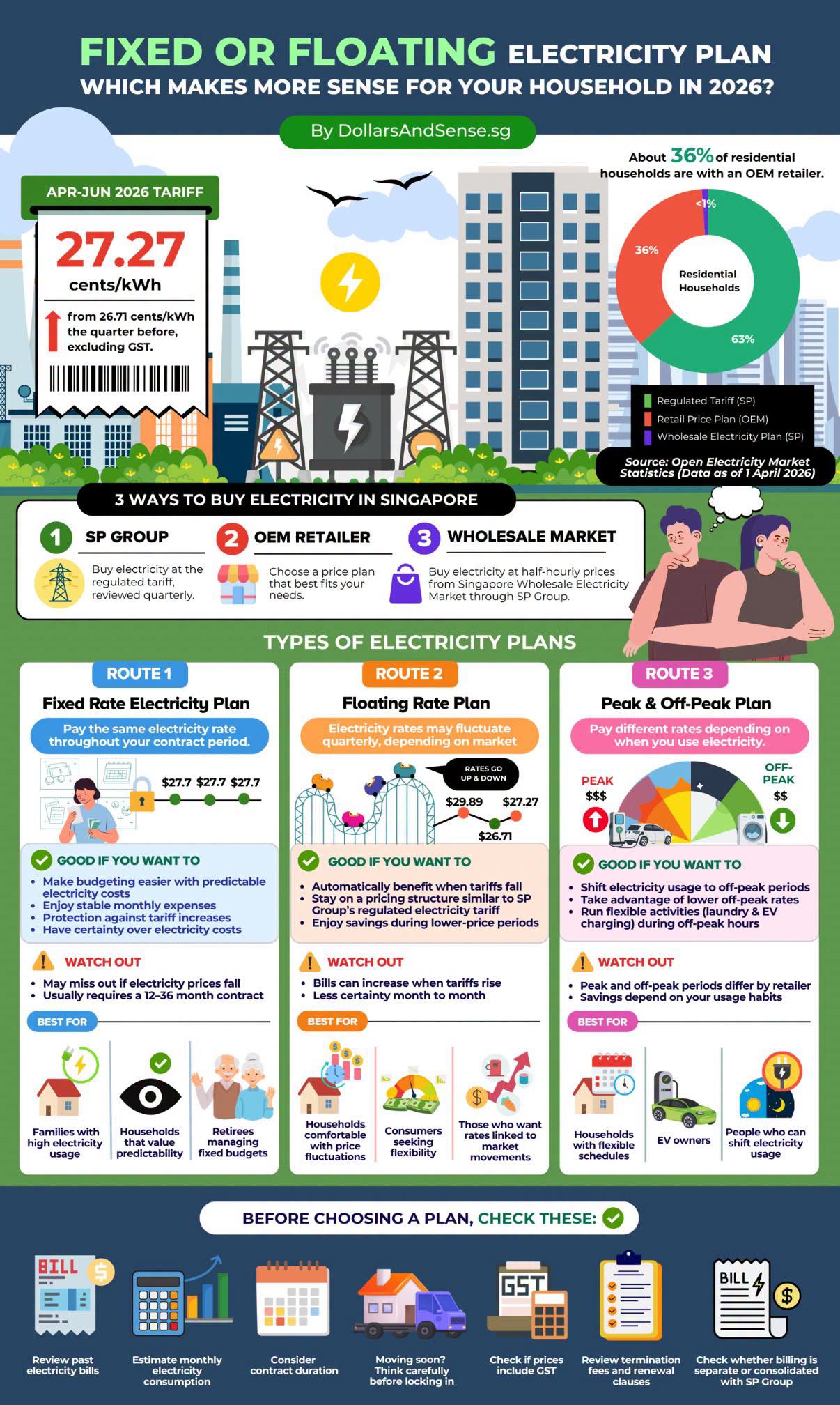
Singapore households broadly have three options. Residential consumers can choose to buy electricity from 1) SP Group at the regulated electricity tariff, which is reviewed quarterly, 2) an Open Electricity Market (OEM) retailer at a price plan (i.e. electricity retail contract) that meets their needs, or 3) Singapore Wholesale Electricity Market (SWEM) at half-hourly wholesale electricity prices (WEP) through SP Group.
Currently, about 36% of residential households are with an OEM retailer.
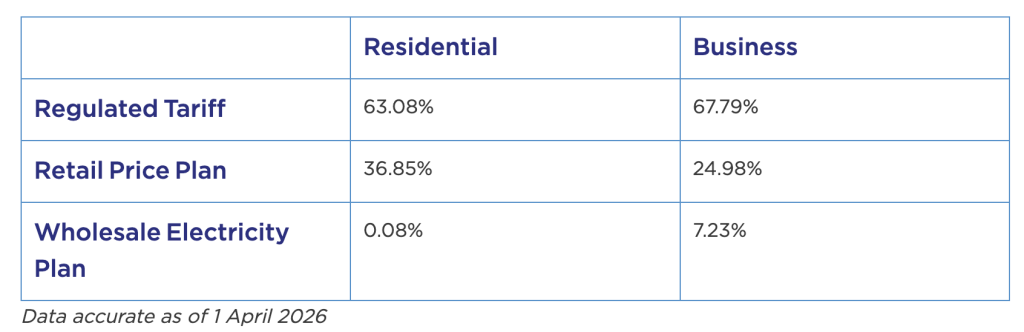
Source (Figures may not add up to 100% due to rounding)
The regulated electricity tariff itself is reviewed quarterly and can rise or fall depending on factors such as global fuel costs . This is partly why electricity plans have received more attention in recent years, as households look for ways to manage potentially higher utility costs.
Rather than focusing only on promotional discounts, consumers may benefit more from understanding how different plan structures work and what trade-offs each option involves.
What Is A Fixed Rate Electricity Plan?
A fixed rate electricity plan allows households to pay the same electricity rate per kWh throughout the contract period. This means that even if regulated electricity tariffs rise due to elevated fuel costs during the next 6 months, the household’s electricity rate remains unchanged for the duration of the contract. The duration of these contracts typically range from 12 to 36 months.
For many consumers, the biggest appeal of a fixed plan is predictability. Knowing exactly how much each unit of electricity will cost can make budgeting easier, particularly for households with consistently high electricity usage.
Fixed plans may also appeal to households that simply prefer having fewer variable expenses to manage each month. For retirees or families already juggling multiple financial commitments, stable recurring costs can provide additional peace of mind.
At the same time, fixed plans are not automatically cheaper in every situation. If the regulated electricity tariff falls during the contract period, households on fixed plans may only enjoy the lower market rates upon contract expiration or renewal.
What Is A Floating Rate Electricity Plan?
A floating rate electricity plan, also known as a “Discount Off Regulated Tariff Plan”, usually provides a discount off SP’s regulated electricity tariff .
This means that, similar to SP Group’s regulated electricity tariff, your electricity rate may fluctuate quarterly, depending on market conditions. Some households may find such plans reasonable, as they follow a pricing mechanism similar to the regulated electricity tariff they are already used to.
When the regulated electricity tariff falls, consumers on floating plans would automatically benefit from lower electricity rates without needing to switch contracts. However, floating plans also come with less certainty. During periods when the regulated electricity tariff rises sharply, monthly electricity bills may also increase.
For households that prefer predictable expenses, this uncertainty may be less appealing even if floating plans sometimes offer lower rates during certain periods.
Peak and Off-Peak Plans
A third option is to opt for peak and off-peak plans, also known as Time-of-Use plans. Peak and off-peak plans work differently because how much you pay for electricity prices vary depending on when you use electricity. Retailers define their own peak and off-peak periods and rates, typically with lower off-peak rates during evening hours and higher peak rates during daytime hours.
This means households that can shift more electricity usage, such as laundry, dishwashing or EV charging, to off-peak periods may enjoy lower overall electricity costs. For households choosing such plans, it’s important to check when are the peak and off-peak periods so that you can choose the plan that best fits your household needs.
What Households Should Consider Before Choosing A Plan
Before signing up for any electricity plan, it helps to first understand your household’s own usage patterns and priorities.
One useful starting point is reviewing past electricity bills to estimate monthly electricity consumption. Households with higher electricity usage may feel the effects of price changes more significantly than smaller households.
Contract duration is another important consideration. Certain plans may require commitments lasting one to three years. Households that anticipate moving homes or changing arrangements within the next few years may want to re-consider whether a longer lock-in period suits their needs.
Beyond pricing, there are also smaller details that matter. Promotional discounts may only apply temporarily, while some plans may include early termination fees or conditions tied to rebates. Consumers should also check whether advertised prices already include GST and whether billing is handled separately or consolidated with SP Group.
There Is No Single “Best” Electricity Plan
Choosing between a fixed or floating electricity plan from a retailer ultimately depends on the household itself.
Some consumers prioritise stability. They may prefer knowing their electricity costs in advance, even if it means potentially paying slightly more during periods where market prices fall. Other consumers may prioritise flexibility instead. They may be comfortable with occasional price movements in exchange for the possibility of benefiting when electricity prices decline.
What matters more is understanding how each option works and choosing a plan that matches the household’s own spending habits and comfort level with changing prices.
For households that have remained on the regulated electricity tariff for years, this may be a useful time to review whether their current arrangement still suits their needs.
Before making a switch, consumers should carefully compare available plans, review the terms and conditions, and assess which option best aligns with their household priorities.
Households can also review the Fact Sheets available on retailers’ websites and the Energy Market Authority’s (EMA) Price Comparison Website. EMA requires retailers to publish their Standard Price Plans and to honour them. These Fact Sheets set out key terms, including GST-inclusive rates, whether the contract includes automatic renewal, and any applicable early termination charges.
Read Also: What Are The Factors That Contribute To Electricity Tariffs Rising In Singapore?
Photo Credit: iStock/Kandl


Street Smart
Singapore Gym Membership Price Guide (2026 Edition)


