

For many Singaporeans approaching retirement, living overseas shifts from a vague aspiration to something worth serious consideration. Not only is the cost of living in a neighbouring country much lower, but the cherry on top is the CPF LIFE payout that arrives every month from age 65, regardless of where you live. This will go a lot further in Penang, Chiang Mai, or Da Nang than it does in Singapore. But how far does it actually go?
What Does The CPF FRS Cover?
If you turn 55 in 2026 and set aside the Full Retirement Sum of $220,400 in your CPF Retirement Account (RA), your estimated monthly payout is approximately $1,780 for men. That figure comes directly from the CPF Board and assumes you are on the CPF LIFE Standard Plan and start payouts at 65, with your CPF RA continuing to earn interest at rates up to 6%.
When you turn 65 in 2036 and your payouts begin, it’s possible that $1,780 a month won’t go far in Singapore. It should cover basic expenses but is unlikely to cover leisure, healthcare, or a financial buffer if something goes wrong.
The question then becomes whether $1,780 a month is enough to live comfortably across Southeast Asia, and the answer varies depending on where you go and how you live. But before getting to that, there is a piece of the puzzle that many people overlook: what happens to your HDB flat.
Read Also: Thinking Of Retiring Overseas? 7 Places Singaporeans Can Consider
Renting Out Your HDB Flat While You’re Away
If you own an HDB flat that has completed its Minimum Occupation Period (MOP), you have options. The most straightforward one is to rent out the entire flat while you live overseas. Singapore Citizens (SCs) can rent out a whole HDB flat after MOP. Permanent Residents (PRs) cannot rent out an entire flat, but both SCs and PRs can rent out individual rooms while continuing to reside in the flat.
For a retiree heading overseas who wants to keep a toehold in Singapore, a middle path worth considering is renting out the two common bedrooms of your 4-room or 5-room flat while keeping the master bedroom for yourself whenever you’re back home. This gives you a Singapore base to return to and still generates meaningful, regular rental income.
In 2026, HDB common rooms typically rent for $800 to $1,300 per month, depending on location, furnishing, and proximity to MRT stations. Two common rooms renting at $900 each would generate $1,800 a month in gross rental income. After factoring in occasional vacancies, minor maintenance, and utilities, a realistic net figure might be closer to $1,500 to $1,600 a month. That is almost equivalent to a second CPF LIFE payout arriving in your account each month. Combined with $1,780 from CPF LIFE, a retiree in this position would receive a respectable gross monthly income of around $3,200 to $3,400. The question now is what that amount buys across three different destinations.
Malaysia: Johor Bahru, Penang
Malaysia is the easiest option logistically and the most familiar culturally for many in Singapore. Johor Bahru (JB) is twenty minutes from Woodlands by car. Penang is a two-hour flight or an overnight bus ride. Both have private hospital infrastructure, a large Singaporean and Malaysian Chinese community, and food that overlaps enough with home to feel familiar immediately.
A comfortable single person’s monthly budget in JB covers a furnished one-bedroom apartment for around RM 1,800 to RM 2,500 ($570 to $790), food, private health insurance, transport, and a reasonable leisure budget. At current exchange rates, the CPF LIFE payout of $1,780 translates to approximately RM 5,640.
That sum, before any HDB rental income, is more than enough to live well in JB and build a savings buffer on top. In Penang, costs are slightly higher. A comfortable couple in George Town might spend RM 6,000 to RM 9,000 per month on rent, food, transport, and incidentals. A single retiree on RM 6,000 would live comfortably. Adding the rental income from Singapore to the CPF LIFE payout makes even Penang, the more expensive Malaysian option, very manageable.
The main qualification is the visa. The Malaysia My Second Home (MM2H) programme, the standard long-stay visa for foreign retirees, requires a minimum fixed deposit as well as a property purchase – the higher the fixed deposit amount and the value of the property purchased, the longer the visa duration. The Sarawak-specific S-MM2H variant has more accessible terms and is worth investigating separately if the standard MM2H is out of reach.
Thailand: Chiang Mai, Hua Hin, Bangkok
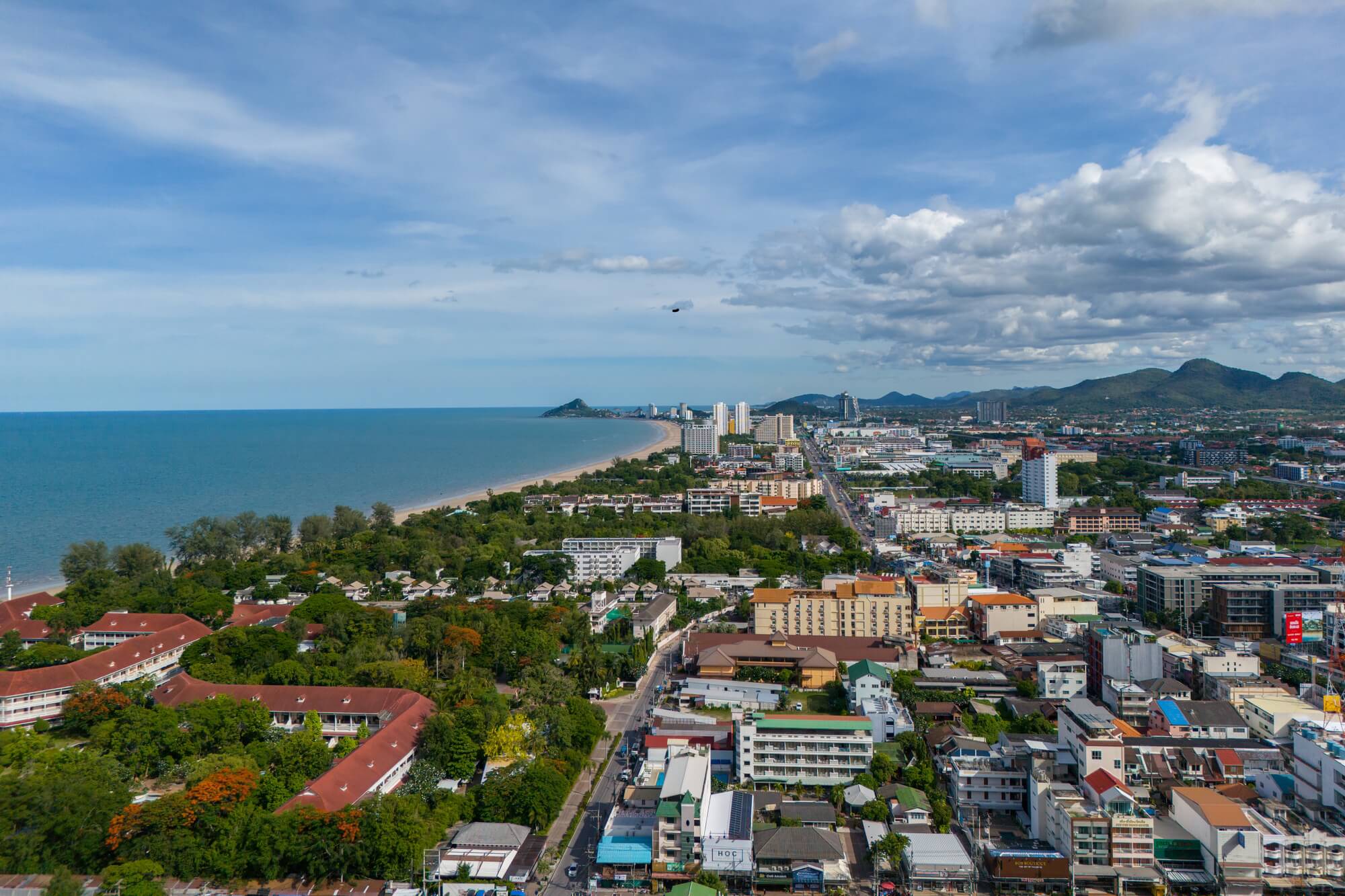
Thailand offers three distinct retirement experiences. Bangkok is urban and connected, with hospital infrastructure that includes JCI-accredited facilities like Bumrungrad Hospital that rival anything available in Singapore. Hua Hin is quieter, beach-adjacent, and has a well-established expat community. Finally, Chiang Mai in the north offers a lower cost of living, cooler temperatures, and a long-standing international retiree scene, with the caveat of a seasonal air quality problem from February to April due to agricultural burning.
A comfortable monthly budget in Chiang Mai or Hua Hin runs roughly THB 50,000 to THB 70,000 ($1,940 to $2,710) per month. At current exchange rates, $1,780 converts to approximately THB 46,300. That is slightly below the comfortable bracket in Chiang Mai or Hua Hin on its own, but with HDB rental income added, the combined $3,200 to $3,400 translates to THB 83,000 to THB 88,000. That is comfortably above the lifestyle threshold for both cities.
Bangkok costs more than Chiang Mai or Hua Hin, typically 40% to 60% higher for comparable accommodation, but the convenience of urban infrastructure, proximity to Bumrungrad, and international connections make it the default choice for retirees with specific medical needs.
Thailand’s Non-Immigrant O-A Retirement Visa is available from age 50 and requires either proof of monthly income of around THB 65,000 or a lump sum of THB 800,000 in a Thai bank account, approximately $31,000. It requires annual renewal. The 2024 tax changes also mean foreign income remitted into Thailand may now be taxable, so professional tax advice before relocating is now a necessity rather than optional.
Read Also: Could Renting Out An HDB Flat To “Retire” Overseas Be The Singapore Dream For Some?
Vietnam: Da Nang
Da Nang is the clearest value proposition of the three destinations for a retiree watching the numbers closely. A single person can live comfortably for around US$1,000 to US$1,200 per month ($1,270 to $1,530), covering a furnished apartment near the beach, three meals a day, transport, and a leisure budget. At current exchange rates, $1,780 Singapore dollars converts to roughly US$1,370, putting a single retiree well within the comfortable range without needing additional income.
With HDB rental income added to the CPF LIFE payout, a retiree in Da Nang would have around US$2,460 to US$2,620 per month. That is an extremely comfortable budget by Vietnamese standards, allowing for regular flights home, healthcare, and meaningful savings accumulation on top of day-to-day spending. The only catch is the lack of a formal visa situation. Vietnam does not have a formal retirement visa as of 2026. Most long-term foreign residents rely on 90-day e-visas with periodic renewals, which adds administrative friction and some uncertainty about long-term legal residency. For retirees who need healthcare continuity or require frequent medical attention, the lack of a clear residency pathway and the need to travel to Singapore or Bangkok for complex specialist care will be meaningful drawbacks.
Is Retiring Overseas On CPF LIFE Possible
For a retiree with only the FRS and no other significant assets, retiring overseas is definitely viable but not effortless. Malaysia is the lowest-friction option for those coming from Singapore, especially if you’re considering JB, and the combined CPF LIFE payout and HDB rental income scenario makes it comfortable without requiring much adjustment. Thailand becomes a more practical option only when you factor in the combined income scenario. Finally, there’s Vietnam – it does work well financially but carries visa and healthcare uncertainty.
The HDB flat is the key variable most people underestimate when thinking about retiring overseas. If you keep it and rent it out, it essentially doubles the monthly income available for overseas retirement. It also preserves an asset that continues to build value in Singapore, gives you a place to return to, and provides options if overseas retirement doesn’t work out as planned.


Family Planning
Cost Guide To International School Fees In Singapore


