

Every graduation speech this year seems to come with the same nervous punchline: will AI take my job before I even get one? I am a fresh graduate. I have heard the joke. I have made the joke.
Then I spent two days at SuperAI 2026, where around 10,000 people packed into Marina Bay Sands to talk about thinking machines, and noticed something nobody warned me about. Nearly every booth was hiring. Just not for jobs my parents would recognise. DollarsAndSense was a Media Partner for the event, and I walked the floor with one question: what work is AI actually creating here?
Here is the flip side that never makes it into a graduation speech, starting with the most Singaporean job on the list.
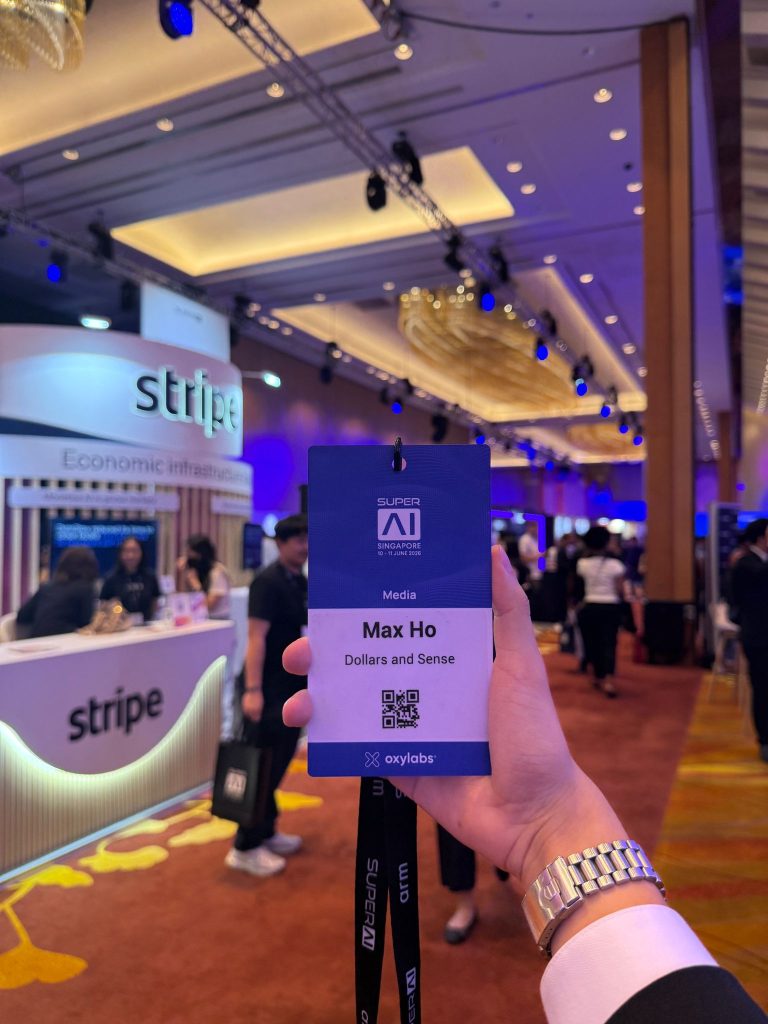
At SuperAI 2026, which drew around 10,000 attendees to Marina Bay Sands on 10 and 11 June
Read Also: AI Is Changing Work, Business And Investing. Here’s Why SuperAI 2026 Is Worth Watching
#1 The AI Feng Shui Master
I know how this sounds. Stay with me.
One of the most memorable booths I visited was Fusion Marketplace, which bills itself as the world’s first AI-powered design and feng shui marketplace, under the unmissable hashtag #SCANYOURFENGSHUI. Traditionally, you would engage a feng shui master and an interior designer separately, then hope their advice does not collide. This platform folds the feng shui consultation into AI-generated home designs, complete with an instant AI renovation cost estimator that prices your whole renovation from a floor plan or a photo of the room, and then connects you to furniture and material suppliers so you can actually buy what is in the render.
What they do: blend traditional practice with AI tools to deliver personalised designs and readings at scale, while staying the trusted human face clients actually pay for.
Why it is real: Fusion Marketplace is already running this model as a business. And every culturally specific service in Singapore, from tuition to TCM to matchmaking, is ripe for the same “tradition meets AI” treatment. These are niches the big AI labs will never build for, which is exactly why there is money in them.
How to break in: deep knowledge of the craft first, AI tools second. The machine does the rendering. The human does the trust.
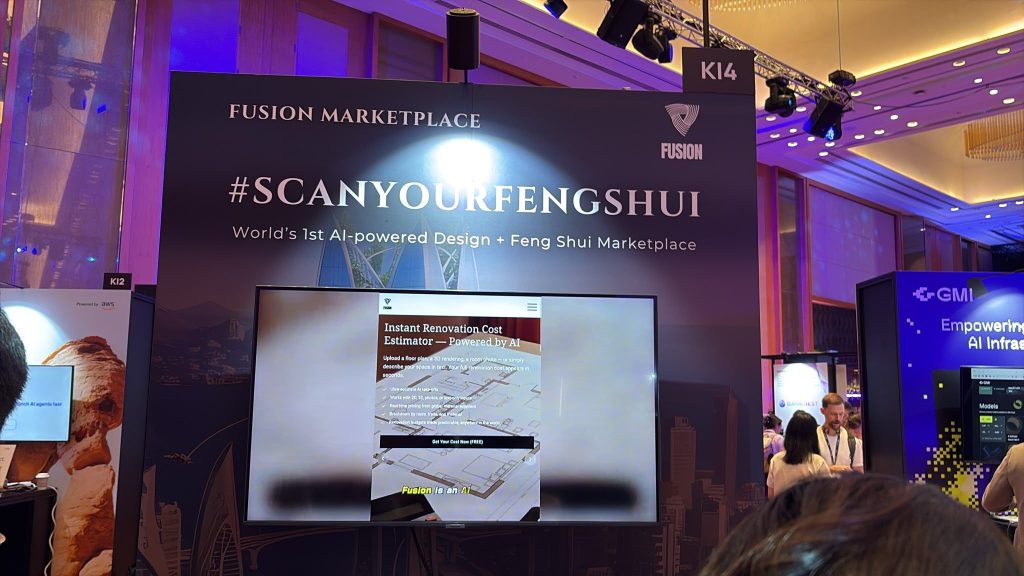
Fusion Marketplace’s booth, billing itself as the world’s first AI-powered design and feng shui marketplace
#2 The Context Engineer
A year ago this sounded like a fake job title. Not anymore. As companies roll out AI agents that take real actions, someone has to design what each agent knows and how it behaves: its instructions, its limits, its sources, its memory.
What they do: shape how an AI agent thinks and control where it gets its information. One keynote at the event was dedicated entirely to enabling AI agents to discover the web in real time, because an agent is only as good as the context it is fed.
Why it is real: at the Notion booth, I watched how companies now build custom agents using plain natural language and onboard external agents into their workspace like new colleagues. Somebody has to write that onboarding.
How to break in: more open to non-engineers than you would guess. Writers, linguists and ex-teachers are slipping in, because half the work is psychology and half is logic.
Notion’s booth, where external AI agents are onboarded into workspaces like new colleagues
Read Also: SuperAI 2025 Showed How Exciting AI Agents Can Be, And Why Safeguards Are More Necessary Than Ever
#3 The Agentic Commerce Specialist
Stripe’s booth did not hedge about where shopping is heading. A banner across the front read, in plain words: Get ready for agentic commerce. The display explained how Stripe’s Agentic Commerce Suite already powers checkout inside Meta’s platforms, letting shoppers move from discovery to purchase in a few taps, and the company’s keynote was literally titled “Inside the Rising AI Economy”. The destination is AI agents that do not just recommend a product but complete the transaction themselves, payment and all.
What they do: build the plumbing that lets AI agents shop and pay on your behalf.
Why it is real: Stripe’s Agentic Commerce Suite already powers checkout inside Meta’s platforms. And the moment an agent can spend your money, an entire job category springs up around approvals, fraud and trust. Someone has to answer, “Wait, did I authorise that?”
How to break in: fintech, payments or e-commerce experience, plus genuine curiosity about how agents make decisions.
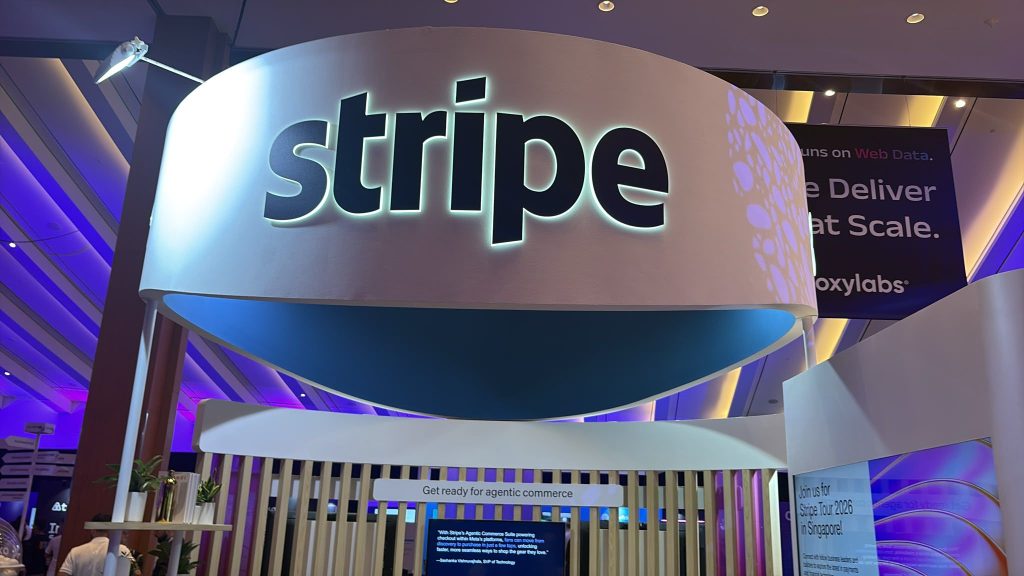
Stripe’s booth told visitors plainly to get ready for agentic commerce
#4 The AI-Native Product Designer
The tired prediction was that designers would be replaced by AI. On the floor, the opposite was happening: companies were hunting for designers who use AI as a raw material, the way an architect uses steel.
What they do: design products where the AI is the experience, not a feature bolted on at the end. I saw the purest example at a Singapore holographic display booth, where I had a conversation with Bella, a life-sized AI avatar projected in mid-air. Someone designed her personality, her voice, and what she says when she does not know an answer.
Why it is real: the event ran an entire panel on the AI-native builder, where Notion, Plaud and design firm IDEO discussed how design, product and engineering are collapsing into one hybrid role.
How to break in: If you can design and prototype with AI tools, you are rarer, and more hireable, than you think.

#5 The AI Investing Specialist
For a money publication, I saved the closest-to-home one for last. AI is reshaping how everyday Singaporeans invest, and that is spawning roles that fuse finance with AI.
On the floor, Longbridge was showing what it calls an AI-powered online brokerage: lifetime $0 commission on Singapore, US and Hong Kong stocks, more than 32,000 tradable assets in one account, and a built-in assistant, LongbridgeAI, billed as all-in-one real-time market intelligence and pitched elsewhere at the booth as an agent “built to think and act”. One of the teams I spoke to made the pitch simply: with AI digesting the market in real time, there has rarely been a better moment for retail investors to get informed help. New users are courted hard too, with welcome promotions like an interest boost of 5 per cent per annum on S$2,000 in its Cash Plus product for a year, though as with any money market product, returns are not guaranteed.
What they do: build and run the AI features inside investing platforms, from real-time market intelligence to the “explain this trade to me like I am new” layer.
Why it is real: Longbridge was demonstrating a live AI-powered brokerage on the floor, with its in-app assistant LongbridgeAI billed as an agent “built to think and act”. Products like these need people who understand both the markets and the machine learning underneath.
How to break in: finance knowledge plus comfort with data and AI tools. A CFA-track graduate who can also hold a conversation with engineers is exactly who these teams want.
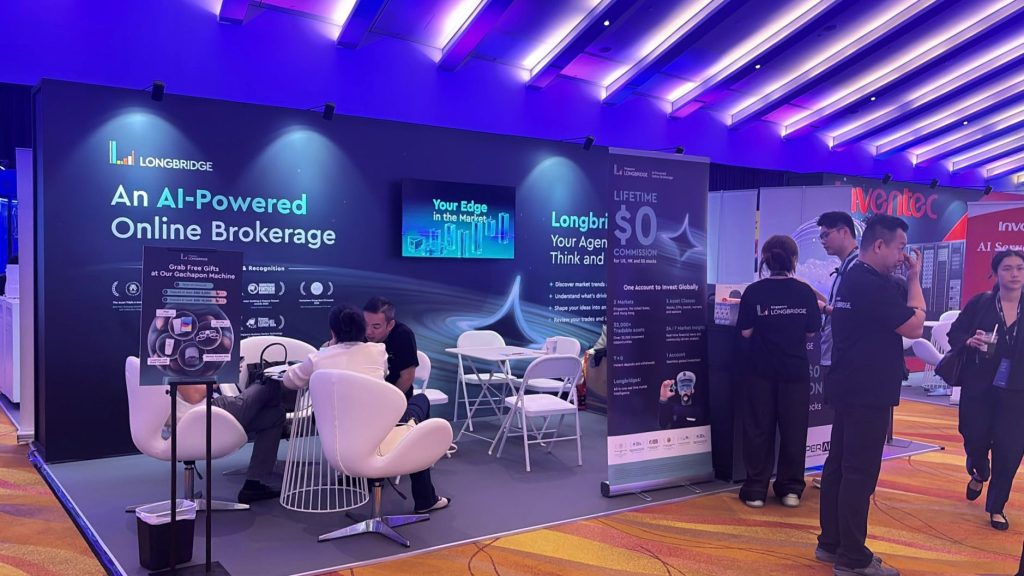
Longbridge pitched LongbridgeAI as an agent ‘built to think and act’ for retail investors
The One Move That Gets You Into Any Of These
Notice the pattern: almost none of these jobs ask you to build AI from scratch. They ask you to understand one real domain deeply, whether that is feng shui or fixed income, design or compliance, and then be unafraid to use AI tools on top of it.
The graduates who will struggle are the ones waiting for permission. The ones who will thrive are already poking at these tools tonight. So maybe my generation has it backwards. AI is not the thing taking the jobs. It is quietly writing a whole new list of them. You just will not hear about them at graduation.
Read Also: I’m A Gen Z Graduate Who’s Supposed To Hate AI. Here’s How SuperAI 2026 Changed My Mind


Street Smart
Singapore Gym Membership Price Guide (2026 Edition)


