

SuperAI 2025 is Asia’s largest Artificial Intelligence (AI) event, and was held over the past two days, 18 and 19 June 2025. This is the second edition of the event, and follows a significant shift in AI developments over the past few months, with the entry of DeepSeek and Manus AI into the space. DollarsAndSense was a Media Partner for the event.
Walking into the event, the immediate exhibits that caught my eye were SenseRobot, a new generation of chess-playing robot, and Tesseract.art, a generative robot “artist”.
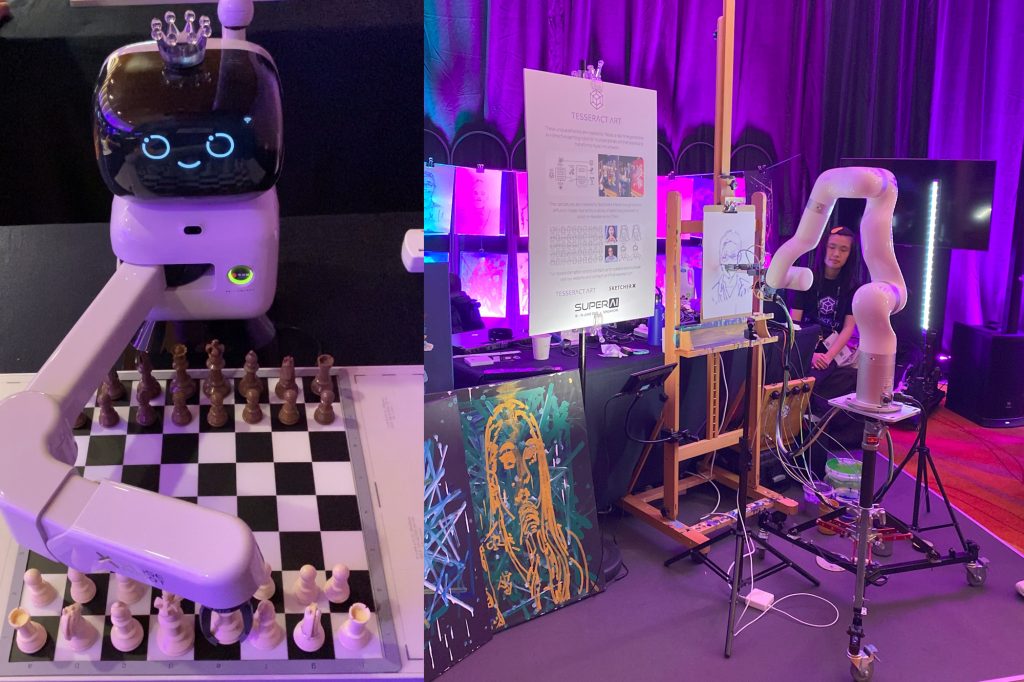
Playing chess for the first time in years, I was fascinated by how the relatively small SenseRobot could determine almost immediately when pieces were out of position, or if an illegal move had been made, and could use its robot arm to rectify the situation. The 10-minute game moved swiftly – I lost, of course – and it felt like I was playing with a fellow human being.
Having experienced what was possible in physical AI in 2025, I spent most of the next two days in the io.net Main Stage. SuperAI had brought together some of the top global AI leaders and thinkers in a series of panels and keynotes that hoped to answer the question of AI’s future, both immediate and beyond.
AI Agents Are The Next Frontier For AI Development
The stage was set early when Tao Cheung, the co-founder of Manus AI, a “general AI agent” that officially launched earlier this year, shared how autonomous agents are the next step of AI development. While the world today is familiar with Generative AI and Large Language Models (LLMs) thanks to ChatGPT, these tools are primarily designed for conversation and are reliant on constant inputs from a user. Autonomous AI agents like Manus AI, on the other hand, have access to multiple tools and are capable of performing a series of tasks, from planning to execution. Think of it as a team of interns doing research, analysis and presenting their findings to you in a well-designed slide deck. Manus AI is transparent about its planning process, so you can see in real-time how it thinks and how it expects to execute your single request.
The topic of AI agents continued to dominate conversations over the two days of the event, with panels discussing how AI will affect the future of work. The rise of AI agents in the workforce was a topic covered by panelists Swapnil Jain, co-founder and CEO of Observe.AI, which focuses on the contact centre industry, Tony Wang of Agora, which develops real-time communication tools, and Valentin Bercovici of WEKA, which focuses on efficient data storage solutions. They discussed how AI agents could perform at scale for certain jobs, but the human touch would still be appreciated for others.
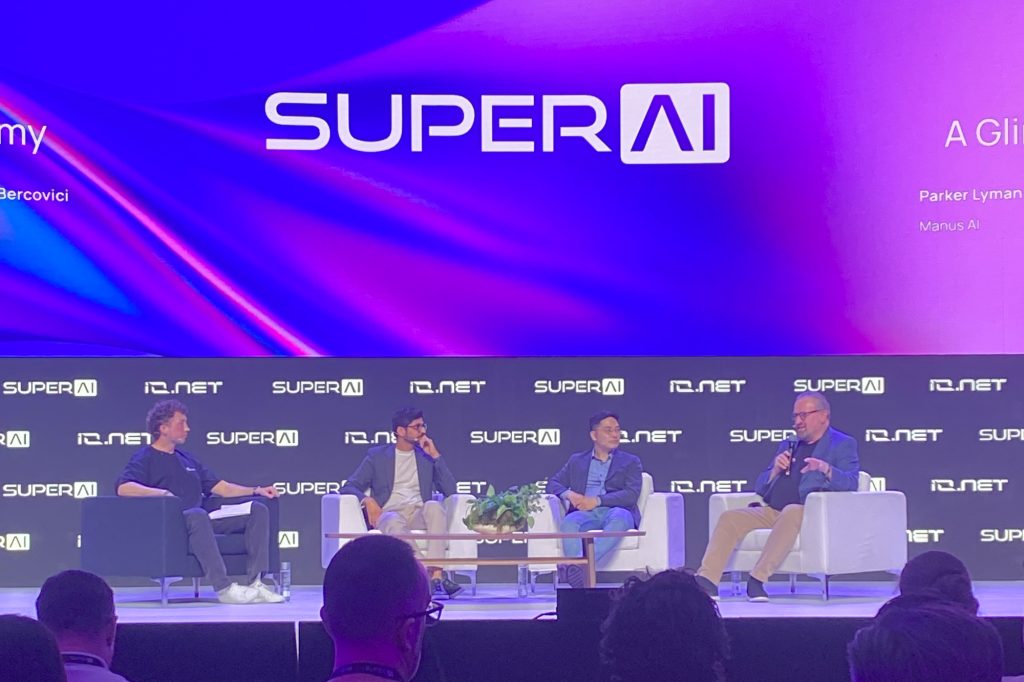
In the contact centre industry, for example, AI agents can now imitate human agents almost seamlessly, but only for the most basic requests. Though there was initial pushback at using AI agents in what is traditionally a human interaction, they have become more acceptable now. As Swapnil Jain put succinctly, “If I can get my problem solved immediately by an AI agent, I wouldn’t choose to wait to talk to a human being.”
The Need To Question And Challenge AI’s Rapid Growth
Though the seemingly unlimited capability of these AI agents is exciting, it naturally raises questions and doubts, which is why I appreciated that SuperAI also provided a platform for keynote speakers like Benedict Evans, a veteran technology analyst, and Edward Snowden, the former NSA-contractor-turned whistleblower.
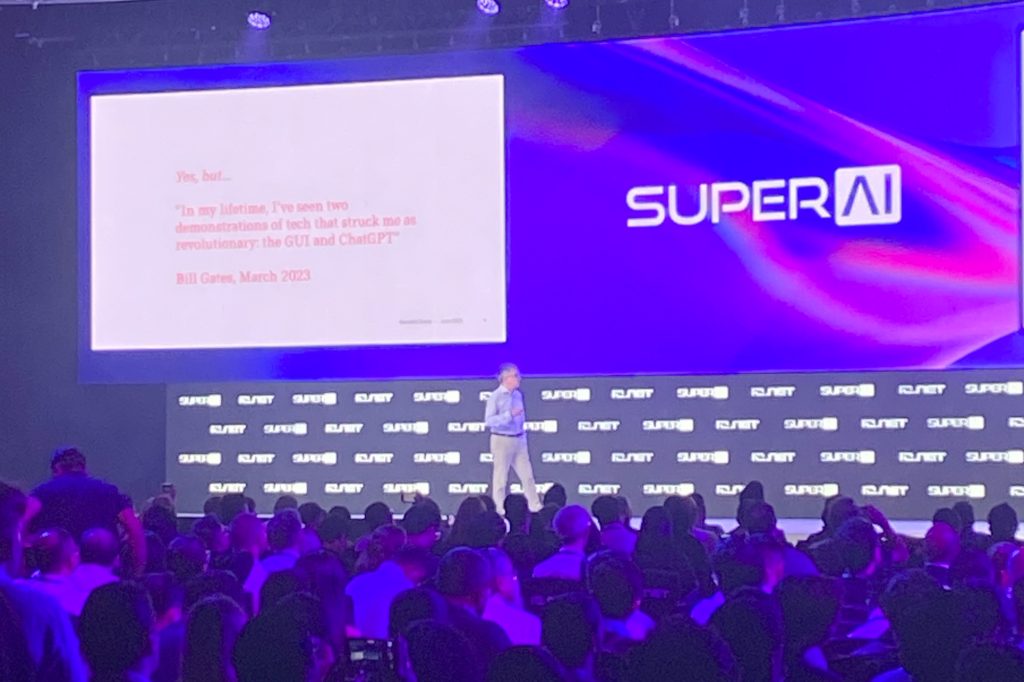
Evans questioned if Generative AI and the rise of AI agents were just the next “New Thing”. Perhaps AI would follow PCs, the Internet, and smartphones, each a significant platform shift in technology’s history, yet considered normal today. Conversely, AI could be “Everything”, something that could essentially transform humanity. Evans made it a point to center the question based on the use case of AI agents, challenging startups to find new reasons to use AI more regularly, implying that AI has yet to find a truly revolutionary use, even though he quoted Bill Gates calling the graphic user interface (GUI) and ChatGPT the two “revolutionary” demonstrations of technology in his lifetime.
Snowden’s presentation was, unsurprisingly, a much more serious warning about how the rapid rise of AI development required stronger safeguards for privacy and human rights. Appearing via a live feed due to his “person of interest” status, he cautioned that as AI becomes more commonly used in multiple industries and sectors, there had to be greater transparency about how its decisions are made. He challenged the need to consider the type of appeal process people would have if AI decided against them.

Singapore’s Pragmatic Approach To AI Gives Us A Competitive Advantage Globally
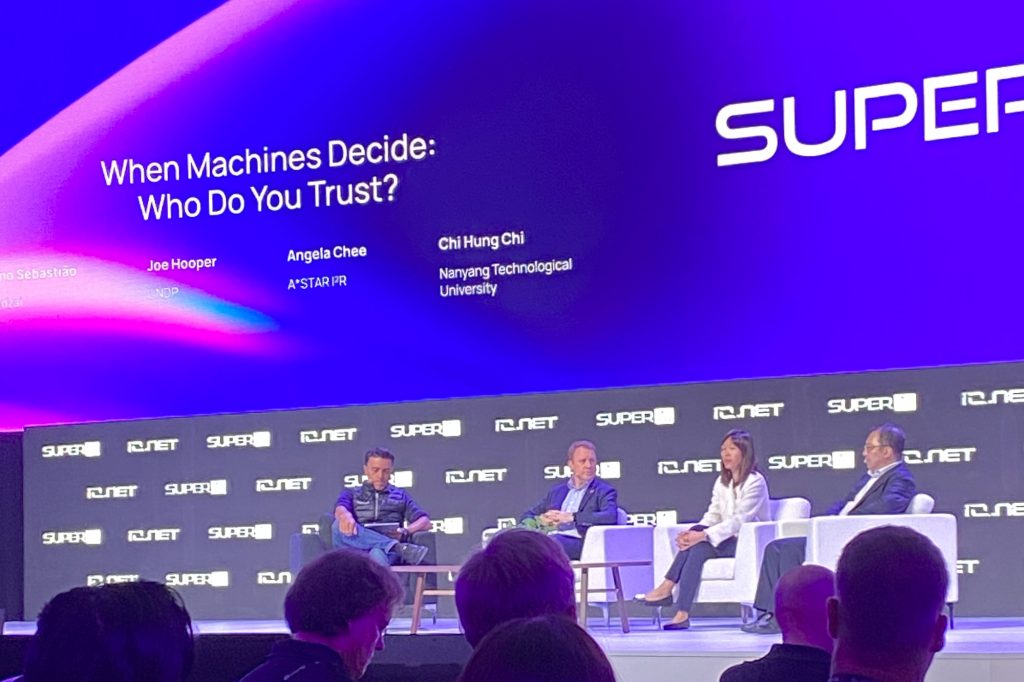
Closer to home, Singapore had multiple opportunities to showcase its AI adoption journey on the Main Stage. Day 2 of the event saw A*STAR Director Angela Chee and NTU research scientist Chi Hung Chi share the stage with the United Nation’s Director of the Global Centre for Technology, Innovation and Sustainable Development, Joe Hooper. They spoke about how Singapore’s “pragmatism” built a sense of trust between AI stakeholders, allowing for open conversations on multiple levels. Whether from the private sector, researchers or policymakers, all were able to hold AI progress to a certain level of accountability and accelerate economic growth without compromising ethics.
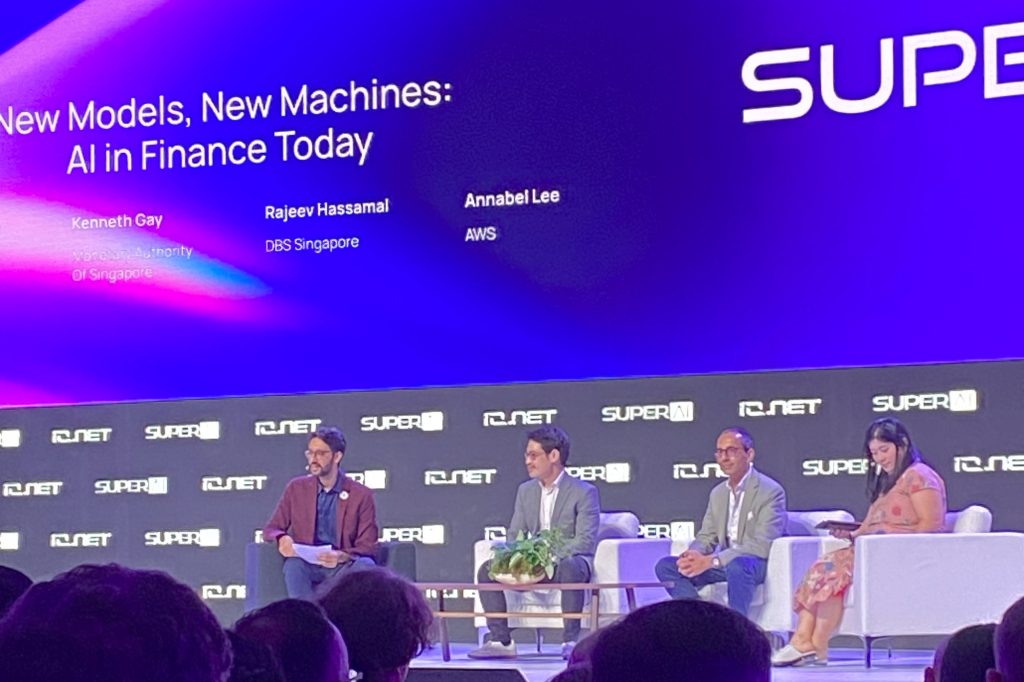
This collaboration was perfectly encapsulated in another panel which brought together the Monetary Authority of Singapore’s (MAS) Chief FinTech Officer, Kenneth Gay, DBS’ Head of GenAI and Future of Work, Rajeev Hassamal and Amazon Web Services’ Annabel Lee, who in her previous role in IMDA and the Personal Data Protection Commission (PDPC) was also one of the pioneers of AI ethics and governance in Singapore. They spoke about how MAS and the financial sector in Singapore was an early adopter of machine learning and AI, and how Singapore’s forward-looking regulatory policies give us a competitive advantage globally. By building guardrails through consultation and collaboration with the industry, MAS expects to give financial institutions more clarity to explore AI projects with certainty.
Read Also: Governing AI: How MAS Is Ensuring Responsible Use of Gen AI in Finance Through Project MindForge
It was impressive to see the diversity of speakers featured on the SuperAI Main Stage. While I could not attend all the keynotes and panels, there truly was something for the thousands present over both days of the event.
With constant innovation in the AI space and exciting new developments promised each year, SuperAI continues to be the event to showcase and discuss how this technology can change our lives both in the near and distant future.


Street Smart
Singapore Gym Membership Price Guide (2026 Edition)


