

This article is written in collaboration with the National Youth Council. All views expressed in this article are the independent opinion of DollarsAndSense.sg based on our research, and is purely for informational purposes and should not be relied upon as financial advice. DollarsAndSense.sg is not liable for any financial losses that may arise from any transactions and readers are encouraged to do their own due diligence. You can view our full editorial policy.
It has been more than a decade since I started working in 2012. Together with a few friends, I started DollarsAndSense as a small finance blog, which eventually grew into a media business. Fourteen years later, I am still working on it.
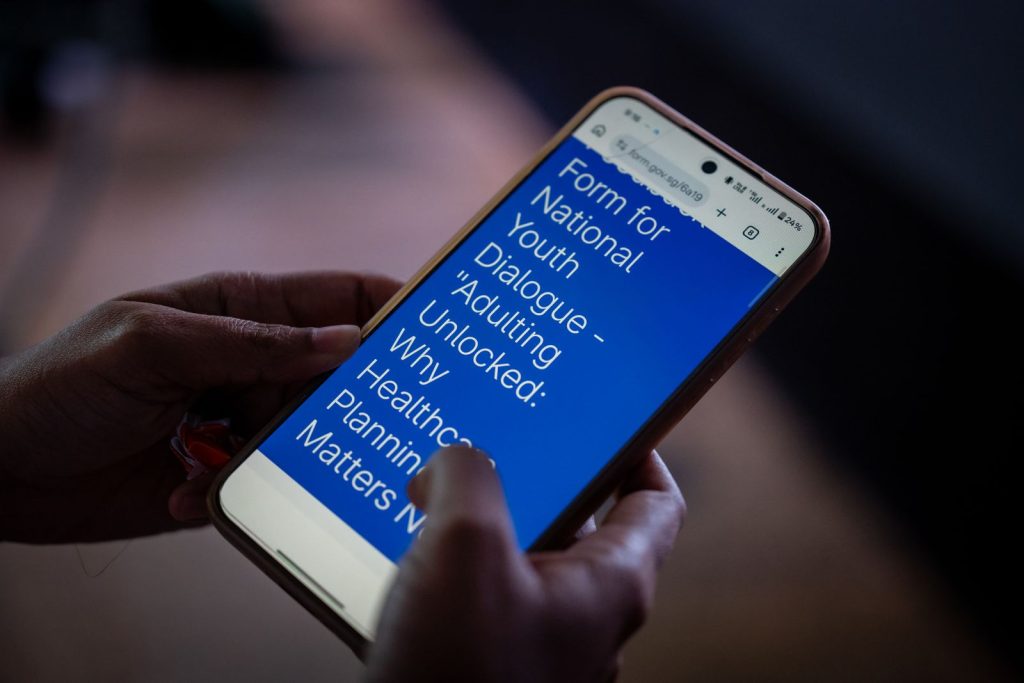
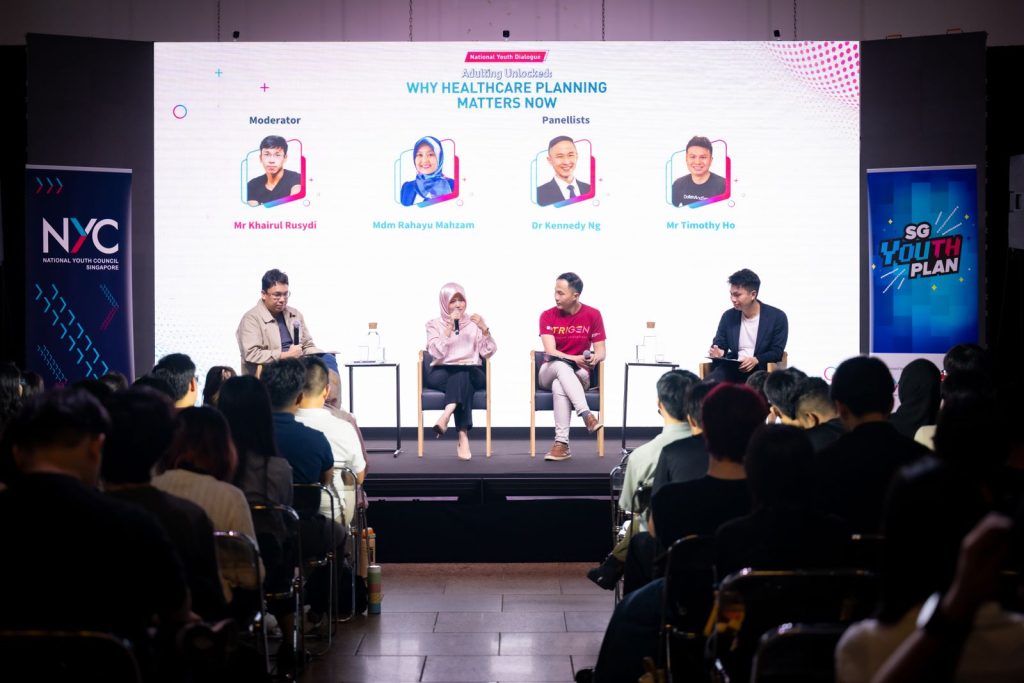
Recently, I found myself reflecting on how much life had changed while speaking at the National Youth Dialogue on “Why Healthcare Planning Matters Now”. I joined Madam Rahayu Mahzam, Minister of State for Digital Development and Information and Health, and Dr Kennedy Ng, Medical Oncologist at the National Cancer Centre Singapore, on a panel moderated by Khairul Rusydi, Co-Founder and CEO of Reactor School. Together, we spoke with 147 young Singaporeans about navigating many of the same concerns I once had: building a career, managing money, planning for the future and trying to stay healthy at the same time.

During the panel discussion, one recurring theme was why healthcare planning often feels distant when we are young, even though the decisions we make early can shape the options available to us later. We also discussed how financial preparedness and preventive healthcare become even more important as we enter the sandwich generation, balancing our own needs with the responsibility of caring for both young children and ageing parents.
The discussion made me reflect on how differently I now view money, health and adulthood compared with when I was 25. With the benefit of hindsight, these are five lessons I would share with my younger self.

#1 Money & Health Compound More Similarly Than You Think
Health and money are both important parts of our lives, though they often move in opposite directions. At 25, I had plenty of energy but very little money. Today, I am in a stronger financial position, even as I carry more responsibilities as a father of three and part of the sandwich generation. However, what has changed most is my health: staying fit and feeling well today now takes far more deliberate effort than it once did.
One lesson I have learned is that money and health compound in remarkably similar ways. Both are long-term pursuits where small actions can make a big difference over time.
With money, saving and investing a few hundred dollars each month may not seem life-changing at first. Yet over time, compounding can produce substantial results. Health works pretty much the same way. Exercising regularly, getting enough sleep and making slightly better food choices may not produce immediate results, but these habits add up over the years to help you stay healthy.
Unfortunately, neglect compounds too. Just as ignoring our finances can lead to financial stress later in life, neglecting our health eventually catches up with us. For example, during our panel discussion, we spoke about how better (or poorer) health is often built through small everyday decisions, including the food we choose. While Singapore’s hawker food is delicious, some dishes may not be the healthiest, especially when eaten too often. That does not mean we need to avoid nasi lemak, roti prata or char kway teow altogether. What matters is balance: enjoying them in moderation, while making healthier choices where possible, such as opting for brown rice instead of white rice, or adding more vegetables to our meals.
Other lifestyle habits such as poor sleep and lack of exercise are also unlikely to cause problems overnight, which is why they are easy to ignore when we are younger. Unfortunately, by the time the consequences become obvious, reversing them is often much harder.
#2 Consistency Matters More Than Intensity
When I was younger, I often approached progress in waves. I would train hard for a few weeks, follow a strict routine or become highly disciplined with my spending, only to slow down once the effort became difficult to sustain.
Today, I realise that regular effort matters more than occasional bursts of intensity. This applies to both our health and wealth.
A good example is the popularity of fasting trends. Every few years, a new approach gains attention, whether it is intermittent fasting, the keto or paleo diet, or another variation promising rapid results. While some people may benefit from these approaches, sustainable health is rarely built on a few weeks of extreme discipline.
This was also reflected in Dr Kennedy Ng’s closing remarks during the dialogue. He encouraged participants to focus on daily consistency, practise moderation and avoid being too hard on themselves when they make the occasional poor decision.
The same principle applies to money. Chasing investing trends or trying to time the market can feel exciting. However, building wealth is usually the result of investing consistently through good times and bad, rather than making short-term gains from a couple of lucky trades. The investor who contributes steadily to a diversified portfolio often ends up in a better position than one who jumps in and out based on market sentiment.
#3 A Balanced Approach To Life Does Not Mean Optimising Everything
If there is one thing I would tell my 25-year-old self, it is that not everything in life needs to be optimised all the time.
When we are younger, it is easy to view decisions through a right-or-wrong lens. If saving money is good, then spending on something non-essential can feel wasteful. If working and studying hard is important, then taking time off can feel unproductive. If healthy eating is the goal, then every indulgence can feel like a setback.
This is, in my opinion, not true and not how life is meant to be lived.
As I grow older, I have come to appreciate that a good life involves trade-offs. There may be periods when work demands more of our attention, and others when family, health or rest need to come first. The goal is not to save every dollar, work every hour or avoid every unhealthy meal. It is to make choices that remain sensible across different seasons of life.
The same principle applies to healthcare planning. During the audience Q&A, one participant asked how to tell whether they were over-insured. In response, Madam Rahayu Mahzam noted that balance and moderation matter even when deciding how much coverage to buy, as over-insuring can contribute to the unnecessary use of healthcare services and higher costs for everyone.
That is a useful reminder that more is not always better. Whether we are managing our money, health or insurance coverage, the goal is not to maximise everything. It is to make choices that are appropriate for our needs, responsibilities and stage of life.
#4 Prepare For The Person You Want To Be 10 Years From Today
When we are young, planning 10 or 20 years ahead can feel abstract because we do not yet know what our lives will look like.
Instead of thinking decades ahead, ask yourself a simpler question: what would the version of you 10 years from now want you to do today?
The future arrives quietly, often faster than we expect. When I started DollarsAndSense 14 years ago, I did not have a mortgage to pay, young children to raise or bills to worry about. Today, those once-distant concerns are real responsibilities, alongside healthcare needs and career decisions.
Many people think planning for the future requires us to know exactly what our goals are, or to predict what will happen. While this is not entirely wrong, it is often about giving our future self optionality.
Optionality means giving your future self more choices. Emergency savings help us handle setbacks, such as retrenchment, without having to panic and take the first job offer that comes our way. Investing can give us the flexibility to take time off or pursue a different goal. Building career resilience can also make it easier to adapt if we decide to change industries later.
#5 Life Will Throw You Setbacks
One thing I have learned over the years is that adulthood rarely goes exactly according to plan.
Careers do not always progress smoothly, markets do not always move in our favour and health issues can arise unexpectedly. Even when life is going well, it only takes one setback to remind us that the stability we enjoy today should never be taken for granted.
This does not mean we live our lives in constant anxiety. Rather, it is a reminder that whenever possible, we should try to build resilience early.
Financially, this means having emergency savings, keeping debt manageable and being well covered with the right insurance policies. On a personal level, it means taking care of our health, maintaining strong relationships and developing the emotional strength to navigate difficult seasons.
Healthcare is one area where this becomes especially clear. When we are young and healthy, health issues are not something we naturally worry about. However, as we get older, we start to see how illness affects not just the person receiving care, but also the family around them. Good planning cannot remove every problem, but it can reduce the financial stress that comes with difficult moments.
Looking back, I would tell my 25-year-old self that resilience is not built by avoiding setbacks. It is built by preparing before they happen, so that when life becomes difficult, we have the capacity to respond.
What Matters As We Get Older
Looking back, the advice I would give my 25-year-old self is not to pursue one perfect approach to adulthood, but to build a few good foundations early. The lessons are simple, even if applying them is not: take care of your money and health over time, favour sustainable habits over extremes, and leave room to enjoy life along the way.
Just as importantly, make choices today that give you more flexibility when your priorities and responsibilities inevitably change in the future.
At 25, you do not need to predict exactly what the next decade will look like, even if you are already working towards a plan. What matters is building the stability, optionality and resilience that will give you more confidence and choices as life unfolds.
Read Also: Should You Save Your Allowance? What Young Singaporeans Learn About Money While Growing Up


