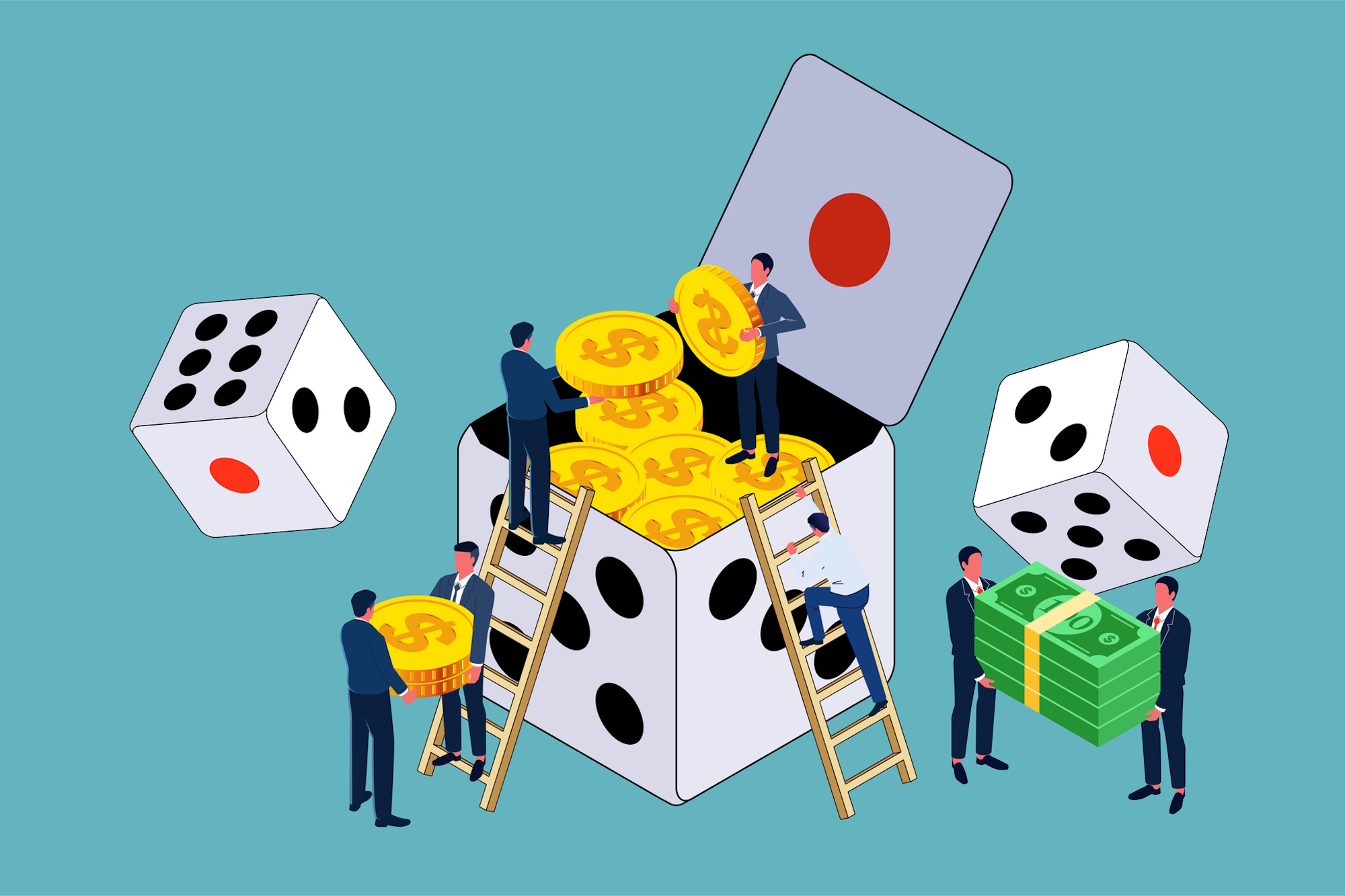
Over the past two years, the popularity of so-called “prediction markets” has reached new highs. While they’re not accessible here in Singapore, you have probably heard of platforms like Polymarket and Kalshi. Prediction markets have gone from a niche pastime to a financial powerhouse, with combined monthly global trading volume on Kalshi and Polymarket doubling in just two months, from US$26 billion in May to US$53 billion in July. In comparison, the entire US legal sports betting industry was slightly under US$166 billion for the entirety of 2025.
How Prediction Markets Work
A prediction market is a platform where participants buy and sell contracts tied to the outcome of a real-world event. Each contract is binary: it pays out $1 if the event occurs and $0 if it does not. The current market price of a contract represents the crowd’s collective estimate of the probability of that event happening. Here’s a simple example. If a contract on “Will Singapore’s GDP exceed 5% in 2026?” is trading at $0.63, the market is implying roughly a 63% probability of that happening.
If you believe the probability is higher than 63%, you might buy the contract. If GDP does exceed 5%, you receive $1 per contract and profit from the difference. If it doesn’t happen, the contract expires worthless, and you lose what you paid. You can also sell contracts you already hold before expiry if the price moves in your favour, just as you would with a stock or an options position. This is where the financial market comparison becomes much more meaningful: prediction market participants are actively trading probabilities, not just placing a bet and waiting.
Read Also: What Happens To The Money That You Bet (And Lose) When Gambling With Singapore Pools
What Can You Trade On?
The range of events covered has expanded enormously. Politics remains a significant category: who will win an election, whether a piece of legislation will pass, whether a head of state will resign before a certain date. Economics is another major category: inflation readings, central bank rate decisions, GDP figures, and unemployment data all have active markets. Sports, however, now account for the largest share of volume by far. In March 2026, approximately 87% of Kalshi’s total trading volume came from sports event contracts. During the FIFA World Cup in June and July of this year, sports contracts on Kalshi alone topped a whopping US$58 billion across just those two months.
The idea that prediction markets are primarily a tool for aggregating economic and political intelligence is accurate for a subset of participants, but numerically, sports is where most of the money moves because that’s where many of the variable outcomes (and eyeballs) are. Other categories include entertainment outcomes, technology milestones, weather events, and company-specific questions such as whether a particular merger will close or whether a CEO will remain in their role by a certain date.
How Do Participants Make And Lose Money?
The profit or loss depends on whether your probability assessment is more accurate than what the market is currently pricing. If you buy a contract at $0.40 that eventually pays out at $1.00, you make $0.60 per contract. If you buy at $0.70 and the event does not happen, you lose $0.70 per contract. You can also trade out of positions before expiry: say you bought at $0.40, and the market price rises to $0.65 before the event occurs. You can then sell and lock in a $0.25 profit without waiting for the final resolution. The platforms earn revenue differently versus a traditional bookmaker. Kalshi charges transaction fees of around seven US cents per contract on its standard markets. Polymarket introduced taker fees in March 2026.
Neither platform takes the opposite side of your position, though, so in effect you are always trading against another participant. That means if you win, another trader loses, and vice versa. The house does not lose; it earns its fee regardless of the outcome. Losses are straightforward to comprehend. If you hold a contract to expiry and the event does not resolve in your favour, the contract is worth zero. The maximum you can lose on any single position is what you paid for it, so you can’t lose more than your stake, unlike leveraged financial products. But if you trade actively across many markets without a true informational edge, the fees and your own miscalibrated judgments will likely erode your capital over time.
How Prediction Markets Differ From Traditional Gambling
The structural differences are real, even if the underlying experience can feel similar. In a traditional sportsbook, you bet against the house, which sets odds with a built-in margin so it profits regardless of the outcome. The odds are fixed when you place the bet. You have no ability to exit the position early or trade it with anyone else. In a prediction market, you are trading with other participants, not against the so-called “house”. The price moves continuously based on new information and changing sentiment, the same way financial markets price in news. You can enter and exit positions at any time before expiry.
That means your profit or loss depends on the accuracy of your judgment relative to other market participants, not on a house margin. This is why Kalshi received a licence from the Commodity Futures Trading Commission, the same federal body that regulates the Chicago Mercantile Exchange. The CFTC concluded that event contracts fit within the existing legal framework for financial derivatives and not gambling. That distinction has real-world implications because Kalshi operates under the same regulatory category as futures markets, not as a casino.
How Prediction Markets Differ From Investing
The comparison to investing isn’t perfect, either. When you buy a company’s shares, you are acquiring ownership in a business that generates earnings over time, pays dividends, and compounds in value. The underlying assets have intrinsic economic value. On the other hand, a prediction market contract has no intrinsic value: it is worth either $1 or $0 at expiry, and any value between those points is entirely derived from probabilistic expectations. In other words, the outcome is binary. This makes prediction markets closer to options trading than to equity investing. Like options, prediction market contracts are time-limited and derive their value from probability rather than underlying business performance.
Unlike options, though, these contracts are often easier for retail participants to understand because the underlying event is described in plain language rather than encoded in strike prices and technical jargon. The accuracy record matters here. Data shows that gaps between platforms suggest market quality, liquidity, and participant sophistication all affect how well the price reflects reality. A well-calibrated market should consistently price outcomes close to their actual probabilities over time.
Read Also: The Vices Of Gambling (And Are You Unknowingly Gambling?)
Why Have Prediction Markets Become So Popular?
Several converging factors explain the explosive growth of prediction markets. Combined monthly trading volume on Kalshi and Polymarket rose from under US$5 billion in September 2025 to about US$24 billion by April 2026, US$26 billion in May 2026, US$44.8 billion in June 2026, and US$53 billion in July 2026. Part of the appeal is that prediction markets let you take a financial position on events that otherwise have no tradable market. You can effectively bet on anything and everything, from the first player to receive a yellow card in a Premier League football match to how many of the US Federal Reserve (Fed) governors will vote for a rate hike at the next FOMC.
Running with that example, if you have a strong view that the US central bank will raise rates by a certain date, there is no simple instrument for a retail investor to express that view cleanly. That’s where prediction market contracts come in because they offer exactly that. Bloomberg Terminal and Dow Jones have both integrated Polymarket data, signalling that institutional financial media sees genuine information value in these price signals. The growth of stablecoin infrastructure also lowered the friction for global participation. Polymarket runs on a blockchain using USDC, which means participants anywhere with a crypto wallet can, in theory, access the platform. Global accessibility, combined with markets on topics that resonate across borders, has driven this rapid user growth that would not otherwise have been possible through traditional financial infrastructure.
The other main factor, of course, is that the regulatory environment in the US has eased up on prediction markets. The CFTC, the federal body overseeing prediction markets mentioned earlier, saw a change in leadership in December 2025, when Michael Selig, was sworn in as Chair after being nominated by President Donald Trump and confirmed by the Senate. Selig is also the only Commissioner left in the CFTC’s typically bipartisan, five-seat panel, and has led the CFTC to sue nine US states in its defence of prediction markets.
Can Singaporeans Legally Participate?
Simple answer is “No”. Singapore’s Gambling Regulatory Authority blocked access to Polymarket on 12 January 2025, classifying it as an unlicensed gambling site under the Gambling Control Act 2022. Kalshi is also blocked in the Lion City. Internet service providers must block access at the DNS level, and residents who try to access either platform are warned that they are accessing an illegal gambling site. Penalties for gambling with an unlicensed provider include fines of up to $10,000 or up to six months in jail, or both. Using a VPN to circumvent the block does not make participation legal.
The only legal online gambling options for Singapore residents are through Singapore Pools, the government-owned entity offering lotteries, sports betting, and horse race betting. There is currently no MAS-regulated equivalent of a prediction market contract available in Singapore. For now, prediction markets are something Singaporeans can follow, understand, and use as an information source — Polymarket and Kalshi pricing are publicly visible even without trading — but residents here cannot legally trade them from within Singapore.
Advertiser Message
Thinking Of Switching Brokers Or Consolidating Your Holdings?
Tiger Brokers is currently running a transfer-in campaign where eligible clients can receive an iPhone 17 Pro Max* when they transfer in their assets.
For SGX investors, there is also a CDP Transfer promotion with 0* commissions on Singapore stocks.
Find out more here. *T&Cs apply.