
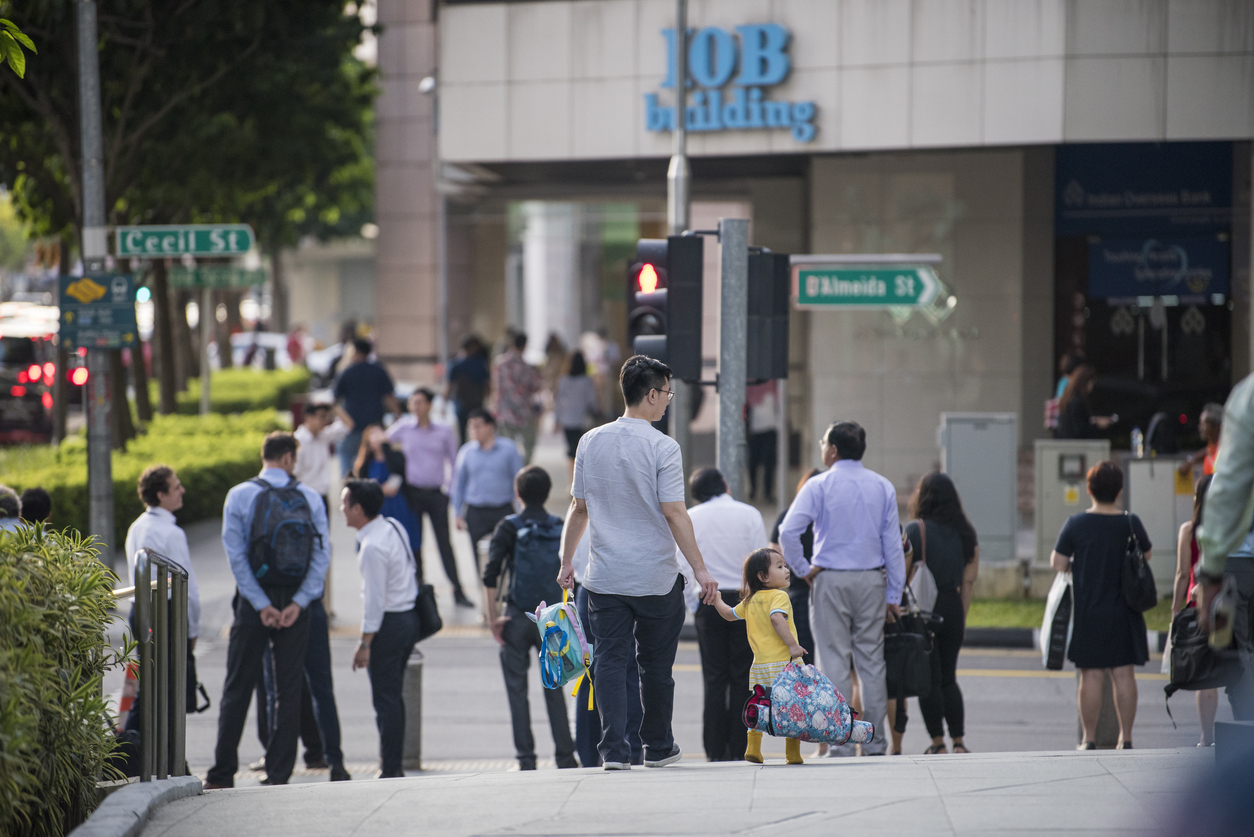
From 1 July 2026, the Local Qualifying Salary (LQS) will increase from $1,600 to $1,800 a month for full-time local workers. The change was announced as part of Budget 2026.
While a $200 increase may not sound significant to many of us, it could translate into higher pay for some lower-wage workers. At the same time, businesses that rely on foreign manpower may face higher wage costs as they adjust to the new requirement.
What Is The Local Qualifying Salary?
Singapore does not have a universal minimum wage. Instead, employers must meet the Local Qualifying Salary requirement if they wish to hire foreign workers.
Companies that employ Work Permit holders, S Pass holders or Employment Pass holders must pay their local employees at least the LQS, unless those employees are already covered by Progressive Wage Model (PWM) requirements.
In other words, businesses that benefit from access to foreign labour are expected to pay a minimum wage to their local workforce. This makes the LQS an important part of Singapore’s broader approach to supporting wage growth for lower-income workers.
What Does This Mean For Lower-Wage Workers?
Workers earning between $1,600 and $1,799 a month are likely to be the most directly affected by the increase. For example, an employee earning $1,700 per month may receive a $100 salary adjustment to remain compliant with the new LQS requirement.
The impact may be most visible in sectors where wages are closer to the LQS threshold, such as retail, food and beverage, logistics support, and certain service industries.
While not every lower-wage worker will benefit directly, the increase raises the baseline wage employers must pay local workers to continue hiring foreign employees.
What Does This Mean For SMEs?
For SMEs that hire foreign workers, the most immediate impact will be higher manpower costs.
Consider a small business with 10 employees currently earning between $1,600 and $1,799 a month. If each worker requires an average salary adjustment of $120 a month, annual wage costs could increase by around $14,400 before accounting for additional CPF contributions.
Unlike a voluntary wage increase, compliance with the LQS is linked to a company’s ability to hire and retain foreign workers. Businesses that fail to meet LQS requirements may face difficulties applying for new work passes or renewing existing ones.
For employers that rely heavily on foreign manpower, maintaining compliance may be necessary to sustain their operations. In many cases, raising wages may be less disruptive than losing access to foreign workers.
Businesses are likely to respond differently depending on their circumstances. Some may absorb the higher costs, particularly if only a small number of employees are affected. Others may invest in automation, digitalisation or job redesign to improve productivity and offset rising labour costs.
Some firms may also review their pricing, although their ability to pass on higher costs will depend on customer demand and competitive pressures.
A Signal Of The Direction Singapore’s Labour Market Is Taking
The increase in the Local Qualifying Salary from $1,600 to $1,800 is a relatively modest adjustment. However, it continues a broader trend of policies aimed at raising wages for lower-income local workers.
For workers earning close to the current threshold, the change could result in a meaningful pay increase. For SMEs that rely on foreign manpower, it is another reminder that labour costs are likely to rise gradually over time.
Photo Credit: iStock/3yephotography


Budgeting 101
7 Ways Being Frugal Is Different From Being Cheap


Street Smart
Singapore Gym Membership Price Guide (2026 Edition)


Street Smart
Singapore Gym Membership Price Guide (2026 Edition)


