
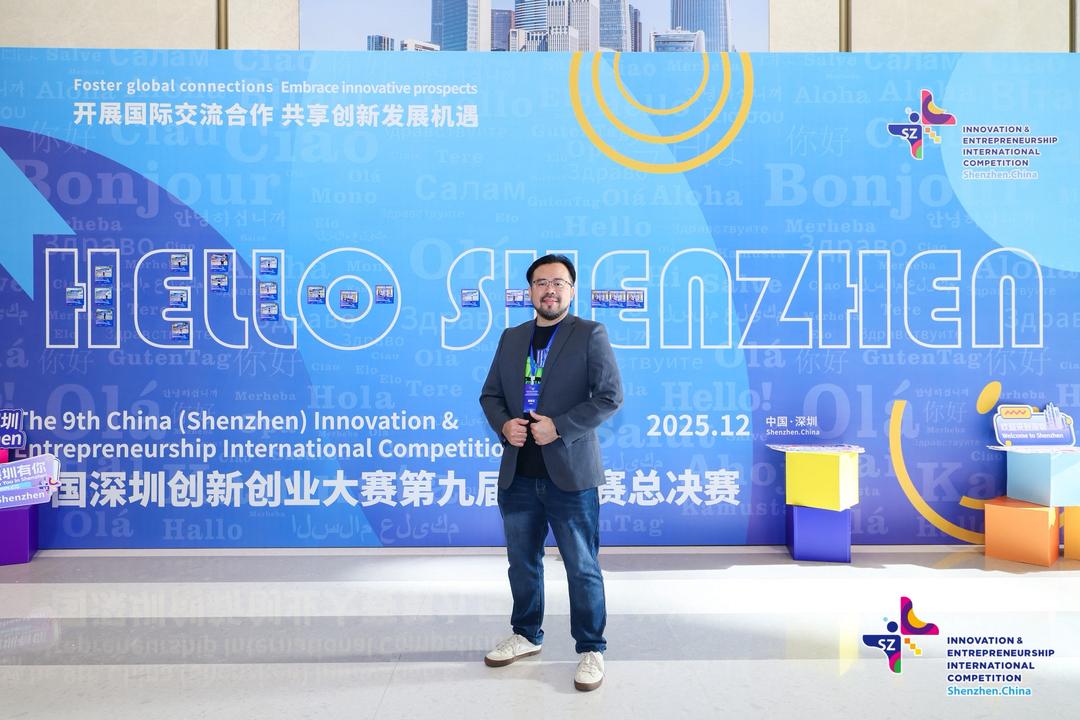
When Yusup Ngadimin began thinking seriously about career guidance, it did not start with a pitch deck or a product idea.
It started with a question many people eventually face: what do you do when the path you are on no longer feels like the right one?
For some, that question comes early, when choosing a school, course, or first job. For others, it arrives much later, after years in a stable role, a successful career on paper, or a profession they once thought they wanted.
Yusup had seen both sides.
As a parent, he noticed how many important decisions were still shaped by guesswork, reputation, or well-meaning advice. As a corporate leader with more than two decades in IT, he saw capable professionals reach their late 30s or 40s still trying to understand what kind of work truly suited them.
To him, the problem was not that people lacked ambition. It was that many had never been given the right reference points to make clearer choices.
“Career switching isn’t the enemy,” Yusup says. “Blind guessing is.”
Seeing Misalignment Up Close
Long before he began building around career guidance, Yusup had already seen what misalignment looked like in the workplace.
As a corporate leader, he noticed that talented employees were not always the ones who progressed. Some were overlooked because they were less visible, while others advanced because they knew how to be seen. In technical fields, where many strong performers may be more introverted, this gap could become especially pronounced.
He also saw professionals who were hardworking and capable, yet still felt disconnected from their work. Some stayed because the job was stable. Others eventually considered a career switch, but only after years of uncertainty.
To Yusup, this raised an important question: why do so many people only start asking what truly fits them after they have already spent years on a path?
Over time, he became convinced that people worked best when their roles matched their strengths, motivations, and natural ways of operating. When that alignment was present, teams performed better, and people were more likely to stay engaged.
“If people actually like their jobs, they won’t feel miserable doing the work,” he says.

The Role Model That Changed His Own Path
Yusup’s belief in career clarity is also rooted in his own story.
He was not the top student in school, but he discovered an early spark when he saw a personal computer for the first time at home. Fascinated by how it worked, he began learning programming outside the classroom.
Just as importantly, he had someone to look up to: Bill Gates.
That reference point gave him a sense of direction. It helped him imagine what was possible and pushed him to keep learning.
Later in his career, Yusup noticed the same pattern in others. People who had a role model often seemed to have a clearer sense of what they were building towards. Those without one were more likely to drift, even if they were capable.
That observation became central to the idea he would later pursue – people do not only need advice when they feel stuck. They need examples they can relate to.
Why Career Switching Can Feel So Overwhelming
For many people, wanting a change is the easy part.
Knowing where to begin is much harder.
Someone may know they are tired of their current role, but not know whether that means changing industries, moving into a different function, starting something on the side, or simply finding a better version of the work they already do.
Others may feel drawn to something completely different, but hesitate because it seems risky, unrealistic, or too late.
Yusup believes this uncertainty often comes from the same issue: people are forced to make career decisions without enough clarity about themselves.
The assumption is often that anyone can thrive in any job if they simply work hard enough. But he questions whether that is sustainable over decades.
“If you don’t genuinely like what you’re doing, are you really going to force yourself to do it for the next 40 years of your life?” he says.
Career switching, in his view, should not be treated as failure. It can be a sign that someone is finally paying attention to what does and does not fit.
The real risk is not changing direction. It is continuing to guess blindly.
Turning Experience Into A System
Before starting Mimicue, Yusup had spent years working with personality assessment tools such as MBTI, DISC, Holland Code and STRONG Inventory. He saw value in them, especially for understanding general behaviour and preferences.
But he also saw their limitations.
Many people needed a consultant to interpret the results meaningfully. Even then, the advice could remain broad, such as suggesting a field based on general personality patterns without showing what the path might actually look like.
Yusup wanted to move from description to direction.
The idea behind Mimicue was to use assessment data and career information not just to tell someone what type of person they might be, but to connect them with real-life examples of people whose paths could offer useful clues.
Rather than giving someone a fixed answer, the platform is designed to help them explore possible futures with more structure.
“We don’t just tell you who you are,” Yusup says. “We give you a blueprint for how to move forward.”

Building Against Scepticism
The idea was not immediately easy to explain.
Some people were sceptical of personality-based guidance. Others dismissed AI-powered career tools as too generic or too reliant on existing models. Yusup also encountered those who believed that hard work alone should be enough to make any career work.
He understood the hesitation.
The point, he says, is not to outsource life decisions to technology or to claim that an algorithm can guarantee success. It is to give people better starting points before they make decisions that may shape the next decade of their lives.
“We fight beliefs, not people,” he says.
That mindset helped him accept that the platform would not be for everyone. It was built for people who wanted clarity, not certainty; guidance, not guarantees.
The Moments That Make The Work Worthwhile
For Yusup, success is not only measured by growth or scale.
It is measured by the moment someone sees a path that finally makes sense.
He has seen people leave with more specific goals, from mechanical engineering in Germany to organisational psychology, global sales, marketing, education, writing, and creative careers. He has also seen working adults recognise interests they had previously ignored or dismissed.
These moments matter because they shift the conversation from vague dissatisfaction to intentional direction.
Sometimes, the most powerful outcome is not choosing a prestigious path. It is realising that a less conventional path can still be valid if it fits a person’s strengths, values, and motivations.
For someone considering a career change, that kind of clarity can be especially important. It can turn a vague feeling of “I want something else” into a more grounded understanding of what “something else” could actually look like.
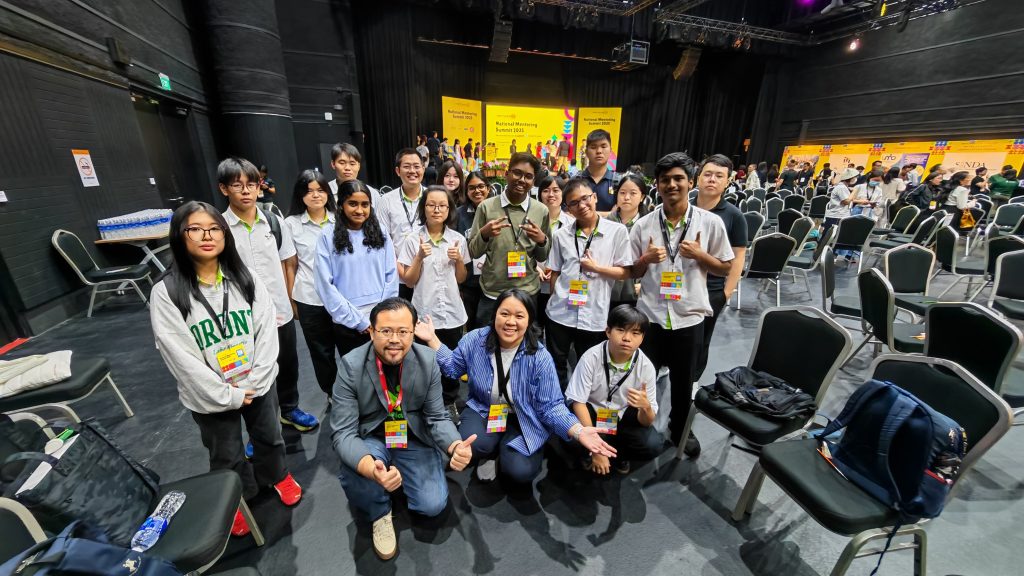
Rethinking Career Development Beyond The First Job
Although career guidance is often associated with students or fresh graduates, Yusup believes the need for clarity continues throughout a person’s working life.
Many companies still approach learning and development through broad, standardised plans. Employees are often expected to follow the same department-level training paths, even though they may grow in different ways.
Yusup believes career development should be more personal.
A person’s growth path may not always look conventional. An art class, a baking class, or a vocational skill may seem unrelated to corporate progression, but these experiences can build traits such as creativity, discipline, structure, or product thinking when understood in the right context.
For him, the future of career development is not about forcing people into identical tracks. It is about helping them understand how they are wired, then giving them better ways to build from there.
Choosing With Clarity, Not Pressure
Looking back, Yusup’s own journey has shaped the way he thinks about success.
He knows what it means to find a spark early. He knows the value of having a role model. He has also seen what happens when capable people spend years in roles that do not fit them.
That is why his work today is less about telling people what to become, and more about helping them make choices with greater self-understanding.
In a world where careers are changing quickly, the old playbook of simply choosing a “safe” or “prestigious” path may no longer be enough.
For Yusup, the better question is not whether someone is too early or too late to change.
It is whether they can finally recognise the kind of future they want to move towards.
Read Also: How BingXue Singapore Is Making S$1 Ice Cream Work In A High-Cost F&B Market
This article was contributed to us by Alpha Story.


Budgeting 101
7 Ways Being Frugal Is Different From Being Cheap


Street Smart
Singapore Gym Membership Price Guide (2026 Edition)


Street Smart
Singapore Gym Membership Price Guide (2026 Edition)


