
In Singapore’s F&B industry, selling anything at S$1 can feel counterintuitive. Rents are high, manpower remains tight, logistics costs have risen, and consumers have no shortage of choices.
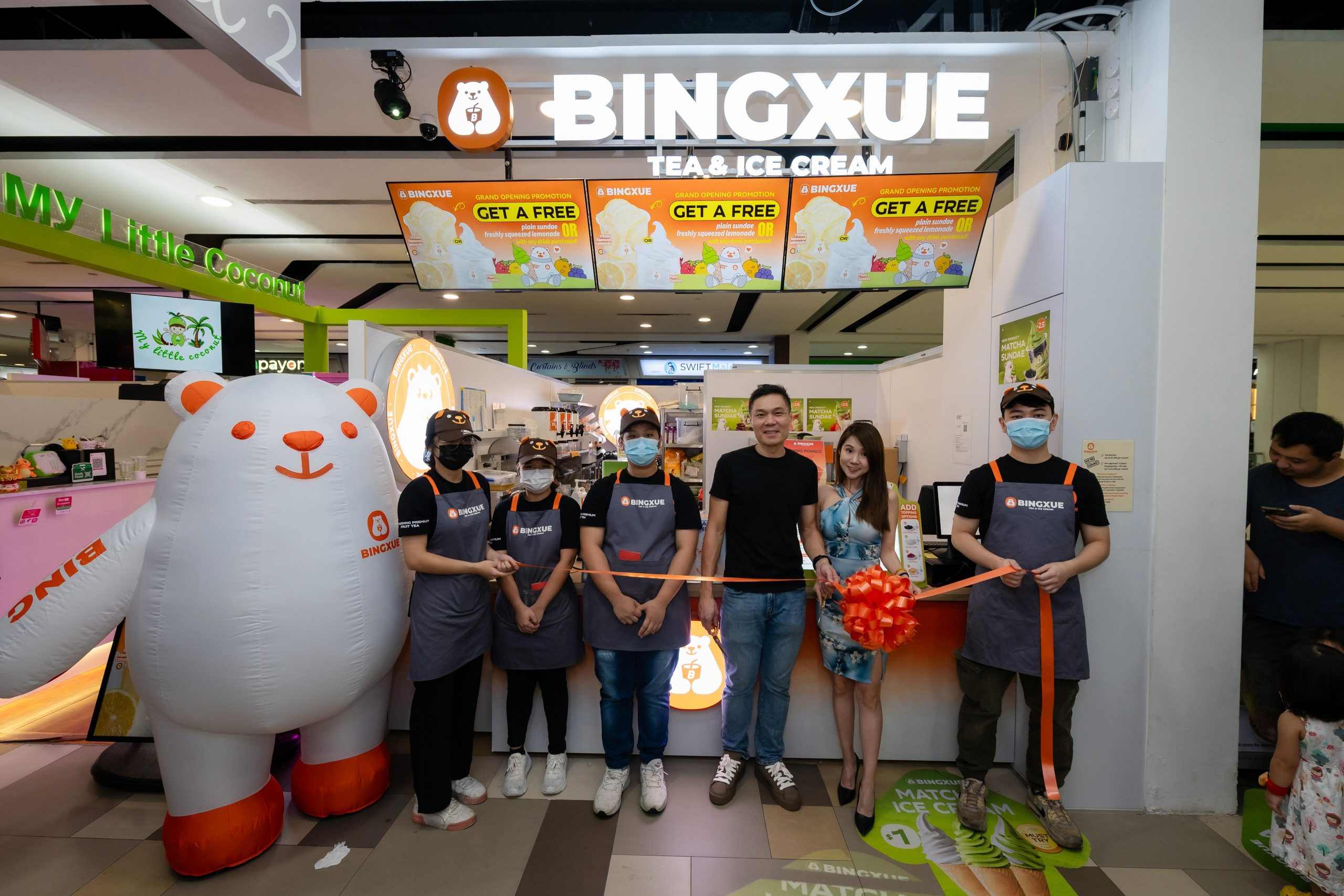
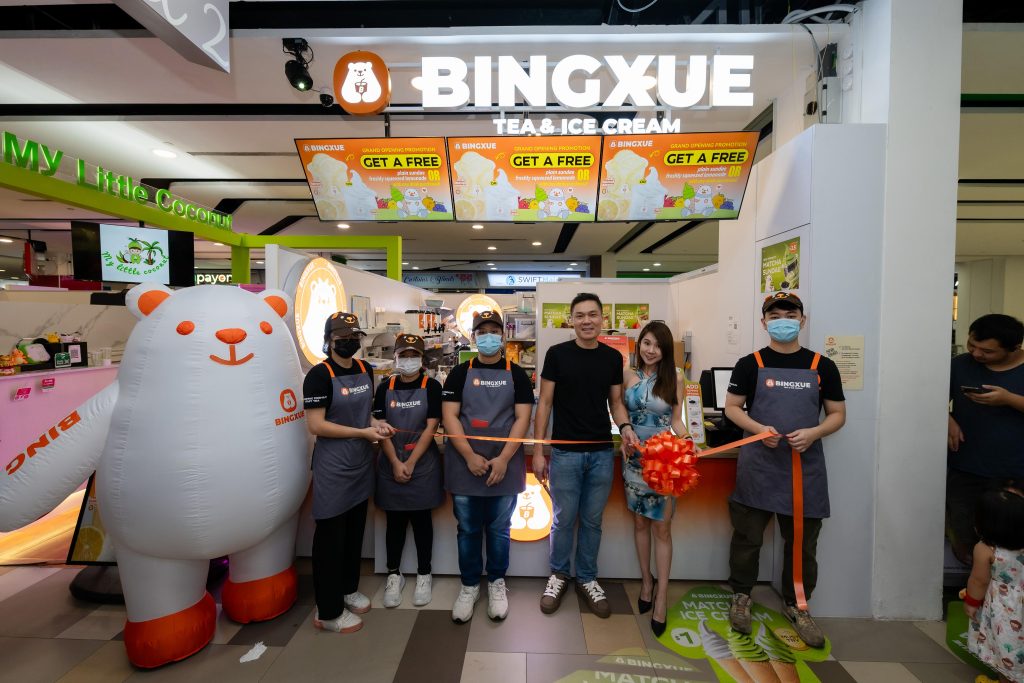
Yet BingXue Singapore has built its local presence around affordable ice cream, drinks, and snacks for the mass consumer. Since opening its first two outlets in October 2024 at Yishun Junction Nine and Changi City Point, the brand has grown to 12 outlets locally. By end-March 2026, it had sold more than 1.2 million ice cream cones.
Behind the brand is Singaporean couple James Leong and Joyce Lim, founders of NutriSmart Group, BingXue’s master franchisor in Singapore. For them, the harder question was not whether cheap products could attract customers, but whether affordable F&B could be sustainable here if the supply chain, pricing, and franchise model were disciplined enough.
From Shanghai To Singapore
Before starting NutriSmart Group in 2024, James and Joyce had spent years in corporate careers. James worked in plastics and chemicals for the healthcare and pharma industries, while Joyce built her career across events, PR, SaaS, business development, and client growth.
The couple relocated to Shanghai in September 2021 for work, after both were promoted in their respective companies. Living in China gave them a closer look at its fast-moving consumer, retail, and F&B sectors.
They came across BingXue while exploring business opportunities at the CFA Catering Alliance exhibition in Shanghai. What stood out was the combination of product quality and accessible pricing. That shaped their conviction that BingXue could work in Singapore, even though affordable ice cream cones, fruit teas, and China-origin F&B brands were already part of the local consumer landscape.
Before committing, they studied foot traffic, consumer behaviour, and category demand across multiple locations. Their view was that affordable drinks were available, but consistent quality, fresh fruit-based options, and accessible pricing did not always come together. The opportunity was not just to sell low-priced products, but to build a repeatable system around them.
Why The Real Investment Was In Supply Chain
Bringing BingXue to Singapore required a high six-figure commitment, funded entirely from personal savings. This covered franchise rights, the first outlets, raw materials, equipment, and the infrastructure needed to import from China.
While franchise fees and shop fit-outs were important costs, the largest early investment area was supply chain infrastructure. For a low-price F&B model, this matters. An S$1 ice cream cone only works if procurement, inventory, import routes, equipment, and logistics are tightly managed.
Localising Without Losing The Brand
Although BingXue originated from China, James and Joyce knew the Singapore market could not be copied and pasted from China. One of the first changes was sugar level. With Singapore consumers becoming more health-conscious, BingXue Singapore set its default sweetness at 50 percent.

At the same time, the Singapore team has had to remain closely aligned with BingXue HQ. For James and Joyce, the relationship works because it is not purely top-down. They communicate regularly with HQ, share what they are seeing on the ground, and receive support on product, pricing, and operations. That trust allows them to adapt for Singapore without diluting the brand.
Winning Over Landlords And Franchisees
One of the earliest hurdles was securing retail space. Singapore is a landlord’s market, and unfamiliar brands can struggle to convince larger mall operators.
BingXue’s first two outlets were chosen deliberately. Yishun Junction Nine allowed the team to test the concept in a neighbourhood mall. Changi City Point gave the brand broader visibility, given its higher footfall and proximity to Singapore Expo.
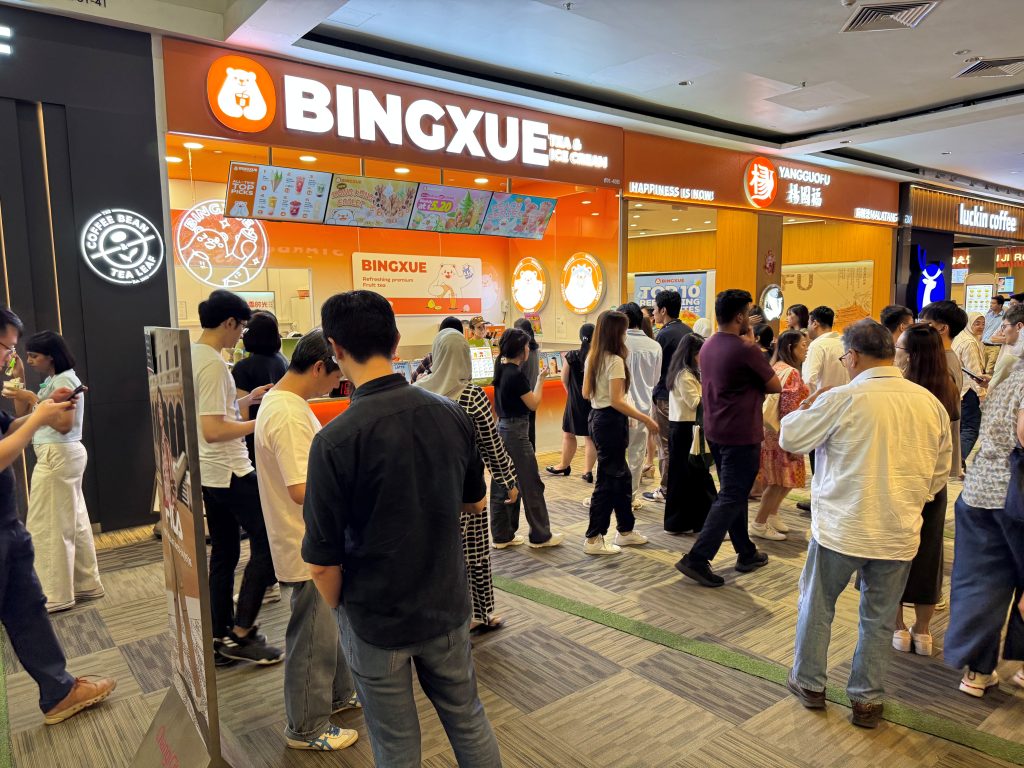
NutriSmart Group also had to build confidence among franchisees. Franchisees are supported through location selection, lease negotiation guidelines, design rendering, SFA submissions, insurance, renovation, licensing, and staff training. The goal is to make the system replicable, so franchisee success does not depend on the founders being physically present at every outlet.
Can Low Prices Still Be Profitable?
According to NutriSmart Group, most BingXue outlets in Singapore have been cash-flow positive from the first month of operations. Full capital breakeven on setup investment typically falls within the industry-standard 12 to 18 month window.
Still, James and Joyce say people often underestimate how much discipline is needed to make S$1 ice cream viable. Even the cone itself matters. Staff have to be trained to serve a cone with the right shape, height, and visual appeal, while keeping the portion within SOP. At S$1, every gram matters. The challenge is protecting margins without making customers feel shortchanged.

A low-price product can drive foot traffic, but if the unit economics are weak, growth only magnifies losses. For BingXue, the bet is that HQ’s production scale, disciplined supply chain management, careful site selection, and franchisee systems can make affordable pricing sustainable.
As James and Joyce put it, many brands can sell an S$1 ice cream cone. Far fewer can do so profitably.
BingXue is only the first step for NutriSmart Group. The company is targeting at least 50 outlets in Singapore within the next three years.
This article was contributed to us by Alpha Story


