
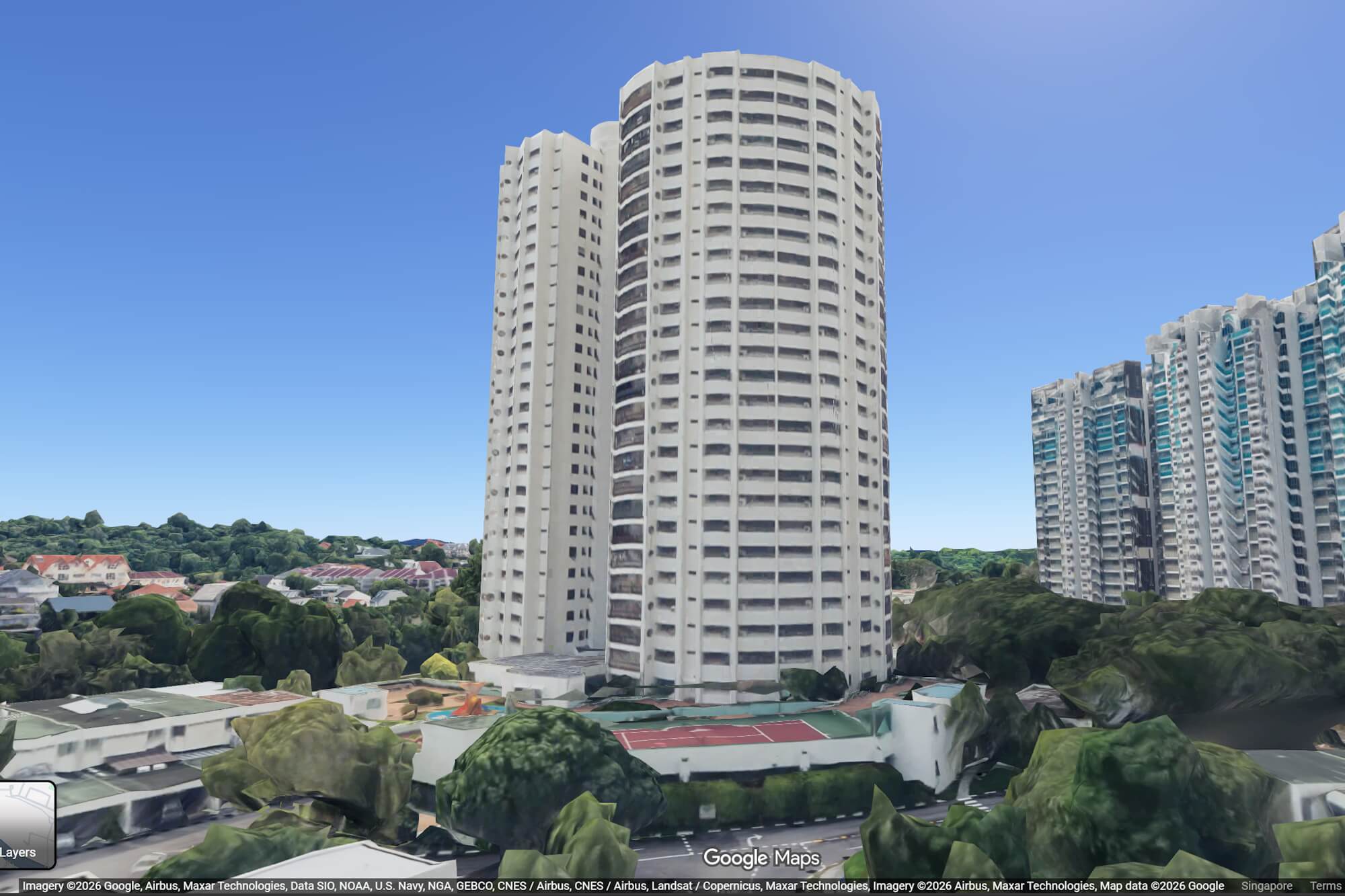
Parliament is discussing a new law to reduce the support property owners need to push through an en bloc sale. Earlier in August 2026, the Ministry of Law proposed the Land Titles (Strata) (Amendment) Bill 2026 in Parliament. This Bill seeks to update the consent thresholds for collective sales for the first time since 1999, so that “significantly older” developments that need “substantial investment… to remain safe and liveable” have a “more practical” chance of an en bloc sale.
This is one of many reasons en bloc sales could be making a comeback after the en bloc fever of 2017 and 2018, which saw over 60 deals worth about $18 billion in sales in both years combined.
#1 Easier For Older Developments To Initiate En Bloc Sale
In effect, the proposed Bill would require developments more than 40 years old to obtain consent from just 70% of owners before proceeding with a collective sale. Furthermore, developments 60 years and older will only need 65% of owners, if and when this Bill passes in Parliament.
This recognises that as developments age, their owners may also be increasingly difficult to contact, either because they are now based overseas and leasing the property through a third party, or they have medical issues that require power of attorney privileges. The proposed amendments would lower the consent threshold, making it more practical to obtain the required minimum number of signatures.
Read Also: 5 Former HUDC Estates That May Benefit From The New En Bloc Measures
#2 New Proposed Bill Frees Up Unique Developments For En Bloc Sale
In addition, the proposed Bill expands the collective sales potential of several sites that are non-strata-titled private residential developments. This means that while the flat owners own long leases in their units, they do not own the underlying land. Currently, any attempt at a collective sale would require the landowner’s agreement as well, not just the unit owners. (Notably, this amendment specifically excludes any land owned by the Housing and Development Board.)
One of the most infamous of these is Neptune Court, a development along Marine Parade Road built in 1975 by the Singapore government as a benefit for civil servants. Individual owners hold the 750 or so units, but the Ministry of Finance (MOF) owns the land and common areas.
One way around this was to privatise Neptune Court, meaning the unit owners would collectively purchase the land from MOF. The latest attempt was in October 2011, and MOF was prepared to sell the underlying land and common areas as long as at least 75% of unit owners consented to the privatisation. Unfortunately, only 52% of unit owners gave consent.
Under the new proposed Bill, the collective sale process would essentially be streamlined – the need to privatise the development first would be subsumed into the collective sale and would abide by the proposed consent threshold according to the development’s age.
Read Also: En Bloc Deal: 3 Ways You Can Still Not Make Any Money
#3 ABSD Deadline Extended For Developers
In July 2026, Minister for National Development Chee Hong Tat announced that developers now have more time to complete construction and sell all units when redeveloping large residential en bloc sites. Previously, developers faced Additional Buyer’s Stamp Duty (ABSD) if they did not complete construction and sell all units within 5 years of acquiring the site.
Recognising that the “redevelopment of large residential en bloc sites will require more time”, Minister Chee said that the shorter critical sales timeline would discourage developers from rejuvenating these sites, leading to a “lose-lose outcome”.
With this announcement, large en bloc redevelopments of at least 700 units will have their deadline extended by a year to six years, while developers of mega en bloc projects of at least 1,400 units will have the deadline extended by two years to seven years.
According to Minister Chee, “These changes are intended to set the right incentives for developers to rejuvenate larger estates.”
#4 Lower Interest Rates
Beyond the policy changes, there are other factors which should encourage more en bloc sales. With interest rates falling from their 2023 peak, borrowing costs should no longer hold back developers, who should be more willing to underwrite larger deals.
The recent en bloc sales of Loyang Valley at $880 million and Thomson View at $810 million suggest greater buyer confidence in redeveloping these sites, rather than simply waiting for a suitable government land sale (GLS) site to bid on.
Read Also: Mortgage Rates Are Lower In 2026: Should You Refinance Your Home Loan Now?
#5 GLS Sites Are Getting More Competitive
That said, GLS sites are also facing stiff competition among developers. Despite the growing number of sites awarded in recent years, the average number of bidders for each new site has steadily increased, from 3 to 4.
This year, for example, there were 4 bids for a Peck Hay Road GLS site near Newton MRT station. The highest bid was $542.4 million, which is about $1,865 psf per plot ratio, from City Developments Limited and Hong Realty.
There were also 4 bids for the third and final River Valley Green (Parcel C) GLS site, which is next to Great World MRT station. Sunway MCL and CSC Land Group won, submitting a bid of over $750 million, or $1,730 psf per plot ratio.
Even the exceptions to the rule demonstrate how competitive GLS bidding is. The most recent GLS site in Berlayar Drive, part of the Greater Southern Waterfront, had only one bidder after the public tender closed in August 2026. However, the joint bid from Hong Leong Holdings and GuocoLand was $576 million, which is about $1,515 psf per plot ratio. This is the highest psf per plot ratio for a development outside the Central Region.
#6 More Realistic Reserve Prices
Perhaps recognising the pitfalls of failed en bloc attempts, sellers are now pricing more realistically and lowering or maintaining their reserve prices from previous attempts. The reserve price is the minimum price that property owners are willing to accept.
Loyang Valley’s successful en bloc attempt in April this year was only possible after its reserve price dropped from $980 million in October 2022 to $880 million in July 2025.
Thomson View, another en bloc success story, was also due to reducing the original reserve price of $918 million in 2024 to $810 million after developers UOL Group and CapitaLand Development showed interest in the site in October 2025.
Pine Grove, a former HUDC development, has dropped its reserve price from $1.95 billion in its unsuccessful 2024 en bloc attempt to $1.78 billion in its current attempt.
Laguna Park, another former HUDC development, has maintained its reserve price at $1.48 billion from its unsuccessful 2019 en bloc attempt. It was again unsuccessful, but mainly due to not obtaining the required proportion of signatures to meet the existing consent threshold.
Top Image Credit: Thomson View/Google Maps


Lifestyle
15 Of The Cheapest EV Cars In Singapore


Budgeting 101
7 Ways Being Frugal Is Different From Being Cheap

Street Smart
Singapore Gym Membership Price Guide (2026 Edition)


