
Healthcare demand in Singapore has been rising steadily, driven by more people living longer with chronic diseases and other care needs. Singapore reached “super-aged” status in 2026, with over 21% of our population aged 65 and above. By 2030, this is expected to rise to 25%, or 1 in 4 Singaporeans.
As our population ages, that also means the absolute number of people living with chronic diseases will rise. Our current healthcare system will need to manage this increase while ensuring that higher healthcare utilisation doesn’t lead to an inaccessible rise in medical costs.
Foundation Healthcare has made it its mission to build a scalable, integrated healthcare system that is sustainable and affordable both in Singapore and the region. As Singapore’s largest private multi-specialty healthcare group, established in 2023, Foundation Healthcare is well-positioned to do this and recently launched its initial public offering on the Singapore Exchange Mainboard in July this year.
Foundation Healthcare is built around three complementary pillars. It is Singapore’s largest specialist platform today; it operates four medical centres spanning day surgery, imaging, and fertility, as well as two speciality centres; and it has developed a proprietary digital platform called AVA®, which has been deployed in all private and public hospitals in Singapore.
Foundation Healthcare’s key is its goal of making private healthcare simple and accessible. These are two words you don’t normally associate with private healthcare, which can often feel complex to navigate and financially prohibitive, so I wanted to see for myself how accessible Foundation Healthcare makes it.
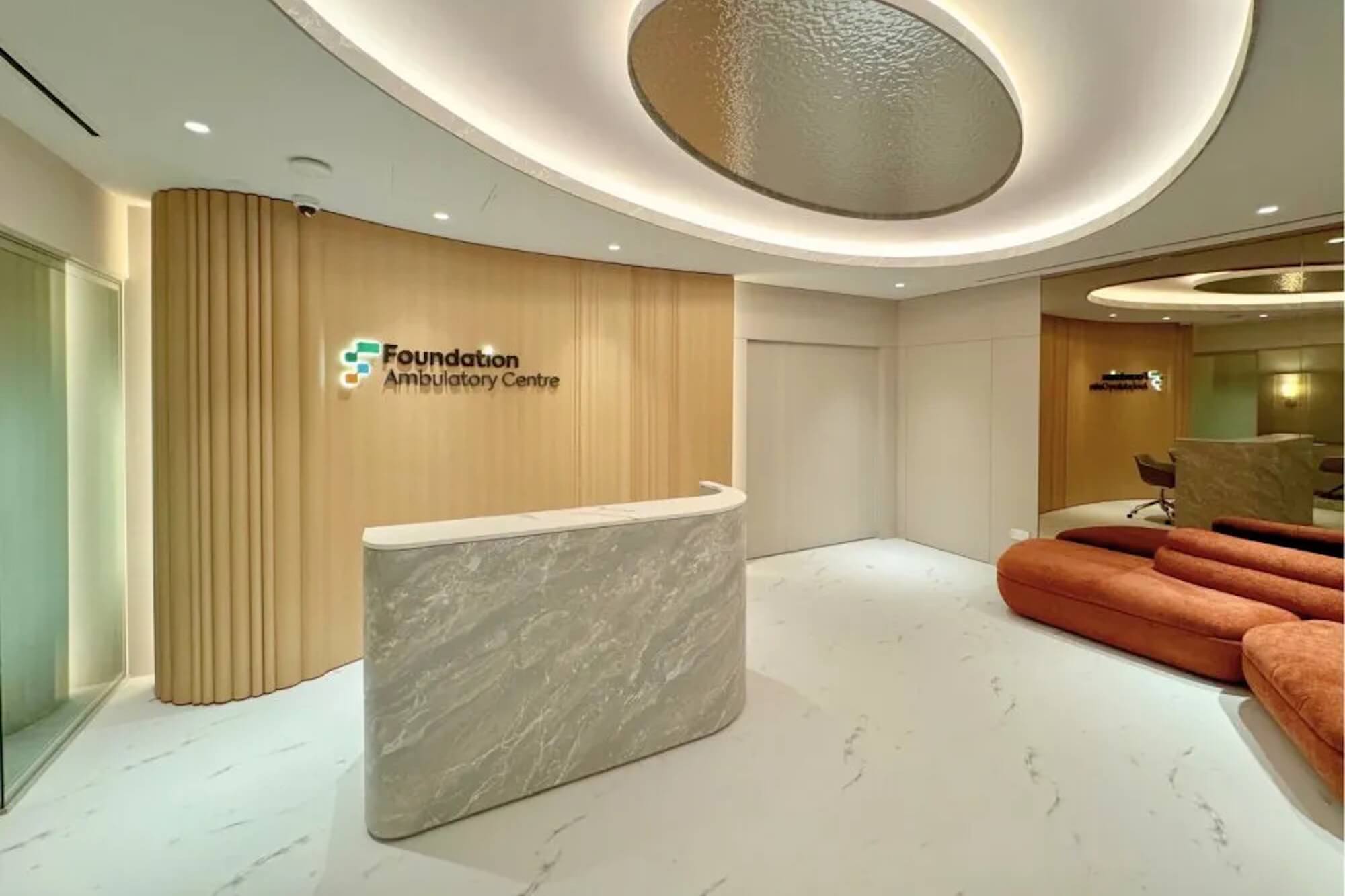
Earlier this month, I had the privilege of visiting two Foundation Healthcare facilities: the Foundation Ambulatory Centre (Novena) and the Foundation Oral Maxillofacial Surgery Centre at Farrer Park. These two centres are part of Foundation Healthcare’s push to deliver differentiated, patient-centric care in Singapore.
Visiting The Foundation Ambulatory Centre (Novena)
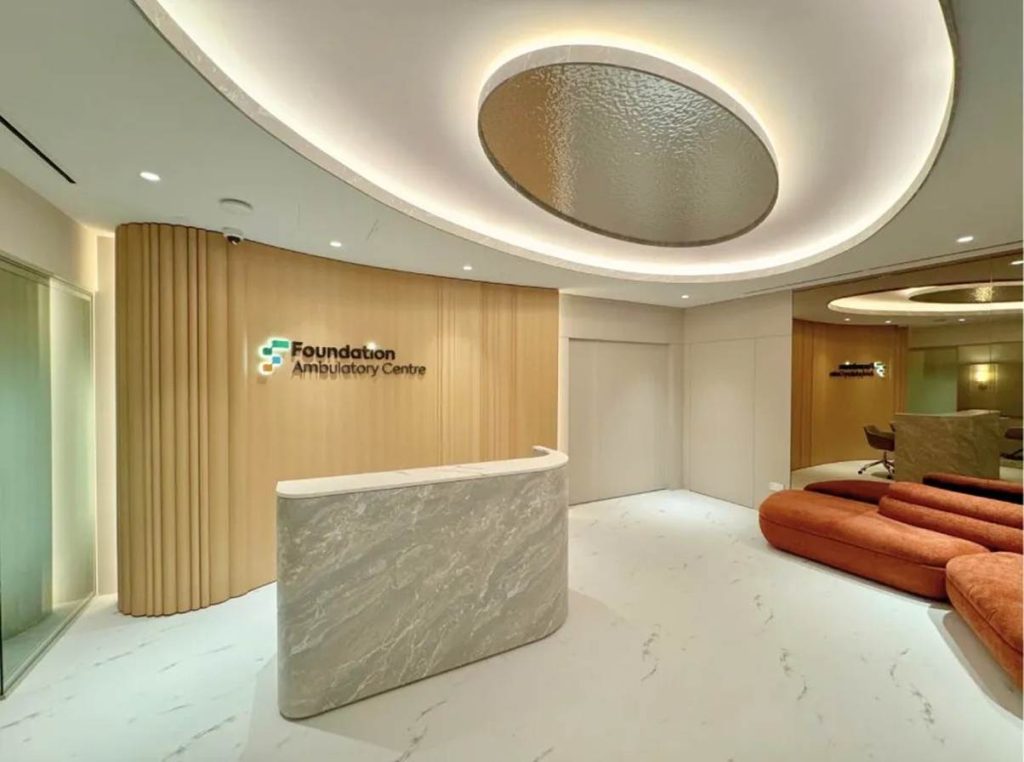
The Foundation Ambulatory Centre (FAC) (Novena) is the largest standalone day surgery centre in Singapore, featuring 4 operating theatres and 2 endoscopy suites. The purpose-built facility spans a substantial 7,000 square feet, providing ample operating space for clinical teams and a comfortable environment for patients.
FAC (Novena) is fully equipped to support a broad range of medical specialties, including gastroenterology, ophthalmology, orthopaedic surgery and hand surgery. Since opening earlier this year, FAC (Novena) has performed over 600 operations.
Each operating theatre meets hospital-grade standards and is tastefully designed so that, from the point of admission to discharge, typically on the same day, patients will enjoy a comfortable, efficient process. Each operating theatre is themed after one of the four seasons.
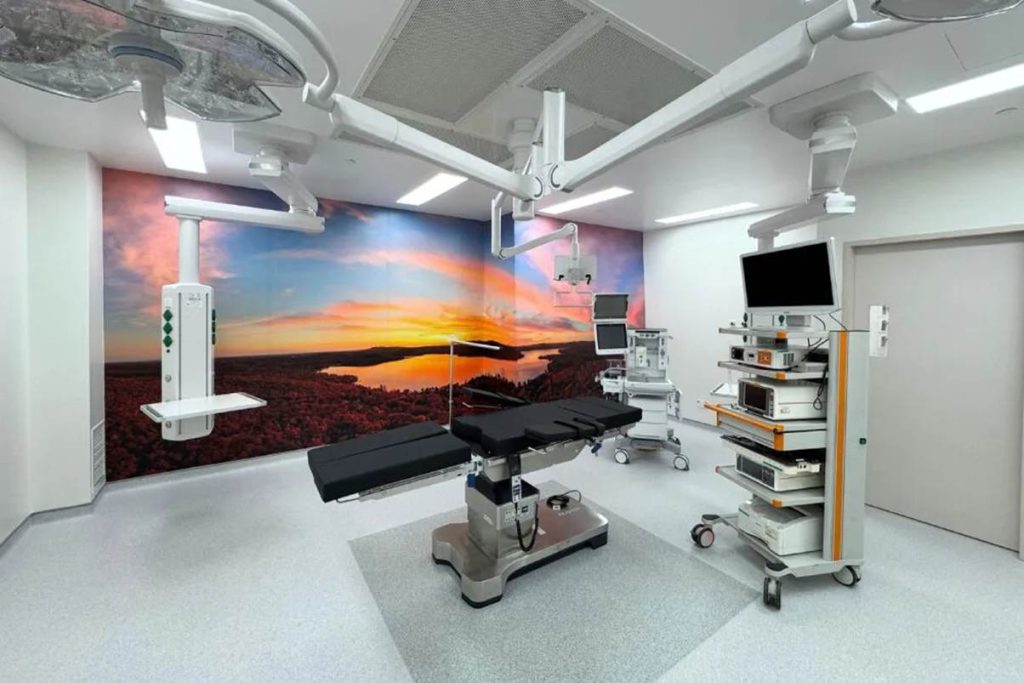
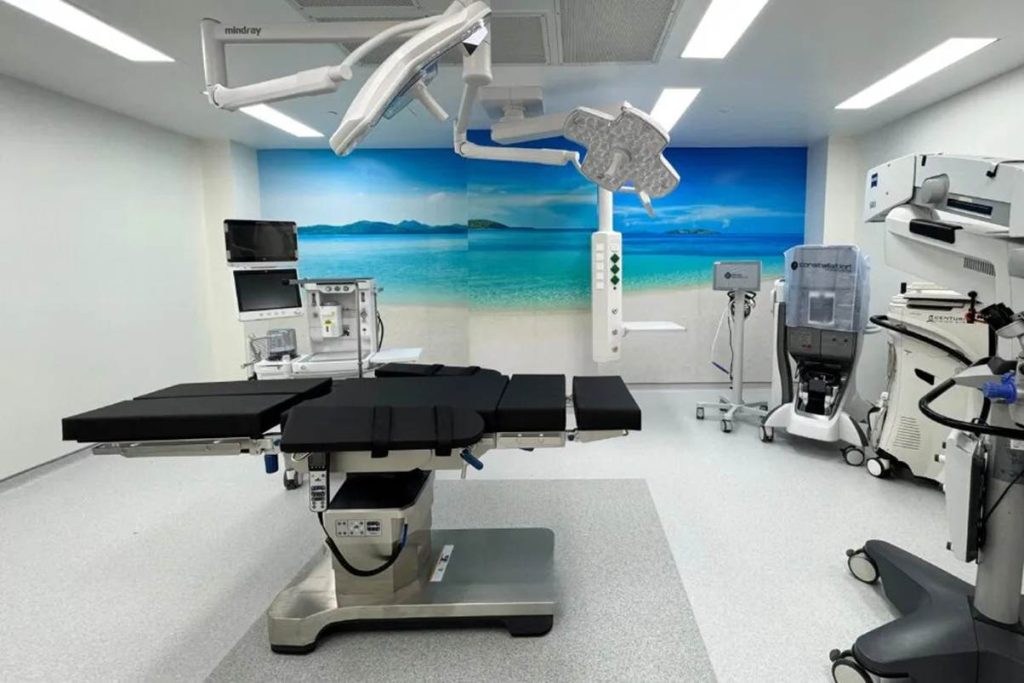
Before admission, patients may undergo a pre-clinical evaluation. This includes a medical history review, clear explanations of what to expect on the day of surgery, pain management, and, where appropriate, advance planning for pain control. This allows patients to feel prepared and reassured before their procedure.
After surgery, patients can recuperate in one of 11 recovery beds located next to the operating theatres. Where necessary, there is also a private recovery suite for slightly longer periods. The professional yet comfortable space allows for minimal waiting between admission, procedure, and discharge.
I especially appreciated how the emphasis on high-quality, hospital-equivalent care remained consistent throughout the FAC’s design. Such an efficient, comfortable design goes a long way toward building trust and reassuring patients, even for procedures that allow same-day discharge.
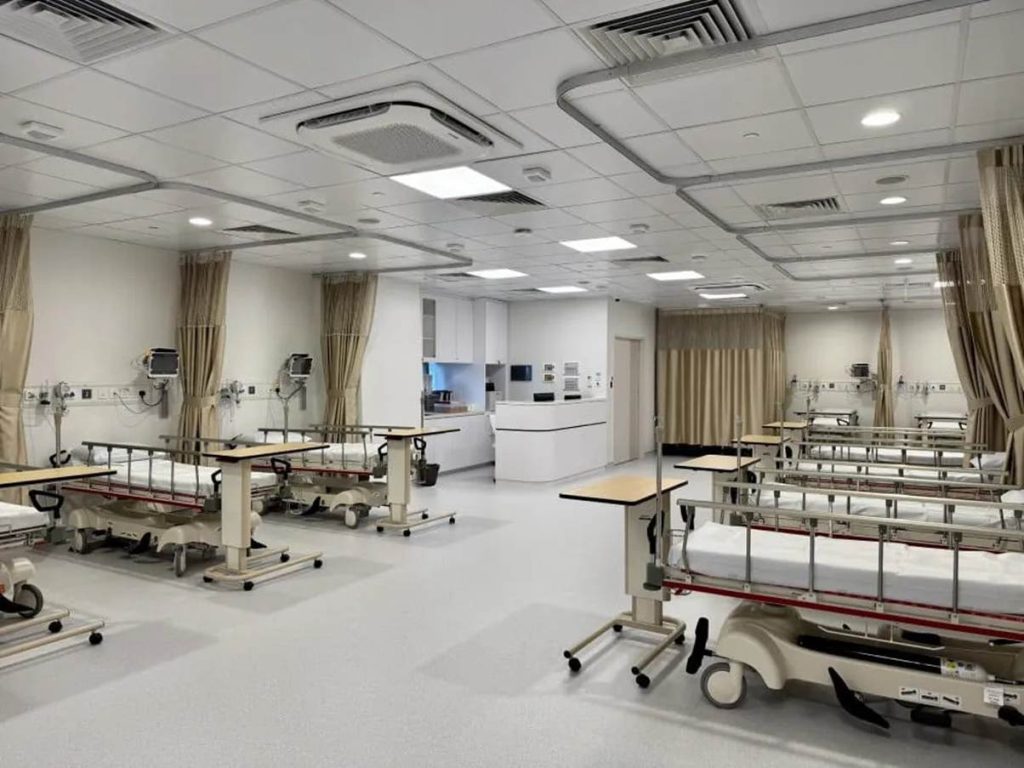
FAC (Novena) is not only designed for patients, but for doctors as well. They support doctors with a highly trained, multidisciplinary nursing team and, perhaps more crucially, an in-house anaesthesia team. This ensures structured pre-anaesthesia assessment and counselling, and close co-ordination between the surgical, anaesthesia, and nursing teams.
Keeping the anaesthesia team in-house enables doctors to predict and reduce potential complications during a planned surgery, ensuring safe and consistent outcomes.
Doctors also have access to a separate, private area to rest before and after their procedures.
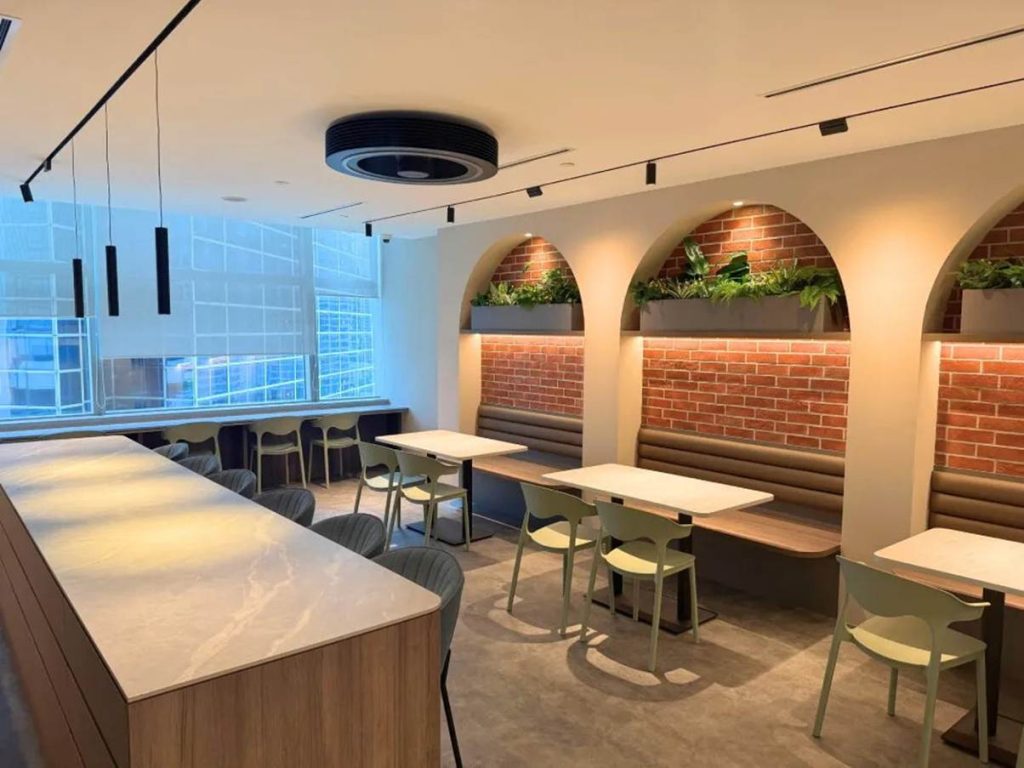
The FAC’s location on the 12th floor of Novena Square Tower also carries multiple benefits. It is easily accessible by public transportation, as it sits directly above the Novena MRT station. Furthermore, its close proximity to Tan Tock Seng Hospital and Mount Elizabeth Novena Hospital makes it convenient for the doctors based there, many of whom are part of Foundation Healthcare’s broad network of specialists.
When it comes to costs, I was surprised by how much cheaper some procedures can be when done here.
Based on costs publicly published by the Ministry of Health (MOH), as of 2023, a colonoscopy (SF702C) at a private hospital would cost between $2,792 and $3,827, with a typical bill of $3,241. This includes $2,518 for the operation fee and $642 for ward charges, consultation fees, and other fees.
As one of Prudential’s preferred partners under PRUPanel Connect, Foundation Healthcare charges about 10% to 20% less than the typical bill according MOH data. Day surgery and eFiling of the claim must be done at the panel healthcare institution (for example, FAC (Novena)).
As of 1st October 2026, Foundation Ambulatory Centre (Novena) will be an AIA Partner Facility.
Perhaps most impressively, for cash-paying patients, Foundation Healthcare would charge only $1,950 for that particular colonoscopy procedure. This is about 40% less than the typical bill, according to 2023 MOH data. This entire amount is claimable by Medisave, which means that there is no out-of-pocket charge to the patient.
Here are some other common procedures and their corresponding cost to patients.
| Procedure (TOSP Code) | MOH Typical Bill Range (2023) | MOH Typical Bill (2023) | Foundation Healthcare Cash-Paying Patients (Exclusions apply) |
| Gastroscopy or OGD (SF701I) | $2,688 to $3,659 | $3,079 | $1,250 |
| Colonoscopy (SF702C) | $2,792 to $3,827 | $3,241 | $1,950 |
| OGD + Colonoscopy (SF701I + SF702C) | $7,115 to $10,042 | $8,467 | $2,370 |
Foundation Oral Maxillofacial Surgery Centre
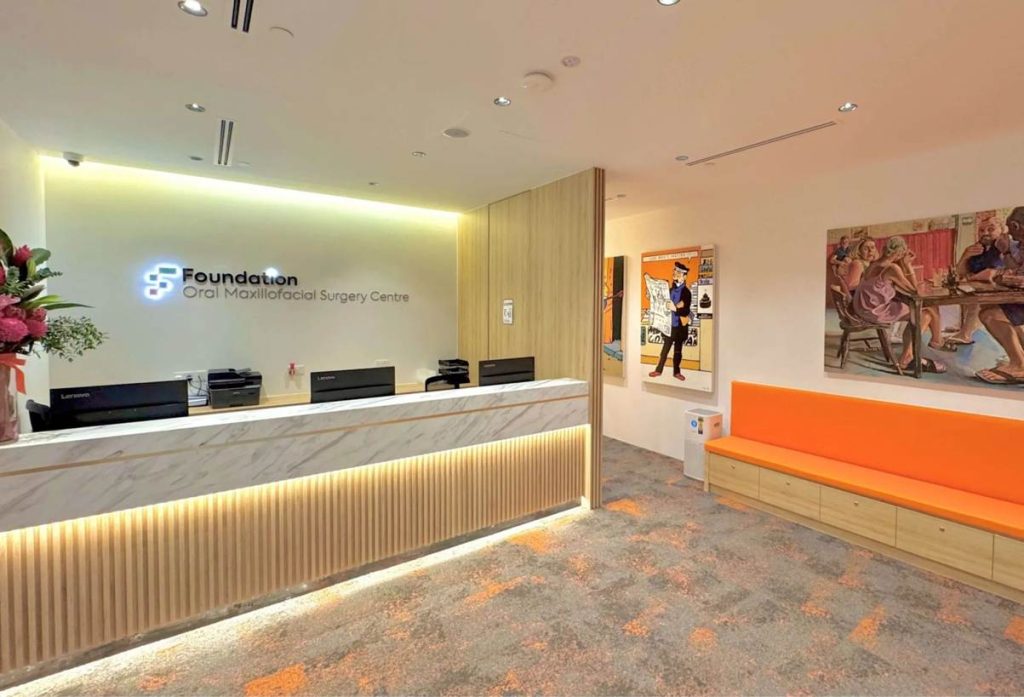
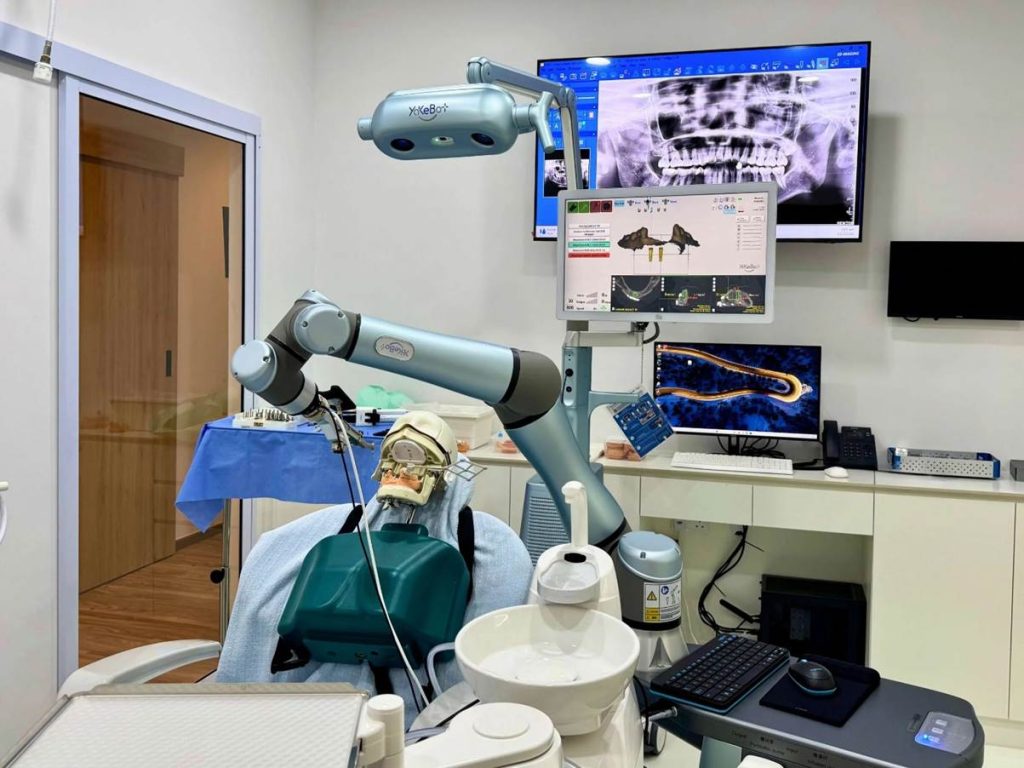
My tour of Foundation Healthcare continued with a short trip to the Foundation Oral Maxillofacial Surgery Centre at Farrer Park Medical Centre. This new facility, which opened in July 2026, is the first of its kind in Singapore, and houses Singapore’s first autonomous dental implant surgical robot.
The facility handles multiple implant and oral-maxillofacial cases of varying complexity, from single-tooth replacement to full-mouth rehabilitation and reconstruction.
While the team already includes several experienced oral and maxillofacial surgeons, the autonomous dental implant surgical robot was clearly the star. It can perform dental implant surgery with precision and predictability that even experienced surgeons cannot replicate.
Dental implants are titanium anchors surgically placed into the jawbone. They support various replacement teeth, such as crowns, bridges, or dentures.
Unlike conventional freehand implant placement, which almost all dental implant surgeries currently require, using the surgical robot requires much more pre-planning by the surgeon. This includes a digital workflow to determine implant position, angulation, and depth using a virtual rendering of the patient’s bone structure, which can be obtained on the same visit to the centre as part of treatment planning.
The robot then translates this digital plan into action during surgery. The surgeon controls it throughout the procedure, supervising every step of the implant and making all necessary decisions. The surgical robot is therefore simply a tool to assist the surgeon and never works autonomously.
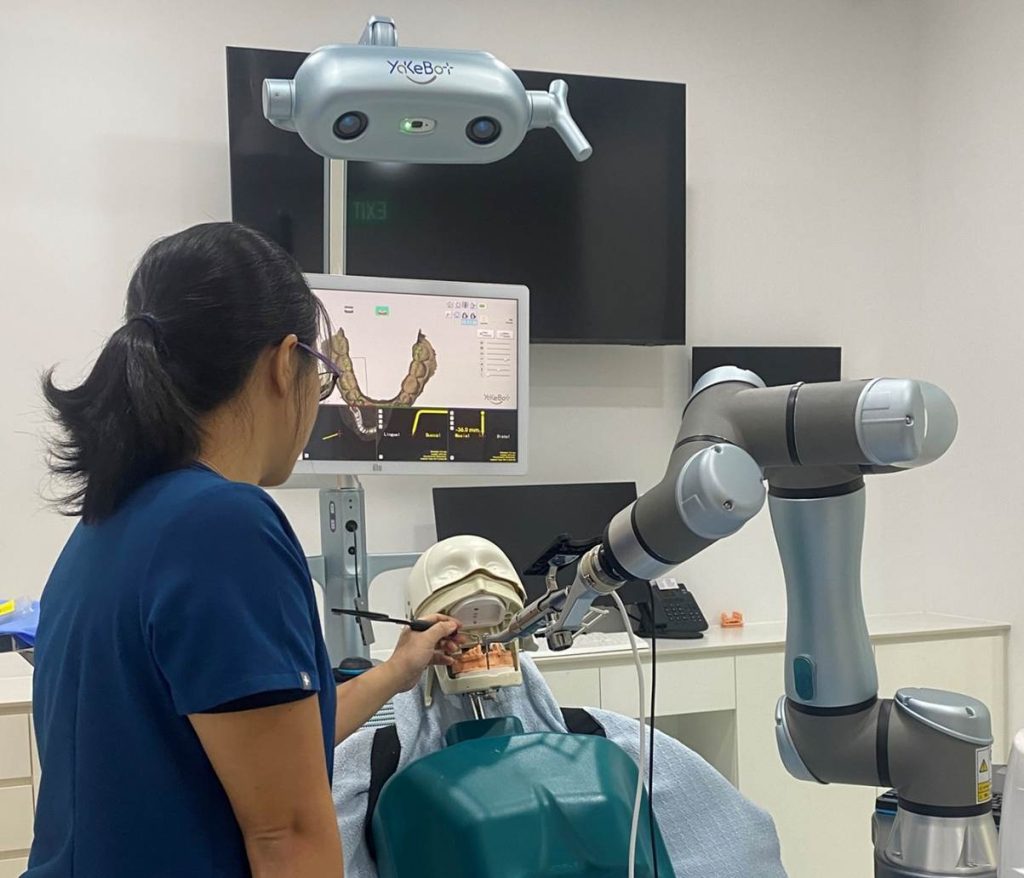
Most impressively, because the surgical robot can achieve a high level of precision and accuracy, thanks to the effort in the pre-planning stage, it can often achieve parallel implant placement at levels impossible for even the most experienced surgeon. While implants don’t have to be parallel, parallel placement often reduces stress on the implant and reduces long-term wear and tear.
Naturally, robotic implant surgery isn’t suitable for every patient, and experienced surgeons determine suitability based on the patient’s oral health, bone condition, and the complexity of the case. In some cases, because the digital planning process takes much more effort before using the robot, the surgeon might decide that traditional freehand implant placement is more efficient.
I was especially surprised to hear that, regardless of the implant surgery method-that is, whether using the surgical robot or not-the centre charges the patient the same amount. Currently, the total cost of an implant and crown ranges from $3,800 to $5,300. These include the surgery fees and the prosthetic tooth. The exact cost depends on the implant brand and any additional treatment the surgeon deems necessary, such as bone grafting or tooth extraction.
Foundation Healthcare’s Role In Singapore
As Singapore’s largest private multi-speciality healthcare group, Foundation Healthcare plays several interconnected roles to build a truly integrated healthcare system that lowers healthcare costs in Singapore.
They are not only growing their network of over 100 trusted specialists across various medical fields but also ensuring most have at least five years of private practice experience. This also makes them Singapore’s largest specialist platform today, creating greater opportunities for collaboration between specialists while enabling cost savings through shared infrastructure and economies of scale that standalone practices struggle to achieve.
By demonstrating the feasibility of the day surgery model with the Foundation Ambulatory Centre at Novena as their flagship, they intend to move appropriate surgical procedures out of higher-cost hospital settings and into lower-cost outpatient medical centres. The FAC allows them to do this without losing the high-quality care expected from hospitals. Furthermore, ambulatory surgery centres are much cheaper and faster to develop than a fully equipped hospital and can be built even in commercial buildings while paying a base rent. While there are no official plans to expand beyond the four medical centres yet, Foundation Healthcare expects this segment to play a bigger role in their business moving forward.
Finally, Foundation Healthcare has developed a proprietary technology platform named AVA®. This ecosystem facilitates communication between specialists, patients, facilities like hospitals and other medical centres, and payors. AVA®, deployed in all private and public hospitals in Singapore, is expected to connect and coordinate information flow among these four. This will streamline processes like obtaining medical records, booking appointments, admission and discharge, and claims assessment within one ecosystem, creating a more integrated patient journey.
Ultimately, such a scalable integrated platform will ensure that private specialist care remains accessible and affordable, regardless of how complex the treatment is.
My special thanks to Dr Julian and Adrian for taking time out of their busy schedules to give me a tour of the Foundation Ambulatory Centre (Novena), and to Dr Winston and Dr Debbie for taking the time to show me around the Foundation Oral Maxillofacial Surgery Centre. My deepest appreciation also goes to Karen of Foundation Healthcare and Melody for facilitating both visits and for accompanying me.


Family Planning
Cost Guide To International School Fees In Singapore


