
When markets are volatile, deciding when to invest can be difficult. Share prices can swing sharply as interest-rate expectations, economic conditions and geopolitical developments change.
But what we invest in is only part of the decision. How we invest matters too. Lower trading costs can make strategies such as dollar-cost averaging (DCA) more practical, especially for investors building their portfolios gradually. At the same time, cheaper trading should not become a reason to trade more often.
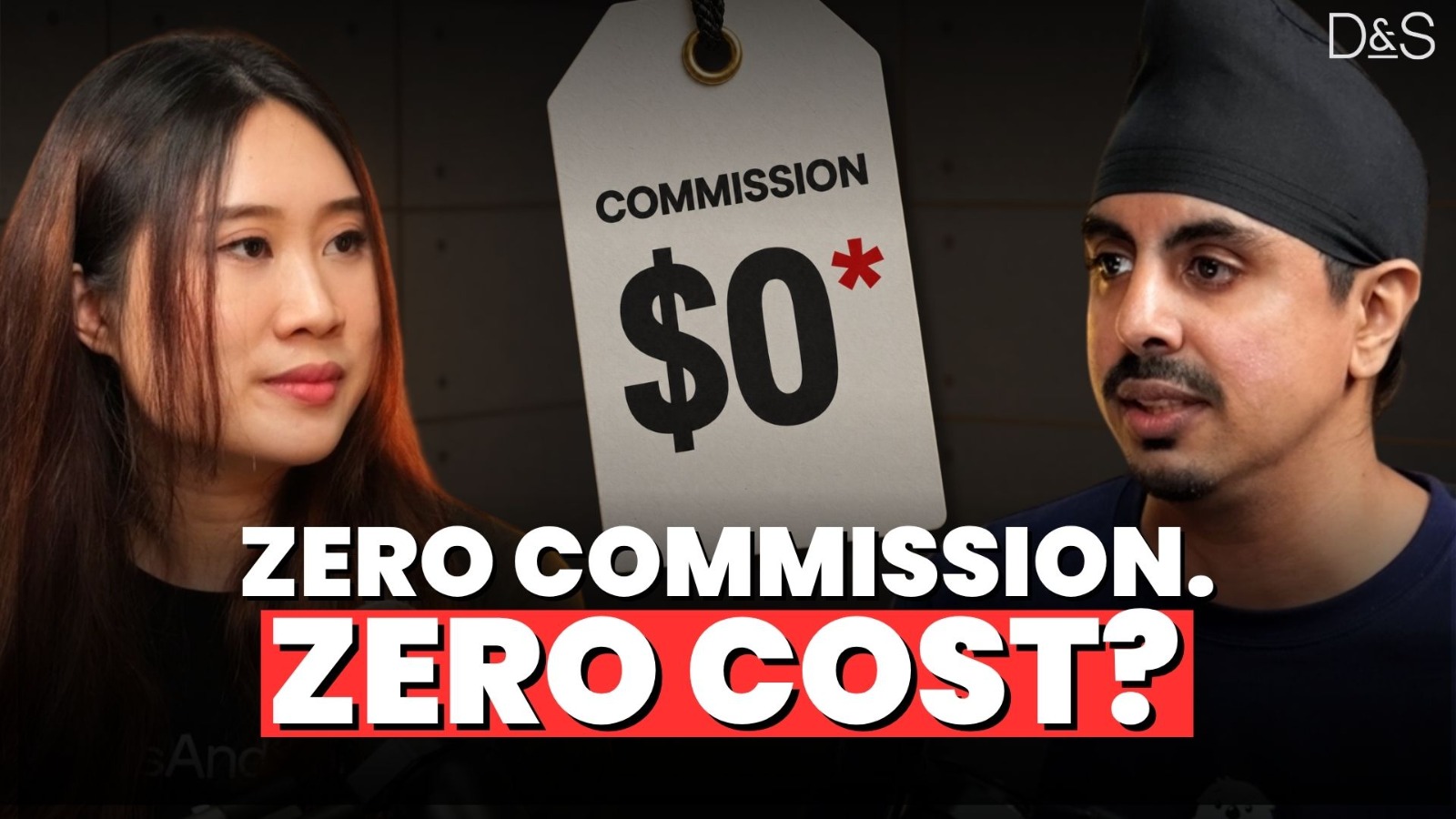
In this episode of the DollarsAndSense Podcast, we spoke with Vik, Director and Head, Securities Retail Sales at Phillip Securities, a member of PhillipCapital, about navigating market volatility, using DCA and what investors should know about zero-commission investing.
Watch the full DollarsAndSense Podcast episode.
Not Every Market Dip Is A Buying Opportunity
When markets fall, investors may be tempted to “buy the dip”. The difficult part is knowing whether a lower share price represents an opportunity or reflects a genuine deterioration in the investment.
Rather than focusing on how much the price has fallen, Vik believes investors should first understand why it happened. A company’s share price could fall because of broader market volatility even though its longer-term prospects remain largely unchanged. But if the decline reflects worsening business conditions, industry changes or weaker company fundamentals, buying more simply because the stock is cheaper could compound the problem.
This is why price movements alone should not determine whether we invest. Whether markets are rising or falling, investors still need to understand what they are buying and why they want to own it.
Dollar-Cost Averaging Takes Some Of The Guesswork Out Of Investing
Trying to find the perfect entry point sounds appealing, but markets rarely make it easy. An investor may wait for a rising stock to pull back, only for its price to keep climbing. By the time the dip eventually comes, the stock could still be trading above the price at which the investor first considered buying it.
Dollar-cost averaging takes a different approach. Instead of trying to predict the best time to enter the market, investors put a fixed amount into an investment at regular intervals. When prices are higher, the same amount buys fewer units; when prices are lower, it buys more. This makes investing more systematic and reduces the need to predict short-term market movements.
However, DCA does not mean blindly investing in the same company regardless of what happens to the business. If its fundamentals deteriorate, continuing to buy simply because the price is falling could leave investors with a larger position in a weaker company.
Investors who do not want to continually select individual companies could instead DCA into a diversified index such as the S&P 500. This reduces the need to identify the “right” stock, although investors will not capture the full upside if a particular company or sector substantially outperforms the broader market.
Zero Commission Makes Investing Smaller Amounts More Practical
Trading commissions matter more when we invest smaller amounts. If every transaction comes with a minimum commission, someone investing a few hundred dollars at a time could see a noticeable portion of each investment go towards fees. This may encourage investors to accumulate a larger sum before investing.
Zero-commission trading changes this calculation. Vik explained that Phillip Securities’ POEMS Cash Plus account currently charges zero commission and zero platform fees. He also pointed out that investors should distinguish between a brokerage charging neither and one advertising zero commission while still imposing a separate platform fee.
Without a minimum commission for each trade, investors have greater flexibility to invest smaller amounts regularly, making DCA easier to carry out without having to optimise each investment around transaction costs.
Lower trading costs can also make portfolio rebalancing more practical. For his individual stock investments, Vik reviews financial results and management guidance around quarterly reporting periods to assess whether his original reasons for investing still hold. The important point is that lower trading costs remove one practical barrier; they do not remove the need to review the investment itself.
Zero Commission Does Not Mean Investing Is Free
Brokerage commission is only one cost of investing. For Singapore investors buying US investments, converting Singapore dollars into US dollars may involve a currency conversion spread, while changes in the exchange rate can also affect returns.
Taxes are another consideration. Singapore investors receiving dividends from US stocks are generally subject to a 30% US dividend withholding tax, which means the headline dividend yield is not necessarily what eventually reaches the investor.
There may also be different ways to gain exposure to the same market. Vik pointed to Irish-domiciled accumulating exchange-traded funds (ETFs) listed on the London Stock Exchange as one alternative structure investors may encounter when investing overseas.
The point is not to assume that “zero commission” means zero cost. Saving on brokerage fees can help, but investors should still account for currency conversion, taxes and other costs that may affect their overall returns.
Cheaper Trading Should Not Encourage Us To Trade More
Removing trading commissions also removes some of the friction that makes investors think twice before buying or selling. Once that cost disappears, placing another trade can feel almost consequence-free, even though the investment risk remains exactly the same.
A stock can still fall after we buy it, and frequent trading can still lead to poor decisions. More importantly, zero commission does not make an investment idea better. Investors should still be able to answer a basic question before placing a trade: why am I buying this investment?
Cost matters when choosing a brokerage, particularly for investors who invest regularly, but it should not be the only consideration. Access to research, investment products and support may also matter depending on how you invest.
Vik highlighted Phillip Securities’ research capabilities, access to licensed trading representatives and range of investment products as other factors investors may want to consider. Having access to different products can also give investors more ways to gain exposure to the same market, which may matter when considering dividends, taxes and investment objectives.
Rather than simply choosing the cheapest brokerage, investors should consider whether a platform offers the combination of costs, investment access and support that suits how they invest.
Read Also: Does It Make Sense To DCA Into A Recovering Stock Market?


Lifestyle
15 Of The Cheapest EV Cars In Singapore


Budgeting 101
7 Ways Being Frugal Is Different From Being Cheap


Street Smart
Singapore Gym Membership Price Guide (2026 Edition)


Street Smart
Singapore Gym Membership Price Guide (2026 Edition)

Bonds and Fixed Income
Complete Guide To Buying Singapore Savings Bonds (SSB) [2026 Edition]


