
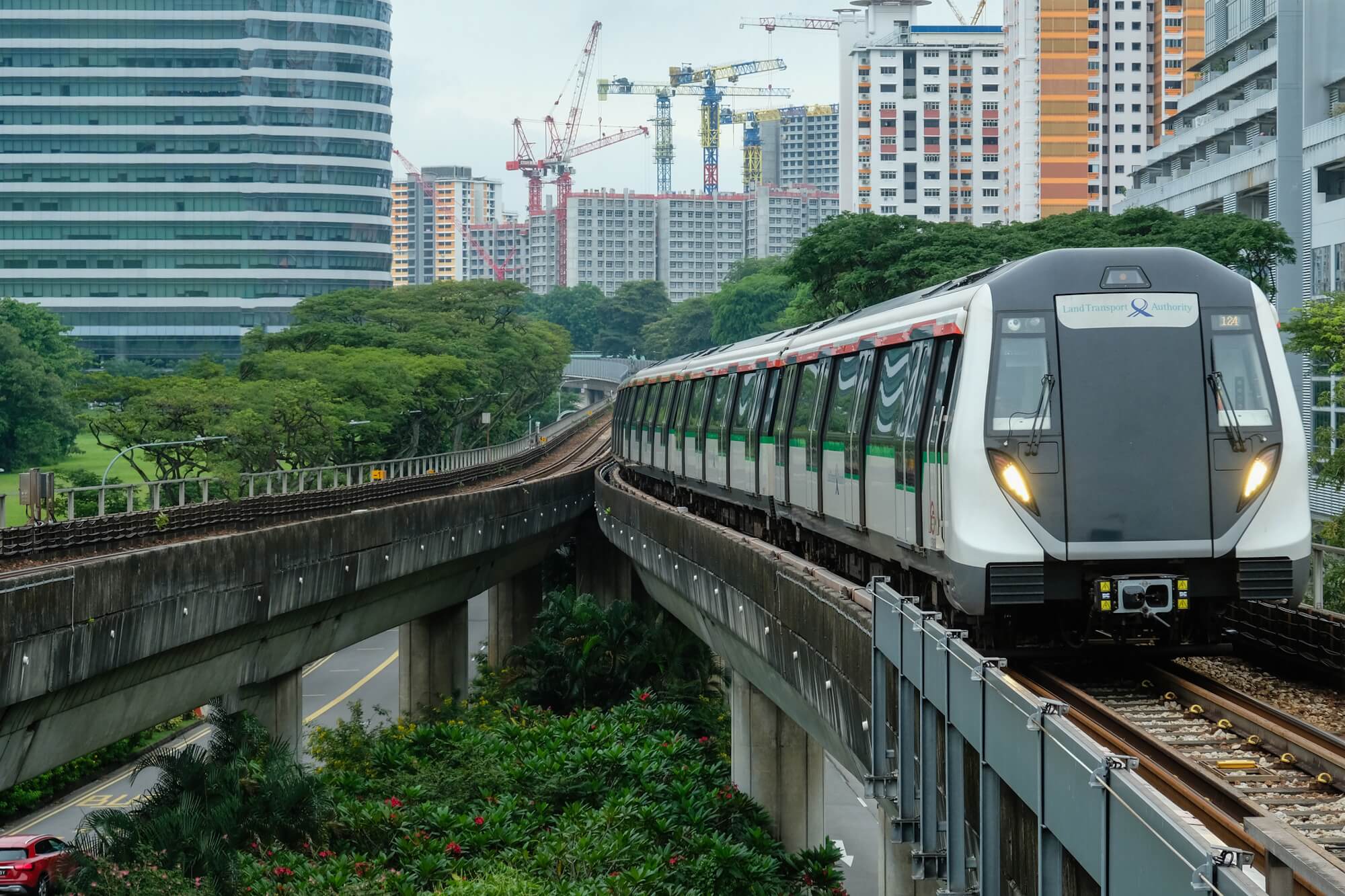
The latest Fare Review Exercise has concluded with adult card fares rising 12 to 13 cents by 26 December 2026, a record increase in cash terms. The Public Transport Council (PTC), which conducts the fare review, has affirmed its position that it needs to “strike a balance between keeping public transport fares affordable for commuters and ensuring the financial sustainability of Singapore’s public transport system amid rising operating and energy costs”.
The PTC uses a fare adjustment formula that takes into account several factors, including the year-on-year changes in core Consumer Price Index (CPI), the Average Monthly Earnings (National Average) also known as the Wage Index, and the Energy Index, a composite index derived from diesel and electricity prices.
In other words, when inflation increases, wages increase, and energy prices increase, public transport fares can also expect to increase. However, the PTC also has the discretion to defer some of the increase determined by the fare adjustment formula to future fare review exercises.
| Year Of Fare Review Exercise | Fare Adjustment Quantum Generated By Formula | Overall Net Fare Adjustment | Change To Adult Card Fare |
| 2014 | -0.6% (3.4% carried over) | 2.8% | Increase by 2 to 5 cents |
| 2015 | -1.9% | -1.9% | Decrease by 1 to 4 cents |
| 2016 | -5.7% | -4.2% | Decrease by 1 to 27 cents |
| 2017 | -3.9% (-1.5% carried over) | -2.2% | 50 cents less for train fares if you tap in before 7.45am on weekdays (excluding public holidays) |
| 2018 | 7.5% (-3.2% carried over) | 4.3% | Increase by 6 cents |
| 2019 | 7.0% | 7.0% | Increase by 9 cents |
| 2020 | 4.4% | 0% | No change |
| 2021 | -2.2% (4.4% carried over) | 2.2% | Increase by 3 to 4 cents |
| 2022 | 13.5% | 2.9% | Increase by 4 to 5 cents |
| 2023 | 12.0% (10.6% carried over) | 7.0% | Increase by 10 to 11 cents |
| 2024 | 3.3% (15.6% carried over) | 6.0% | Increase by 10 cents |
| 2025 | 1.5% (12.9% carried over) | 5.0% | Increase by 9 to 10 cents |
| 2026 | 5.3% (9.4% carried over) | 7.0% | Increase by 12 to 13 cents |
As the table shows, the PTC has used its discretion to spread the formula-determined fare adjustments over several years. In 2020, for example, in the midst of the COVID pandemic, the PTC chose not to increase fares for the coming year. In 2022 and 2023, as energy prices soared, the PTC deferred most of the cost increase, spreading it over several years, an effect still being felt today.
Read Also: How Are Public Transport Prices Determined By The Public Transport Council?
How Have Adult Card Fares Changed Compared To Inflation
But perhaps such a macro view of the fare adjustment is difficult to appreciate. As revealed in the General Household Survey 2025, about 60.1% of employed residents in Singapore take a combination of bus and MRT rides to work. Thanks to distance fares, we can represent such diversity of journeys simply.
Since 2010, distance fares have been used across public buses and MRT/LRT trains in Singapore. This means fares are charged based on total distance travelled in one journey, regardless of the mode of transport used and whether passengers made transfers.
For example, a journey totalling 13.7 km between someone’s home in Ang Mo Kio and their workplace in Raffles City may involve a transfer between the bus and the MRT. Regardless of how much each individual ride costs, distance fares ensure the commuter is charged a flat amount for the 13.7km travelled.
Let’s see how this 13.7km fare has changed over the past 10 years and compare it with the corresponding change in core CPI over the preceding year, as published by the Monetary Authority of Singapore. The change in Core CPI forms part of the Fare Adjustment Formula.
| Year Of Fare Review Exercise | Adult Card Fare | Change From Previous Year | Change In Core Consumer Price Index |
| 2017 | $1.49 | No change | 0.9% |
| 2018 | $1.55 | 6 cents (4.0%) | 1.5% |
| 2019 | $1.64 | 9 cents (5.8%) | 1.7% |
| 2020 | $1.64 | No change | 1.0% |
| 2021 | $1.67 | 3 cents (1.8%) | -0.1% |
| 2022 | $1.72 | 5 cents (3.0%) | 0.9% |
| 2023 | $1.83 | 11 cents (6.4%) | 4.1% |
| 2024 | $1.93 | 10 cents (5.5%) | 4.2% |
| 2025 | $2.02 | 9 cents (4.7%) | 2.8% |
| 2026 | $2.15 | 13 cents (6.4%) | 0.7% |
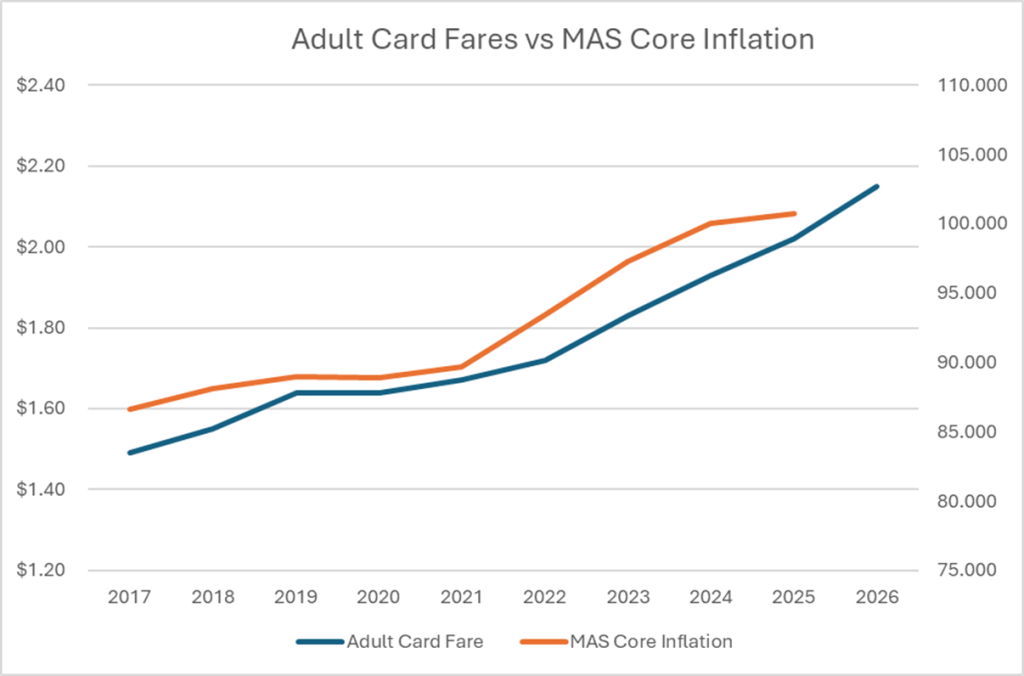
There are two ways to look at the data – the first is to see that between Fare Review Exercises in 2017 and 2026, transport costs for this commuter have increased from $1.49 to $2.15 per journey, an increase of 66 cents or 44.3%. The other is to see that adult card fares are simply keeping pace with MAS Core Inflation, since it is part of the fare adjustment formula. You can also see this in the chart below, which compares CPI-All items against CPI-Bus & Train Fares.
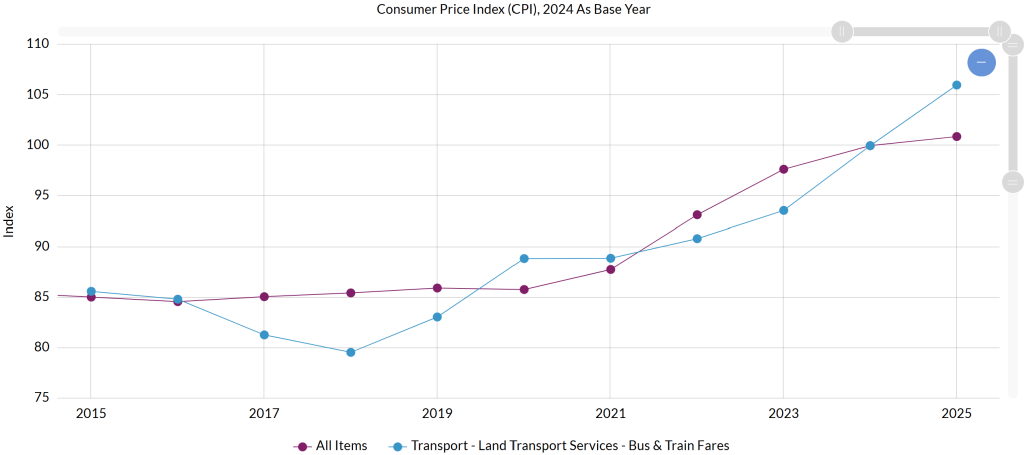
Source: SingStat
The Fare Review Exercise Looks Broadly At All Commuters
It would also be inappropriate to focus solely on adult card fares, as the fare review exercise looks at diverse groups of consumers. For example, despite increases in adult card fares and concession card fares, monthly pass prices remain unchanged, meaning greater savings for the 126,000 commuters who use public transport frequently. Because monthly pass prices remain the same, the PTC also believes that an additional 110,000 card commuters can now benefit by switching to a monthly hybrid pass and save around $26 a month (based on card commuters who spend more than 10% monthly above their respective monthly hybrid pass and the associated savings).
Read Also: Concession Passes For Working Adults: Are They Ever Worth It?
To support lower-wage workers, the Government will absorb the card fare increase for Workfare Transport Concession Scheme (WTCS) cardholders. About 190,000 WTCS cardholders will see no change in their card fares, shielding them from the impact of this year’s fare adjustment.
The PTC also continues to ensure that public transport fares remain affordable. Using the second quintile households (i.e. those who make up the bottom 21% to 40% of households by income) to represent the average public transport commuter, and the second decile households (i.e. those who make up the bottom 11% to 20% of households by income) to represent the lower-income public transport commuter, the Public Transport Affordability Indicator demonstrates that public transport remains a small proportion of monthly income despite the fare increases.
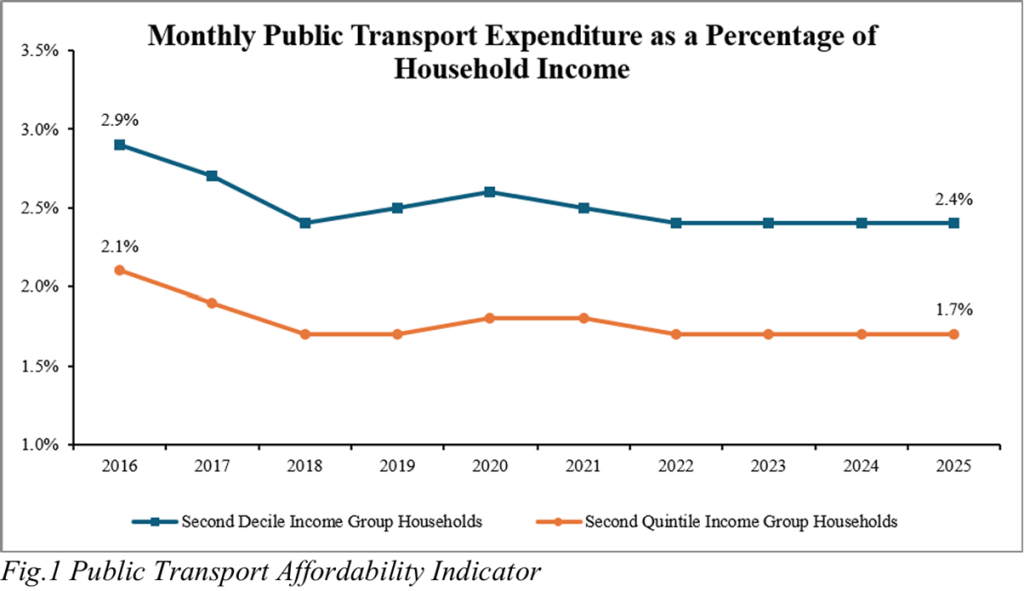
Source: Public Transport Council
Advertiser Message
Thinking Of Switching Brokers Or Consolidating Your Holdings?
Tiger Brokers is currently running a transfer-in campaign where eligible clients can receive an iPhone 17 Pro Max* when they transfer in their assets.
For SGX investors, there is also a CDP Transfer promotion with 0* commissions on Singapore stocks.
Find out more here. *T&Cs apply.




Lifestyle
15 Of The Cheapest EV Cars In Singapore


Budgeting 101
7 Ways Being Frugal Is Different From Being Cheap

Street Smart
Singapore Gym Membership Price Guide (2026 Edition)


