
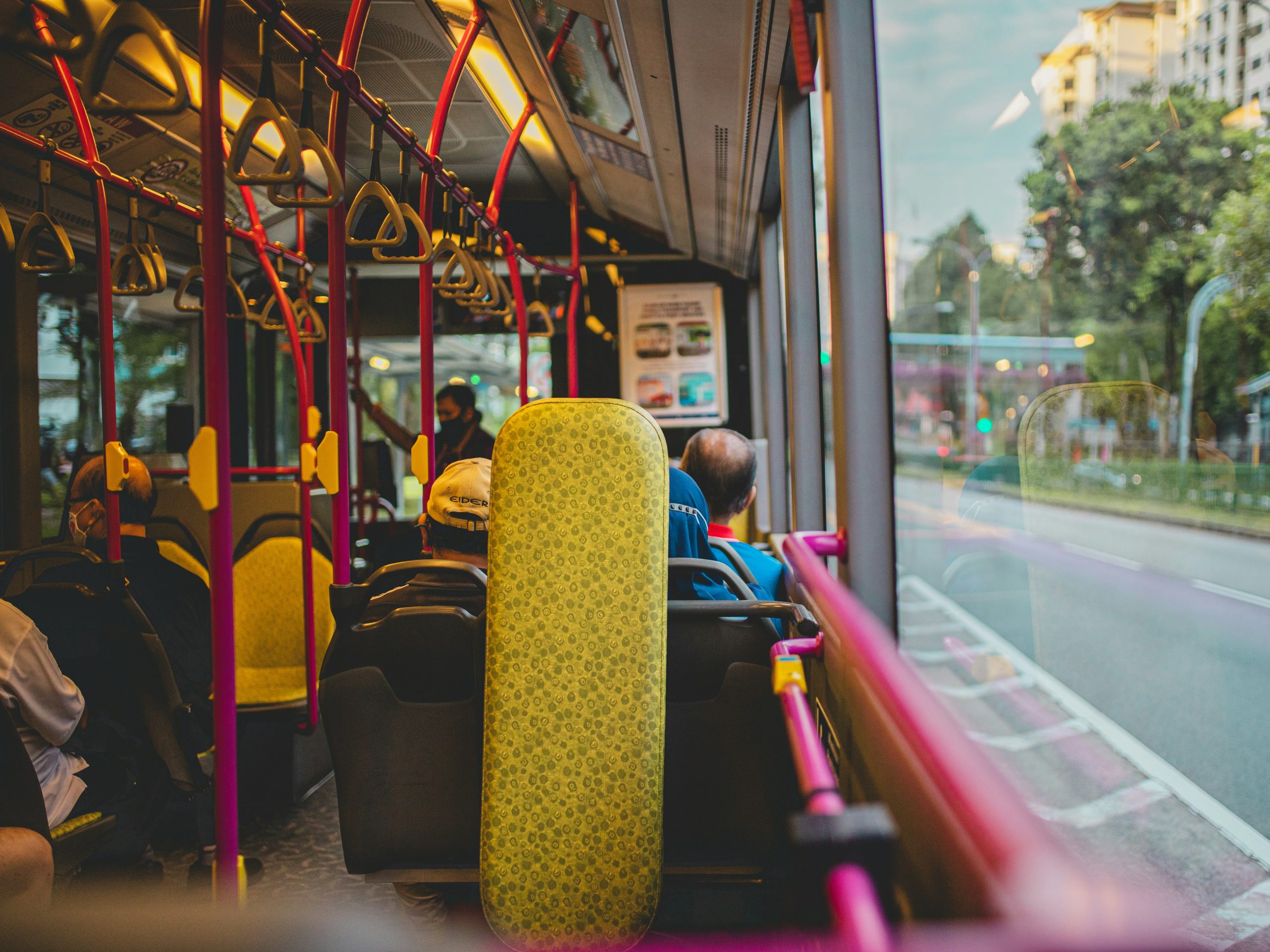
With the cost of living still being a big concern for many Singaporeans, it’s no surprise that many of us are looking to trim our regular expenses. One of these is transport, especially since bus and MRT fares have been steadily rising over the years.
While each trip may not seem like much, the cost of commuting to school or work, plus errands and weekend outings, can add up more quickly than we expect over a month.
That’s where the Adult Travel Pass (AMTP) could make a difference. With the lure of a concessionary monthly rate in exchange for unlimited travel in both train and basic bus services, we dive deep in this article to find out if it’s worth taking up.
What Is The Adult Monthly Travel Pass (AMTP)
The Adult Monthly Travel Pass (AMTP) is meant for adult commuters who want unlimited basic bus and train services for a fixed monthly cost.
Before we can buy the AMTP, we first need to apply for an Adult Monthly Travel Card (AMTC). This is different from the usual EZ-Link cards that most of us may already own, and it’s only available to Singaporeans and Permanent Residents.
We can apply for the AMTC via the SimplyGo app, at any SimplyGo Ticket Office, or SimplyGo Ticketing Service Centres. We’ll need our NRIC and a recent colour passport-sized photo for the application. The card is valid for 7 years and costs $8.10 or $10.10 if we want it mailed to us.
Once we have the card, we can then buy the AMTP for $122, which provides us unlimited travel on both train and basic bus services, including trunk and feeder services.
For lower-income workers, there is also another concession option that offers unlimited train and basic bus rides worth noting. The Monthly Public Transport Concession Pass costs $92, but it is only available to Singapore Citizens aged 30 and 60 years old and who are currently receiving Workfare Income Supplement (WIS) payments. As working adults, our main question is whether paying $122 a month upfront actually works out to be cheaper than simply paying the normal adult fares.
Read Also: Public Transport Voucher (PTV)
How Far Do You Travel?
Since July 2010, Singapore uses a distance-based fare system for public transport. This means we pay based on the total distance travelled rather than the number of transfers we make along the way.
In other words, we don’t have to pay extra just because we switch between MRT and bus services or take a feeder bus to the interchange before continuing our journey, as long as the trip falls within the transfer rules. What matters is the total distance travelled.
That’s why the AMTP tends to make more sense for those of us with longer daily commutes. If we stay near our workplace or mostly make shorter trips around our neighbourhood, it may be harder to justify paying for the pass.
How Often Do You Travel?
Distance is only one part of the equation. How often we travel matters too.
Beyond our daily commute to work, our public transport usage depends a lot on our job and lifestyle. Some of us may need to travel more for work, especially if we are in roles that involve meeting clients or moving between locations. But for most of us, the extra trips are more likely to come from everyday life, such as going to the gym, meeting friends, or running errands.
In short, the more often we travel, the more likely the AMTP starts to make financial sense.
To see when this may or may not work, here are three common scenarios:
Read Also: Driving School VS Private Instructor: How Much Does It Cost To Get A Driving License in Singapore?
Scenario 1: Medium Frequency Public Transport User Who Stays Near Their Workplace
Let’s say Andy lives within walking distance of Commonwealth MRT and works near Tanjong Pagar MRT. His weekday commute is about 6.3km each way.
On weekends, he takes the bus for two return trips a week, with each ride being about 5.5km.
The fare for his MRT commute from Commonwealth to Tanjong Pagar is about $1.68 each way. Assuming there are around 22 working days in a month, his weekday travel cost comes up to:
$1.68 x 2 x 22 = $73.92
A 5.5km bus ride costs about $1.59 each way. Over the month, his weekend travel cost works out to:
$1.59 x 2 x 9 = $28.62
So, Andy’s total monthly public transport spending is:
$73.92 + $28.62 = $102.54
In this case, the AMPT at $122 is clearly not worth it as it will costs around 15% more than simply paying the regular adult fares.
If we are less likely to travel regularly or only make shorter trips, the AMTP may not benefit us much.
Scenario 2: Medium Frequency Public Transport User Who Stays Far From Work
Now, let’s say Ben lives in Sengkang and works near Tampines MRT. His daily commute is much longer, at about 17.5km each way. Like Andy, Ben also makes two return trips a week on weekends to run errands around his neighbourhood, which requires taking a feeder bus service.
The fare for his MRT commute from Sengkang to Tampines is about $2.20 each way. Over 22 working days, his weekday commuting cost comes up to:
$2.20 x 2 x 22 = $96.80
The fare for feeder buses is capped at 3.2km, which works out to about $1.28 each way. Over the month, his weekend travel cost comes up to:
$1.28 x 2 x 9 = $23.04
So, Ben’s total monthly public transport spending is:
$96.80 + $23.04 = $119.84
Even though Ben lives farther from work, the AMTP may still not be worth it for him. His monthly spending is close to the cost of the pass but still falls slightly short of $122.
Of course, there may be months where Ben travels more often and ends up spending more than the cost of the AMTP. But there may also be lighter months where he spends less – for example, if he WFH more often or goes on holiday. Based on this travel pattern, he is less likely to enjoy consistent savings from buying the pass.
This is probably the situation for many working adults. We may travel long distances during the weekdays but not enough extra travels over the weekends to make it worthwhile getting the AMTP.
Scenario 3: High-Frequency Public Transport User Who Stays Far From Work
Finally, let’s look at Charles. He lives in Marsiling and works near Tampines MRT, which is a whopping 33.4km of travelling distance, each way. During weekends, he also makes 4 return trips, with around 8.5km each way.
The fare for his MRT commute from Marsiling to Tampines is about $2.50 each way. Over 22 working days, his weekday commuting cost comes up to:
$2.50 x 2 x 22 = $110
A 8.5km bus ride costs about $1.82 each way. Over the month, his weekend travel cost works out to:
$1.82 x 4 x 9 = $65.52
So, Charles’ total monthly public transport spending is:
$110 + $65.52 = $175.52
In this scenario, the AMTP would be worth considering as Charles travels both far and frequently, which could help him save on transport costs.
This could apply to those of us who travel regularly across Singapore for work, or simply have a more active social life that involves meeting family and friends or heading out for fitness activities.
Calculating Your Own Usage
Each of us may have our own travelling patterns which may not fit into any of the above examples. That’s why it could be helpful to do a quick calculation of our average monthly transport spending through the Fare Calculator. Alternatively, another way to check on our transport spending is via our SimplyGo records or bank transactions.
As a rough guide, if our average public transport spending comes up to more than about $4.10 a day or $122 a month, the AMTP may be worth considering. Otherwise, we may be better off paying the regular adult fares.
The AMTP Is Purchased On A Monthly Basis
One useful thing about the AMTP is that it’s bought on a month-by-month basis. This means we do not have to commit to it long-term if we’re unsure how much we’ll be travelling. Instead, we can buy it in months when we expect to travel more and go back to paying regular fares in other months.
Beyond the potential costs savings, the AMTP can also be more convenient for those of us who do not want to link our bank cards or keep topping up regularly, especially if we travel often. We only need to pay once a month and can then enjoy unlimited travel for the rest of the period.
Still, while the AMTP may sound appealing because of its unlimited travel, its current price of $122 means it may not be worthwhile for the most of us who do not travel long distances frequently.
This article was first published on 7 July 2018 and was updated with new information.
Advertiser Message
Thinking Of Switching Brokers Or Consolidating Your Holdings?
Tiger Brokers is currently running a transfer-in campaign where eligible clients can receive an iPhone 17 Pro Max* when they transfer in their assets.
For SGX investors, there is also a CDP Transfer promotion with 0* commissions on Singapore stocks.
Find out more here. *T&Cs apply.




Street Smart
Singapore Gym Membership Price Guide (2026 Edition)


