

Parents today are more involved than ever in shaping their children’s experiences — from curated playdates to structured enrichment classes. While the instinct to protect children from failure and disappointment is understandable, it can also keep them from the messy, real-world experiences that build resilience.
This was something Jolene Ang, a 46-year-old mother of three and CEO of BlueTree Education, noticed among students: a decline in social stamina, and a growing fear of failure. It inspired her to launch Kidpreneurs Bazaar, to strip away that safety net and to create a space where kids can find their most authentic self through hardships and raw experiences. What better way to start than by letting children run their own business? What began as a humble one-day bazaar with 15 booths for “mompreneurs” and their kids has since grown into its seventh edition, featuring 30 booths and more than 50 kidpreneurs, drawing over 5,000 visitors, and bringing on sponsors such as OCBC and DollarsAndSense.
We sat down with Jolene to discuss why she believes entrepreneurship is the ultimate “authentic classroom” and the four real-world skills every child will gain when they put themselves out there.
#1 Learning To Approach Strangers, Pitch An Idea, And Handle Rejection
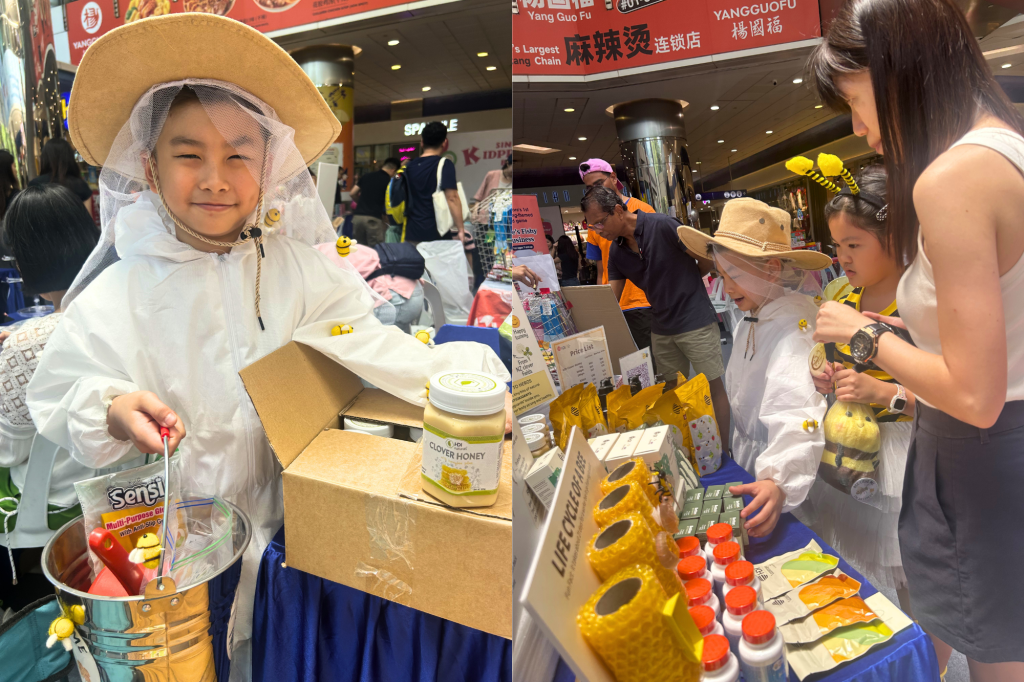
2025 Kidpreneurs Bazaar’s Honey Bee booth
Courage is often misunderstood as something kids either have or do not have. But according to Jolene, courage is not an inborn trait, nor is it something parents can simply talk their kids into having. It is built through practice — especially in small, uncomfortable moments where a kid has to act despite feeling nervous, unsure or afraid of being rejected.
That is what makes running a business such a powerful experience for kids. At Kidpreneurs Bazaar, courage is not taught as a concept. It is practised in real time, the moment a kid steps out from behind the booth to speak to someone they do not know.
Whether they are selling handcrafted soaps cut into alphabets, DIY Singapore food-themed tote bags, or running a small workshop, the kids have to learn how to explain their product, make eye contact, answer questions and accept that not every passer-by will stop to listen — let alone buy.
These may seem like small interactions, but for a kid, they can be deeply formative. A textbook can teach the idea of entrepreneurship, but it cannot replicate the nerves of making a first pitch, the disappointment of being ignored, or the quiet confidence that comes after realising, “I can actually do this.”
#2 Learning Who They Are When Expectations Fall Away

2025 Kidpreneurs Bazaar’s Amazing Caricatures booth
Kids today are often surrounded by expectations — from school, peers, parents and even themselves. They are constantly told to do well, keep up, stand out and make the “right” choices. Over time, this pressure can make kids afraid to try anything they are not already good at.
For Jolene, one of the most valuable parts of running a business is that it gives kids a clearer view of themselves. Instead of performing for grades or approval, they have to make real decisions, deal with real customers, and take ownership of the outcome. In the process, they begin to discover what they are capable of beyond the labels they may have grown used to.
At Kidpreneurs Bazaar, this self-discovery happens in practical ways. Some kids may realise they are better at talking to customers than they expected. Others may discover that they enjoy creating products, designing their booth, managing money or solving problems on the spot. There is no single definition of success, which allows each kid to find their own strengths.
Jolene shares that many kids leave the bazaar saying, “I never knew I could do that.” For a kid, that realisation can be powerful. It shifts the experience from simply completing an activity to discovering a new sense of capability. They are not just told that they can be independent, adaptable or resourceful — they get to prove it to themselves.
In a world where kids often feel pressure to prove themselves to others, running a business gives them something more grounding: the chance to better understand themselves. They learn that they are not defined by one test score, one failed attempt or one person’s expectations. They are capable of trying, learning, adapting and becoming more than they thought they could be.
#3 Learning To Adapt When Customers Do Not Respond The Way They Expect
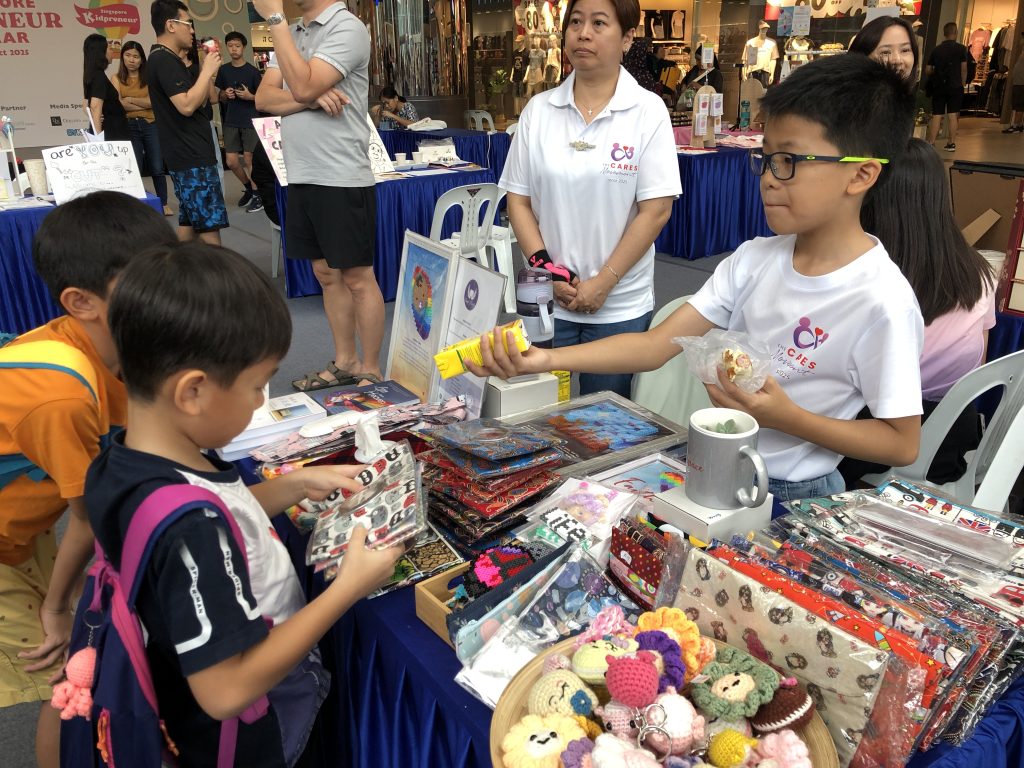
2025 Kidpreneurs Bazaar’s The CARES Movement booth
One of the most practical lessons kids can learn from running a business is that having a good product is only one part of the challenge. At a bazaar, how they present, explain and sell it matters just as much.
A kid may have spent weeks preparing handmade soaps, tote bags or craft kits, only to realise on the day itself that customers are not stopping to take a closer look. The product may not be the problem. It could be that the signage is unclear, the prices are not visible, the booth looks too cluttered, or passers-by do not immediately understand what is being sold.
This is where adaptability becomes real. Instead of giving up, kids have to observe what is happening and make practical changes on the spot. They may shift their best-looking products to the front, rewrite a clearer sign, create a simple bundle deal, offer a small promotion, invite customers to try a sample, or change their opening line when approaching passers-by.
For Jolene, these moments are valuable because they teach kids to see setbacks as feedback. If customers are walking past, the lesson is not simply “my product is bad”. It becomes: Is my booth clear enough? Am I explaining this well? Would a promotion help? How can I make it easier for customers to say yes?
That is where kids begin to build real problem-solving instincts. They learn that not everything will work the first time, but they are not helpless when it does not. They can observe, adjust and try again.
#4 Learning That Earning Money Is Only The First Step
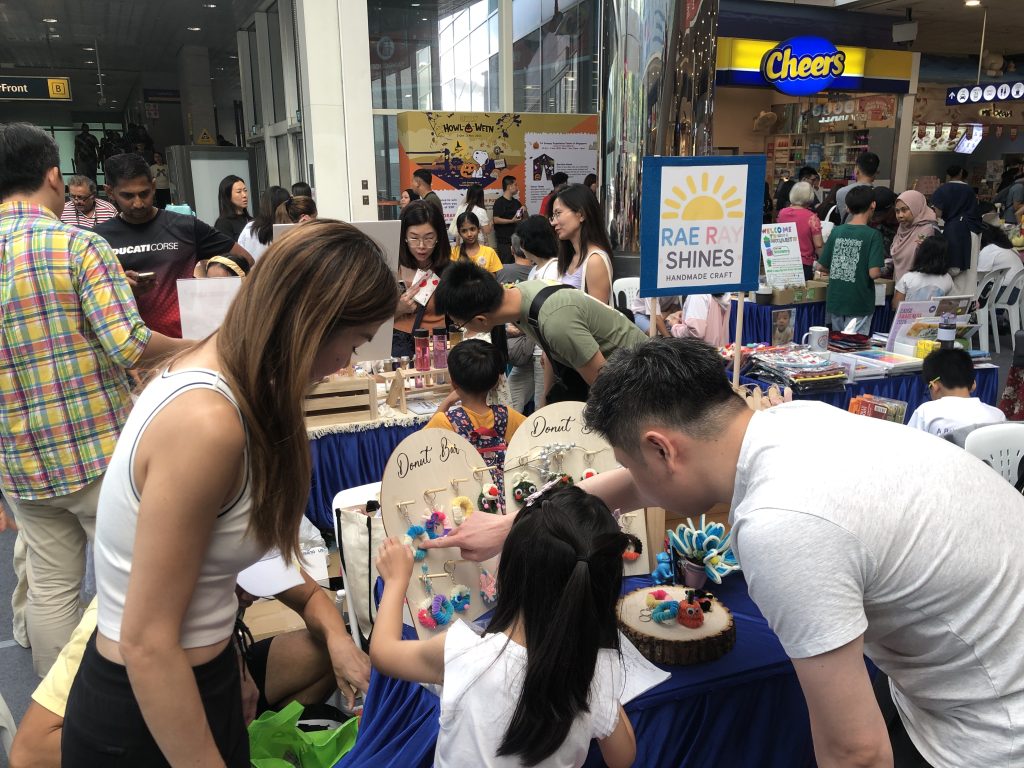
2025 Kidpreneurs Bazaar’s Ray Ray Shines booth
For many kids, the most exciting part of running a business is seeing cash come in at the end of the day. But one of the most important lessons of entrepreneurship is that sales are not the same as profit.
A booth may look successful because many people bought something. But once kids start accounting for the cost of materials, packaging, booth decorations, transport, marketing, and other expenses, they begin to understand that every dollar earned has to be measured against every dollar spent.
This is where financial literacy becomes real. It is no longer an abstract lesson about saving money or doing sums on paper. Kids get to see how their decisions affect the final outcome. Did they price their products too low? Did they spend too much making the booth look good? Did a promotion help increase sales, or reduce their margins too much? These are simple questions, but they introduce kids to the basics of budgeting, pricing, cash flow and profit.
At Kidpreneurs Bazaar, this learning also extends beyond the booth. Through workshops by partners such as OCBC and DollarsAndSense, kids can begin to understand what happens after they earn money. Should they spend it, save it, donate it, or put it aside for a future goal? Where can they keep their money safely? Why does growing their earnings matter over time?
That is an important shift. Earning money may give kids a sense of achievement, but learning how to manage it gives them a sense of responsibility. They start to see money not just as something to collect, but as something to plan for, protect and grow.
When kids understand the effort behind earning, the discipline behind saving, and the thoughtfulness behind spending, financial literacy becomes more than a classroom concept. It becomes a life skill they can carry with them long after the bazaar ends.
Read Also: 8 Books Your Child Should Read to Build an Entrepreneurial Mindset
A Word Of Advice: Step Back And Let Kids Try
As a mother of three, Jolene has seen how much kids can grow when they are given room to try, struggle and figure things out for themselves. Her advice to parents is simple, but not always easy: resist the urge to step in too quickly.
“Parents are often afraid to watch their kids fail,” she says. “But we shouldn’t underestimate them.”
She has seen this even in her own children. After several attempts that were not profitable or efficient enough, her daughter eventually worked out a better system by creating her own instruction sheets to streamline the process. It was not something an adult had to solve for her. It was something she learned because she had the space to experience what was not working, think through the problem, and improve it herself.
That is the bigger lesson Jolene hopes every kidpreneur takes away from the experience. Failure is not the opposite of success. It is part of the same path.
“Failure and success are not on opposite paths in life,” she says. “Failure is on the same path as success. You have to be comfortable with failure.”
For first-timers joining the upcoming Kidpreneurs Bazaar, Jolene’s advice is practical: sleep early, prepare your opening lines, decorate the booth well, use bright colours to catch attention, and be mentally prepared for things not to go exactly as planned.
At the end of the day, kids may choose to keep their earnings, donate them to a good cause, or reinvest them into their next business idea. But the real value of the bazaar is not just in how much money they make. It is in what they learn about effort, resilience, independence and responsibility along the way.
For parents who want their kids to experience this for themselves, the 2026 Kidpreneurs Bazaar offers a practical next step. Running a booth for a day gives kids the chance to manage a real business, interact with customers, make decisions, handle money and learn from setbacks in a safe but authentic environment.
Each booth costs $325, which includes the booth space as well as three pre-event workshops designed to help kids prepare for the bazaar. Limited booths are left, and registration will close once all available booths are taken. You can sign up here.


