
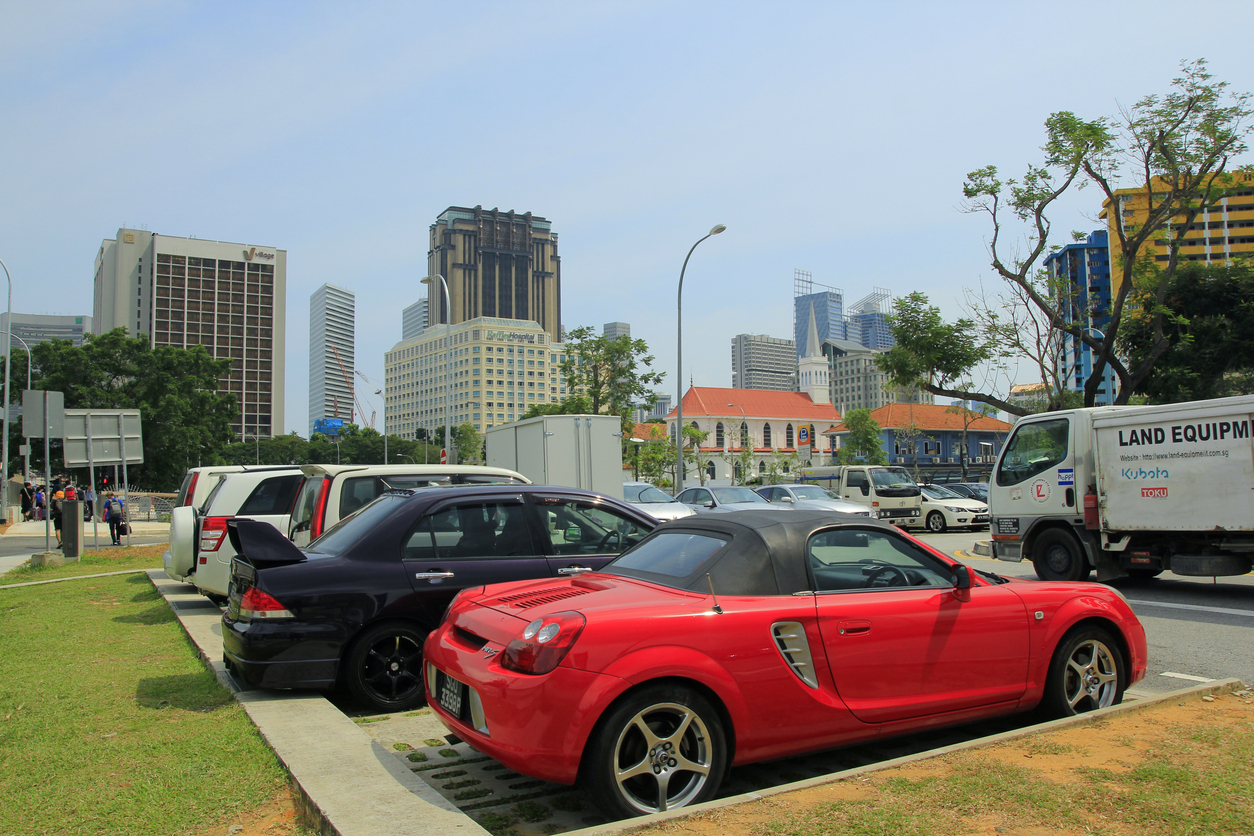
On 8 October 2026, the Land Transport Authority (LTA) launched a public consultation on a proposal to merge Categories A and B into a single passenger car category, alongside a new system of rebates and surcharges based on a car’s value. The aim is to differentiate mass-market cars from higher-value models better, as engine capacity and power are becoming less effective ways to separate them.
These are proposed changes, and public feedback remains open until 2 November 2026.
However, the fact that LTA has developed a specific proposal following earlier consultations suggests, in our view at least, that the authorities are leaning towards this approach, even though the eventual decision and details remain open.
There are good reasons to merge the two categories. However, whether this would address the wider problems with Singapore’s COE system, particularly the high cost of car ownership for ordinary families, is a separate question.
Under the proposal, Categories A and B would be merged into a single passenger car category, with buyers bidding for the same pool of COEs. A new fee-and-rebate system, or “feebate”, would then differentiate cars by value: buyers of lower-value cars would receive a rebate, while buyers of higher-value cars would pay a surcharge. This would replace the current separation of Cat & Cat B COE, which is based on engine capacity and power.
The COE Categories No Longer Reflect What Cars Actually Cost
The strongest argument for merging Categories A and B is that the current separation no longer does its job particularly well. In the latest COE bidding exercise on 7 October 2026, Category A premiums closed at $130,001, compared with $130,100 for Category B. That is a difference of just $99, giving buyers of supposedly smaller, more affordable cars no advantage in COE cost.
The problem goes beyond similar premiums. Engine capacity and power are increasingly poor indicators of whether a car is a mass-market model or a higher-value vehicle, and manufacturers know it. LTA itself has acknowledged that manufacturers can adjust vehicle specifications to fit within Category A thresholds. This lets higher-value models compete in the same COE pool as more affordable cars, weakening the purpose of separate categories.
For example, both the Mercedes-Benz CLA180 Progressive and Mercedes-Benz CLA180 AMG Line are currently selling at 274,888 and have the same 1,499cc engine capacity. However, the Progressive trim falls under Category A with 129 bhp, while the AMG Line falls under Category B with 134 bhp. A difference of just five horsepower places two versions of the same model in different COE categories, even though neither is a more affordable car in any practical sense.

In our view, merging the two categories therefore makes sense. It would remove the incentive to offer slightly different versions of a car to take advantage of whichever COE category is cheaper. Instead, the proposed rebates and surcharges would differentiate cars directly by their value. That is a more logical basis for separating mass-market cars from higher-value models, although it does not necessarily mean car ownership would become more affordable.
Read Also: Does It Make Sense To Renew Your Car’s COE When Prices Are At Record Highs?
A Shared COE Pool Could Put More Pressure On Buyers Of Affordable Cars
However, merging two categories into a single pool, even with rebates and surcharges, may still be too simplistic. Buyers would compete for the same limited supply of COEs whether they are purchasing an affordable family sedan, a luxury model, a third car for occasional use, or a private-hire vehicle (PHV) driven throughout the day. Differentiating cars by value addresses only one aspect of these very different purchases.
How often a car is driven should also matter, particularly if the concern is road congestion.
A PHV operating throughout the day uses the roads far more than a family car used mainly for school runs or a short commute. It also generates income, allowing its operator to recover the cost through fares. A family, by contrast, pays for its car from household income. Yet the proposed merger would leave both competing for the same COE, without accounting for these differences in usage or their ability to recover the cost.
Similarly, someone purchasing a third car would face the same COE premium and value-based adjustments as a family buying its first car of the same value. If we accept additional taxes on subsequent residential property purchases, it is reasonable to ask whether a similar principle should apply to cars, where supply is also deliberately limited. A rebate for a lower-value car does not distinguish between a household buying its only vehicle and someone adding another car to their collection.
The concern is that families looking to buy a modest sedan would end up paying more than they do today. They will not only compete directly with luxury-car buyers who have larger budgets, but also with commercial owners such as rental companies that can recover costs through business revenue. If that competition pushes the common COE premium up by more than the rebate they receive, a system intended to preserve affordability for mass-market cars could leave these families worse off.
Read Also: 6 Ways Other Major Cities Around The World Control Car Ownership Without COE
Photo Credit: iStock/bari paramarta


