
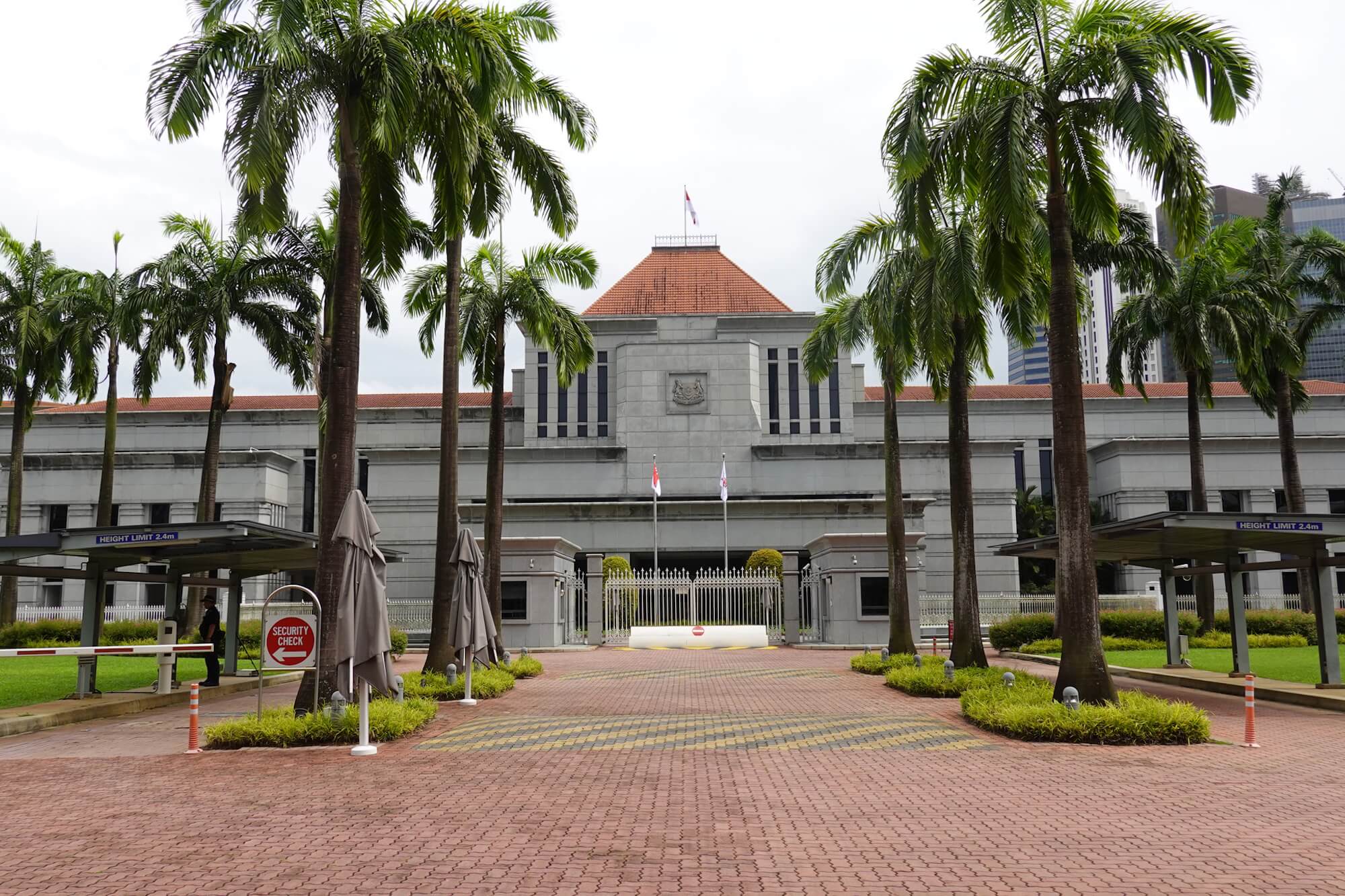
Last week, Deputy Prime Minister Gan Kim Yong revealed that Singapore’s resident total fertility rate (TFR) has reached a historic low of 0.87 in 2025. He called it a “serious and profound existential challenge” and said that it was the Government’s commitment to “address this challenge”. However, he also acknowledged that the Government can’t tackle the challenge alone and welcomed “all debate and fresh ideas on how to do so”. In fact, there were a number of proposals from Members of Parliament (MPs) during the week’s Committee of Supply debate. Here is a non-exhaustive list of them, collected under five main themes.
#1 Housing And Lifestyle Considerations
Recognising that housing in Singapore shapes when and how families decide to have children, several MPs proposed changes to Singapore’s housing policy.
Ms Hany Soh, MP for Marsiling-Yew Tee GRC, who suggested further refinements to Housing Development Board (HDB) priority schemes. She suggested expanding eligibility or increasing allocation for schemes such as the Family and Parenthood Priority Scheme, Third Child Priority Scheme, and others that help young families with two or more children to secure homes more quickly.
Mr David Hoe, MP for Jurong East-Bukit Batok GRC, highlighted the importance of space and design in HDB flats, suggesting family-centric layouts with play areas and child-friendly amenities. In particular, he proposed a new “jumbo BTO flat” layout for families with more children.
Read Also: Why HDB Needs To Start Building Bigger Flats For “Large Families”
#2 Workplace Policies And Career Flexibility
Singapore’s highly competitive workforce often leaves parents struggling to balance career and caregiving.
Ms Hany Soh emphasised the need for continuous career progression for working parents, especially mothers, to continue advancing their careers while raising children, and proposed reinstating and enhancing working mother tax relief incentives.
This was echoed by Ms Eileen Chong, one of the Non-Constituency MPs. She highlighted that the main deterrent to having children among her peers is not just the financial cost, but also the fear of being unable to be present and engaged parents due to exhaustion and work demands. She called for policies that provide per-child childcare leave, paid caregiving leave, and enforceable flexible work arrangements, moving beyond guidelines to binding standards.
Mr David Hoe also proposed expanded paid childcare leave and measures to reduce commuting stress. He suggested that the current standard, where childcare leave drops from 6 days to 2 days when a child turns 7, is insufficient to cover the realities of school excursions, sick days, and school closures. His point was that time, not just money, is a critical resource for parents.
Read Also: 10 Things Employers Need To Know About The Government Paid Childcare Leave (GPCL)
#3 Financial Support And The Cost of Raising Children
At the heart of the matter, however, is the financial cost of raising children in Singapore remains one of the most cited deterrents to parenthood. Several MPs spoke on the cost of raising children.
Mr Pritam Singh, MP for Aljunied GRC, suggested refining cost-of-living measures such as the Community Development Council (CDC) Vouchers Scheme to provide additional support for larger households, expressing that the current scheme, where vouchers are distributed on a per-household basis, regardless of household size, is “not equitable”.
Mr Louis Chua, MP for Sengkang GRC, pushed for “bold and innovative” approaches to raising TFR, citing Hungary’s policy of tax exemption for mothers, and proposed Singapore adopt a similar lifetime exemption from personal income tax for mothers.
Ms Denise Phua, MP for Jalan Besar GRC, pointed to an education “arms race” with “three fronts”, naming the PSLE, Direct Schools Admission (DSA) and artificial intelligence. She argued that redesigning these systems and reducing these pressures could, in turn, lower costs and make parenthood less daunting.
#4 Social And Cultural Shifts
Beyond material incentives, MPs stressed the importance of reshaping societal attitudes toward family life.
Mr Foo Cexiang, MP for Tanjong Pagar GRC, focused on four specific groups of children, whom he feels require more targeted support, including children of unmarried parents, children of non-working mothers, children with special needs, and adopted children. For example, he called for an end to policy differentiation between children of married and unmarried parents in access to benefits such as grants and subsidies. He argued that all children should be treated equally, regardless of their parents’ marital status.
#5 Education & Support Systems
Parenting is not only about financial and cultural support — it requires strong systems to ease the caregiving journey.
Mr Shawn Loh, MP for Jalan Besar GRC urged more support for caregiving and education needs, including easing the burden on parents navigating childcare and schooling. He pushed for free childcare, infant care and student care, suggesting that the Government’s $15 billion fiscal surplus could be used to improve the lives of Singaporeans and address long-term problems.
Mr David Hoe suggested improving community spaces and play areas, reinforcing the importance of supportive environments for children’s growth.


Lifestyle
15 Of The Cheapest EV Cars In Singapore


Budgeting 101
7 Ways Being Frugal Is Different From Being Cheap


Street Smart
Singapore Gym Membership Price Guide (2026 Edition)


Street Smart
Singapore Gym Membership Price Guide (2026 Edition)

Bonds and Fixed Income
Complete Guide To Buying Singapore Savings Bonds (SSB) [2026 Edition]


