
This past week, viral videos on social media showed buyers rushing into the IMBA Theatre at Gardens By The Bay. Many carried multiple tote bags and were scooping bunches of flowers into them. But these were not ordinary flowers. This was the scene at artist Cj Hendry’s Flower Market, which opened earlier this week on the 10th of June. The Australian artist designed more than 30 varieties of plush flowers, including 8 exclusively for this week’s Singapore show – the first of its kind in Southeast Asia.
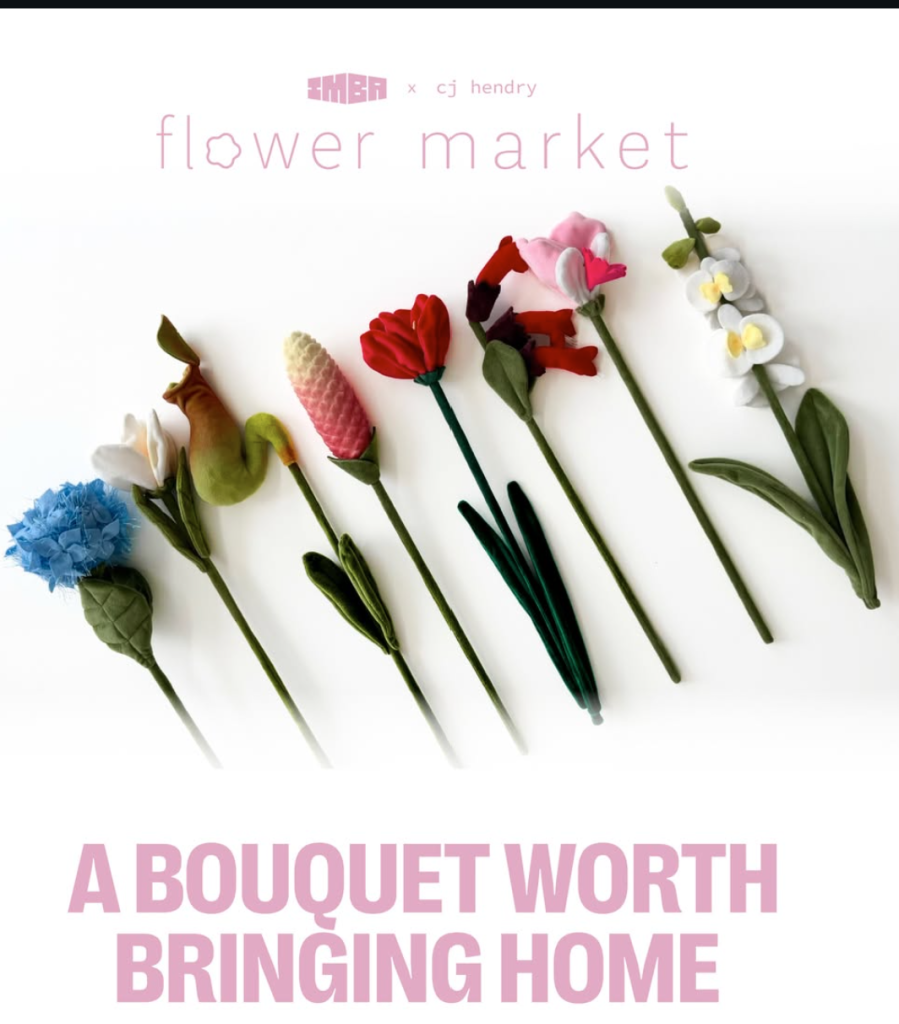
Source: @_f.l.o.w.e.r.s.h.o.p_ on Instagram
To encourage access, entry to the exhibition is free, and visitors are entitled to a free handcrafted stalk. However, echoing scenes from last month’s Flower Market exhibition in Sydney, where there were alleged scuffles over exclusive designs, Singapore proved little better, as evidenced by videos circulating on social media.
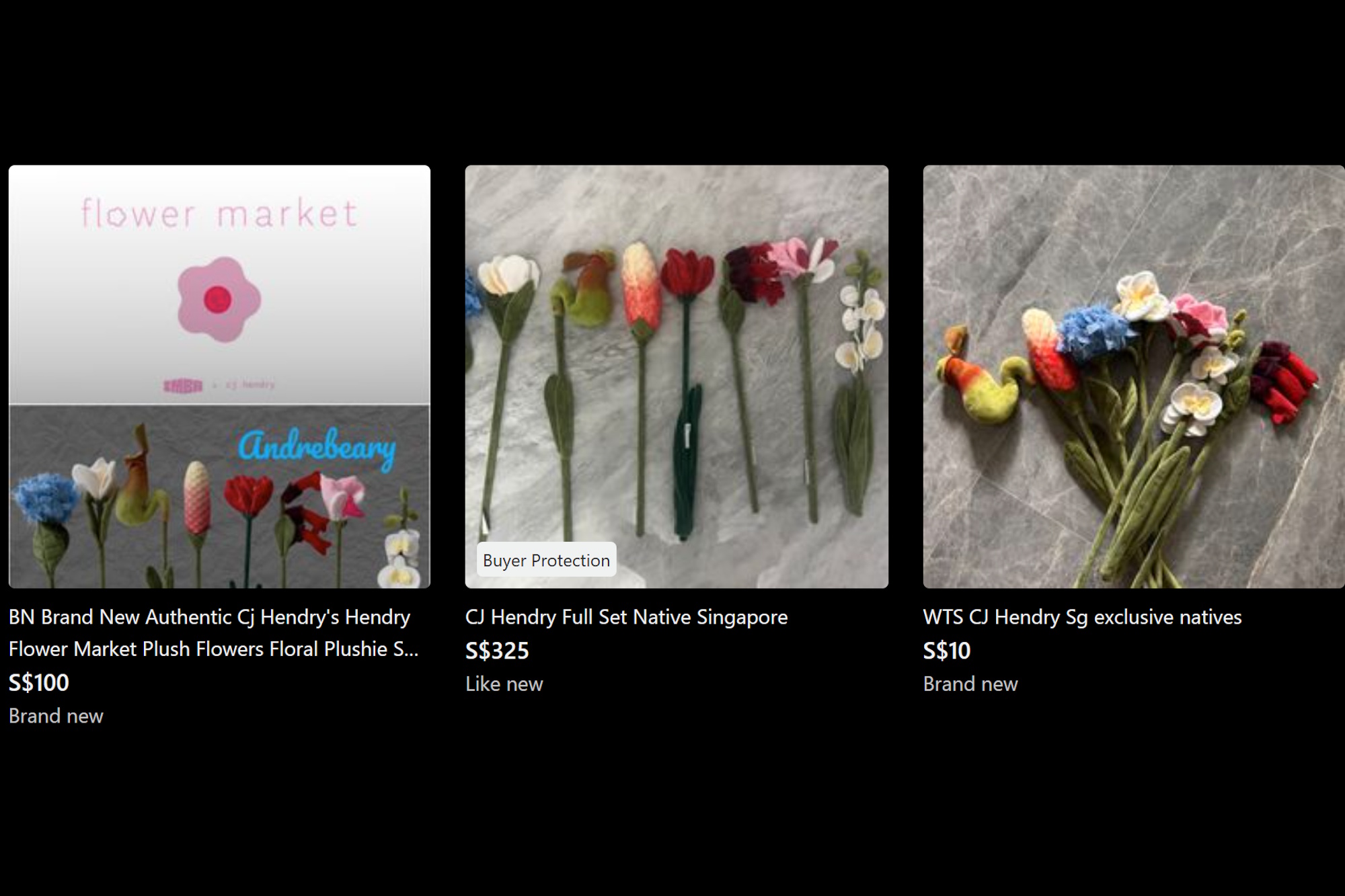
Buyers of additional stalks paid a modest price, 5 AUD in Sydney and S$7 in Singapore. Within hours, however, the secondary market on platforms like Carousell transformed those same stalks into speculative assets, with complete sets of the 8 exclusive Singapore designs listed for over S$300. That gap between retail price and resale markup is a live demonstration of how Veblen dynamics, scarcity psychology, and modern resale infrastructure combine to create instant arbitrage opportunities for the everyday consumer.
From Decorative Object To Status Signal
Economists call items whose desirability rises with price Veblen goods. Traditionally, this label applies to luxury watches, designer handbags, and other durable goods whose high price signals status. Hendry’s plush flowers would complicate that label in two ways.
First, they are intentionally affordable at the point of sale, thereby lowering the barrier to entry and broadening the pool of potential buyers. Second, the social and cultural factors surrounding the pop‑up, the artist’s brand, the event’s relative exclusivity, and the limited designs tied to Singapore’s botanical identity convert a modestly priced object into a symbolic token.
The result is a predictable paradox – what costs a low nominal price on site also possesses a high perceived value in resale listings. These Carousell listings are not looking for buyers who will just pay for the material costs of fabric and stuffing. They are hoping buyers are willing to pay for the convenience of avoiding the queues and the crowds, as well as the social signal that comes with owning a sold‑out item from a high‑profile event.
How The Secondary Market Amplifies Value
Three structural features of today’s resale ecosystem make this transformation fast and profitable.
- Low-friction listing apps like Carousell let sellers list items instantly, reach a large audience, and adjust price points in real time. As of this writing, the description for the listing of a complete set of 8 Singapore-exclusive designs indicates “buy now price of $325, current bid is $301”.
- Photos and video posts from the pop‑up may drive up demand. The sense of scarcity is reinforced by the behaviour demonstrated in this social media content, even as organisers assure that supply remains available on subsequent days.
- Sellers who buy multiple stalks can create curated bundles that appear more valuable than single items, justifying steep markups. Several listings on Carousell offer various bundles at different prices, either limited by the seller’s own ability to obtain all 8 exclusive designs, or a recognition that some designs are more highly sought after than others.
For a reseller who buys eight stalks at S$56 and lists them for S$300, the math is simple and tempting. Even after accounting for platform fees and the time cost of selling, the margin can be substantial. That arithmetic explains why scalping and “help‑to‑buy” services proliferate around limited releases such as these.
What This Means For Singapore
Hendry’s pop‑up is a microcosm of a larger shift in how value is created and captured, especially in Singapore. Artists and brands increasingly monetise scarcity not only through high retail prices but through controlled accessibility. The recent furore over marked up resale prices for BTS concert tickets is another example. Relatively low entry prices, combined with limited supply and cultural cachet, democratise access to the experience while still enabling secondary markets to extract premium value.
That dynamic raises ethical and economic questions. Flower Market organiser IMBA has faced various social media pushback, most recently over its last-minute decision to turn away walk-ins at this weekend’s event, restricting access to those who had pre-registered.
In response, it has extended the exhibition by one day, till tomorrow, Monday 15th June.
Treat the Hype Like a Market Signal, Not a Guarantee
CJ Hendry’s Singapore plush flowers are more than a viral moment; they are a real‑time lesson in how perception, scarcity, and resale infrastructure create Veblen‑like outcomes even for low‑priced items.
The smartest response is pragmatic: enjoy what you buy, do the math before paying a premium, and treat resale opportunities as speculative trades rather than guaranteed profits. This episode is a reminder that value is as much about story and signal as it is about cost, when a S$7 stalk can quickly become a S$300 statement.


Budgeting 101
7 Ways Being Frugal Is Different From Being Cheap


Street Smart
Singapore Gym Membership Price Guide (2026 Edition)


Street Smart
Singapore Gym Membership Price Guide (2026 Edition)


