

The labour market in Singapore continued to expand in 2025, according to the latest Labour Market Report released by the Ministry of Manpower (MOM). Employment grew for the 16th consecutive quarter, by 25,100 (5,600 residents and 19,500 non-residents). This was stronger than the 10,400 growth in the previous quarter, but far below the employment growth seen in 2022, following the pandemic.

Source: Labour Market Report
What does this mean for the labour market as we look forward to 2026? Earlier this month, employment platform Jobstreet by SEEK provided some insight into the career trends of 2025.
#1 Job Switching Is Declining
According to MOM’s Labour Force in Singapore Advance Release 2025, the proportion of employed residents who had changed jobs in the past year declined from 7.6% in 2024 to 6.2% in 2025. This was particularly notable among workers aged 25 to 29.
Nonetheless, the quality of job moves remained high, with six in ten job switchers enjoying real income increases.
These statistics imply reduced job-seeking activity, even as opportunities for upward mobility continue. As we look to 2026, we can probably expect this level of “job hugging” as Jobstreet by SEEK refers to it, to continue.
Read Also: From The Great Resignation To Job Hugging. Why 2026 Is The Year To NOT Leave Your Job
#2 Workplace Priorities Are Changing
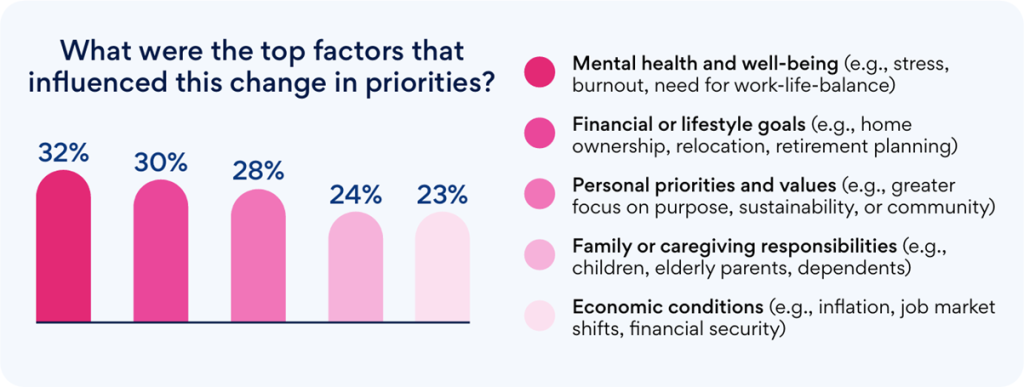
According to a new Jobstreet by SEEK report released in November, 49% of employees feel their priorities have shifted since starting their current role. This is due to several factors.
The report, entitled The Great Expectation Gap, Overall, mental health and well-being influenced this change in priorities, followed closely by financial or lifestyle goals.
Source: Jobstreet by SEEK
When diving deeper by employee age, the picture becomes clearer. 33% of younger employees aged 25 to 34 prioritised their mental health, while 31% of older employees aged 35 to 44 said family and caregiving responsibilities became their top priority.
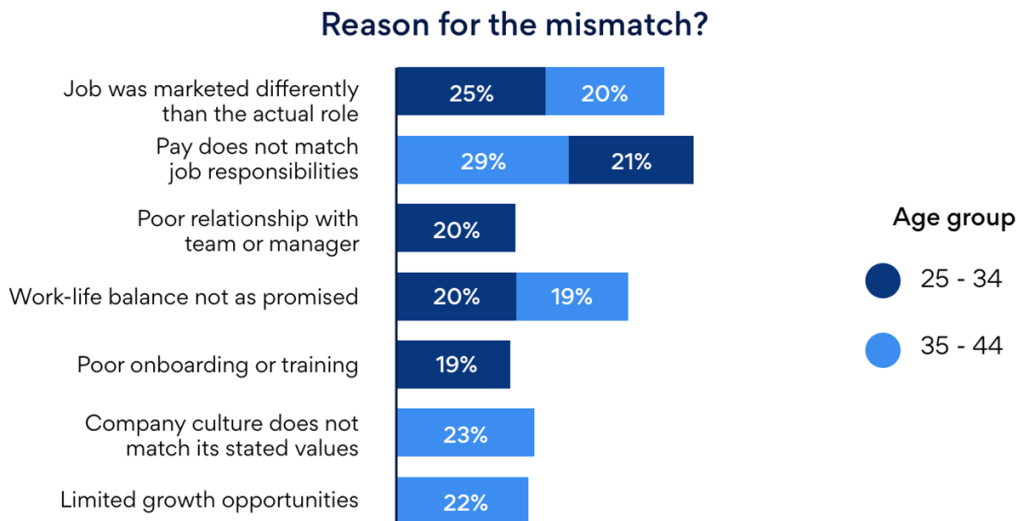
Employees whose focus has changed are slightly more likely to report career mismatches early. This suggests that, when expectations shift, employees become more attentive to whether their role still aligns with what they now value. Heading into 2026, employees may need to be more aware of their own expectations and priorities before taking on a new role.
Source: Jobstreet by SEEK
#3 Adopting A Trade-Off Mindset
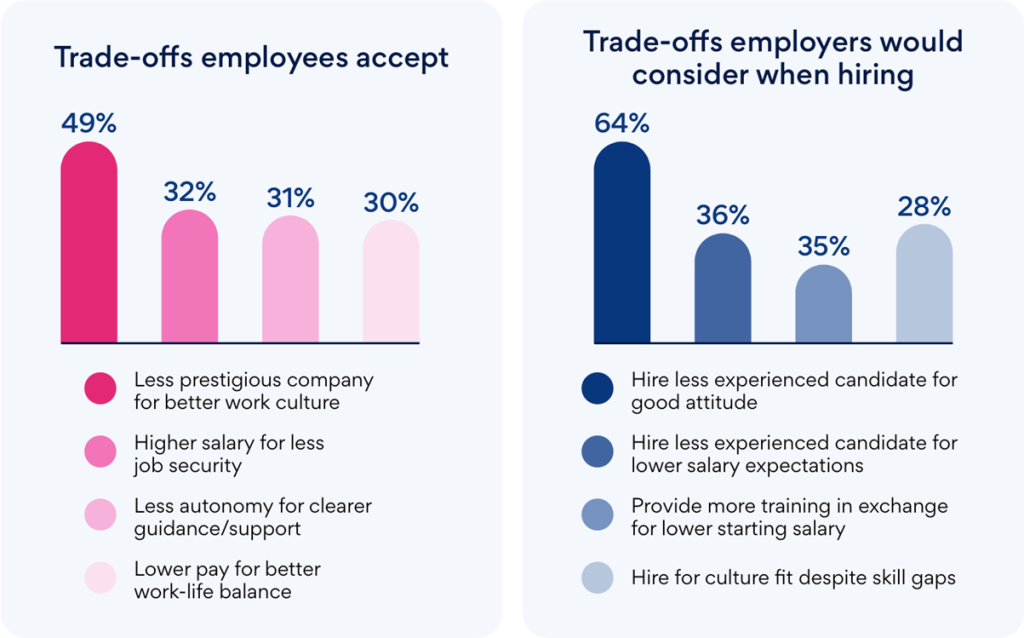
In 2025, it became clearer that Singapore’s workforce is willing to accept several trade-offs to maintain their roles. Both employees and employers have several conditional compromises when it comes to negotiating.
One clear trade-off employers were willing to accept was hiring a less experienced candidate if they showed a good attitude.
Source: Jobstreet by SEEK
In fact, according to Jobstreet by SEEK’s keyword search data, more employers were willing to hire fresh graduates or employees with no experience for entry-level roles in 2025.

Source: Jobstreet by SEEK
#4 Artificial Intelligence Fluency Is Key
According to data from another Jobstreet by SEEK report, the Hiring, Compensation & Benefits Report 2025, 54% of employers consider AI skills while hiring, with 19% seeing it as a primary consideration.
There was a 12% increase in “data analysis” in keyword searches for entry-level jobs from November 2024 to October 2025, while “automation” jumped a whopping 93% in keyword searches in the same period.
On a broader level, keyword searches for hiring increased across both education levels and language skills, reflecting their growing value to employers.

Source: Jobstreet by SEEK
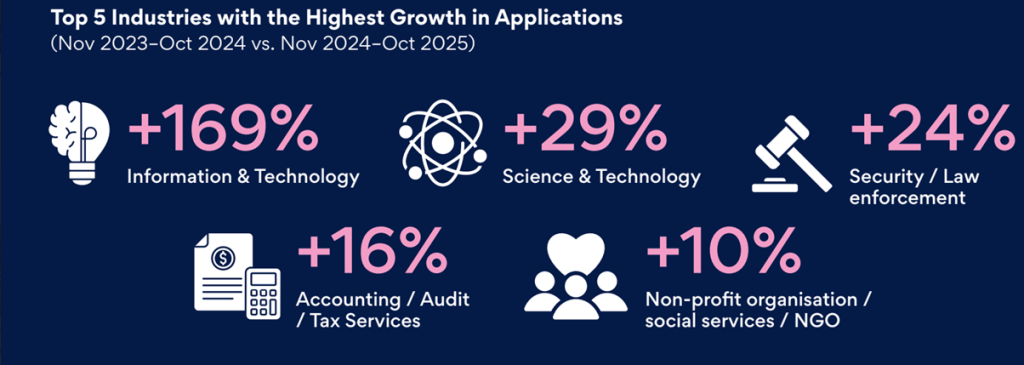
#5 Job Applications In The Information And Technology Industry Surged
Data from Jobstreet by SEEK showed that the Information and Technology industry experienced the most growth in applications, far outpacing the other four industries in the top 5.
Source: Jobstreet by SEEK
According to their data, both soft and technical skills ranked highly in IT job searches, with skills like “Troubleshooting”, “Computer Science”, and “Python Programming” being in as much demand as “Customer Service” and “Relationship Management”. Jobstreet by SEEK refers to these skills as “new collar” tech skills, and expects this trend to continue into 2026.
Read Also: AI: The Quiet Job Threat No One Wants To Talk About


Budgeting 101
7 Ways Being Frugal Is Different From Being Cheap


Street Smart
Singapore Gym Membership Price Guide (2026 Edition)


Street Smart
Singapore Gym Membership Price Guide (2026 Edition)


