If you are employed today or looking for employment, the good news is that Singapore’s labour market remains relatively stable.
Jobs are still being created, retrenchments remain low, and unemployment has not spiked (yet). But if you are planning your next career move, negotiating a pay raise, or thinking about switching jobs, the latest Ministry of Manpower’s Labour Market Report for 3Q2025 suggest you may want to tread more carefully.
Employment Is Growing, But The Momentum Is Uneven
Total employment rose by about 25,100 (5,600 residents and 19,500 non-residents) in the third quarter, a more substantial increase than the previous quarter. However, after 16 consecutive quarters of employment growth, the number of job vacancies eased further from 76,900 in June 2025 to 69,200 in September 2025.
There were more vacancies than job seekers in September 2025, with the ratio of job vacancies to unemployed persons at 1.49. This means there are roughly 1.49 jobs available for every unemployed person.
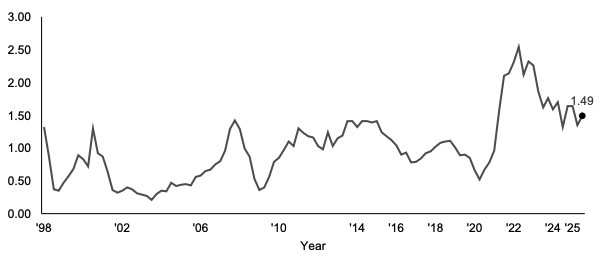
While this looks good on paper, the truth is that it is likely a result of a job mismatch and expectations. Jobseekers for PME roles, such as technology, nursing and logistics, remain in short supply. In contrast, those in administrative, clerical, and customer service roles have an oversupply of job seekers. Non-PME shortages reflect job nature constraints, such as physical demands or shift work.
For workers, this means job security increasingly depends on which sector you are in. Growth sectors remain relatively safe, but support functions may feel more pressure.
Unemployment Remains Low, But Job Searching Is Taking Longer
Overall, unemployment has stayed steady, with resident unemployment around 2.8 per cent and citizen unemployment at about 3.1 per cent. On the surface, this looks reassuring.
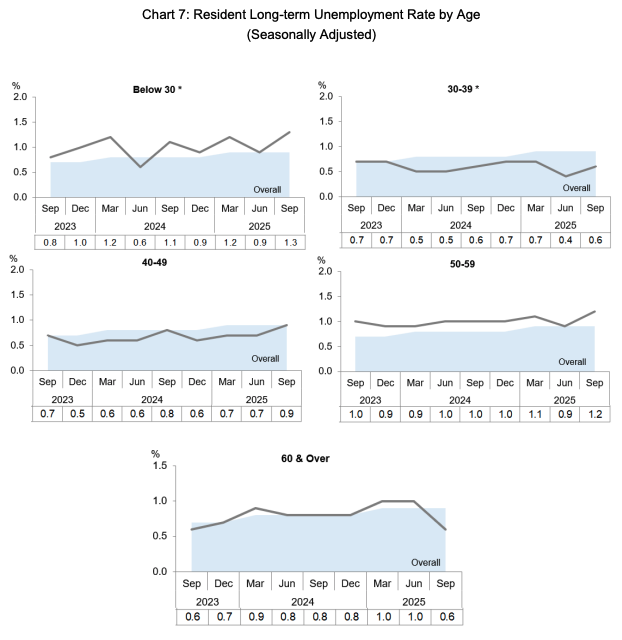
However, there is a subtle shift beneath the surface. Long-term unemployment among residents has held at 0.9 per cent, but younger workers and degree holders are taking longer to find the “right” job. This is not because jobs have disappeared, but because hiring has become more selective.
Employers are still hiring, but they are being more careful about fit, experience, and skills. For job seekers, this means landing a new role may require more patience, better targeting, and a stronger alignment of skills.
Retrenchments Are Low, But Restructuring Is Still Happening
Retrenchments remained low at about 3,670 workers in the third quarter. This is well below levels seen during economic downturns.
What is worth noting is where retrenchments are occurring. Many are happening in traditionally high-paying growth sectors such as Financial Services, Professional Services, and Information and Communications. The main reason is restructuring, not business failure.
In practice, companies are reshaping teams, automating tasks, or shifting roles rather than aggressively cutting headcount. For workers, this means that even “safe” sectors are not immune, especially if roles are easily replaced or duplicated.
Shorter Work Weeks Are Being Used Instead Of Layoffs
Another trend workers should watch is the rise in short workweeks. About 800 employees were placed on shorter hours or temporary layoffs, up from the previous quarter.
This is a signal that firms prefer to reduce hours rather than retrench staff outright. For employees, this can mean lower take-home pay even if you technically remain employed. Non-PMET workers are more affected, as their pay is more directly linked to hours worked.
Finding A New Job After Retrenchment Takes Longer
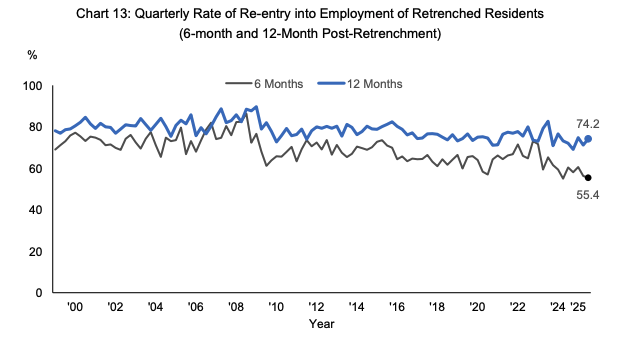
For retrenched workers, the six-month re-entry rate into employment dipped slightly to about 55 per cent. This means fewer retrenched workers are finding new jobs within six months than earlier in the year.
The silver lining is that most people do eventually return to work. About 74 per cent of those retrenched a year ago have found employment. The challenge is timing, not opportunity.
This reinforces the importance of having emergency savings. Even in a stable job market, transitions are taking longer.
What Workers Should Take Away
The labour market is stable, not booming. Jobs are still available, but competition is tighter, and employers are cautious. Wage growth and job switching are likely to moderate going into 2026.
For workers, the message is clear: focus on staying relevant, building in-demand skills, and maintaining financial buffers. This is not a crisis, but it is no longer a seller’s job market either.
In times like these, stability is valuable, but preparation matters even more.
Read Also: 3 Jobs Recommendation By The National Wage Council (NWC) That Were Accepted By The Government
Photo Credit: iStock/joyt
Subscribe To The DollarsAndSense Business Pass
Enjoy what you are reading and want more? Join The DollarsAndSense Business Pass and unlock access to valuable tools, exclusive networking opportunities, and tap into the wisdom of industry experts to fuel your business expansion!