
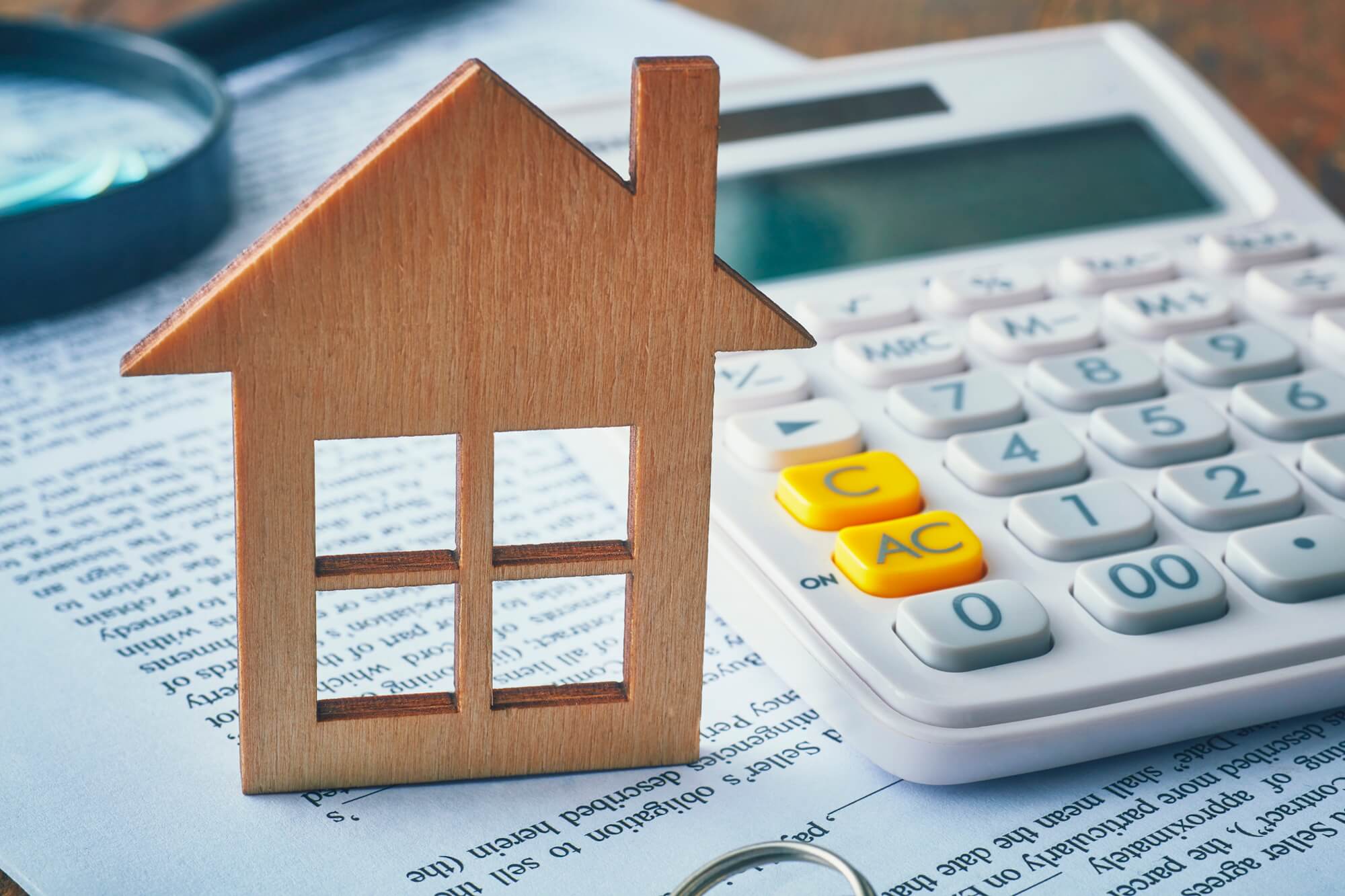
Whether you should buy or rent your property is a perennial question which elicits equally vociferous responses from those for or against. The truth is that there is no universal “right” answer, and a lot depends on your specific situation at this specific point in your life. This might sound like “sitting on the fence” but once you look at the numbers and the life context, it’s the only conclusion. Let’s get into both sides properly and then assess how you actually decide what makes more financial sense for you.
The Case For Why You Should Buy
Owning private property gives you a home that is yours and allows you to do what you want with your own place, without a landlord’s oversight. Such stability matters a lot, especially those starting families or are simply tired of moving every two years when a lease ends. There’s also the long-term capital appreciation argument, which has held up over time in land-constrained Singapore.
In contrast, those who rent also have an inherent uncertainty over whether their rent will go up at the end of a lease.
Looking at the broader picture, the non-landed segment, that is, the strata-titled condos most people are choosing between buying and renting, rose slightly in the first quarter of 2026. Of course, none of this guarantees future appreciation. Singapore’s property market has had flatter periods in the past. But over a long enough holding period, owning property has historically built up equity in a way that renting can’t. Every mortgage payment you make is partly going toward an asset you’ll eventually own outright, rather than disappearing entirely into a landlord’s pocket.
Read Also: 5 Ways Singapore Investors Can Invest In Properties (Without Buying A Physical Property Yourself)
The Real Cost Of Buying In Singapore
This is the part that often gets glossed over because the idea of owning is so romanticised. Buying a private property in Singapore involves a lot more upfront cash than just the purchase price, and the numbers add up quickly.
Let’s start with the downpayment. Under current MAS rules, the maximum loan-to-value ratio (LTV) for a first home loan with no outstanding mortgages is 75%, which means you need to fund the remaining 25% yourself. Of that 25%, at least 5% of the purchase price must be paid in cash; the remaining 20% can come from a mix of cash and your CPF Ordinary Account (OA) savings. On a $1.5 million condo, for example, that’s $75,000 in cash at minimum, with the rest of the $375,000 downpayment coming from CPF or additional cash.
Then there’s Buyer’s Stamp Duty (BSD), which applies to every property purchase regardless of citizenship or how many properties you already own. As of the current 2026 schedule, BSD is calculated on a tiered basis: 1% on the first $180,000, 2% on the next $180,000, 3% on the next $640,000, 4% on the next $500,000, 5% on the next $1.5 million, and 6% on anything above $3 million. On a $1.5 million property, this works out to roughly $44,600.
If this isn’t your first property, Additional Buyer’s Stamp Duty (ABSD) kicks in on top of BSD, and it’s substantial. Singapore Citizens pay 20% ABSD on a second property and 30% on a third or subsequent one. Singapore Permanent Residents pay 30% on their very first property and more on subsequent purchases. Foreigners pay a flat 60% ABSD on any residential property purchase, on top of BSD. These rates have remained unchanged since the April 2023 cooling measures.
Beyond stamp duty, factor in legal conveyancing fees, renovation costs, and ongoing monthly maintenance fees, all of which add up to tens of thousands of dollars. Property tax is also payable annually, at owner-occupier rates if it’s your primary residence, or a higher non-owner-occupied rate otherwise. Due to stamp duty, legal fees, and a reasonable renovation budget, the true cost of buying is comfortably 30% to 35% above the headline purchase price.
Read Also: How Much Buyer’s Stamp Duty (BSD) And ABSD Singaporeans, PRs And Foreigners Need To Pay – And When
The Case For Renting
Renting flips almost every one of these constraints. There’s no downpayment, no stamp duty, no maintenance fee responsibility beyond what’s in your lease, and no multi-decade mortgage commitment. Your upfront cost is typically a security deposit of two months’ rent, and the first month’s rent itself, a fraction of what buying requires.
This flexibility matters more than people often give it credit for. If your job situation is uncertain, if you’re not sure which part of Singapore you want to settle in long-term, or if you anticipate needing to relocate for work in the next few years, renting lets you adjust without the friction and cost of selling a property, which itself comes with agent commissions, potential Seller’s Stamp Duty if sold within the holding period, and the simple hassle of finding a buyer. Renting also frees up capital that would otherwise be locked into a downpayment, which you could choose to invest elsewhere.
Read Also: Guide To Renting SLA Black And White Colonial Houses
What Renting Actually Costs You Over Time
The obvious downside of renting is that you build no equity in an asset. Every dollar in rent is gone the moment you pay for it, with nothing to show for it beyond having had a place to live. And rents in Singapore have not been static. The URA’s private rental index recorded 1.8% year-on-year growth in Q1 2026, while private rents ended 2025 with overall growth of 1.9% for the full year. This means rent isn’t a fixed cost over a long horizon. If you rent for 10 or 15 years instead of buying, you are exposed to rent increases at each lease renewal, with no equity building in the meantime.
Whether this matters or not depends on what you are otherwise doing with the money you save by not buying. If that capital sits idle in a low-interest savings account, the comparison tilts towards buying. If it’s invested productively, in a diversified portfolio earning a reasonable long-term return (typically 8-10% p.a. in global equities, say), then renting and investing the difference can be competitive with, or in some scenarios better than buying outright. This is the actual financial calculation that matters, and it is highly dependent on your own investment discipline and returns. That’s exactly why there’s no universal “right” answer.
Read Also: Is It Financially Prudent To Rent A Private Property In A Prime District Instead Of Buying It?
How To Actually Think About Your Own Decision
Rather than treating this as buy-versus-rent in the abstract, the more useful exercise is to run through a short list of questions about your own life. How long do you realistically expect to stay in this home? Property transaction costs (stamp duty, agent fees, renovation) are largely fixed regardless of how long you hold the property. Most financial planners would suggest you need a holding period of at least five years, and ideally longer, for the math of buying to clearly outweigh renting once all the upfront costs are accounted for.
How stable is your income and career? Buying commits you to a mortgage that, in most cases, will run for decades. If your job, industry, or income is volatile, the inflexibility of a large monthly mortgage payment is a real risk, not just a hypothetical one. Also, what are your family plans? A young couple anticipating children in the next few years has different space and stability needs than a single professional in their late twenties who isn’t sure where they’ll be living in five years or if they even want kids in future.
Buying tends to make more sense once your life circumstances, location preferences, and space requirements have settled into something reasonably predictable. What’s true for a 28-year-old early in their career renting near their workplace is not true for a 38-year-old with two kids who has decided this is the neighbourhood they want to settle in for the next 20 years. The right move is the one that matches where you and your life stage.


Lifestyle
15 Of The Cheapest EV Cars In Singapore


Budgeting 101
7 Ways Being Frugal Is Different From Being Cheap


Street Smart
Singapore Gym Membership Price Guide (2026 Edition)


Street Smart
Singapore Gym Membership Price Guide (2026 Edition)

Bonds and Fixed Income
Complete Guide To Buying Singapore Savings Bonds (SSB) [2026 Edition]


