

In Singapore, National Service (NS) is a physically demanding and character-building rite of passage for many. If you are willing to use the time constructively, however, NS is also a rare period in life when your expenses are low, your responsibilities are limited, and you have stretches of downtime that most working adults could only dream of. As a Full-Time National Serviceman (NSF), getting through a good finance book or two during NS is one of the highest-return uses of your time.
You are not going to get rich off your $700 to $900 a month stipend, but you can come out of NS with a framework for thinking about money that most of your peers will spend their twenties trying to build from scratch. So, here are eight books worth picking up to learn more about money and investing.
#1 The Psychology Of Money – Morgan Housel
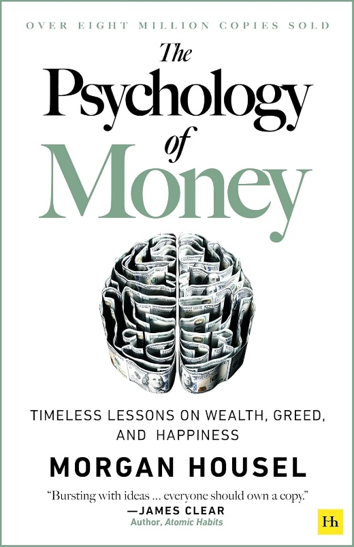
If you only read one book on this list, it should be this one. Morgan Housel is not a financial advisor, but he’s a gifted writer, and this shows in the best possible way. The book is built around short, readable chapters, each making one clear point about how human behaviour shapes financial outcomes more than technical knowledge does. The central argument is that being good with money has less to do with intelligence or income, and more to do with your relationship with time, risk, and ego.
Housel uses real stories, from Ronald Read, the janitor who quietly accumulated millions by staying invested, to the executives at Lehman Brothers who lost everything by betting too big, to make points that feel obvious in hindsight but are genuinely difficult to see without someone laying them out. For an NSF just beginning to think about money, this book is a good place to start because it does not overwhelm you with spreadsheets or strategies. It reframes the whole exercise. For Housel, getting rich is simply about not doing stupid things over a long time.
#2 I Will Teach You To Be Rich – Ramit Sethi
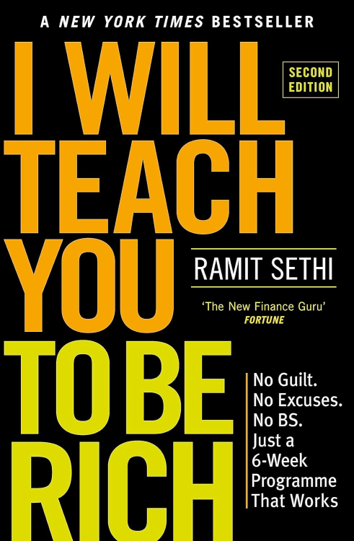
The great thing about I Will Teach You To Be Rich is that it delivers on its title a lot more honestly than most finance books. Ramit Sethi wrote the first edition for Americans in their twenties, and while some of the specific product recommendations don’t exactly translate to Singapore, the underlying system and framework does. Sethi’s core argument is that you should automate your finances so that good behaviour happens by default rather than by discipline. Set up your accounts so that a portion of every paycheck flows into savings and investments automatically, before you have a chance to spend it. Then spend the rest freely, without guilt.
Read Also: 8 Books Your Child Should Read to Build an Entrepreneurial Mindset
#3 The Richest Man In Babylon – George S. Clason
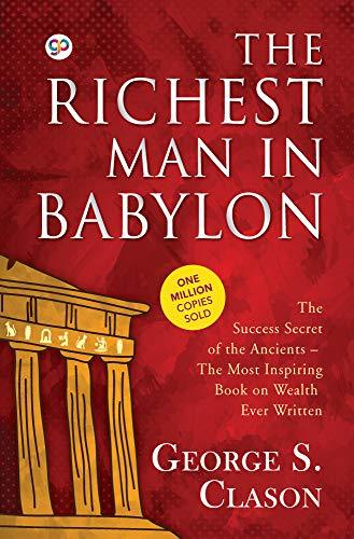
This one was first published in 1926 and is structured as a series of parables set in ancient Babylon. That description might make it sound dry, but it’s actually one of the most readable books on this list. The lessons are delivered through short stories about merchants, tradespeople, and moneylenders, and the financial principles they articulate have not aged at all. The core lesson is deceptively simple: pay yourself first. Clason argues that a person should save at least one-tenth of everything they earn before spending a single cent. This is not a new idea, but hearing it told through stories of Babylonian gold traders somehow makes it stick in your head.
#4 Millionaire Teacher – Andrew Hallam
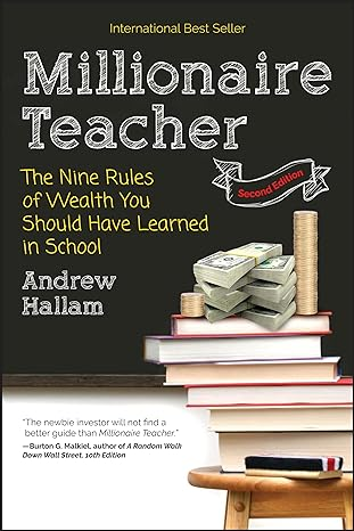
Now, Millionaire Teacher is the most underrated book on personal finance that most Singaporeans have never heard of. Andrew Hallam was a secondary school teacher in Canada who became a millionaire on a teacher’s salary through disciplined index fund investing. He then wrote a book explaining exactly how he did it. What makes this book particularly useful in the Singapore context is that Hallam writes about investing through low-cost index funds in a way that translates directly to what is available to retail investors here.
He argues, convincingly, that the average person who buys a globally diversified index fund and holds it for decades will outperform many actively managed funds and stock-picking investors. He also does something rare: he names and criticises the financial products and salespeople that drain returns from ordinary investors. If you have ever had a friend or relative try to sell you an investment-linked policy (ILP), this book will help you understand why those products are usually not in your best interest.
#5 The Simple Path To Wealth – JL Collins
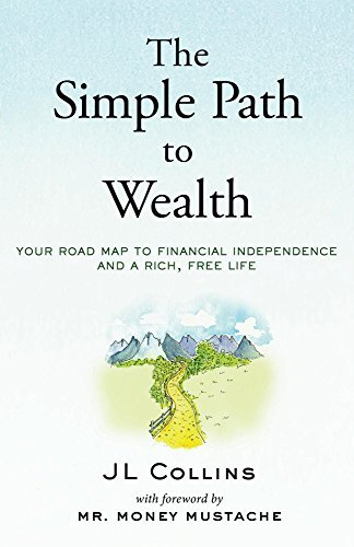
This book was started as a series of letters JL Collins wrote to his daughter to explain how money works. It grew into one of the most widely read books on index fund investing in the world, and for good reason: it makes a genuinely complex topic feel manageable. Collins’ argument is that you do not need to be clever to build wealth. You need to earn more than you spend, invest the difference in a low-cost total market index fund, and leave it alone for as long as possible. That is essentially the whole book, but he explains the reasoning behind it so thoroughly that by the end you understand not just what to do but why it works. The original book references US-based funds but the concept can easily be transferred to Irish-domiciled UCITS ETFs like VWRA or CSPX, which are what most Singapore-based investors use to access global equity markets.
#6 Rich Dad Poor Dad – Robert Kiyosaki
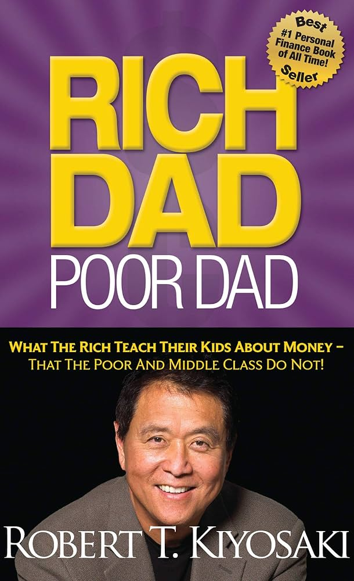
This one needs a word of warning before you read it, because it is both genuinely useful and deeply flawed. Kiyosaki’s core idea, that the wealthy build assets that generate income rather than simply trading their time for a salary, is a valuable mental framework. The distinction he draws between assets and liabilities is simple but clarifying, especially for someone just beginning to think about wealth-building.
The book falls short in its use of specific instruments, as Kiyosaki’s advice centres on property investment and entrepreneurship in the US context, and some of his financial claims have been criticised by financial professionals over the years. He has also been accused of overstating his own accomplishments. But it’s still worth reading for the mindset, not the strategy, as long as you treat the specific investment advice with scepticism.
Read Also: 3 Finance Books Recommended By The DollarsAndSense Team To Kickstart Your Financial Journey
#7 Your Money Or Your Life – Vicki Robin And Joe Dominguez
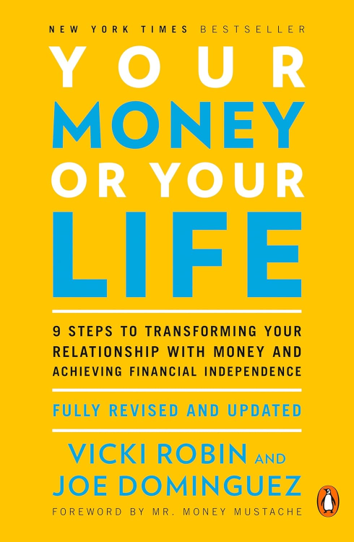
Your Money or Your Life is the most philosophically ambitious book on this list, and the one most likely to make you think about money in a way you never have before. The central question it asks is: how many hours of your life does this purchase cost you? If you earn $15 an hour and you buy a $150 pair of shoes, those shoes cost you ten hours of your life. Robin and Dominguez argue that most people spend money subconsciously, then spend much of their lives working to earn more money to spend more, without ever asking whether the things they buy make them happier or more fulfilled. The book is a direct challenge to the idea that consumption equals satisfaction.
#8 The Little Book of Common Sense Investing – John C. Bogle
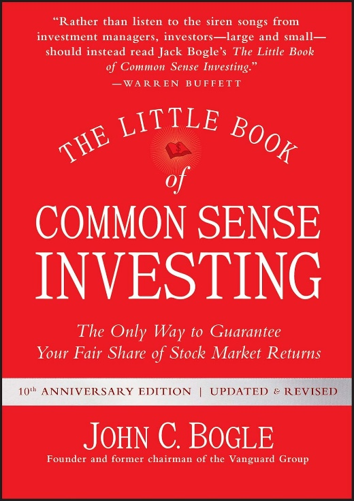
Everyone knows John Bogle as the father of index investing, but this is the most technically grounded book on this list, and the one most worth reading once you have absorbed the earlier titles. Bogle founded Vanguard and invented the index fund, and this book is his life’s argument distilled into a few hundred pages. The core thesis is that markets, over time, reflect the returns of the underlying businesses that make up the economy. Every dollar paid in management fees, trading commissions, and fund expenses is a dollar subtracted from your returns. The only reliable way to capture what the market gives is to buy a diversified index fund at the lowest possible cost and hold it indefinitely. He writes plainly and with conviction, and his argument is backed by decades of data. The data out there for index investing is compelling, and this is a great book that hammers that point home.
One Final Thought
Remember that NS is two years of your life, and a lot of people use it to get fitter, pick up some discipline, and occasionally play a lot of mobile games during the downtime. All of that is fine. But if you can carve out a few hours a week to read through even half of this list, you will emerge from NS with a financial education that most adults in their thirties are still missing, and that’s invaluable.

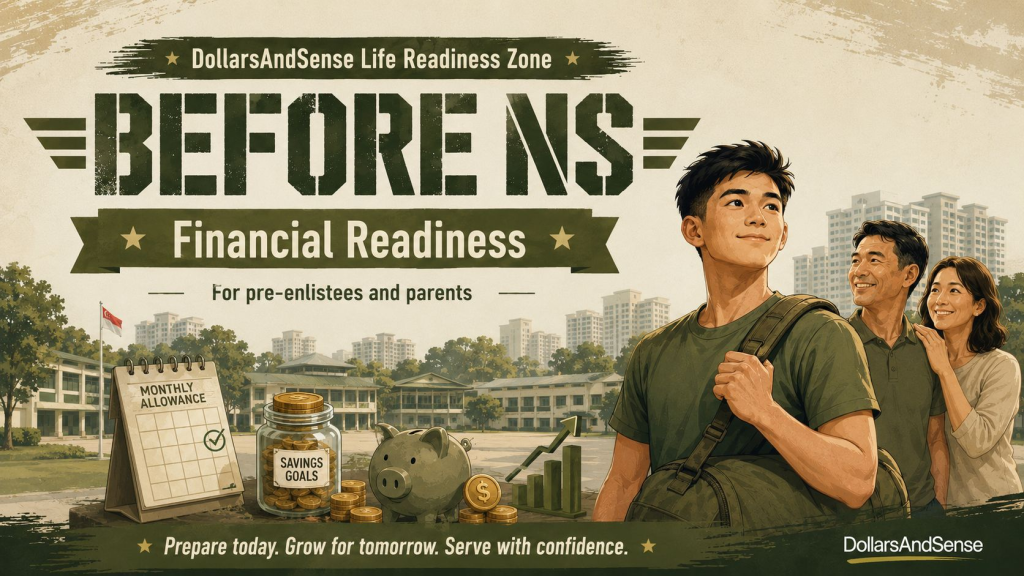
DollarsAndSense Is proud to be the Media Partner for the upcoming Pre-NS Talk at SAFRA Mount Faber this weekend on July 4, 2026. Do join us at the NS Experiential Zone at the Level 1 Atrium from 11am to 4pm as well and explore hands-on activities and interactive booths.
Check out the laser shooting range where you can learn basic marksmanship skills and test your accuracy using safe laser-based training pistols. With learning about drone operations now a part of Basic Military Training, you can get some first-hand experience in a fun Drone Soccer Challenge and show off your drone piloting skills. Also drop by our DollarsAndSense booth to have a chat with us about financial readiness, and play some games!
The NS Experiential Zone is open to the public at the Level 1 Atrium of SAFRA Mount Faber from 11am to 4pm. No registration is required to attend the NS Experiential Zone.
Advertiser Message
Thinking Of Switching Brokers Or Consolidating Your Holdings?
Tiger Brokers is currently running a transfer-in campaign where eligible clients can receive an iPhone 17 Pro Max* when they transfer in their assets.
For SGX investors, there is also a CDP Transfer promotion with 0* commissions on Singapore stocks.
Find out more here. *T&Cs apply.




Budgeting 101
7 Ways Being Frugal Is Different From Being Cheap


Street Smart
Singapore Gym Membership Price Guide (2026 Edition)


Street Smart
Singapore Gym Membership Price Guide (2026 Edition)


