
When Dr Pooja Agarwal Jayagobi, Senior Consultant in the Department of Neonatology at the KK Women’s and Children’s Hospital, returned to work 12 weeks after giving birth, she plunged right back into 30-hour hospital shifts. She had no idea she could ask for flexible work arrangements or a maternity leave extension.
“I was shocked that I was just expected to go back as if nothing had changed,” said Dr Pooja, recounting this experience during a panel discussion 20 years later.
But everything had changed. She now had a newborn to raise—a full-time responsibility —on top of the full-time job she already had. How was she, and every working mother like her, supposed to manage both at once?
For some women, the solution is simple: just don’t have children. This is one reason, among many, that Singapore’s total fertility rate has been on a steady decline, hitting a record low of 0.87 in 2025. In fact, Deputy Prime Minister Gan Kim Yong went as far as to call the issue an “existential challenge”.
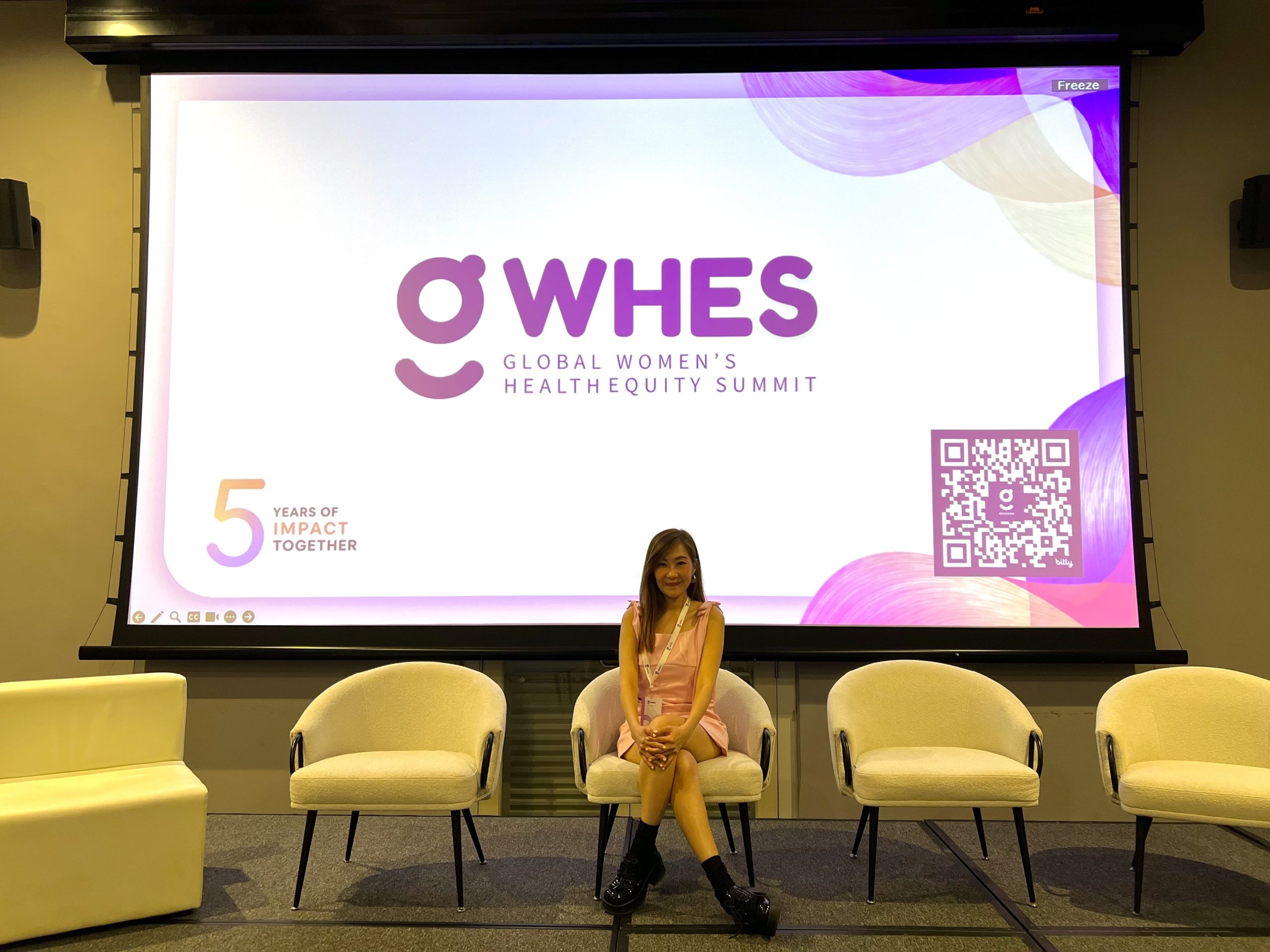
The tension between the demands of motherhood and those of advancing a career was one of the central threads that ran through the Global Women’s Health Equity Summit 2026, organised by lactation pod provider Go!Mama to mark its fifth anniversary.
Held at the Asian Civilisations Museum on 4 August 2026, the summit gathered policymakers, employers, healthcare professionals and mothers to discuss a broader question: what would it take to redesign workplaces, policies and communities so women don’t have to choose between building a family and building a career?
Here’s what they had to say.
Read Also: 5 Ways To Improve Singapore’s Total Fertility Rate (As Proposed By MPs)
The Challenges Of Returning To Work As A New Mother
Presenting key findings from Go!Mama’s Maternal Support Pulse 2026 research, Arvin Tang, CEO and Founder of AKIN by Techlyon, noted that help for mothers is “front-loaded on birth”, with a slew of resources available when their newborn arrives.
“The hardest point arrives months later,” he said, when mothers return to work.
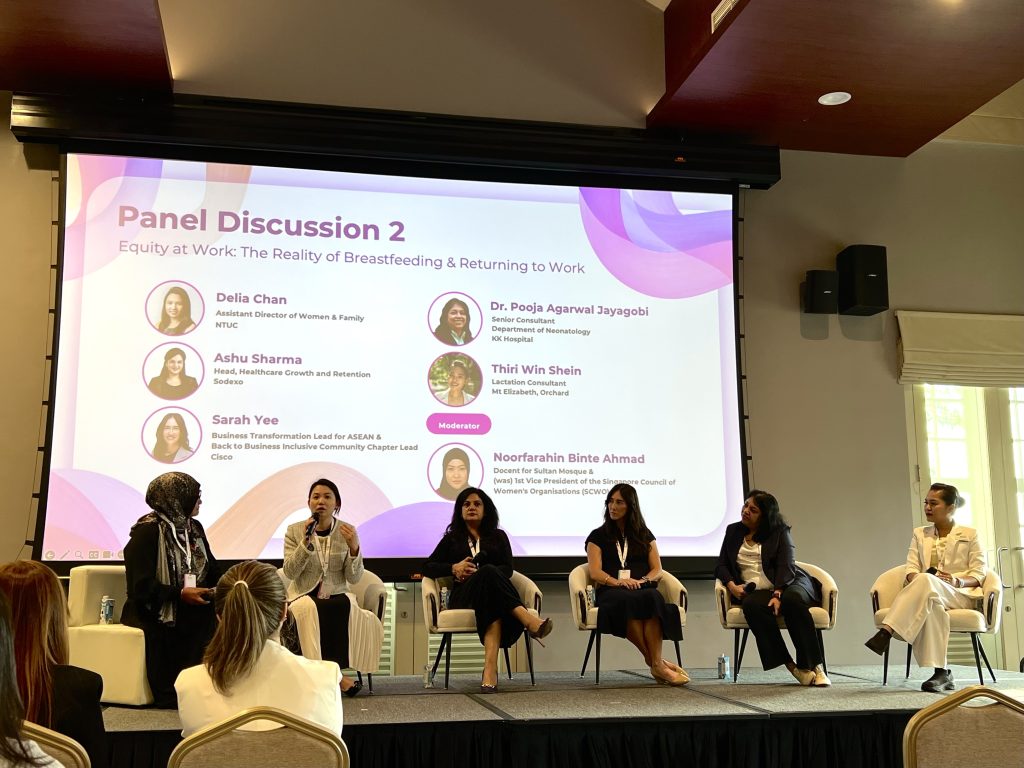
Ashu Sharma, Head of Healthcare, Growth and Retention at Sodexo, shared her experience of this gap during the panel discussion “Equity at Work: The Reality of Breastfeeding & Returning to Work”. On her first day back after having her first child, she didn’t know where she could go to pump breastmilk.
She ended up doing this in a storeroom, but it wasn’t the end of her difficulty. She then had to figure out where to store the milk, all while heading into a meeting an hour later.
“A lot of thoughts were going through my mind,” she recalled. “What should I do with this milk? Is anyone going to see me? How will I label it and put it in the fridge? What’s the meeting? What’s the agenda? It was a lot of chaos.”
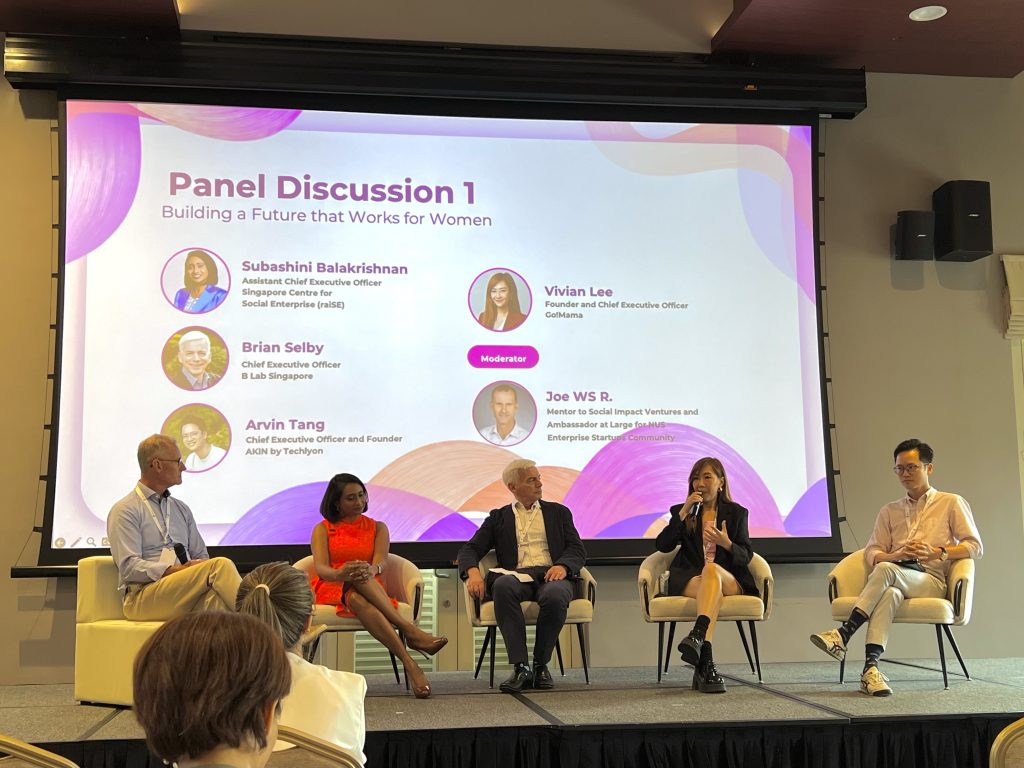
Vivian Lee, Founder and CEO of Go!Mama and a speaker for the “Building a Future That Works for Women” panel discussion, had a similar experience.
When she wanted to breastfeed her child at work, her employer said she could do it in the office’s toilet. She was dismayed by her employer’s response—and in fact, it was the turning point that led her to start Go!Mama.
Even If The Facilities Are There, Mothers Aren’t Using Them
It’s been five years since Go!Mama’s founding. In that time, the infrastructure for breastfeeding mothers has improved significantly. But just because it’s there doesn’t mean mothers will use it, as seven in 10 mothers surveyed by Go!Mama reported.
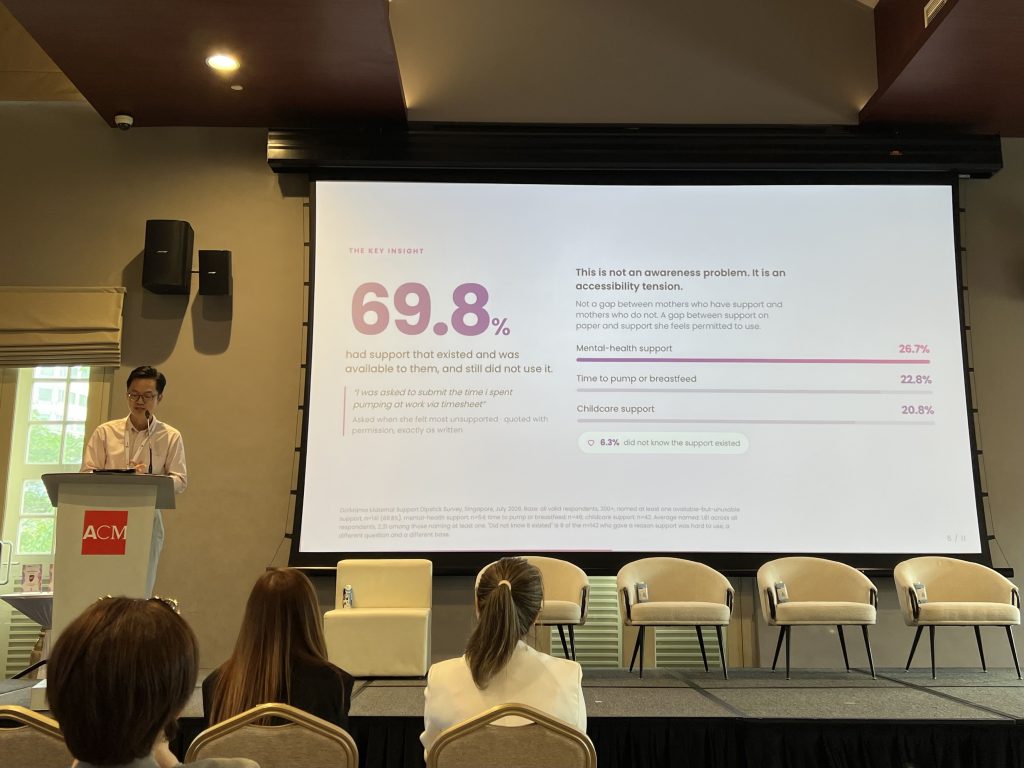
Drawing on her experience counselling breastfeeding mothers, Thiri Win Shien, Lactation Consultant at Mount Elizabeth Hospital (Orchard) and “Equity at Work” panellist, offered one explanation for this fear of judgement.
“Mothers are afraid breastfeeding will inconvenience their colleagues,” she says.
“I’ve worked with mothers employed in male-dominant companies, like those in construction, and they’re pumping breastmilk at their desks. The pump is noisy, and they’re embarrassed to use it around their male colleagues.”
Creating A Safe Space For Mothers To Ask
So, if facilities aren’t the real bottleneck, what is? Various panellists pointed to one answer: workplace culture.
“Policy creates permission, but the organisation’s culture creates the safety to request it,” said Delia Chan, Assistant Director of NTUC Women and Family and “Equity at Work” panellist.
Managers, in particular, are well placed to create this safety. Arvin shared a finding from Go!Mama’s research that a manager’s support shapes a working mother’s sense of support about as closely as her partner does—if not slightly more.
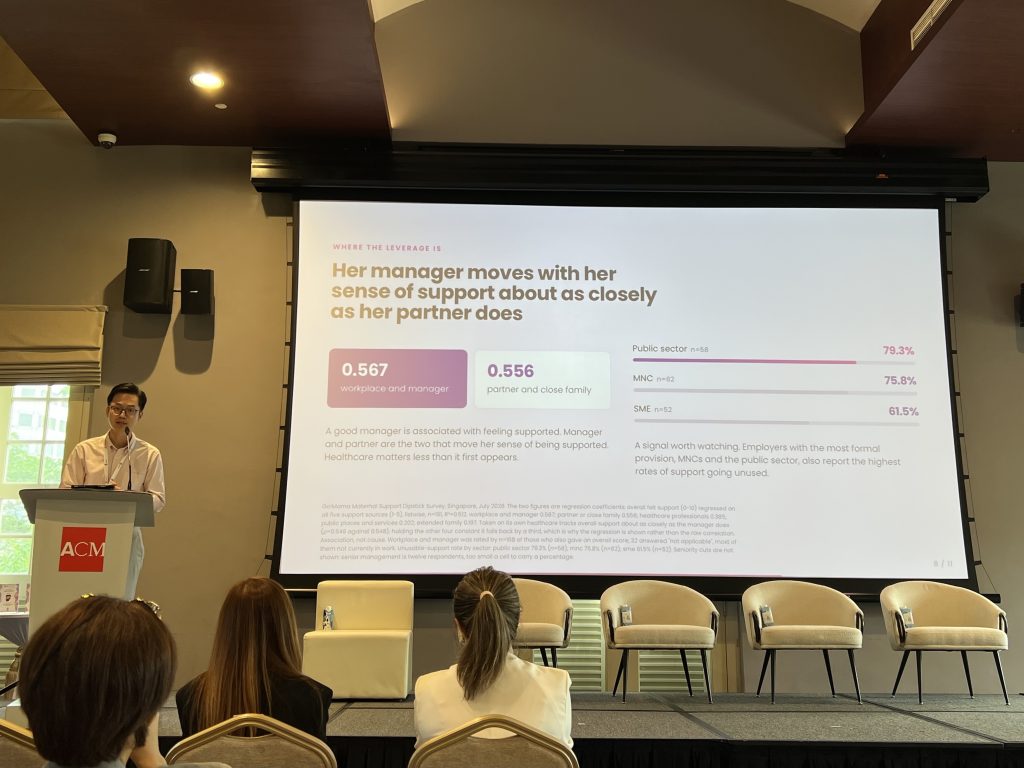
A story shared by Sarah Yee, Business Transformation Lead for ASEAN, Back to Business Inclusive Community Chapter Lead at Cisco and “Equity at Work” panellist, corroborated this finding.
Sarah described a manager who personally walked a returning mother to the office’s nursing room on her first day back. The manager also asked the employee: “What do you need from me to support your return to work?”
“I was blown away when I heard this,” related Sarah.
“This is the kind of impactful leadership that will make a woman stay in her job and help her manage her work and personal life. It’s really about having systemic procedures in place, coupled with good intent from managers and employees.”
Read Also: Guide To Understanding How Shared Parental Leave Works In Singapore
Mothers: Have The Courage To Challenge Self-Limiting Beliefs
Organisational culture isn’t the only thing that needs to shift. Working mothers also need to challenge self-limiting beliefs they may hold about themselves.
Delia has witnessed these mental barriers firsthand while encouraging women to take on bigger roles, even among those who already hold a leadership position.
“‘No, no, no, no, not me lah,’” she said, describing the common reply when she approaches a female leader about stepping up. “‘Ask somebody else, ask the person next to me.’”
This same hesitancy shows up when mothers try to balance pursuing their career with raising a child. Delia cited an NTUC study that found that even though close to 90% of flexible work arrangement requests were approved, over 30% of respondents felt stigma in making them.
“I think each of us should find the courage to try to have that conversation with your manager and request flexibility, especially when you’re going through this season of life,” she advised.
“Hopefully, you’ll get the support you need, and that your organisation’s culture will give you the safety to request it in the first place.”
No One Group Can Support Mothers Alone
Raising children touches nearly every part of a mother’s life, including her career. Much of this responsibility also tends to fall on her alone. So, if it takes a village to raise a child, that same village needs to show up for the child’s mother, too, as she juggles work and motherhood.
“It’s not realistic to have just one organisation or one person support a mother through the different seasons of their journey,” said Vivian. For example, the mother’s employer has a role to play. So does the government.
“It’s only when everybody steps into their role and takes one tangible action that things will come together—and become something scalable enough to impact more women.”
This is the kind of collective ownership, with every part of the ecosystem doing its share, that Singapore’s declining birth rate calls for. One that lets working mothers balance having children and furthering their career, without needing to sacrifice one for the other.
Advertiser Message
Thinking Of Switching Brokers Or Consolidating Your Holdings?
Tiger Brokers is currently running a transfer-in campaign where eligible clients can receive an iPhone 17 Pro Max* when they transfer in their assets.
For SGX investors, there is also a CDP Transfer promotion with 0* commissions on Singapore stocks.
Find out more here. *T&Cs apply.




Street Smart
Singapore Gym Membership Price Guide (2026 Edition)


