
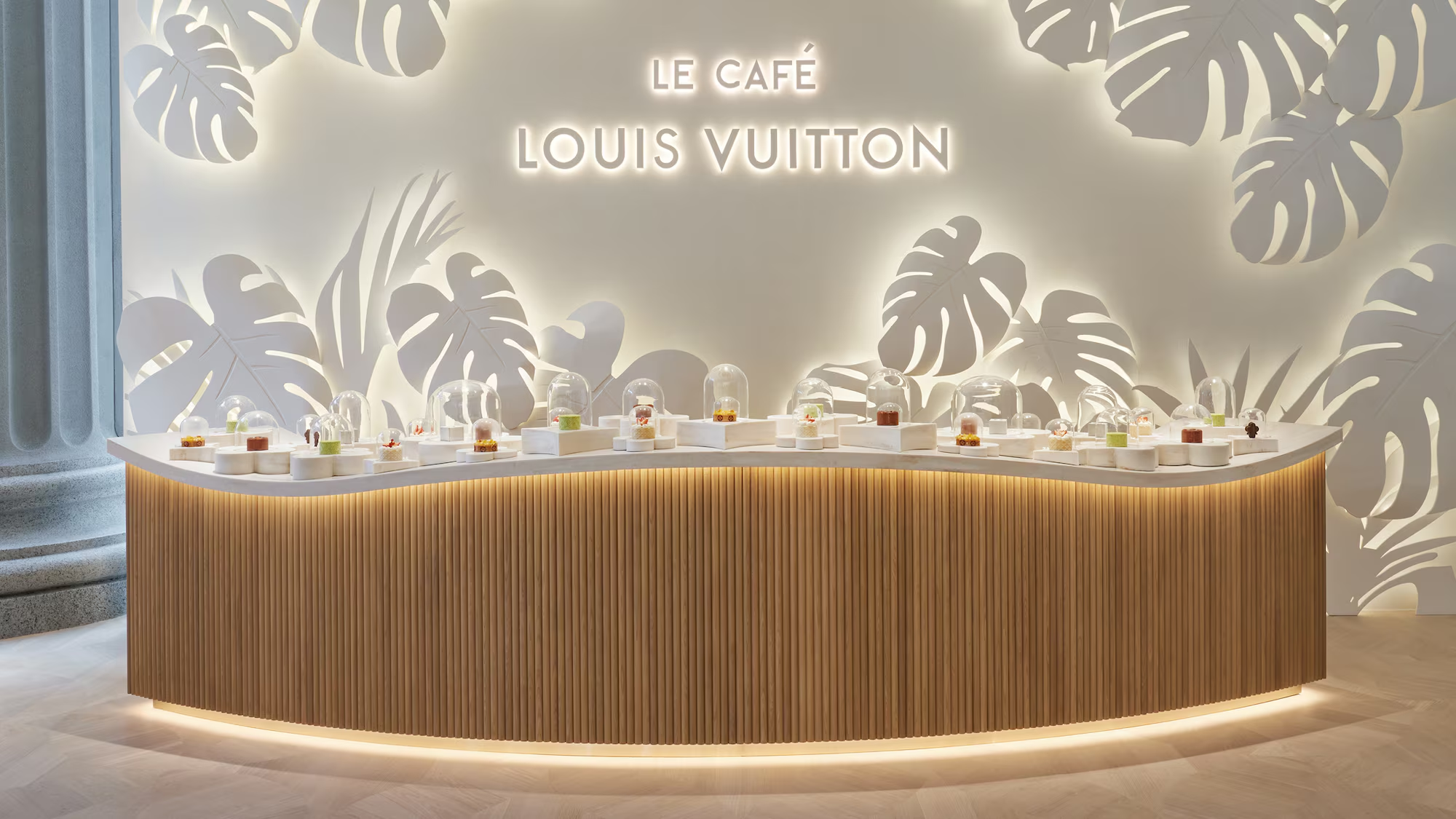
There is something slightly off-putting (to say the least) about paying $15 for a cappuccino at Prada. Not because the coffee is bad but mainly due to the fact that you are sitting inside one of the most prestigious fashion houses in the world, nursing an espresso between glass cases of handbags. It seems like you’re paying for the location rather than the coffee. And yet, this is exactly the experience Prada has been engineering at ION Orchard in Singapore, as well as Harrod’s in London and soon in SoHo, New York.
Luxury brands opening cafes and restaurants is no longer a novelty but has morphed into a strategy, and understanding why tells you a great deal about how these brands think about customer relationships, brand building and long-term revenue. So here’s what these luxury icons are really selling when they open a branded café.
Brief History Of The Trend
Source: Prada Group
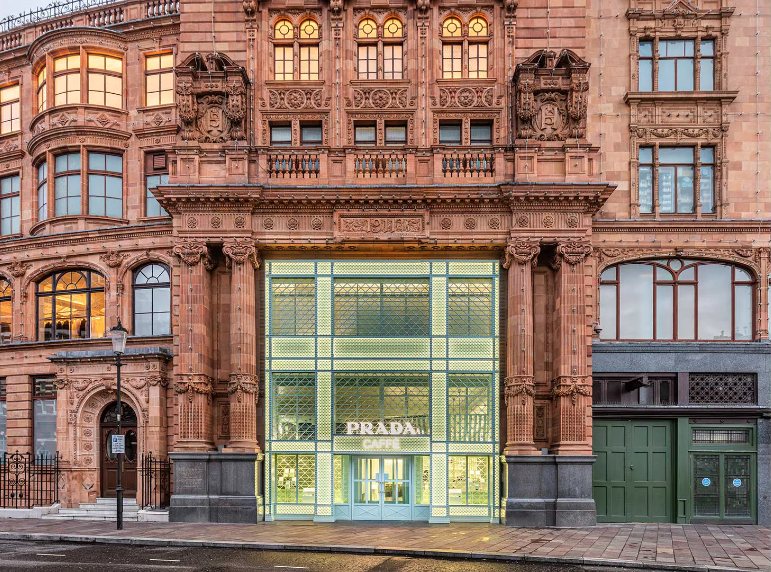
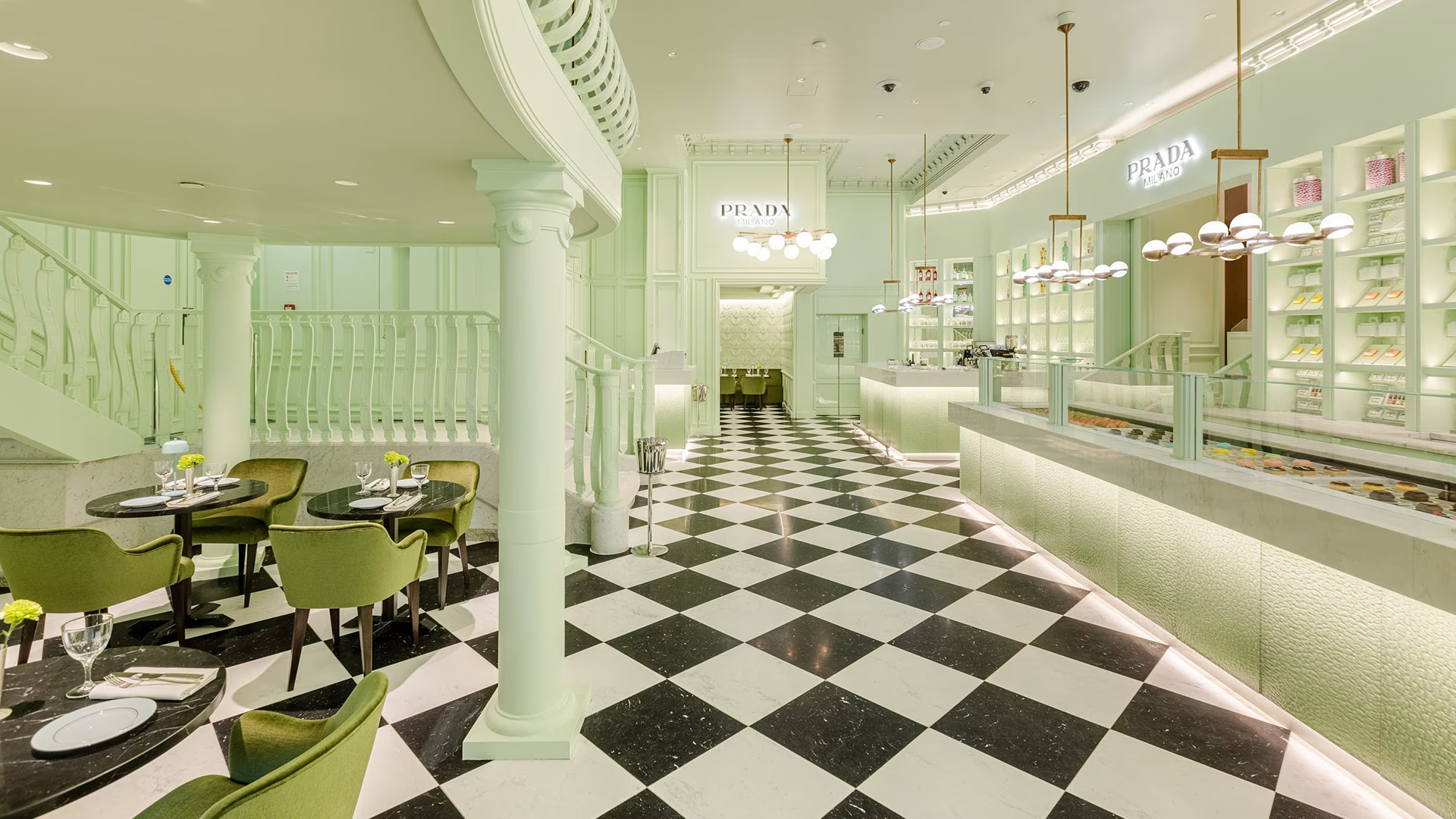
The hospitality pivot in luxury fashion has been gathering momentum for years. Prada opened its Prada Caffè at Harrods in London in 2023, extended its run well beyond the original closing date due to strong demand, and opened a second location right here in Singapore’s ION Orchard in 2025. A New York outpost in SoHo is expected in mid-2026. The menu is Italian, the interiors are vintage Prada — think green velvet, black-and-white chequered floors, pastries under glass — and a typical white coffee costs more than $12 in Singapore.
Louis Vuitton has taken a different approach, embedding its cafes within its flagship retail stores. Le Café V, the first Louis Vuitton cafe, opened in Osaka in 2020. Then in November 2024, the brand launched its first US café at its temporary Manhattan flagship on East 57th Street. The menu, described as “luxury snacking”, features dishes such as lobster ravioli embossed with the Louis Vuitton flower and a scallop soufflé with caviar and champagne beurre blanc. It’s not that much of a shock to discover that Michelin-starred restaurateur Stephen Starr is involved.
Read Also: Singapore Vs Hong Kong: Where Is It Cheaper To Buy Luxury Products?
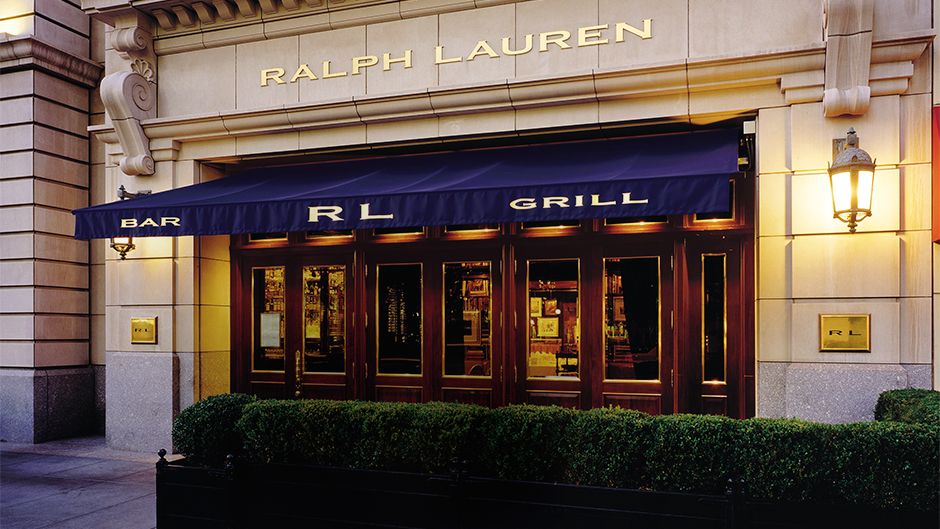
This is not a coffee shop that happens to be inside a retail store but a gastronomic destination by its own and did the high-luxury brands start it? Not really, because Ralph Lauren is arguably the pioneer of this model. The brand opened its first restaurant, the RL Restaurant in Chicago, in 1999 and Ralph’s in Paris followed in 2010. The Polo Bar in New York opened in 2015 and quickly became one of the city’s most recognisable dining institutions.
Source: Ralph Lauren
Ralph’s Coffee, which launched on Fifth Avenue in 2014, has now grown to over 40 locations worldwide and it’s still growing. Hospitality is now one of Ralph Lauren’s five core business categories, sitting alongside apparel, footwear, home and fragrances. In FY2025, the company added 5.9 million new direct-to-consumer (D2C) customers, and its global D2C comparable store sales grew 13% in both the first and second quarters of FY2026. No doubt, its coffee shops helped drive a portion of those new customers. More time spent around a brand tends to equal more opportunity to “cross-sell” or “upsell” consumers.
Business Logic Behind The Flat White
To understand why this works, it helps to think about who actually walks into a luxury store on any given afternoon. Under the traditional retail model, most of these visitors leave without making a purchase and, crucially, without any particular reason to come back soon. A cafe changes that calculus entirely because now there is a reason to visit and a reason to stay longer and even return again. A purchase threshold that has dropped from, say $5,000, down to about $15, makes the brand accessible in a tangible, physical way to customers who are not yet ready to spend at the handbag level.
The data from Coach, which has been among the most transparent about sharing its cafe results, illustrates this effect clearly. Stores where Coach has added a coffee shop have seen double- to triple-digit sales increases across the entire store. The cafes are also profitable as standalone operations so even without the added benefit of upselling, they make business sense. Nearly 70% of Coach’s new customers in recent years have been Gen Z and Millennials. These are precisely the consumers who are most likely to delay big-ticket purchases but who are also most engaged with brand experiences and social media content.
What You Are Actually Buying With That Coffee
Sit in any Prada Caffè and something becomes strikingly obvious. The experience is designed to make you feel like a Prada customer; not a prospective one but an actual one. That’s an important distinction because the materials, the service, the proportions of the room, the weight of the crockery: everything communicates the same values as the brand’s clothing and accessories. You’re not just drinking an overpriced coffee but inhabiting the world the brand has spent decades constructing.
Source: Prada Group
This is what marketers call experiential branding, and it is more durable than advertising because it creates a lasting memory rather than just an impression (and we all know how powerful memories are). A print ad or an Instagram post can communicate that Prada stands for Italian craftsmanship and understated elegance but physically sitting in the Caffè does something the ad cannot: it makes you feel those qualities rather than simply observing them from afar.
There is also the social media dimension, which should not be underestimated. A $15 cappuccino at Prada, served in branded crockery in a room that looks like the inside of a perfectly art-directed film set, is among the most photographable experiences available at that price point. The monogrammed desserts at Louis Vuitton’s New York cafe were designed with this in mind. Coach’s Tabby Cake, a pastry shaped like its best-selling handbag, went viral on TikTok before the first US coffee shop had been open even a month. All this contributes to building the hype and desirability factor of the luxury café.
Read Also: 5 Types Of Quiet Luxury In Singapore
Luxury Cafes Are NOT Side Projects
It is tempting to read the luxury cafe trend as a whimsical experiment or a brand extension that says more about designer brands’ egos than actual legitimate commercial strategy. But the numbers suggest otherwise. These cafes are profitable and Ralph Lauren’s hospitality division is now a core pillar of the business. It’s no surprise to see other brands, from Gucci to Armani to Tiffany, jump on the café bandwagon as they have invested in dining concepts because the return on brand investment from a well-executed cafe exceeds what most conventional advertising spend can achieve.
At a time when global luxury sales growth has slowed, with much of the growth in recent years coming from price increases rather than rising demand, particularly in Asia, finding new ways to deepen customer engagement and extend the time people spend inside the brand’s world has become a strategic imperative. Put simply, for many of the world’s most recognisable luxury brands, opening cafes has become one of the easiest and low-maintenance ways to achieve this.
Advertiser Message
Thinking Of Switching Brokers Or Consolidating Your Holdings?
Tiger Brokers is currently running a transfer-in campaign where eligible clients can receive an iPhone 17 Pro Max* when they transfer in their assets.
For SGX investors, there is also a CDP Transfer promotion with 0* commissions on Singapore stocks.
Find out more here. *T&Cs apply.



Family Planning
Cost Guide To International School Fees In Singapore


