
The number of Singapore citizens and permanent residents living alone is on the rise in recent years, with a total of 247,900 in 2025, up from 146,000 in 2015, an almost 70% increase, according to data from the Department of Statistics. But what is more interesting is that a greater proportion of these are now made up of people aged 35 and below. In 2015, there were only 9,200 aged 35 and below living alone, or about 6.3% of the total. This jumped by over 145% to 22,600 in 2025, when they made up about 9.1% of the total.
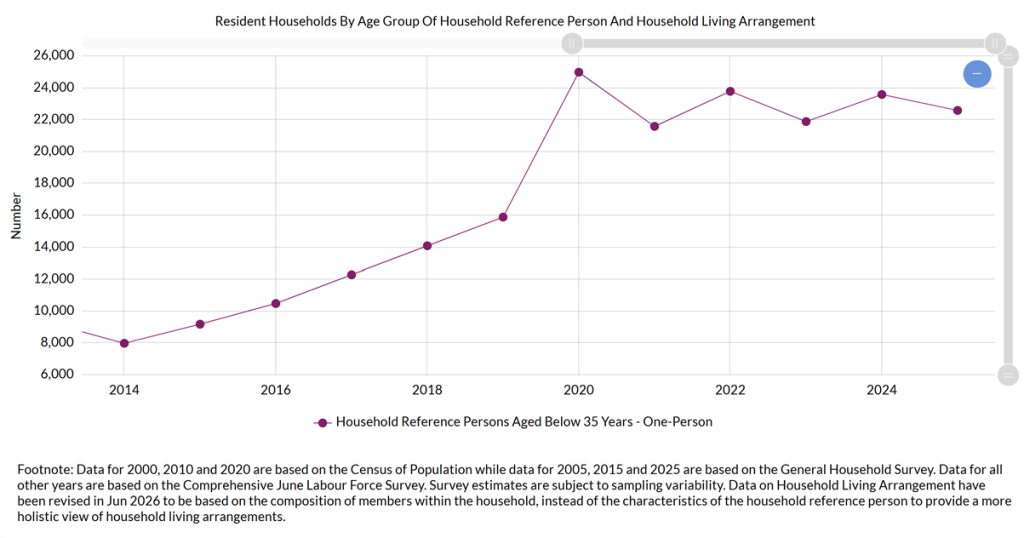
Under Singapore’s property ownership laws, you are only eligible to buy an HDB flat, whether via BTO or resale, or a new Executive Condominium unit, once you turn 35. This rise in Singapore residents under 35 living alone therefore likely represents a similar rise in those choosing to rent.
Cost Of Rent In Singapore
Rental rates in Singapore vary based on several factors, with location and property type being the most determining factors. The latest HDB rental rates for a 3-room flat range from $2,500 to $3,250 per month depending on location, while a 5-room flat ranges from $3,200 to $5,150 per month based on location. This would mean that renting a single room should range between $1,000 and $1,500 per month on average, with the highest prices naturally in towns around the city centre.
| Town | 3-Room | 4-Room | 5-Room |
| Ang Mo Kio | $2,800 | $3,400 | $3,850 |
| Bedok | $2,800 | $3,300 | $3,600 |
| Bishan | $2,950 | $3,600 | $4,000 |
| Bukit Batok | $2,600 | $3,250 | $3,500 |
| Bukit Merah | $3,000 | $3,900 | $4,200 |
| Bukit Panjang | $2,700 | $3,000 | $3,300 |
| Bukit Timah | * | * | * |
| Central | $3,250 | $4,440 | $5,150 |
| Choa Chu Kang | $2,550 | $3,150 | $3,200 |
| Clementi | $3,000 | $3,900 | $3,900 |
| Geylang | $2,800 | $3,600 | $3,900 |
| Hougang | $2,700 | $3,200 | $3,400 |
| Jurong East | $2,800 | $3,400 | $3,700 |
| Jurong West | $2,800 | $3,370 | $3,600 |
| Kallang/ Whampoa | $3,000 | $3,600 | $4,000 |
| Marine Parade | $3,000 | $3,500 | * |
| Pasir Ris | * | $3,300 | $3,500 |
| Punggol | $2,800 | $3,200 | $3,250 |
| Queenstown | $3,000 | $4,000 | $4,400 |
| Sembawang | * | $3,100 | $3,200 |
| Sengkang | $2,800 | $3,100 | $3,300 |
| Serangoon | $2,800 | $3,500 | $3,650 |
| Tampines | $2,800 | $3,400 | $3,650 |
| Toa Payoh | $2,900 | $3,600 | $3,980 |
| Woodlands | $2,500 | $3,000 | $3,300 |
| Yishun | $2,630 | $3,100 | $3,500 |
Source: HDB
Renting a studio or 1-bedroom apartment in a private condo would cost between $3,500 and $4,000 on average, while renting a single room would be between $1,500 and $3,000 per month.
For fresh graduates who no longer have access to campus living, this jump in the cost of independent living may be a difficult transition. A dorm room in NUS or NTU would only cost between $400 and $650 a month.
A New Discounted Co-Living Scheme
Perhaps that is why the new discounted co-living scheme announced in July 2026 is so popular. More than 500 young Singaporeans have applied for this initiative, introduced under the SG Youth Plan, making the scheme five times oversubscribed within days of its launch.
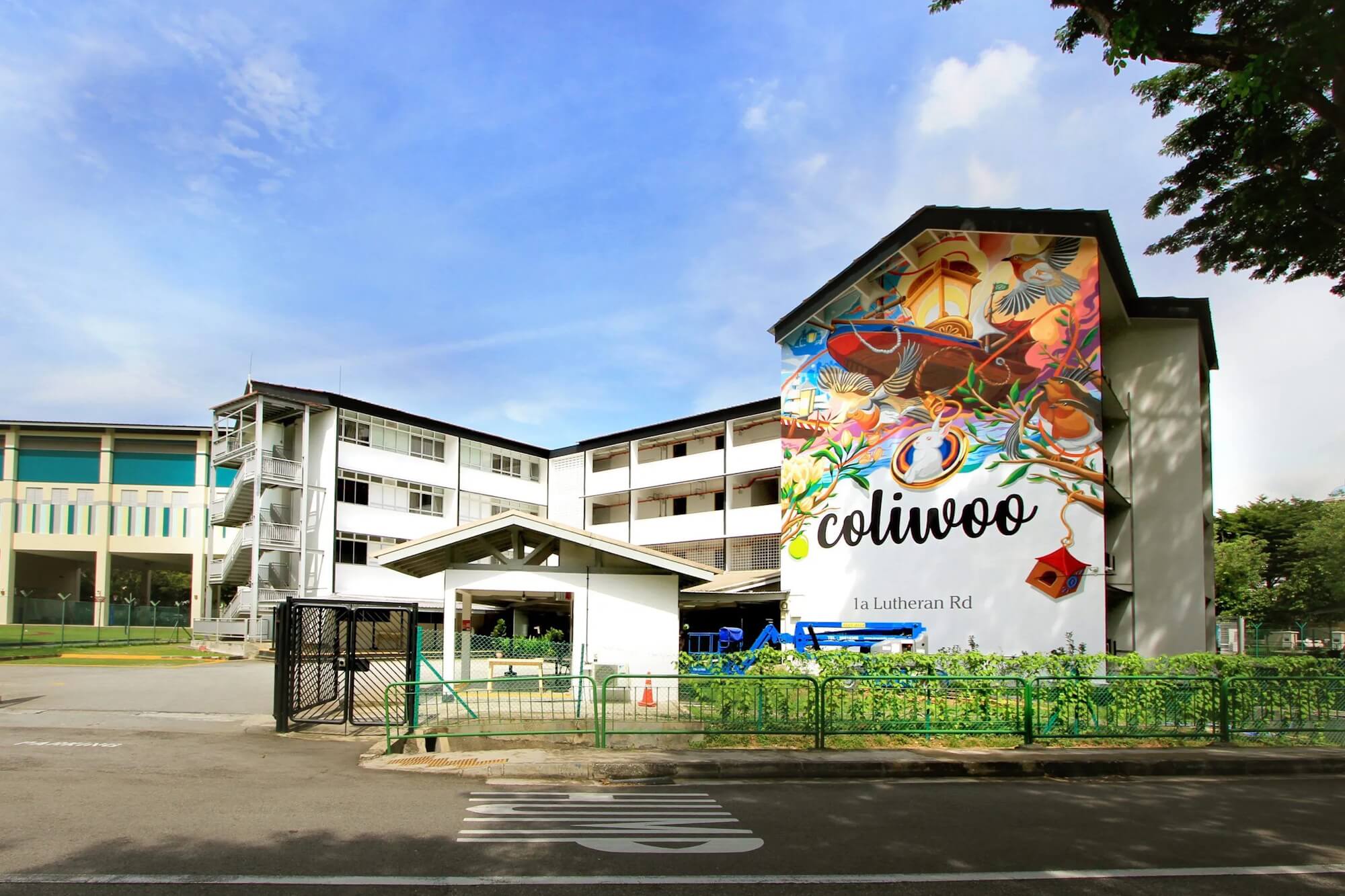
The rooms are intended for Singaporeans between 21 and 35, and are located in three co-living locations. 1925 Quarters is a restored conservation house along Hindoo Road near Jalan Besar MRT station, Coliwoo Boon Lay is one of the largest co-living residences near Boon Lay MRT station, and Coliwoo Lutheran is the former Farrer Primary School building located about 11 minutes from the Botanic Garden MRT Interchange.
The co-living scheme gives a discount of about 30% below the usual rate, with rates starting from $1,800 a month at 1925 Quarters, $1,950 at Coliwoo Boon Lay and $2,000 at Coliwoo Lutheran. Note that these costs do not include utilities, deposits and other charges. Coliwoo Boon Lay and Coliwoo Lutheran do not provide housekeeping services either.
Nonetheless, their popularity suggests that many people feel the location and other offerings are worth paying these prices.
Read Also: Renting VS Co-Living VS Serviced Apartments: How Much Do These Living Arrangements Cost For A Year?
Upfront Costs When Renting In Singapore
If you’re looking to live on your own after graduation, these are the extra expenses you would need to consider. Firstly, there are the initial costs such as moving, refurnishing and refurbishing.
When moving into a rental property in Singapore, tenants should be prepared for immediate expenses such as the security deposit, which typically amounts to one month’s rent for leases under two years and two months’ rent for longer agreements. This deposit is typically refundable at the end of the tenancy.
Tenants will also need to pay stamp duty, which is calculated as a percentage of the total rent payable over the lease term. For average annual rents that don’t exceed $1,000 lease duties are exempted, but for rents above $1,000 a lease duty of 0.4% of the total rent is incurred.
The next set of immediate expenses comes from refurbishing and setting up the home. While many units for rent in Singapore are usually partially furnished, tenants may often need to purchase essentials such as mattresses, kitchen appliances, or storage furniture depending on their needs.
Even for furnished apartments, renters may choose to invest in additional items to make the space more comfortable or functional for them, and costs for these can vary widely: typically between $1,000 to $3,000.
Recurring Expenses When Renting In Singapore
Each month, electricity, water, and gas bills do add up, especially when air-conditioning is used. Depending on the arrangement with the landlord, utilities can cost between $80 and $150 per month.
On top of that, tenants should be prepared to budget for internet subscriptions, air-conditioning servicing, minor repairs, and cleaning supplies. It is important to clarify with the landlord if these additional costs are included in the rent.
Read Also: HDB Rental Guide: Cheapest And Most Expensive Estates To Rent An HDB Flat In 2026
Top Image Credit: Coliwoo


Lifestyle
15 Of The Cheapest EV Cars In Singapore


Budgeting 101
7 Ways Being Frugal Is Different From Being Cheap


Street Smart
Singapore Gym Membership Price Guide (2026 Edition)
Street Smart
Singapore Gym Membership Price Guide (2026 Edition)


