

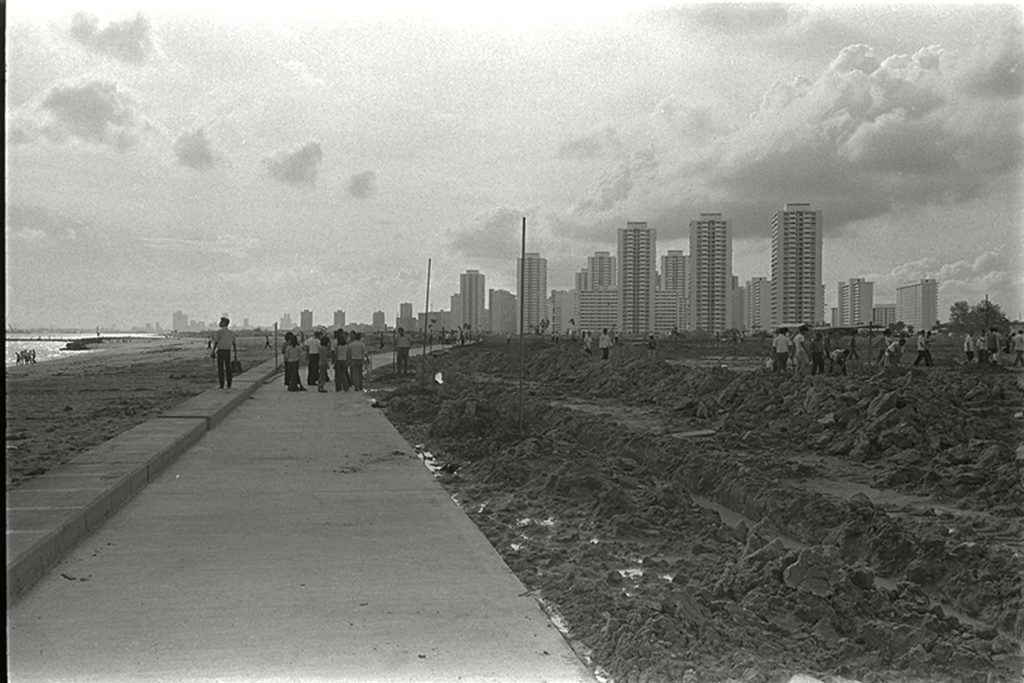
The East Region of Singapore is one of the country’s earliest residential hubs post-independence, with the towns of Bedok, Tampines and Pasir Ris growing rapidly since development began in the 70s and 80s. Before independence, the area attracted a diverse mix of residents, from the wealthy who built seaside bungalows in Katong to the kampongs of Siglap and Bedok, who worked in the many plantations in the area and fished along the coast.
All this changed with the first major post-independence land reclamation project was the East Coast Reclamation in the 60s. Over the next 20 years, the project levelled the hills of Bedok and Tampines, creating new neighbourhoods like Marine Parade. Bedok became one of the first new HDB towns in the late 70s, while Tampines and Pasir Ris began their development shortly after in the 80s. Today, the East Region of Singapore remains one of the most densely populated areas in the country.
Source: Draft Master Plan 2025
In the Draft Master Plan 2025, the vision of living in the East develops further, with new residences, amenities and working opportunities combining to form the “Eastern Gateway” of Singapore.
Read Also: URA Draft Master Plan 2025: How The West Will Become More Connected And Future-Ready
Building A New Housing Precinct At Bayshore
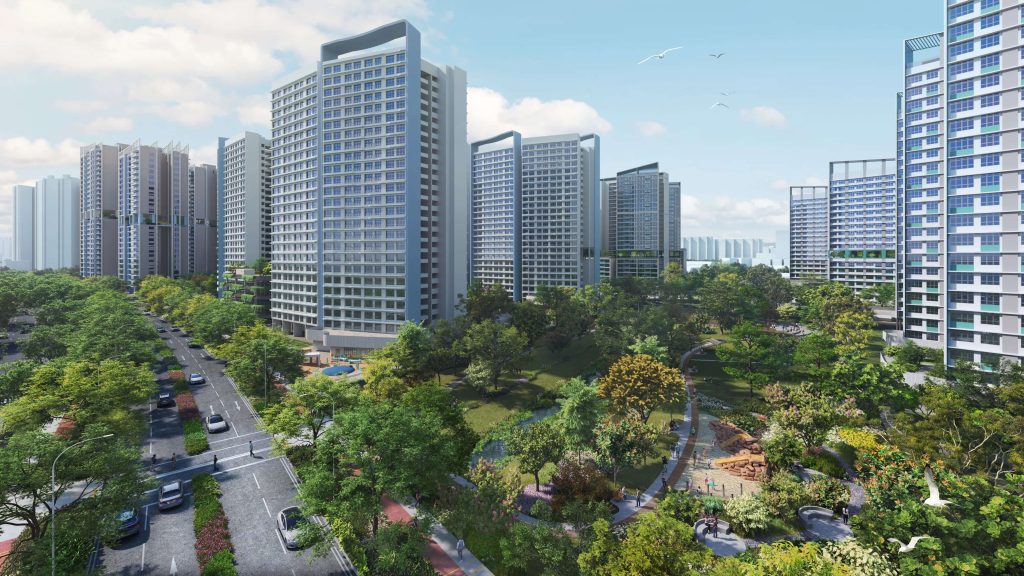
Touted as an “urban village near the sea”, the upcoming Bayshore development echoes the excitement of a new Marine Parade almost 50 years ago. The relatively quiet neighbourhood of landed properties and condominiums
The first HDB BTO projects in Bayshore were launched in October last year with Bayshore Palms and Bayshore Vista. Recognising the high resale value of the sea-view location, both BTO launches were classified as Plus, which means buyers have an extended Minimum Occupation Period (MOP) and other restrictions.
Upcoming amenities include an integrated transport hub, a central linear park, and a Transit Priority Corridor (TPC), which is a road integrated with bus lanes, wider footpaths, and dedicated cycling paths or shared paths.
Source: Draft Master Plan 2025
A new Bayshore SAFRA Clubhouse will be directly connected to the upcoming Bedok South MRT station and bus interchange, which is expected to be SAFRA’s largest. As this new clubhouse is meant to replace SAFRA Tampines (which is the oldest SAFRA clubhouse), the facilities should include a swimming pool, futsal court, gym and multi-purpose hall.
This development of Bayshore is supported by last year’s opening of the fourth stage of the Thomson-East Coast Line, with seven new MRT stations from Tanjong Rhu to Bayshore, with two more stations, Bedok South and Sungei Bedok expected by next year. Eventually, these stations are expected to connect directly via the Thomson-East Coast Line to Changi Airport and the Singapore Expo.

Source: Draft Master Plan 2025
Read Also: Neighbourhood Estate Guide: Why East Coast May Be The Biggest Factor In The East Vs West Argument
Tampines Will Expand In Two Directions – North And South
Already one of Singapore’s densest neighbourhoods, Tampines will grow further with two new neighbourhoods, Tampines North and Tampines South.
Earlier this year, Parktown Residence in Tampines North made the news when an impressive 1,1041 units, or 87% of its available units sold during launch weekend. This is despite the average asking price of $2,360 psf. The high demand for these units is the nature of the property – an integrated megadevelopment that also features a retail mall, hawker centre, community club and other new amenities, all connected to the future Tampines North MRT station. In other words, it’s a very self-sufficient development, that will also serve the upcoming neighbouring HDB estates of Tampines GreenVerge, Tampines GreenCourt, Tampines GreenFoliage, and Tampines GreenVines.
Read Also: The New Condo Launch Premium: How Much More Are Buyers Paying For The Chance Of An Upside?
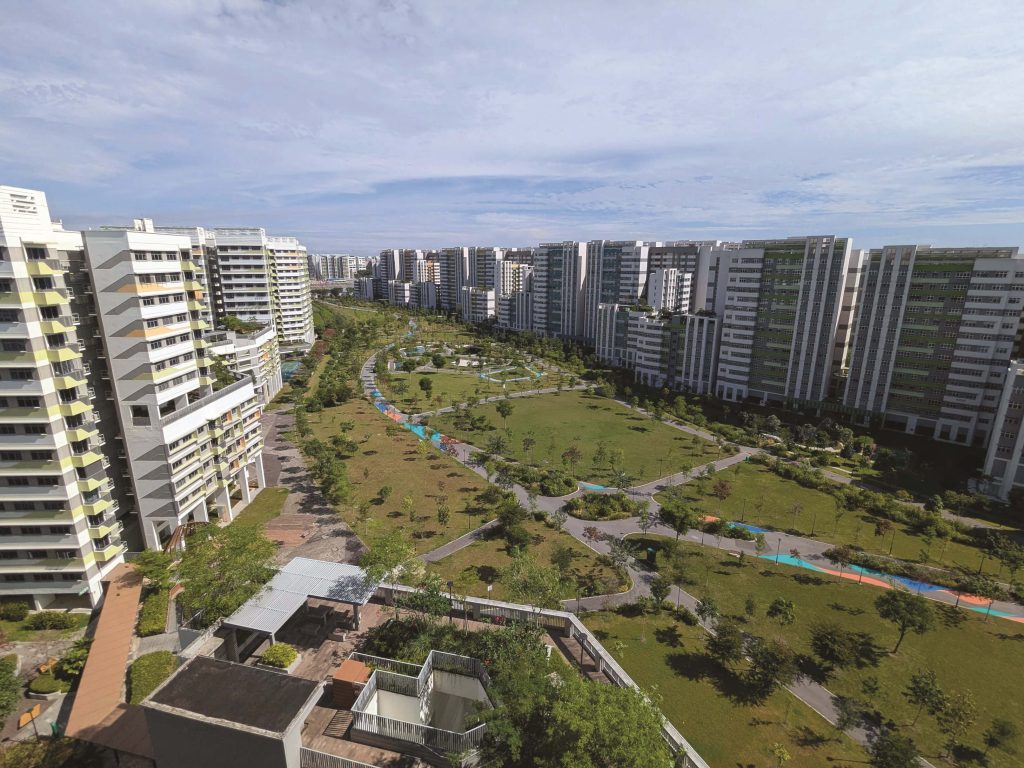
Parktown is so named because it is situated at the western end of the new Tampines Boulevard Park. This park boasts a 60-metre-long cycling track for children, a sand play area, and a 1,200-square-metre dog run and stretches from Tampines Street 62 where Parktown is, to Tampines Avenue 12.
Source: Draft Master Plan 2025
The future Tampines North MRT station, which is expected to open along with the first phase of the Cross Island Line in 2030, will connect four of the five MRT lines currently in operation – the East-West Line at Pasir Ris, the North East Line at Hougang, the North-South Line at Ang Mo Kio, and the Thomson-East Coast Line at Bright Hill.
Read Also: Which Housing Estates Will Benefit The Most From The Cross Island Line (CRL)?
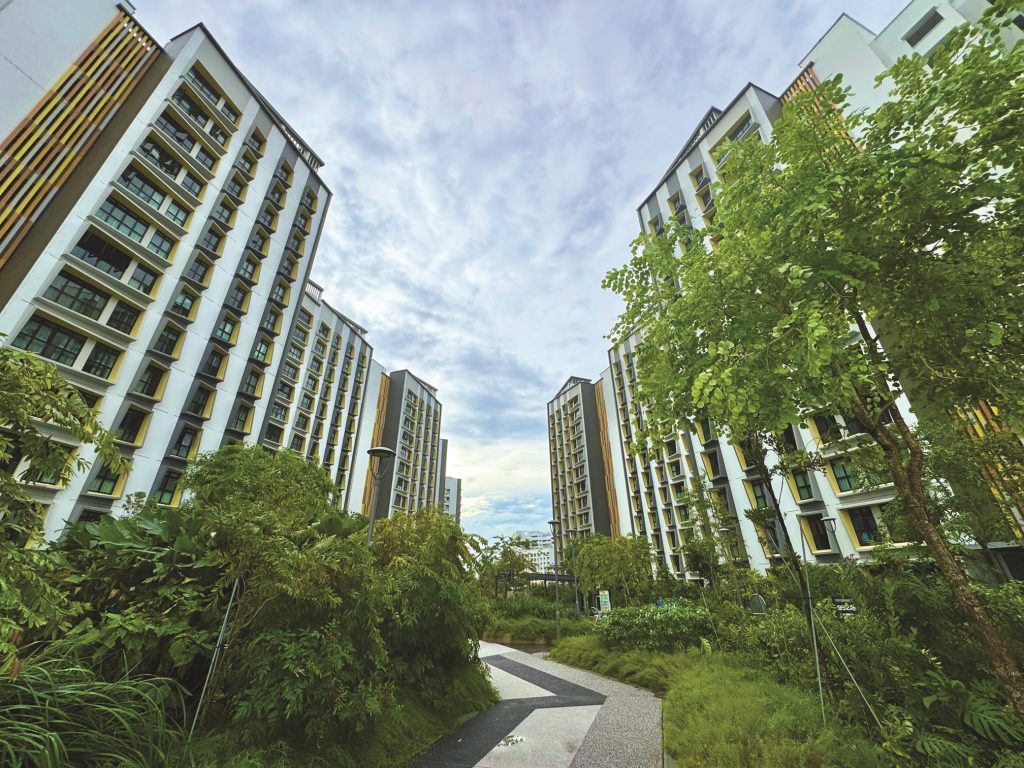
Tampines South, located next to Bedok Reservoir and Temasek Polytechnic, will have a new neighbourhood centre that is linked to Tampines West MRT Station on the Downtown Line. It will include a supermarket, food court and community plaza.
Already, several new HDB BTO estates have been steadily launched in the Tampines South neighbourhood, including Tampines GreenEmerald, Tampines GreenJade, and Tampines GreenOpal, which enjoy waterfront living next to Sungei Bedok. These join other new BTO estates, as well as older HDB estates Tampines Palmspring and Tampines Polyview, which were built in the 1980s.
Source: Draft Master Plan 2025
A Rejuvenated Pasir Ris
The newly launched Pasir Ris Integrated Transport Hub is long overdue. Before, the former Pasir Ris bus interchange also served as a pick-up and drop-off point for MINDEF and SAF personnel, most notably for the hundreds of Basic Military Training (BMT) recruits heading to and returning from Pulau Tekong every weekend.
Today, bus services for these military personnel operate from a separate purpose-built facility called BMT@Pasir Ris that only opened this year.
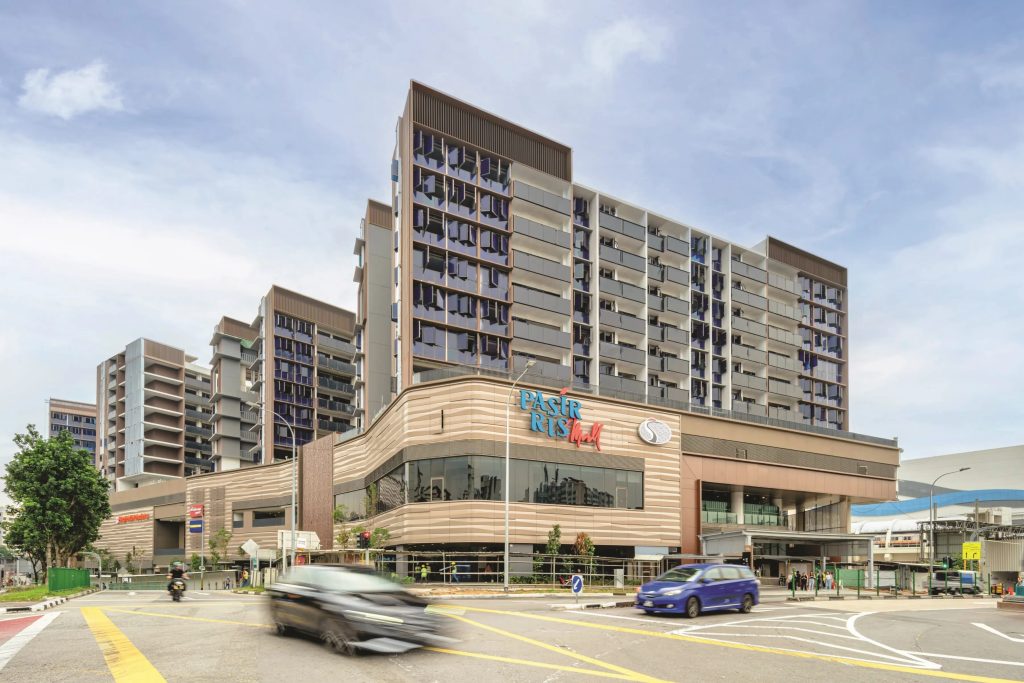
The new Pasir Ris Integrated Transport Hub, next to Pasir Ris MRT station, houses a bus interchange, a polyclinic, and the new Pasir Ris Mall, which takes much of the pressure off White Sands shopping mall next door, which has faithfully served residents since 1997.
Source: Draft Master Plan 2025
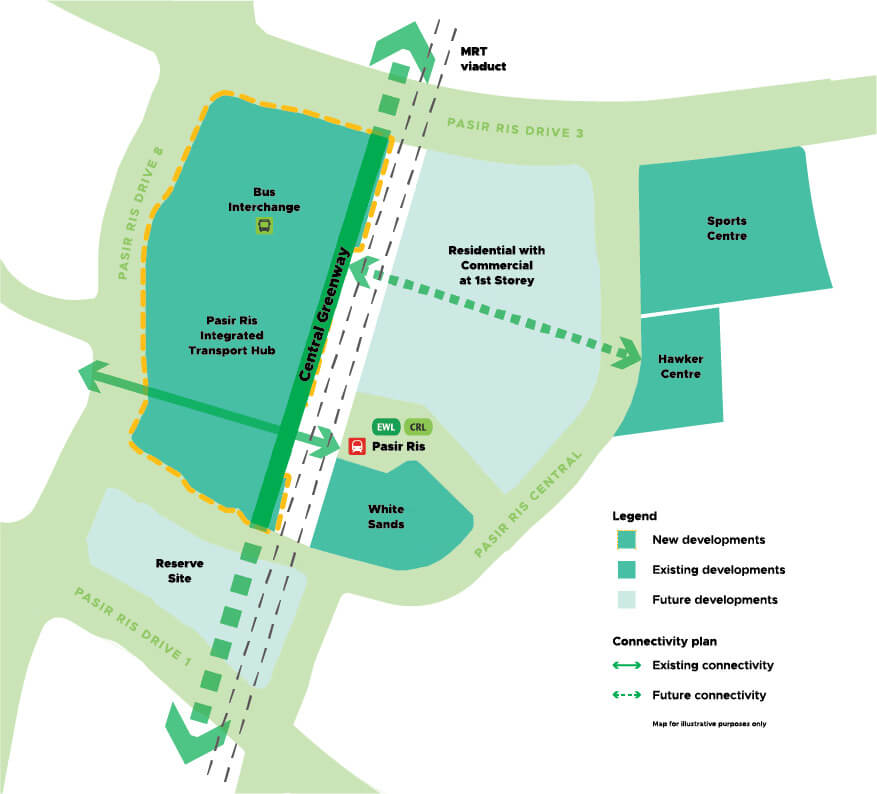
This is in preparation for when the future Cross Island Line provides Pasir Ris with even more connections to the rest of Singapore, starting from 2030. Expect plans at the town centre for more mixed-use developments, taking advantage of the many nearby amenities including the Pasir Ris Sports Centre and Pasir Rise Central Hawker Centre. For example, the former Pasir Ris bus interchange will be demolished to make way for more residential units with a commercial space on the first storey.
Source: Draft Master Plan 2025
Read Also: Neighbourhood Estate Guide: Is Pasir Ris The Place For Seaside Living?
Potential new developments have also been announced very recently, as the Urban Redevelopment Authority (URA) revealed that it is studying plans for a new neighbourhood in Sungei Loyang, a currently forested area at the edge of Pasir Ris. This planned neighbourhood could include homes, commercial and community facilities.
The Future Of Paya Lebar Air Base
Any talk of new developments in the East would not be complete without a mention of of the Paya Lebar Air Base, which will be decommissioned in the 2030s and free up much land for redevelopment.
The first of such redevelopments is transforming industrial area Defu, into a new town with the upcoming Defu MRT station on the Cross Island Line as its hub.
The “10-minute neighbourhood”, as URA describes it, is expected to have all your work, live and play needs within a 10-minute walking radius. It will use some of the former airport buildings to form a “civic heart” that honours the area’s aviation history.
Read Also: 5 Estates That Are Winners From The URA Draft Master Plan 2025


Lifestyle
15 Of The Cheapest EV Cars In Singapore


Budgeting 101
7 Ways Being Frugal Is Different From Being Cheap


Street Smart
Singapore Gym Membership Price Guide (2026 Edition)

Street Smart
Singapore Gym Membership Price Guide (2026 Edition)


