
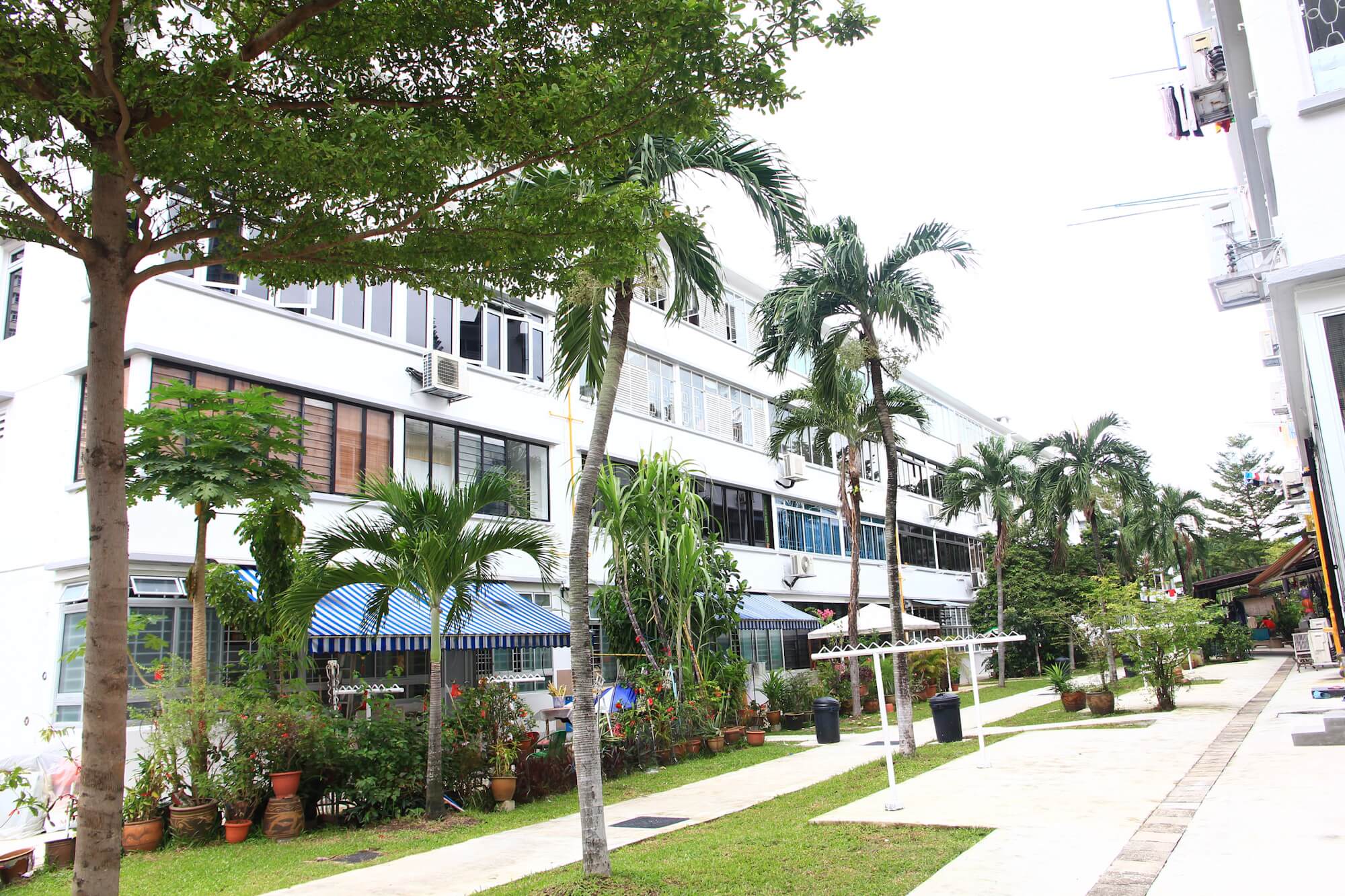
In Singapore, flats that are close to 30 years old, i.e. those built up to 1997, will be eligible for the Home Improvement Programme, or HIP. HIP is done in precincts of 8 to 10 blocks of flats, and voting is conducted to ensure that a significant majority, or 75% of each block’s eligible Singapore Citizen households are in favour of HIP.
In November, HIP made the news when it was revealed that two blocks in Tiong Bahru did not secure the majority vote. Block 34 Kim Cheng Street and Block 35 Lim Liak Street, built in 1949, both missed out on HIP by 2 votes and 1 vote respectively. The small number of units in each block (Just 24 and 15 respectively) amplified the weightage of the vote.


Source: HDB
These Tiong Bahru flats may seem like outliers, as most HIP votes tend to succeed. A Facebook post by Foo Cexiang, Grassroots Advisor for the Tiong Bahru division, revealed that HDB conducts straw polls prior to the official HIP vote to ensure that most blocks can cross the 75% mark.
However, some residents may still change their minds at the subsequent official poll for several reasons. New residents who have moved into these older neighbourhoods and already completed major renovation works may also be less incentivised to vote for HIP. Nonetheless, it still is valuable to vote for HIP, for three reasons.
Read Also: Guide To HDB’s Home Improvement Programme (HIP)
#1 Essential Works Are Fully Funded By The Singapore Government For Singapore Citizens
HIP works are made up of three components: essential improvements, optional improvements, and Enhancement for Active Seniors (EASE) improvements. Of these, essential improvements are necessary for public health and safety and are fully funded by the government for Singapore citizens.
These essential works include repairing spalling concrete and structural cracks, replacing cast-iron waste/soil pipes, and replacing cracked or leaking UPVC waste/soil pipes. Essential works also involve replacing existing pipe sockets with a new external drying rack. These pipe sockets tend to collect rainwater, making them potential mosquito breeding sites.
A vote for HIP is therefore a vote for everyone’s public health and safety, which is why these works are fully funded by the Singapore government for Singapore Citizens.
Read Also: Complete Guide To HDB’s Neighbourhood Renewal Programme (NRP)
#2 Due To Inter-floor Seepage, Your Neighbour’s Upgrading May Benefit You
Toilet upgrading is one of the optional improvements offered during HIP. It comprises a new waterproofing membrane, wash basin, floor and wall tiles, louvred vent, toilet door, grab bar and pedestal pan.
In light of this, residents who have recently renovated their unit may not feel the need to vote for HIP, as they feel they won’t require these optional improvements. However, due to the nature of HDB flats, inter-floor seepage can occur, especially in these older flats.
Before a unit can opt out of the toilet upgrading, a water test will be conducted to ensure there are no leaks to the floor below. The government fully funds this water test. If the water test shows that there is a leak to the flat below, the flat owner will be required to opt in for the toilet upgrading.
Furthermore, if the flat owner does not proceed with the water test, or does not carry out the toilet upgrading if the water test fails, they will be required to sign a letter of understanding and accept that they will be fully responsible for any future ceiling leak to the lower floor for the next six years.
In other words, voting to ensure HIP goes through allows your neighbour above you to install a new waterproofing membrane in the unit above. This will reduce the likelihood of water seeping from their unit into your unit!
#3 Payment For Optional Improvements Can Be Made In Monthly Instalments
Even though HIP would have a net benefit for the block, a vote is still needed to ensure a 75% majority is in favour of the works. This is because, even though the optional works are heavily subsidised, a Singapore Citizen household is still expected to pay a nominal amount for them. In contrast, a Singapore Permanent Resident household has to pay the full upgrading costs. HDB will therefore honour the wishes of the residents if at least 25% do not vote for HIP.
In a typical precinct of 8 to 10 blocks, HIP will take between 14 months and two years, though the work in each flat will take 10 working days or less. The flat owner (on the date of billing) will only need to pay the upgrading cost after the works in the precinct are completed.
This payment can be made in cash, CPF savings, or a combination of both. Flat owners can even choose to pay for the HIP upgrading costs through monthly instalments over one to ten years. Note that HDB will charge interest for payments by instalments.
Read Also: Key Life Stages Of Your HDB Flat That Owners (And Buyers) Should Know


