
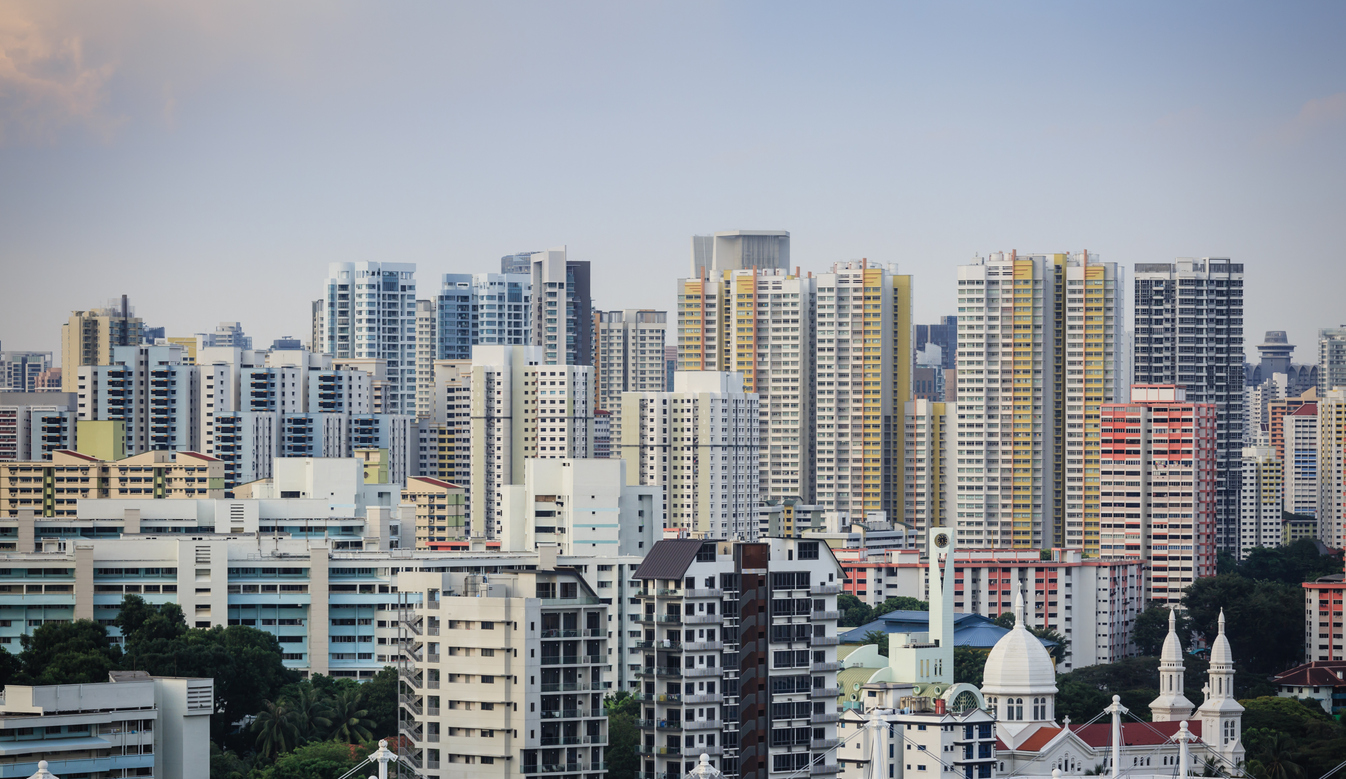
For many Singapore households, having a live-in domestic helper is a normal part of family life.
As of December 2025, Singapore had 316,900 migrant domestic workers, according to the Ministry of Manpower. Singapore had about 1.487 million resident households in 2025. That works out to roughly one migrant domestic worker for every five resident households.
Yet our homes are not always designed to accommodate an additional adult.
This can be a challenge, especially in HDB flats, where bedrooms are often already fully used by family members. MOM states that employers should provide domestic helpers with a separate room where possible, or otherwise ensure they have adequate space and privacy.
In practice, families without a spare bedroom may have to let their helper share a room with a child or adapt another part of the home into a sleeping space.
This issue is likely to be more challenging for larger families, which may also be more likely to need a live-in domestic helper. Households with more children or elderly parents, for example, may rely on a helper for caregiving and household work.
At the same time, larger families also have more people competing for the same amount of space. This makes it even harder to set aside an entire bedroom for a domestic helper, even if the household would ideally prefer to do so
Read Also: How Much Does It Cost To Hire A Maid In Singapore?
Some Larger Singapore Homes Already Provide Space For A Live-In Helper
Some larger homes in Singapore already include this type of provision.
For example, the 5-bedroom unit at Coastal Cabana, an executive condominium launched in Pasir Ris in 2025, includes a separate utility room in addition to its five bedrooms. This utility room comes with a window and is not the household shelter, which is located separately. Next to the utility room is a smaller toilet, which could be used by a live-in domestic helper.
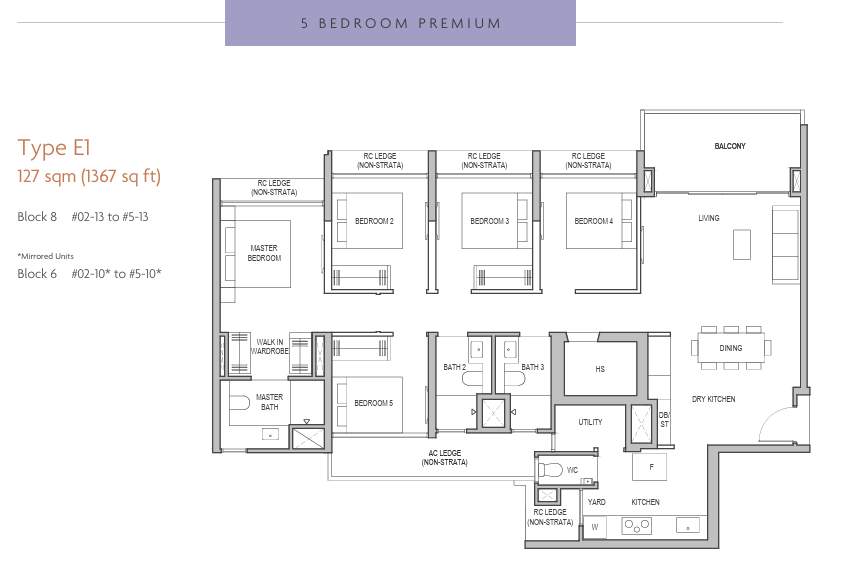
This layout makes sense for a unit designed for a larger household. A family in a 5-bedroom home could easily have six members, even before adding a domestic helper.
A smaller utility room and toilet therefore give the household more flexibility without taking away one of the main bedrooms. The unit also has three larger bathrooms, so a six-person family could effectively have two people share each bathroom, while the helper uses the smaller, separate toilet.
Larger Singapore Homes Could Include A Flexible Utility Room
To be clear, not every home needs a dedicated room for a live-in domestic helper. Smaller flats already make trade-offs over space. For example, in Singapore, household shelters are generally not built within 2-room HDB flats, where space is more limited.
But for larger homes, including 3Gen flats and possibly 5-room flats, it may be worth providing an additional utility room that can accommodate a live-in helper when needed. There is also a worker welfare consideration. MOM requires employers to provide their domestic helper with accommodation that has adequate space and privacy, and even asks prospective employers to consider whether their home has enough room before hiring one.
An additional room does not have to be designed solely as a dedicated helper’s room. It would make more sense for this room to function as a flexible space that homeowners can use as a study, storage area, or another practical room if they do not employ a live-in helper.
Another approach is to take inspiration from traditional Japanese room design, where the same space can serve different purposes throughout the day. A room may be used for relaxing or playing during the day, before being converted into a sleeping area at night.
A similar concept could work in Singapore homes. With movable or sliding partitions, a flex room could function as a study, playroom, or extension of the living area during the day, then close off at night to provide a private sleeping space for a live-in domestic helper. For this to work well, however, the layout would need to be planned from the outset, with considerations such as ventilation, privacy and access built into the design.
That would give homeowners of larger flats more flexibility while recognising that, for many such families, a live-in domestic helper is already part of how the household functions.
Read Also: Does It Make Financial Sense To Bring Your Domestic Helper With You For Holiday?


