
This article is contributed by Vincent Ha, CEO of LyteLease, a fintech company serving landlords and real estate agents in Singapore.
I have gone through three renovations. The first two were fairly typical home renovations. The third was an addition and alteration (A&A) project on a landed home, involving an architect, a professional engineer and a builder registered with BCA.
In the third renovation, I eventually had to take over the project myself. Across these experiences, the tiles and carpentry turned out to be the least of my worries. The much bigger problem was money, and what happened when the contractor managing mine ran into cashflow problems.
I run a fintech company and look at cash flow for a living. Yet I still got caught out. I was paying attention to workmanship when I should also have been paying attention to the business behind it. This is what I wish someone had told me before I signed the contract.
The Renovation Risk We Often Overlook
When homeowners choose a contractor, we naturally focus on the visible things. Does the workmanship look good? Are the reviews positive? Is the quotation reasonable? Does the contractor seem experienced?
Those things matter. But there is another risk that may be much harder to see: cashflow.
Smaller renovation contractors may be managing several projects at the same time. Each project pays according to its own schedule, while subcontractors and suppliers may expect to be paid at different points. Those timelines do not always match.
If a contractor is short of cash on one project, there may be a temptation to use money collected from another project to fill the gap. That does not necessarily mean the contractor set out to cheat anyone. But if several jobs run into delays or cost overruns at the same time, a manageable cashflow problem can quickly become much more serious.
That was what happened to me. My contractor was juggling several projects, and eventually my project was one of those caught in the middle.
CASE received 962 complaints against renovation contractors in 2024 and 787 in 2025. Renovation was the fourth most complained-about industry in Singapore in both years. In 2024, renovation-related cases also accounted for more than $728,000 in reported prepayment losses.
The usual checks still matter. Homeowners should look at the relevant registrations and accreditations, be careful about where payments are being made, and question quotations that appear unusually cheap. But my experience taught me that even a contractor who appears legitimate, is reasonably priced and communicates well can still run into cashflow problems.
How My Payments Got Ahead Of My Renovation
My third renovation was where the lesson became particularly expensive. It was an A&A project on a landed home involving structural work. There was an architect and professional engineer, but my contract was with an interior design firm attempting to become a main contractor who worked with a separate builder for the regulated construction work.
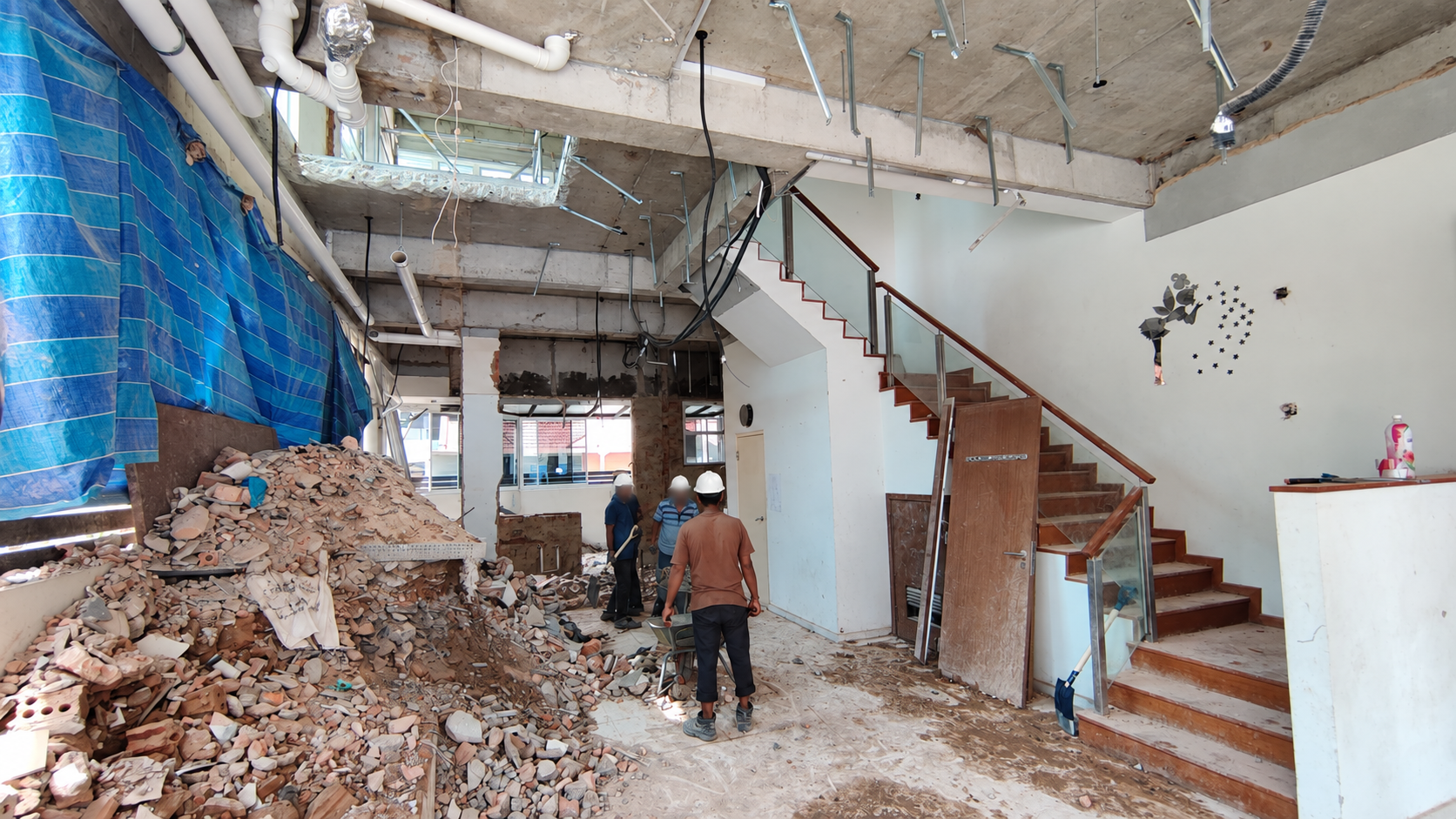
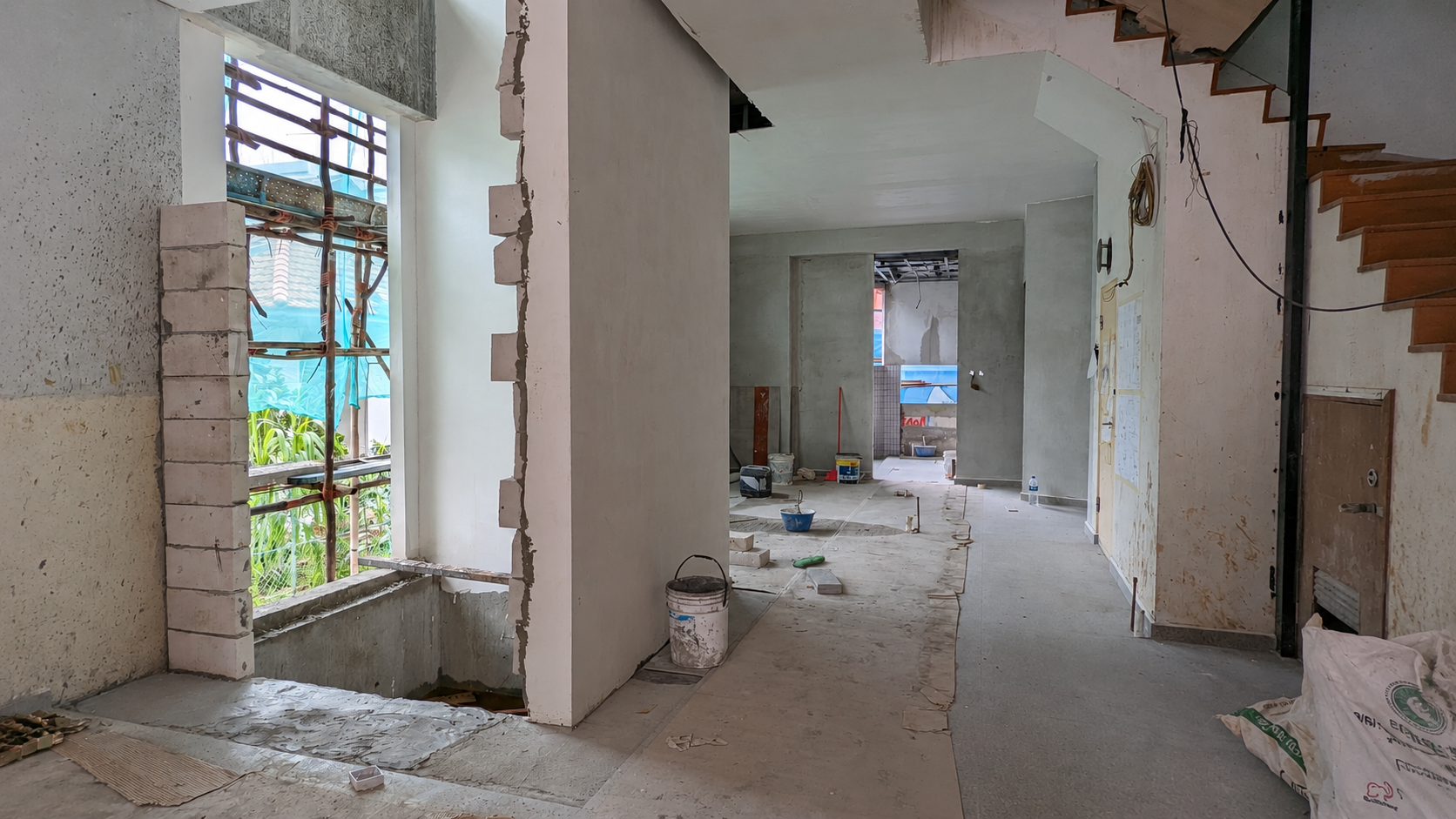
Figure 1 Demolition works
In hindsight, I should have paid much closer attention to that arrangement. My biggest mistake, however, was simpler: I paid ahead of the agreed milestones.
The requests always sounded reasonable. A window supplier needed a deposit. Workers needed to be paid before Chinese New Year. Materials could supposedly be ordered sooner if I made the next payment early.
Each request was relatively small compared with the total contract value. But each one moved my payments further ahead of the work actually completed on site.
Fortunately, I had developed the habit of visiting the site regularly. I took photos and compared what I saw against what I had already paid for. Eventually, the numbers stopped making sense. I had paid for about 70% of the job, but only around 40% appeared to have been completed. There were extended periods of time where the site was empty. Work milestones that were supposed to have been in-progress never started. This was a huge red flag.
When I pushed for answers, I learnt that money from my project had been used to cover problems on other projects. Some subcontractors working on my house had not been paid for weeks and had stopped turning up.
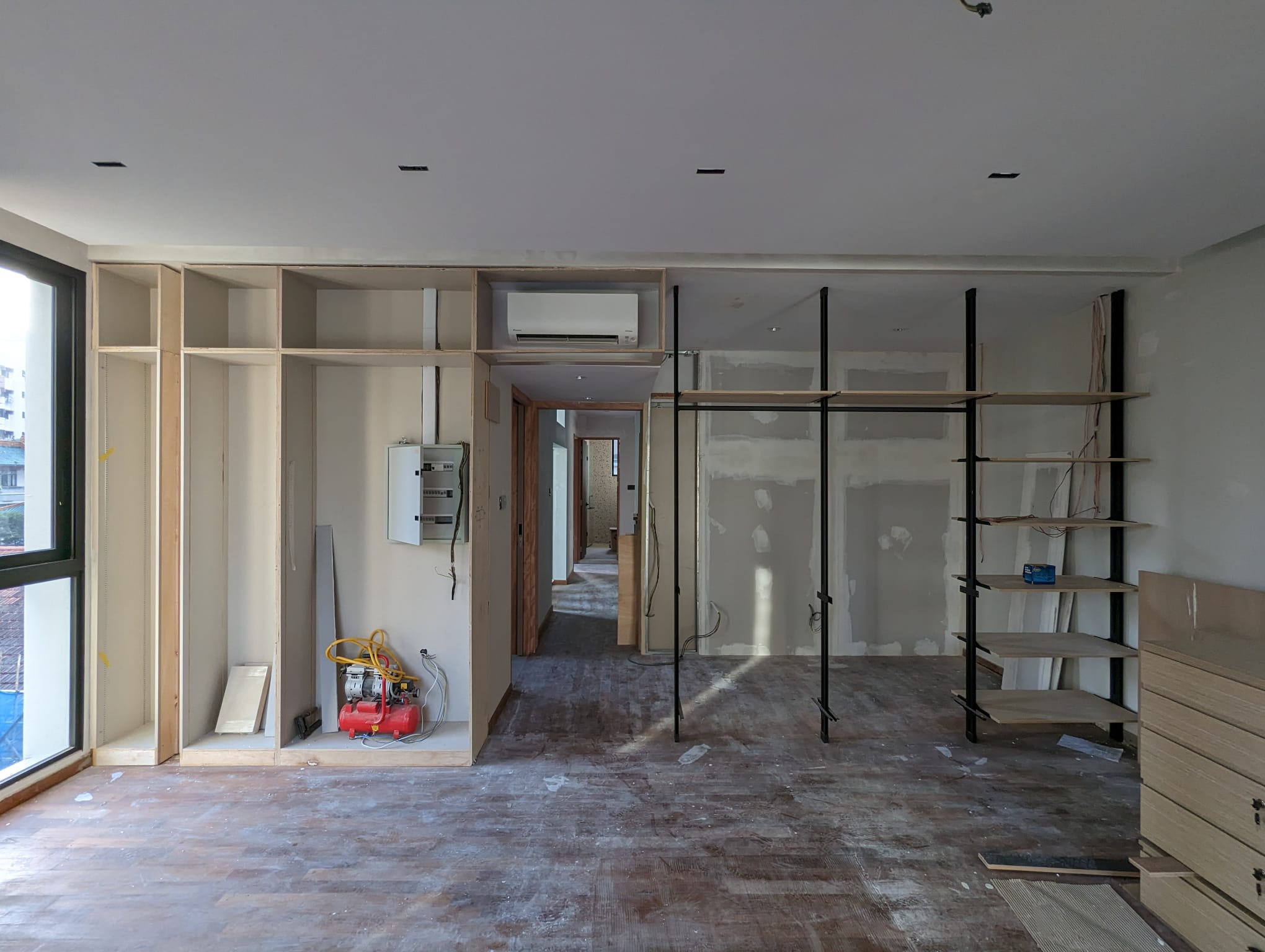
Figure 2 Empty site
By then, the difference between what I had paid and the work completed was about $200,000. The contractor’s firm eventually failed, and the builder involved in the project subsequently worked with me to get the job completed.
When they reviewed the original contract and quotation, they also felt that many items had been underquoted for a project of that scale. On goodwill, they provided the completion labour and materials at cost.
Taking Over A Landed Project Is Much Harder
I had previously taken over an ordinary home renovation when things went wrong. It was painful, but manageable. I paid some subcontractors directly, found a new carpenter and effectively became my own project manager until the work was completed.
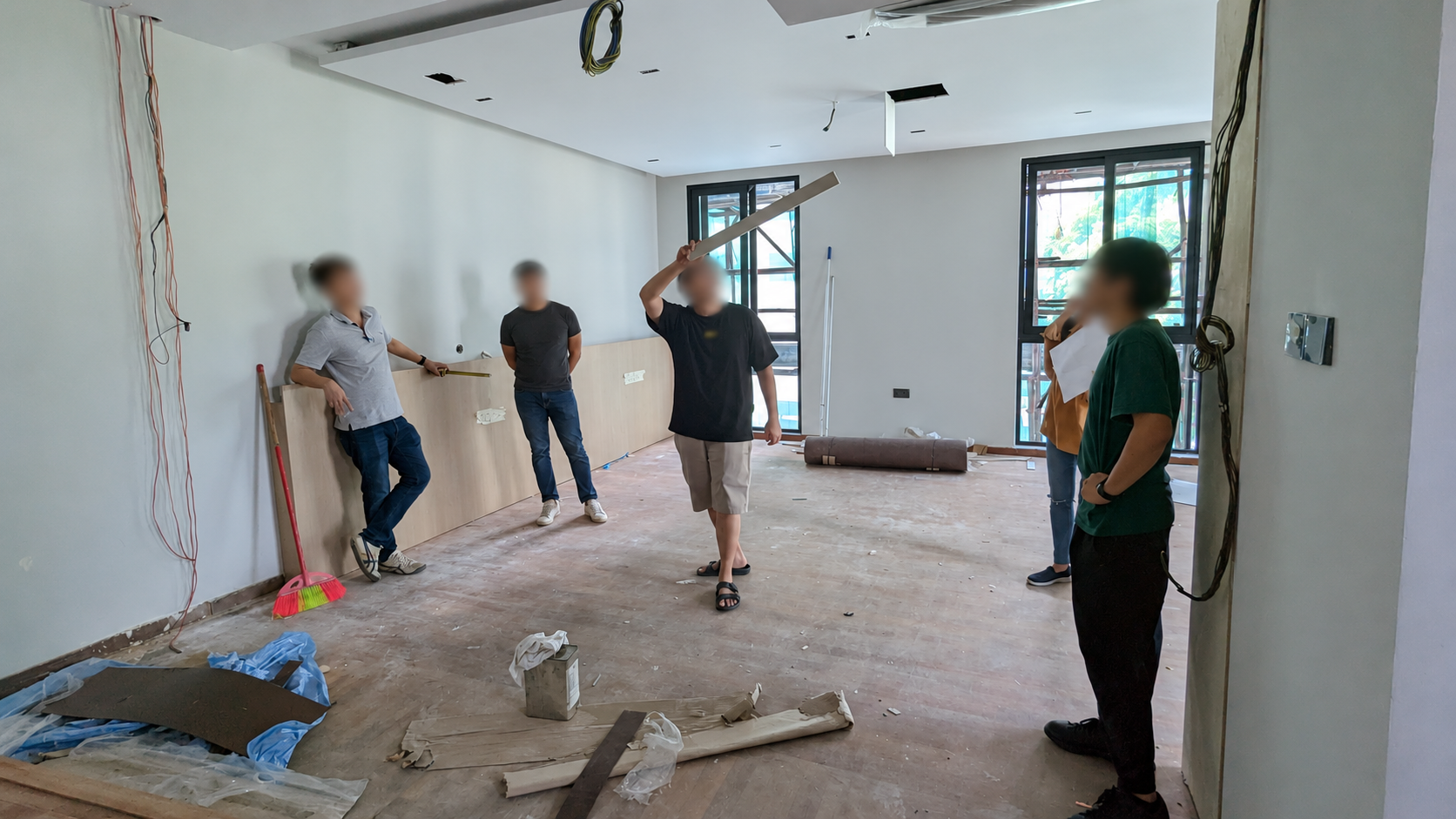
Figure 3 Take-over meeting with architect, carpenter and builder
A landed A&A project was very different. With structural work, various professionals and the builder have formal responsibilities for the work being carried out. That makes replacing a builder midway through construction far more complicated than simply finding another contractor.
Imagine that part of your foundation has already been poured and structural steel has already been installed. A new builder did not supervise that work and may not know whether everything underneath the finished surface was done correctly.
Before agreeing to take responsibility for the rest of the project, they may therefore need to inspect or verify earlier work. They may also be reluctant to assume responsibility for work they did not oversee.
There can be administrative complications as well. Existing permits, insurance arrangements, workers and professional records may all be tied to the original parties involved. This is why contractor failure can be particularly disruptive for landed construction.
On a normal renovation, replacing a contractor can be expensive and frustrating. On a regulated construction project, it may also affect who is prepared to take responsibility for partially completed work.
The Payment Rules I Follow Now
The most important lesson I took away from losing $200,000 is simple: do not let payments run ahead of verified work.
Today, I try to tie payments to something I can see and verify. If a payment is supposedly for completed tiling, electrical work or ceilings, I should be able to see that work on site before paying for it. In a typical project involving a builder, a Resident Technical Office (RTO) should be appointed to act on behalf of the client to check the works and ensure compliance. It is a cost, but a monthly fee over a well-run project is better than large payments lost to the cash flow mismanagement either.
I also try to keep the upfront deposit manageable and, where practical, pay major suppliers such as tiles, bathroom and kitchen fittings directly. For larger projects, I would also want an agreed retention sum written into the contract so that part of the payment remains outstanding until defects have been addressed.
Just as importantly, I no longer make early payments simply because there is an urgent cash request. A contractor may genuinely need to pay a supplier earlier than expected, but that does not automatically mean I should bring forward money that was contractually meant to be paid later.
If materials need to be paid for urgently, I would first want to understand exactly what is being purchased and whether the supplier can be paid directly.
Progress claims should also be documented. The contractor states what has been completed, I or the RTO inspect it, raise any discrepancies and then pay the amount due. It sounds administrative, but compared with the amount of money involved in a renovation, it is a small effort.
What I Check While The Project Is Running
Regular site visits were what eventually alerted me that something was wrong. You do not need to understand every technical detail of renovation work to notice when progress has slowed dramatically.
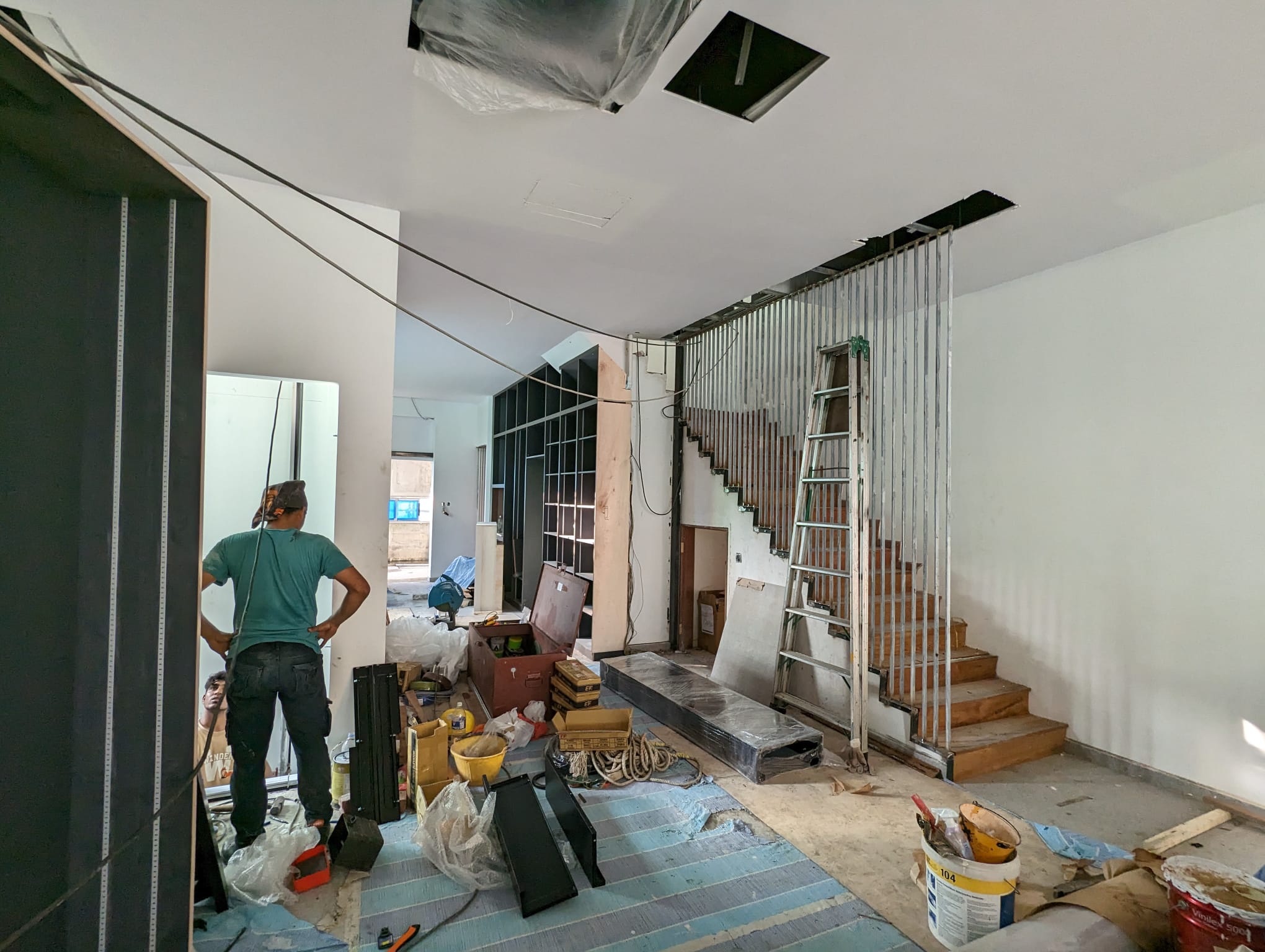
Figure 4 – Work-in-progress
Visit regularly and take photographs from similar locations so you can compare progress over time. Pay attention to the number of workers on site. If a busy project suddenly becomes unusually quiet, ask what has changed.
Check whether major materials have arrived according to schedule. If an item was supposedly ordered weeks ago but has not appeared, ask for confirmation that the order was actually placed.
Most importantly, periodically compare how much you have paid with how much work has actually been completed. The two figures will never match perfectly, but if you have paid substantially more than the progress you can see on site, find out why before making the next payment.
For a landed project, I would also stay in direct contact with the architect and other consultants like the RTO rather than routing every question through the contractor.
What I Would Do If The Numbers Stopped Making Sense
If I noticed the same problem again, my first step would be to stop making further payments until I understood the discrepancy. I would document how much had been paid, what had been completed and where I believed the gap was, then ask the contractor to explain the situation in writing.
Where appropriate, I would also speak to subcontractors and suppliers to understand whether outstanding payments were affecting the job.
For a landed project, I would speak to the architect and engineer early because replacing the builder may involve questions about existing work, professional responsibility and the steps needed before another party can take over.
At that point, the question is no longer simply whether the contractor can finish the renovation. It is whether putting more money into the same arrangement will actually improve the situation.
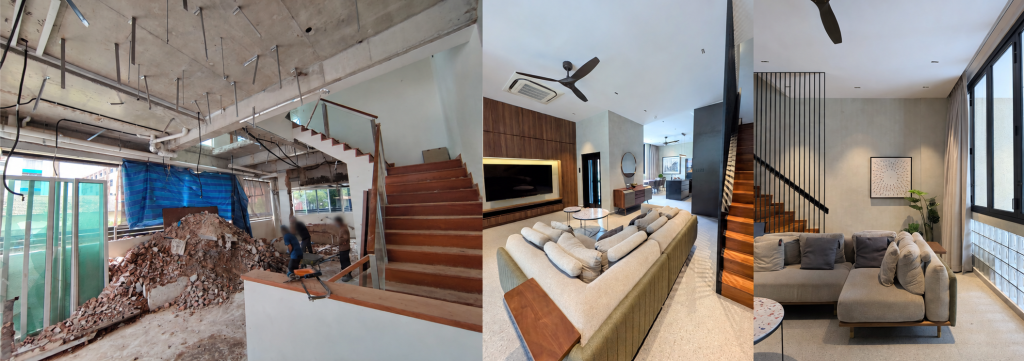
Figure 5 – Before and after
Do Not Let Your Payments Get Ahead Of Your Renovation
If there is one thing I would want homeowners to take away from my experience, it is this: understand not just the renovation you are buying, but also the business you are paying to deliver it.
Understand the payment schedule before signing, visit the site regularly and keep comparing the money you have paid against the work that has actually been completed.
A convincing sales pitch, attractive showroom and good-looking portfolio can tell you plenty about the renovation you hope to get. They tell you much less about the contractor’s cashflow.
I learnt that distinction at a cost of about $200,000. Hopefully, other homeowners can learn it before making the same mistake.
Read Also: How Much Does It Cost To Build A Landed Property In Singapore
Wondering how much you can rent out your HDB flat for in today’s market? Try the LyteLease calculator and get an instant estimate
Instead of waiting to receive rent month by month, LyteLease lets landlords unlock up to 12 months of rental income upfront, in as fast as 3 business days. That means having the cash on hand sooner for a big purchase, an investment, or a family trip, without waiting on your tenant’s next transfer.Rental yields are gross and historical. They do not account for financing costs, taxes, vacancy, or capital appreciation, and past transaction data is not a forecast of future rents. Do your own due diligence before purchasing any property.


Street Smart
Singapore Gym Membership Price Guide (2026 Edition)


