

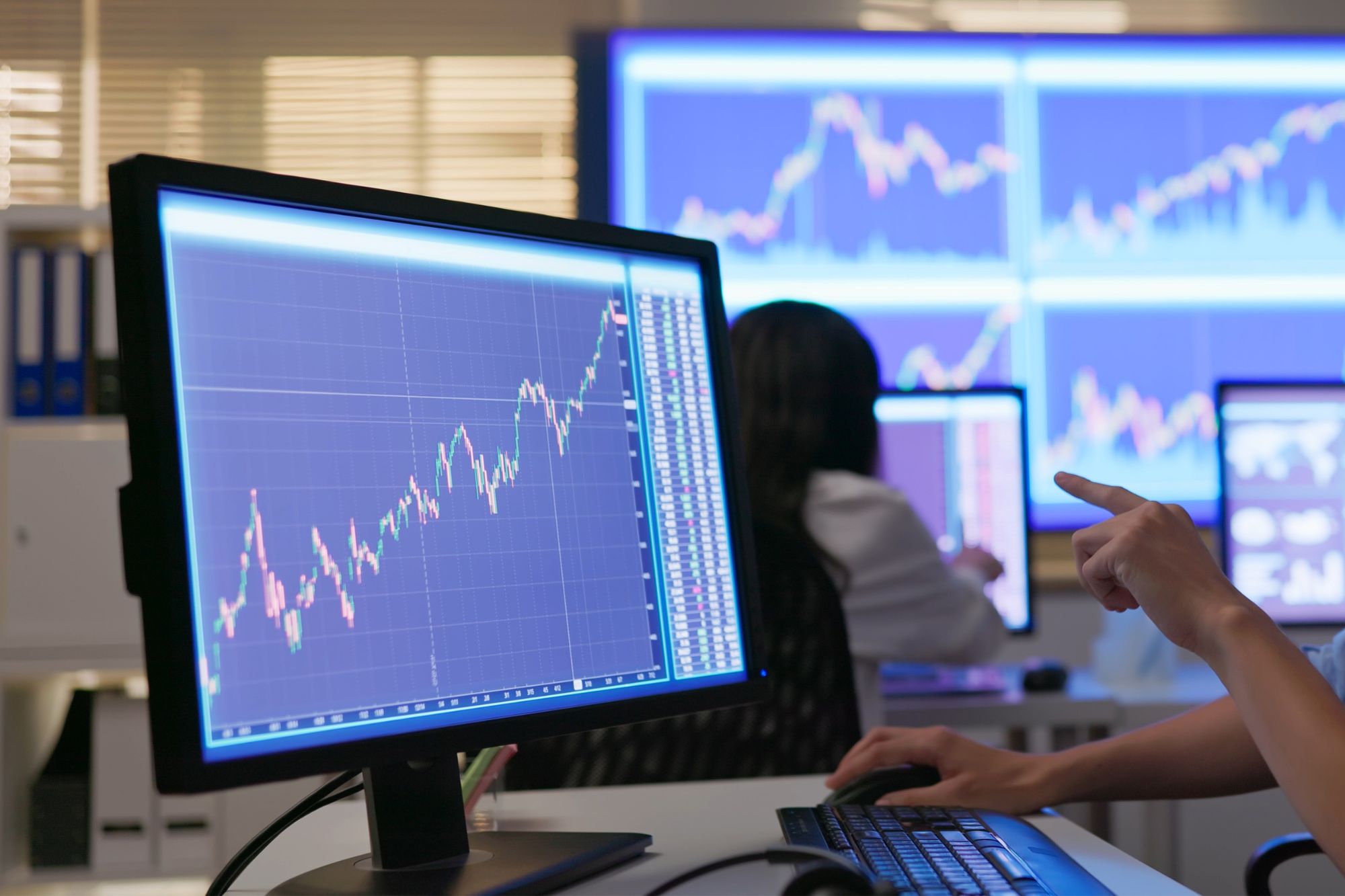
It has been an emotional rollercoaster for global investors so far in 2025. Take the benchmark S&P 500 Index in the US, which is surprisingly still up about 1% since the start of the year.
If you had gone on holiday on 31 December 2024 and returned today (not having ever checked the news), you wouldn’t think anything major had happened.
But, the past four and a half months have seen some extreme volatility for stocks. During that time, President Donald Trump has relaunched a trade war on China, slapped reciprocal trade tariffs on nearly all countries, only to backtrack on many by announcing multiple “tariff pauses” while agreements are negotiated.
At one point in early April – following the “Liberation Day” trade announcements – the S&P 500 Index was down a whopping 19% from its all-time high set in February of this year.
Since 8 April, though, the index has bounced back, recouping the entire losses following Trump’s reciprocal tariff announcements – though it is still shy of the all-time high levels. The wild swings in the US stock market has been a familiar tale across the globe as stock markets everywhere plunged after 2 April.
The question now is whether it too late for individuals to invest now that stocks have rallied?
Read Also: 5 Takeaways From PM Lawrence Wong’s Ministerial Statement About The Trump Tariffs
Time In The Market Matters Most
The old adage of how investing is about “time in the market, not timing the market” still holds true. Despite what has happened in stock markets so far in 2025, we know that investors who have consistently invested through the ups and downs have been rewarded over the years.
In contrast, timing the markets is nearly always identified as one of the most basic mistakes that investors make on their wealth-building journey.
Over the past decades, there have always been times of uncertainty in global financial markets, that have always given us great reasons “not to invest”. Think back to 2020, with the pandemic-led crash, the eurozone debt crisis in 2012, the Global Financial Crisis (GFC) in 2008, or the Dotcom Bubble of 2000.
As we have witnessed across all these market crashes though, it doesn’t mean stock markets can’t bounce back. In fact, investing consistently into global stocks during those highly uncertain periods would have reaped massive rewards for investors over the subsequent decade or two.
An old Chinese proverb goes, “The best time to plant a tree was 20 years ago. The second best time is now”. The same can certainly apply to investing. We shouldn’t be too concerned with what’s happened in the past – that’s out of our hands – and should focus on what we can do today instead.
Understand Your Investing Time Horizons
For long-term investors, investing into the stock market now is fine given they should be prepared to hold global stocks for the next 10 to 20 years. It’s an established fact – backed up by the data – that stocks are the best long-term generators of wealth when compared to other asset classes.
However, if an individual is approaching retirement or believes they will need to draw down on their investments in the next 5 to 10 years for their child’s university education or upgrading their homes, then more thought will be required about whether they want to invest right now, and what kind of investment risks they want to hold.
Beyond that, there’s also the important question of the method of deploying your capital into stocks; do you invest a large lump sum in one go or do you consistently invest your cash by dollar cost averaging, something that is known as DCA?
At this point in time, with the S&P 500 Index trading at a price-to-earnings (PE) ratio of around 28x, it’s certainly not considered “cheap” by historical standards. Its 30-year historical PE ratio is closer to 17x.
Therefore, some investors may be more comfortable using a DCA approach to investing as that takes the psychological component (or unease) out of having to invest in one go.
However, it is also good to know that the academic data on this debate (for periods of 20 years or longer) says that lump sum investing into markets is the more rewarding approach as it gives your capital a longer time to compound. Of course, this ignores the fact that most investors will not have 20 years’ worth of investment funds lying around to invest lump sum.
Consistency And Discipline Are Key
Overall, it’s never “too late” to invest and this also applies to the current situation with global stock markets returning to their pre-Trump tariff levels.
What investors do need to possess are both consistency and discipline when investing. By having a well thought-out financial and investing plan, they can be more structured and logical in how they deploy their funds into the market.
That’s because investing in uncertain markets has been a feature of global financial markets for many decades and that will never change. However, what we can control is our emotions and ensuring we don’t make investing decisions driven by either fear or panic.
If we remain calm and focused on our financial goals, then investing into global markets now to grow our wealth over the long term is never a bad idea.
Read Also: The USD Has Crashed Over 8% In 2025. How This Affects Your US Stock Investments


Street Smart
Singapore Gym Membership Price Guide (2026 Edition)


