

For most homeowners, walls are often treated as an afterthought.
Pick a colour, choose a paint brand, get the contractor to apply it, and move on to the “more exciting” parts of the renovation. But for Urban Walls, a Singapore-based wall finishes company founded by Thomas Tan, Venessa Ho, and Wen Bin, walls are not just a backdrop. They are part of how a home feels.
Founded in 2024, Urban Walls began with a simple observation: homes in Singapore were becoming increasingly design-conscious, but many renovation outcomes still felt flat, uniform, and overly reliant on conventional paint. At the same time, homeowners were becoming more interested in textured walls, limewash, and mineral-based finishes, often inspired by Pinterest, Instagram, and boutique hospitality interiors.

The problem? Many did not actually understand what they were choosing.
“There was growing interest in textured and material-led interiors in Singapore, but very little education around the differences between the various finishes available,” the Tan shared. Homeowners often used terms such as limewash, lime paint, lime plaster, microcement, and textured paint interchangeably, even though each material has a different composition, application method, performance profile, and final look.
That education gap became the foundation of Urban Walls’ business.
Three Founders, Three Different Skill Sets
Urban Walls was not started by three people from the same industry background.
Wen Bin came from the interior design space and brought a strong understanding of how materials shape the feeling of a home. Thomas came from sales and relationship management, which helped the business connect with homeowners and understand what clients were really looking for. Venessa brought experience in digital marketing and branding, having worked across regional campaigns and brand strategy in APAC.
Together, they saw an opportunity to build a company that went beyond “painting walls”. Their goal was to create a brand centred on material, craftsmanship, education, and design sensibility.
In the early days, Urban Walls started mainly as a textured paint applicator, working across different finishes and brands to serve homeowners and designers looking for more thoughtful interiors. But the founders quickly realised that the real opportunity was not just in applying a nice-looking wall finish.
It was in helping customers understand why different materials behave differently, how they age, and how they contribute to the long-term feel of a home.
Selling A Feeling, Not Just A Finish
Convincing homeowners to try limewash or textured finishes was not always straightforward.
Compared with regular paint, limewash is less familiar, more application-sensitive, and harder to understand through a simple colour chart. But Urban Walls found that the conversation shifted when it stopped being about the wall alone.
Instead of simply asking clients what colour they wanted, the team asked how they wanted to live in their homes over the next five to ten years.
Were they planning to start a family? Did they have pets or young children? Did they want a calmer and more natural living environment? Were they looking for something timeless rather than trend-driven?
These conversations helped Urban Walls position limewash and mineral-based finishes not just as aesthetic upgrades, but as more intentional material choices. True limewash, for instance, is mineral-based, breathable, and depending on formulation, often naturally low- or zero-VOC. Unlike conventional paint, which may peel or deteriorate over time, limewash tends to age more organically, developing a natural patina.
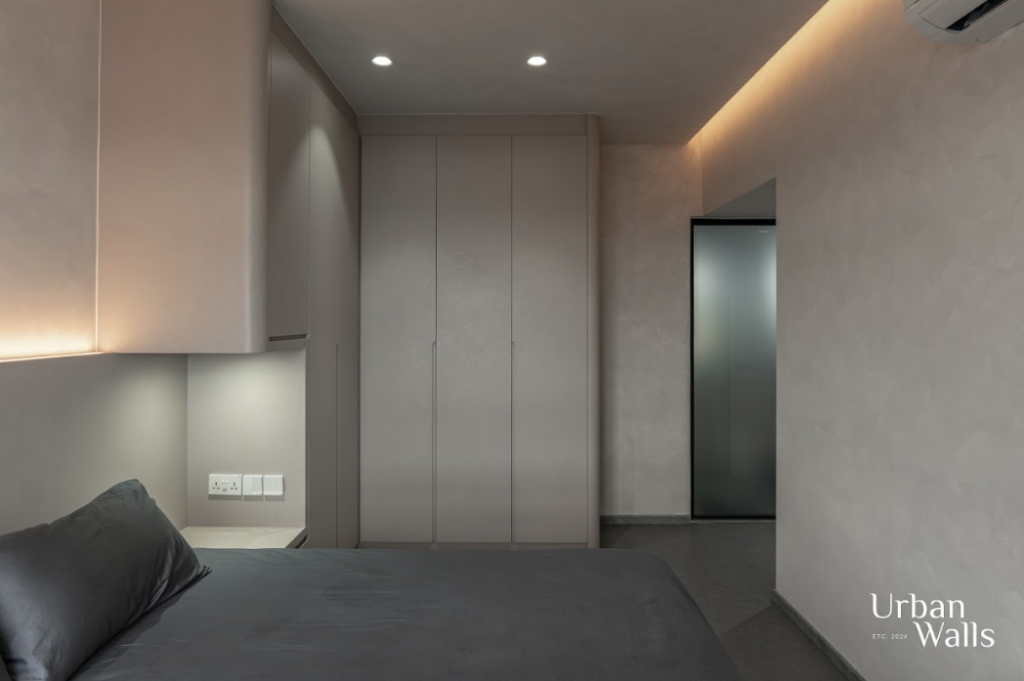
This was particularly appealing to homeowners who wanted their spaces to feel warmer, softer, and less generic.
For interior designers, the appeal was slightly different. Limewash offered individuality. No two walls are exactly the same because the final look depends on the applicator’s technique, lighting, surface conditions, and movement of the brush.
That uniqueness became part of the product’s charm.
Turning A Niche Service Into A Business
Initially, Urban Walls expected textured and limewash finishes to appeal mainly to a niche design audience. But the turning point came when homeowners from different backgrounds began approaching the company not just for a “textured wall”, but because they connected with the philosophy behind the brand.
They were not simply buying paint. They were buying warmth, depth, and a more considered way of designing their homes.
The founders also noticed that interior designers were returning to Urban Walls across multiple projects. That gave the team confidence that demand was not just a short-lived trend, but part of a broader appreciation for materiality and craftsmanship.
Social media also helped validate the market. Close-up visuals of limewash movement, soft textures, and natural wall finishes resonated with homeowners who were looking for interiors that felt more lived-in and human.
Urban Walls realised that its role was evolving. It was no longer just a contractor applying decorative finishes. It was becoming a material-led brand that helped shape how people experience their homes.
The Challenge Of Scaling Craftsmanship
Scaling a craft-based business is not as simple as hiring more workers.
Unlike conventional painting, limewash and textured finishes are highly dependent on workmanship. The final result depends on surface preparation, water-to-powder ratios, dilution, layering, pressure, drying behaviour, tools, and even site conditions.
Different brands also have different formulations. Some products come ready-mixed, while others, including certain mineral-based limewash products, come in powder form and require precise mixing before application.
This means training and quality control are central to Urban Walls’ operations.
The team works closely with partner brands to understand proper preparation methods, application tools, recommended coats, and finishing techniques. Whenever new products are introduced, applicators are trained on the correct process before using them on live projects.
The challenge is compounded by Singapore’s renovation culture, which often prioritises speed and efficiency. Limewash requires a different mindset. It values process, natural variation, and the small imperfections that give the finish character.
For Urban Walls, the business challenge is clear: how do you scale something hands-on and human without losing the soul of the craft?
Moving From Application To Distribution
In Q1 2026, Urban Walls took its biggest step yet by becoming the official regional distributor for Dalray Paint, an Australian limewash paint brand known for natural, mineral-based finishes.
This changed the company’s business model.
Previously, Urban Walls was primarily service-led and project-dependent. Revenue came mainly from applying finishes for individual residential and commercial projects. With distribution, the company can now serve a wider ecosystem of homeowners, interior designers, contractors, applicators, and commercial clients.
Rather than being limited by how many projects its internal team can execute, Urban Walls can now supply products, provide education, support other applicators, and expand regionally.
The company has also launched its international e-commerce platform, urbanwalls.store, to make ordering and shipping more accessible across markets. Test packs and sample kits allow customers to experience the colour, texture, and movement of finishes in their own spaces before committing to a larger project.
Still, the founders do not see e-commerce as a replacement for physical experience. Wall finishes are highly tactile and visual, so Urban Walls continues to invest in showrooms, sample spaces, and on-site test patches.
In other words, the online store is not just a sales channel. It is also an education and discovery platform.
Building Beyond Singapore
Today, Urban Walls operates across application services, B2B product distribution, e-commerce sales, interior designer partnerships, and commercial projects.
In Singapore, much of the business still comes from direct homeowners and residential projects. But the team is also seeing demand from interior designers, architects, contractors, cafés, retail spaces, hospitality brands, and lifestyle businesses looking for warmer, more experiential interiors.
The company has also opened a Malaysia office and sees further growth opportunities across Southeast Asia and the UAE.
Over the next three to five years, Urban Walls aims to evolve from a specialist applicator into a regional material, craftsmanship, and education-driven brand.
That means growing product distribution, supporting more applicators, expanding e-commerce, and helping both homeowners and professionals better understand the differences between limewash, lime paint, lime plaster, microcement, and other textured finishes.
But the founders are careful about not becoming too transactional or trend-driven.
For them, growth is not just about selling more paint or completing more walls. It is about building a stronger ecosystem around thoughtful materials, better craftsmanship, and homes that feel more personal.
After all, walls may be one of the first things people see when they enter a home.
Urban Walls is betting that they should also be one of the things people feel.
This article was shared to us by Alpha Story


Lifestyle
15 Of The Cheapest EV Cars In Singapore


Budgeting 101
7 Ways Being Frugal Is Different From Being Cheap


Street Smart
Singapore Gym Membership Price Guide (2026 Edition)


Street Smart
Singapore Gym Membership Price Guide (2026 Edition)

Bonds and Fixed Income
Complete Guide To Buying Singapore Savings Bonds (SSB) [2026 Edition]


