
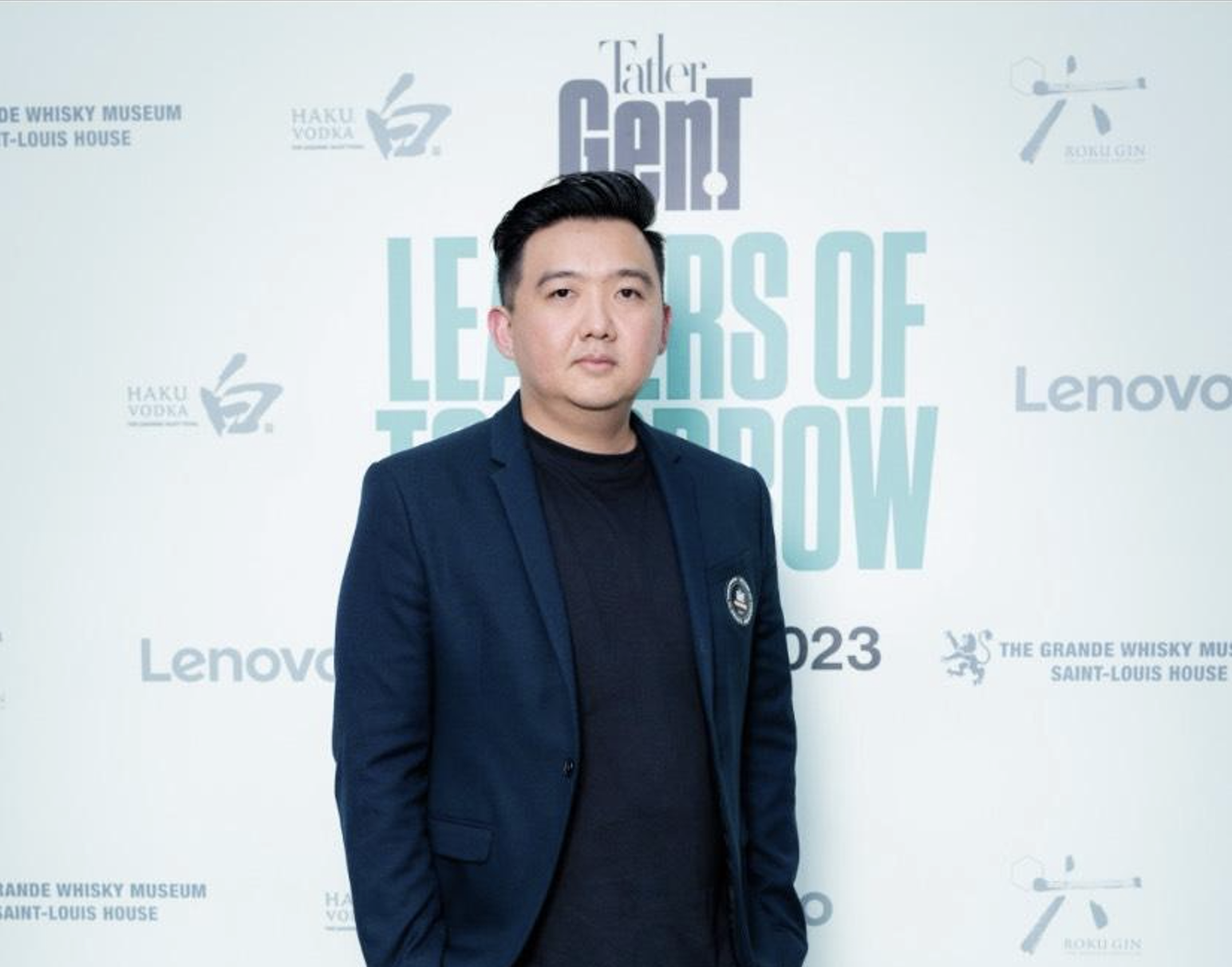
Spend enough time scrolling social media, and chances are you’ll have seen people raving about the sleek-looking hair dryers and personal care products they’ve snagged from Stryv (pronounced “strive”).
To get your hands on these products in the past, you had to order them online. But within the last 12 months, the “extremely online” brand has opened 22 brick-and-mortar stores in Singapore and abroad, where you can see the goods in person. You can even try some of them.
“You can sit down, and our consultants can help you style your hair with our products and teach you how to do it yourself,” says Roy Ang, co-founder and Chief Executive Officer (CEO) of Evo Commerce, a parent company that houses Roy’s brands (including Stryv).
To date, Evo Commerce has secured more than 6M USD in funding from venture capital (VC) firms like East Ventures and GSR Ventures.
Roy started Stryv in 2022 as a direct-to-consumer (D2C) brand. In other words, it directly sells its products to customers, cutting out middlemen and their fees.
Its initial strategy was to sell through online channels, but Roy saw the opening of physical stores as the natural next step to expand the brand’s reach.
The Adrenaline Rush From Building From Scratch
Before becoming an entrepreneur, Roy worked at the startup platform e27 and was part of the founding team for Grab Financial, the financial products arm of Grab.
These work experiences gave him a taste of entrepreneurship, especially since he was creating products for the masses. In particular, he liked the adrenaline rush of building from scratch and solving problems.
So, having been bitten by the entrepreneurship bug, Roy quit his job at Grab to start a business.
Not Stryv, though, but one that sold live-streaming software. The year was 2020, and with the COVID-19 pandemic keeping people cooped up at home, live-stream shopping was a big thing.
That business did well, with Roy sharing that it scaled from zero to $10 million in gross merchandise volume “really fast”. But as he got only a small cut of each sale, business sustainability was an issue.
In contrast, D2C e-commerce seemed like a much more viable option. Many of the live-streamers he supported built and sold their own products directly to customers. As a result, they kept the bulk of the revenue.
Roy sold the live-streaming software business and pivoted to D2C. “From there, things just took off, and we never looked back,” he says.
Pivoting To Health And Beauty
Roy’s first D2C brand was BounceBack, a health supplements brand that’s since been renamed “bback”. With bback’s sales being stable these days, Roy focuses most of his time on Stryv.
His decision to start a second brand in the health and beauty category was because the category’s emphasis on personal wellness resonated with him.
“If you look good and feel good, you feel confident, and then you can go fight your beast,” Roy says.
He also believed selling personal care products was a more VC-backable path with larger growth potential.
As for exactly what he would sell, the answer was: a hair dryer.
Read More: Here’s How Health Wellness Is Like Financial Wellness
High-Quality Hair Dryers Without The High Cost
At that time, his wife had just given birth, and she had been in low spirits after seeing how pregnancy had changed her body. Roy gifted her a hair dryer, which did wonders in cheering her up.
However, the hair dryer was “super expensive”, according to Roy. He thought he could build his own that was not only of a similar quality but also more affordable, thereby democratising access to good products for everyone.
So, he got to it, launching the Stryv Professional Hairdryer, which currently sells for $189 and is the brand’s “OG best seller”.

Stryv made more revenue in its first month of operations than bback’s revenue for that same month, and Roy realised he might be on to something.
He started releasing more personal care products, ranging from hair stylers to shavers, electric toothbrushes and more.
Adding A New Sales Channel: Physical Stores
Roy describes Stryv’s modus operandi like this:
- Work only with Tier 1 factories—meaning, factories that directly supply products to businesses—in China that cater to big brands.
- Put in the team’s own thoughts on the products’ design, technology and features.
- Work with content creators and the in-house marketing team to get the word out on the products.
- Sell directly to customers at an affordable price, passing all cost savings back to them.
Stryv focused on doing online sales well. Two years later, sales revenue stabilised, and the brand ventured into offline sales to continue growing revenue and credibility.
“70 to 80% of the people who go to our stores have already seen the brand online,” says Roy. “At the store, they can see and feel our products. And then, they usually just buy from there.”
To learn how to run physical stores, Roy spoke with around 30 founders who operated retail storefronts. He also read four to five books about retail operations within a month.
“Retail is detail,” Roy says, after rattling off various things he had to learn quickly. These included choosing the shopping malls to open stores in and identifying target customer segments.
It was only then that he felt confident enough to launch Stryv’s first physical store, at Suntec City, in May 2024.

Within the next 12 months, he would go on to open eight more in Singapore and 13 others in overseas markets like Malaysia.
To Run Offline Stores Well, Providing The Human Touch Is Key
When asked about the similarities between running online and offline stores, Roy shares that various fundamental business and marketing skillsets, like getting traffic to the store, crafting the user experience and running promotions, are useful in both situations.
However, there are also many differences, with people management being one of them.
That’s because while churning out dozens of webpages is possible with just a handful of people, running multiple physical stores means recruiting, training—and retaining—teams of employees to manage all of them.
“In the retail scenario, the ‘website’ that converts users is the staff at your store,” says Roy. “This makes the situation less about developing good technical infrastructure and more about providing the human touch.”
Likewise, opening stores abroad brought about challenges.
For instance, Roy had to grapple with differences in employment and tax regulations. He also had to localise his marketing materials to cater to overseas markets’ native languages.
The Goal: Be A Billion-Dollar Brand
Roy shares that Evo Commerce currently does a “healthy” eight-digit revenue annually, with Stryv’s hair care products being the company’s predominant revenue source.
And while Stryv may be a young brand, at only three years old so far, it’s an ambitious one. What is Roy striving for (pun intended)?
To be a billion-dollar brand.
Roy declines to share too many details, but he lets on that he has plans to launch more products, open more physical stores and also enter new markets.
“If you look at the United States and China, which are really mature markets, they’ve had billion-dollar brands evolve out of the DTC model over the past 10 years,” he says.
“I feel that in this part of the world, DTC is up and coming. More brands are doing it, but I think there’s still an opportunity for young brands like us to build.”
Read Also: Why Estelle Ee Left A Career In Technology To Start-Up Affordable Fitness Apparel Brand HWOOFIT


Street Smart
Singapore Gym Membership Price Guide (2026 Edition)


