

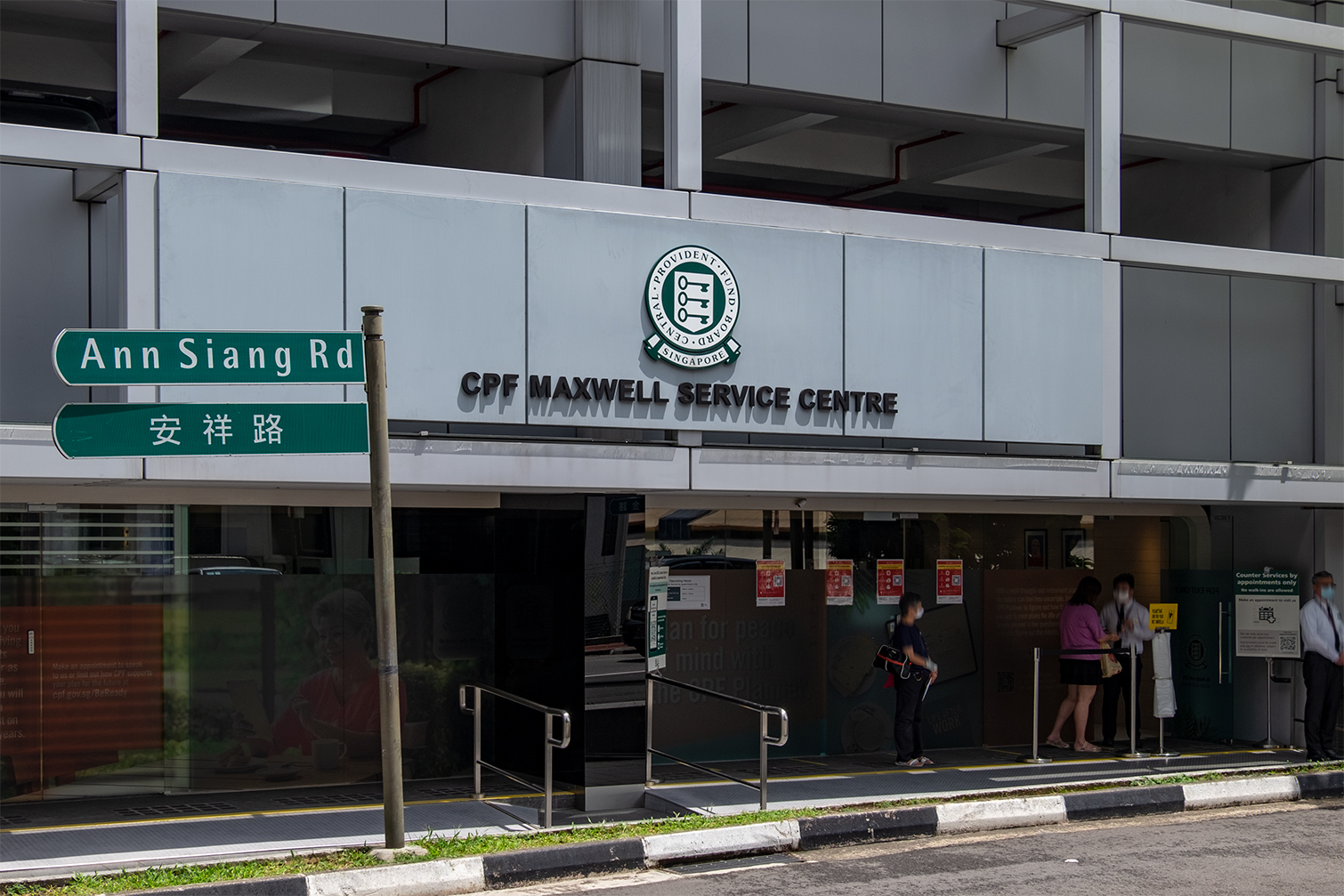
When Singaporeans think about retirement income, the discussion usually centres on two main sources. One is CPF LIFE, which provides monthly payouts for life from age 65. The other is our own investment portfolio, from which we draw down assets such as stocks and bonds to fund our expenses.
For the investment approach, a common rule of thumb is the 4% withdrawal rule, popularised by Bill Bengen. It suggests that retirees can withdraw 4% of their portfolio in the first year of retirement, then adjust that amount for inflation each year, with a reasonable chance of not running out of money over a 30-year period. You can read more about this rule from Bill Bengen (the person who first proposed this rule) himself in this reddit AMA thread.
At a glance, CPF LIFE and the 4% rule appear to serve the same purpose. Both turn a pool of retirement savings into regular income. However, they work very differently. CPF LIFE provides lifelong income by pooling longevity risk, while the 4% rule relies on investment returns, portfolio discipline, and market performance.
So the question is, which is the more efficient way to enjoy passive income for our retirement?
Read Also: What Is The 4% Retirement Withdrawal Rule, And Why You Should Plan Beyond It
How Much Can You Get From CPF LIFE Works If You Set Aside The ERS
The amount we receive from CPF LIFE depends on how much we have in our CPF Retirement Account. For instance, if we set aside the Enhanced Retirement Sum (ERS) of $440,800 (as of 2026) at age 55, we will receive approximately $3,400 a month from age 65 onwards. Over 30 years, this works out to S$1,224,000 in total payouts. This assumes we start receiving payouts at 65 and live until 95, which is a major assumption that we will return to later.
To be precise, the $440,800 that you set aside at age 55 would have compounded to $652,491 by age 65, so it would be more accurate to say that upon starting your CPF LIFE Payout at age 65, you would have $652,491 (based on 4% annual interest) in your CPF Retirement Account.
This brings us to the key question. How large an investment portfolio would we need at age 65 to generate a similar level of retirement income under the 4% withdrawal rule?
How Much Do We Need Under The 4% Rule To Match CPF LIFE?
To make a fair comparison, we start from the same point. At age 65, the CPF LIFE example gives us about $3,400 a month, or $40,800 a year, based on a Retirement Account balance of roughly $652,500.
If we want to generate the same annual income using the 4% rule, we can work backwards. The rule suggests that we can withdraw 4% of our portfolio in the first year of retirement.
This means we would need a portfolio of about $1.02 million at age 65 to generate S$40,800 a year.
On one hand, CPF LIFE converts a Retirement Account balance of about $652,500 into a lifelong income of $40,800 a year ($3,400/month). On the other hand, the 4% rule requires a portfolio of slightly over $1 million to produce the same starting income.
The Limitations Of CPF LIFE
However, there are important differences between CPF LIFE and the 4% withdrawal rule that we cannot ignore.
CPF LIFE Pays For As Long As We Live
The biggest difference is that CPF LIFE pays us for as long as we live. While this is its greatest strength if we live a long life, it becomes less attractive if we pass on earlier. For example, if someone receives $3,400 a month for 18 years, from age 65 to 83, the total payouts would amount to $734,400, leaving no bequest for beneficiaries.
This is very different from someone with a $1.02 million investment portfolio who uses the 4% withdrawal rule. If the portfolio is managed prudently and markets perform reasonably well, there is a good chance that a substantial portion of the portfolio may still remain after 18 years. This remaining amount can be passed on to family members.
CPF LIFE Provides Certainty For Retirement Income
The second difference is market risk. CPF LIFE payouts are not affected by whether the stock market performs well or badly. Once payouts start, the monthly amount is generally predictable. This is useful for retirees who want certainty over their basic expenses.
The 4% withdrawal rule, on the other hand, depends on market performance. If markets do well, retirees may enjoy both income and portfolio growth. If markets perform poorly, especially in the early years of retirement, withdrawals can put pressure on the portfolio. This is known as sequence-of-returns risk, and it is one of the biggest challenges of relying purely on investments for retirement income.
Inflation Matters More Over A 20- To 30-Year Retirement
The third difference is inflation. The 4% rule is designed with inflation in mind. Under the rule, you withdraw 4% of your portfolio in the first year, then increase the withdrawal amount each year to keep pace with inflation. This means your retirement income is intended to maintain its purchasing power over time.
CPF LIFE does not automatically adjust all payouts for inflation. The CPF LIFE Standard Plan provides higher starting payouts, but the monthly payout remains broadly level. This means that $3,400 a month at age 65 will not feel the same when you are 85, especially if prices have risen over the years.
There is an option to choose the CPF LIFE Escalating Plan, in which payouts start lower and increase by 2% each year. This helps address inflation, but it also means accepting a lower payout in the early years of retirement.
Read Also: CPF LIFE Standard, Basic Or Escalating Plan. Which CPF LIFE Plans Should You Choose?
Last but certainly not least, CPF LIFE is designed for retirement from age 65 onwards. This matters because not everyone plans to stop work at the same age.
If your goal is to retire earlier, say, at 55, CPF LIFE will not provide immediate income. There will still be a 10-year gap before payouts begin at 65. During this period, you will need other sources of income, whether from savings, investments or rental. This is where an investment portfolio becomes especially important.
CPF LIFE And The 4% Rule Work Better Together
This is why the comparison between CPF LIFE and the 4% rule should not be seen as an either-or decision. Both have their strengths and limitations.
CPF LIFE provides certainty. It gives us a monthly payout for as long as we live, regardless of market conditions. This makes it useful for covering essential expenses such as food, utilities, transport and basic healthcare.
The 4% rule offers flexibility. An investment portfolio can be adjusted based on our needs, market conditions and legacy-planning goals. It also gives us the potential to enjoy higher returns and leave behind more for our beneficiaries.
For many Singaporeans, the best approach may be to combine both. CPF LIFE can form the foundation of our retirement income, while our investments can provide the additional income needed for lifestyle spending, travel or family support.
Read Also: Is $1 Million Enough to Retire in Singapore? What Really Matters Beyond the Number
Photo Credit: DollarsAndSense/Raymond Quek


