

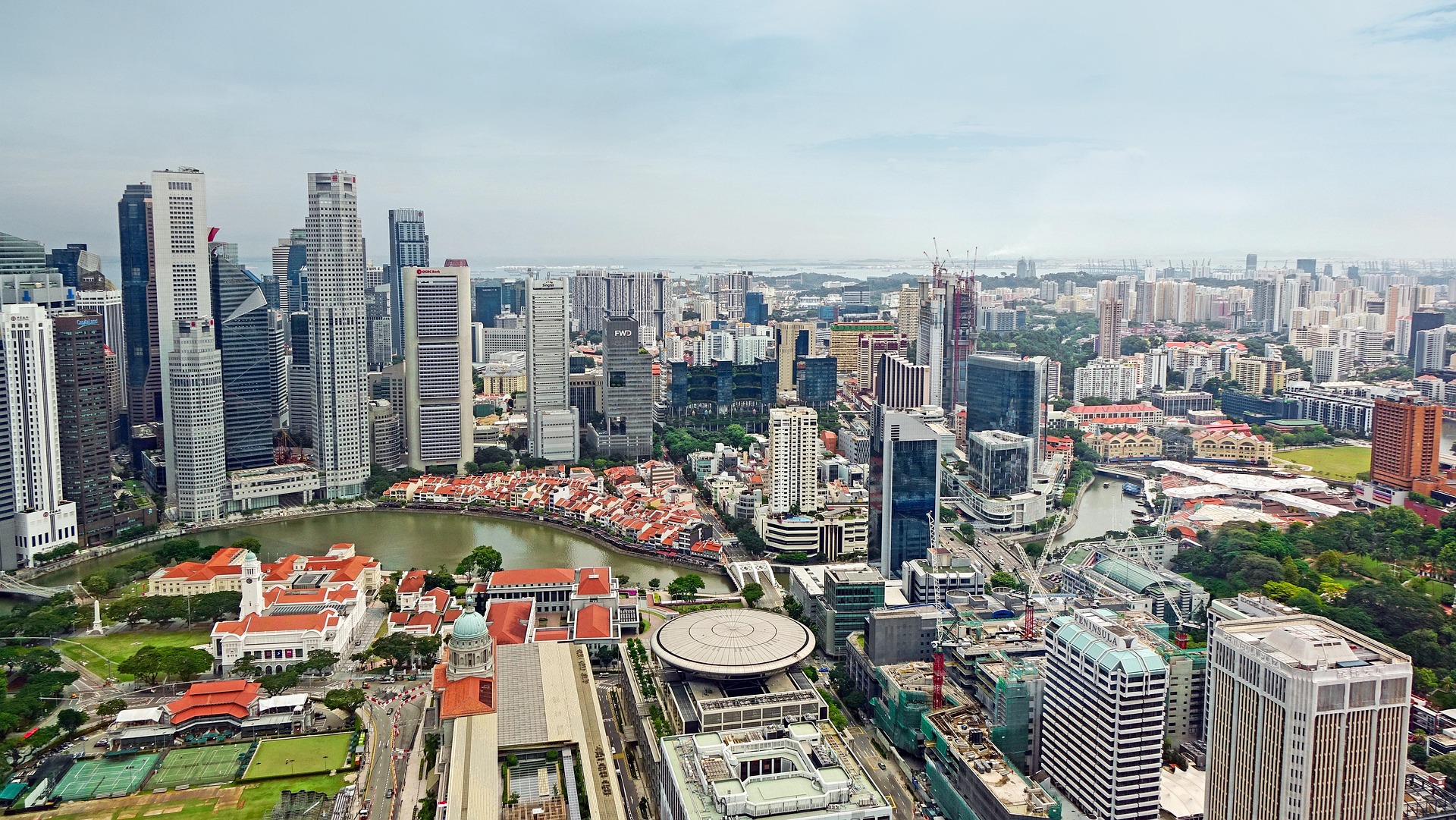
For investors, 2025 was a big year for market volatility. You had the bombshell of President Trump’s Liberation Day tariffs alongside a weakening US Dollar. In addition to this, the market was also focused on the US Federal Reserve (Fed) and its interest rate policy. Amid these ructions, it has made investing into exchange-traded funds (ETFs) listed in Singapore extremely appealing for long-term investors based here.
Total assets under management (AUM) across SGX-listed ETFs hit a record $16.3 billion by the end of Q3 2025 — up 40% year-on-year — and retail investor participation has been surging. But that deployment into ETFs wasn’t spread evenly across the board. The buying was actually concentrated into a handful of ETFs that investors clearly had strong conviction in.
So which ETFs were capturing the most love from investors in 2025? Based on SGX’s data tracking net inflows for the whole of 2025, here are the five most popular ETFs on SGX and what’s been driving investors toward them.
#1 SPDR Gold Shares (SGX: O87) (SGX: GSD)
It’s probably no surprise that gold has topped the charts. The SPDR Gold Shares ETF was the single biggest attractor of net inflows on the SGX in 2025, pulling in $1.23 billion in net new money for the year, and it was also the most actively traded ETF on the exchange last year, with an average daily turnover of S$7.6 million.
The SPDR Gold Shares ETF gives investors direct exposure to the price of physical gold without needing to actually store any of the stuff. That’s because unit represents a fractional ownership of real gold that’s held in a vault. It’s traded in both SGD (ticker is GSD) and USD (ticker is O87) on the SGX, making it easy to access for most retail investors.
Why were investors so into it? Because 2025 was a year defined by uncertainty. US tariff policy, geopolitical tensions, a weaker US dollar, and the ever-present fear of inflation all pushed investors toward the classic safe haven. Gold prices climbed to all-time highs during the year and that reflected structural tailwinds for the yellow metal, such as US currency debasement, central bank buying of gold, and retail inflows into gold ETFs globally (not only in Singapore).
Read More: Together As One: 4 ETFs Listed On SGX That Allow You To Invest In Singapore’s Economy
#2 SPDR Straits Times Index ETF (SGX: ES3)
The main SPDR Straits Times Index (STI) ETF, with the ticker ES3, tracks Singapore’s benchmark Straits Times Index. This is the local heavyweight index, comprising the 30 largest companies listed on SGX by market capitalisation. Think of the big banks – DBS, OCBC, UOB – as well as other large-cap stocks like Singtel, CapitaLand, and ST Engineering.
The SPDR STI ETF (ES3) has been around since 2002, making it Singapore’s oldest ETF and, as of early March 2026, it has an AUM of over $2.8 billion. The ETF pays dividends twice a year and currently yields around 3.6%, which is a big part of its appeal for investors seeking stability. While this ETF ranked second in net inflows, with $387 million during the year, its smaller counterpart – the Amova STI ETF (SGX: G3B) – is slightly cheaper at 0.24% per annum (versus 0.28% p.a. for the SPDR ETF).
Why do investors love the STI ETF? Because it’s the simplest way to invest in Singapore’s economy. You get instant diversification across the country’s blue-chip companies, a decent dividend yield for passive income, and a relatively low total expense ratio (0.24% to 0.28% per year). For investors who want Singapore exposure without the hassle of picking individual stocks (or for those building a CPF or SRS-eligible portfolio) the STI ETFs are practically the default choice for local equities exposure.
#3 Amova-StraitsTrading Asia ex Japan REIT Index ETF (SGX: CFA)
Singapore investors love REITs because of their stable income and bond-like characteristics. The Amova-StraitsTrading Asia ex Japan REIT Index ETF, which ranked third for net inflows on the SGX in 2025 with $285 million, is the go-to vehicle for investors who want to cast a wider net across the Asian REIT market rather than focus solely on Singapore’s REIT listings.
This ETF tracks the FTSE EPRA/NAREIT Asia ex Japan Net Total Return REIT Index; it’s a mouthful of a name that essentially means it provides diversified exposure to listed REITs across markets such as Singapore, Hong Kong, Australia, China, India, and South Korea.
It’s a quarterly-distributing ETF, meaning it pays dividends every three months, and is managed by Amova Asset Management Asia, formerly known as NikkoAM. The appeal of REITs in 2025 was straightforward: interest rates were declining across the region, and Asian REITs broadly re-rated upward. For investors who already hold the Lion-Phillip S-REIT ETF and want to diversify beyond Singapore, this one is the logical complement.
#4 Lion-Phillip S-REIT ETF (SGX: CLR)
Fourth on the list was another REIT ETF, but this time it’s the go-to vehicle for pure Singapore exposure: the Lion-Phillip S-REIT ETF. It’s the largest REIT ETF on SGX by AUM, with a total AUM of over $860 million as of 28 February 2026, and the REIT itself attracted $262 million in net inflows.
The ETF tracks a quality-screened basket of Singapore-listed REITs, weighted toward industrial REITs (which make up over 40% of the portfolio), retail REITs, and office REITs. Its top holdings include CapitaLand Ascendas REIT, CapitaLand Integrated Commercial Trust, and Mapletree Logistics Trust. It pays out dividends semi-annually and delivers a yield of close to 6% through 2025. With the rate cycle turning, investors who had been sitting on the sidelines came back to S-REITs in a meaningful way. The Lion-Phillip S-REIT ETF was the obvious beneficiary, being the most established and liquid option in the space for Singapore investors.
Read More: Investing In REIT ETFs Listed In Singapore: 5 Things You Need To Know
#5 iShares MSCI Asia Ex Japan Climate Action ETF (SGX: ICU) (SGX: ICM)
This one might raise a few eyebrows, given that Environmental, Social and Governance (ESG) investing has had a rough time globally, but the iShares MSCI Asia Ex Japan Climate Action ETF was a genuine standout in Singapore in 2025. For the whole of 2025, it recorded net inflows of $256 million and, as of early March 2026, it has an AUM of over $1.56 billion.
The ETF tracks large- and mid-cap companies across Asia (excluding Japan) transitioning to lower-carbon emissions. It covers markets like China, South Korea, Taiwan, India, and Southeast Asia. And crucially, it does this at a total expense ratio of just 0.18% p.a. – one of the lowest among Asia ex-Japan ETFs globally. That cost efficiency matters a lot to long-term investors who are looking to reduce costs while still wanting equity exposure to broader Asia in an SGD-denominated ETF.
Why the strong inflows? Partly it’s institutional money flowing through Singapore, and it’s also down to this ETF consistently outperforming peers tracking the plain MSCI AC Asia Ex Japan Index on a 1-year total return basis. When a sustainability-focused fund is both cheaper and outperforming, the case for investors becomes much easier to make.


Lifestyle
15 Of The Cheapest EV Cars In Singapore


Budgeting 101
7 Ways Being Frugal Is Different From Being Cheap


Street Smart
Singapore Gym Membership Price Guide (2026 Edition)


Street Smart
Singapore Gym Membership Price Guide (2026 Edition)

Bonds and Fixed Income
Complete Guide To Buying Singapore Savings Bonds (SSB) [2026 Edition]


