

Even as incomes rise, many professionals find themselves just as responsive to late-night emails and urgent requests as they were earlier in their careers. Promotions, bonuses and higher balances do not always translate into greater calm.
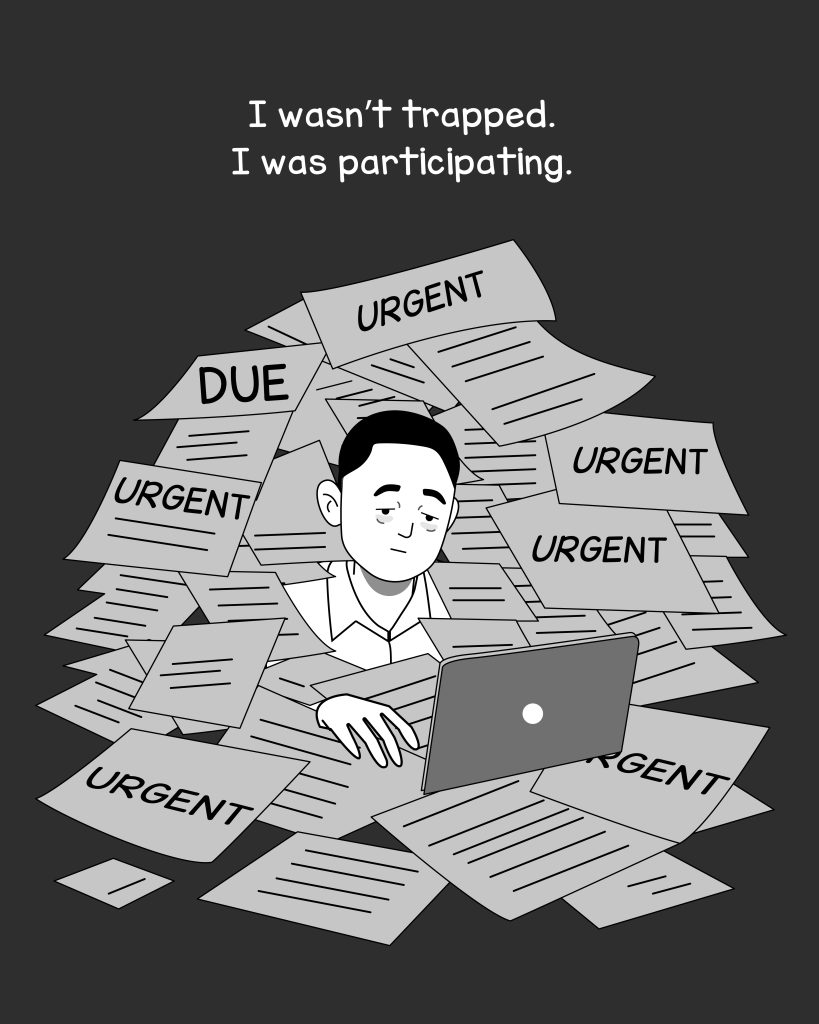
In DollarsAndSense’s recent comic on “quiet wealth”, a professional experiences rising income and improving finances. Yet despite this progress, the instinct to stay constantly available, replying quickly, accepting additional responsibilities, remaining visible, does not fade.
The story reflects a tension that many of us are familiar with: higher earnings do not automatically create greater financial flexibility. Fixed commitments often rise alongside income, and urgency can persist long after stability improves.
Read Also: 6 Things That Quiet Wealth In Singapore Looks Like
Urgency As A Rational Response
Source: DollarsAndSense’s Instagram
For many workers, urgency begins as a practical response to uncertainty. Staying visible, replying quickly and accepting additional responsibilities can support career progression and income stability.
In the early stages of one’s career, these behaviours may even be deemed as necessary.
The challenge arises when urgency continues even after financial stability has improved. If income growth is absorbed by higher recurring expenses, households may find that their margin for manoeuvre remains limited.
The result is a structural form of dependence on stable employment, sometimes described as “job-hugging”. In such cases, remaining in a role may reflect financial prudence rather than complacency.
Read Also: From The Great Resignation To Job Hugging. Why 2026 Is The Year To NOT Leave Your Job
The Role Of Financial Optionality
Source: DollarsAndSense’s Instagram
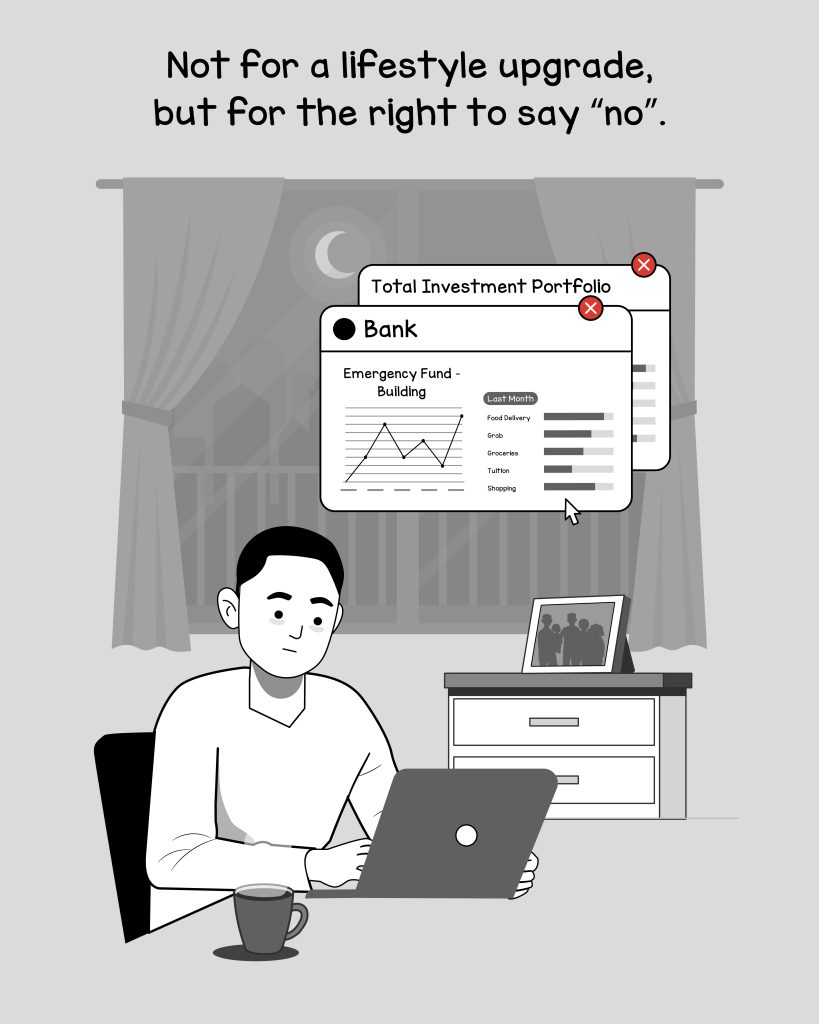
Financial pressure typically eases when the gap between income and lifestyle widens.
Building savings for flexibility, rather than consumption, can change the decision-making dynamic. An “exit fund”, for instance, allows individuals to consider opportunities more selectively. The purpose is not early retirement or lifestyle upgrades, but reducing the financial consequences of saying “no”.
While Singapore’s saving rate remains comparatively high, the degree of financial calm depends on how much of those savings are available for discretionary use, rather than committed to long-term obligations.
When Urgency Stops Working On You

Source: DollarsAndSense’s Instagram
Urgency is rarely permanent but it becomes permanent when financial structures are left unchecked. If every pay rise is quickly absorbed into new fixed costs, the sense of urgency simply resets at a higher level.
In a fast-moving economy, urgency can be useful early on. The longer-term challenge is ensuring it does not define an entire career. Quiet wealth, in practical terms, is not about dramatic exits or sudden freedom. It is about reaching a point where urgency stops dictating every decision.
Follow DollarsAndSense on Instagram for more comic stories drawn from everyday money realities in Singapore.


