

Tote bags aren’t exactly luxury products. You get given them free at a lot of places in Singapore if you happen to be spending a certain amount or if it’s a retailer’s anniversary, for instance. So, it seems rather absurd that in the US, Trader Joe’s tote bags (plain canvas shopping bags sold at a US grocery store chain) are getting sold for hundreds – if not thousands – of dollars online.
Typically, these sit near the checkout counters at Trader Joe’s and cost a few US Dollars.
Just how did a reusable grocery/tote bag turn into something that looks like a collectible asset or “blind box” piece?
Trader Joe’s Tote Bag Is A Very Ordinary Product
Trader Joe’s is a US-based supermarket with a following that borders on obsession, much like Costco. People do not just shop there for groceries. They talk about their favourite snacks, film videos of their big grocery hauls and complain loudly when they move overseas and lose access to it. If you have ever met an American expat, you may have heard a Trader Joe’s rant at some point.
What is interesting is that none of this was carefully planned branding. Trader Joe’s did not set out to become a lifestyle label. It was just a neighbourhood grocery chain doing things a little differently.
That same accidental magic applies to its tote bags.
The tote bags were never meant to be special. They were designed to be practical and cheap, often printed with colourful graphics linked to a specific state or city. Think of them as functional packaging with a touch of creativity, not collectables.
But here is where things get interesting.
Some designs appear briefly and then disappear without warning. There is no announcement, no countdown, and no promise of a restock. One week, it is there. Next week, it will be gone.
Accidental Scarcity + Viral Nature Of The Internet
Unlike many modern hype products, Trader Joe’s did not deliberately engineer scarcity for its tote bags. There was no marketing campaign, no teaser drop, and no grand plan. The scarcity was completely accidental.
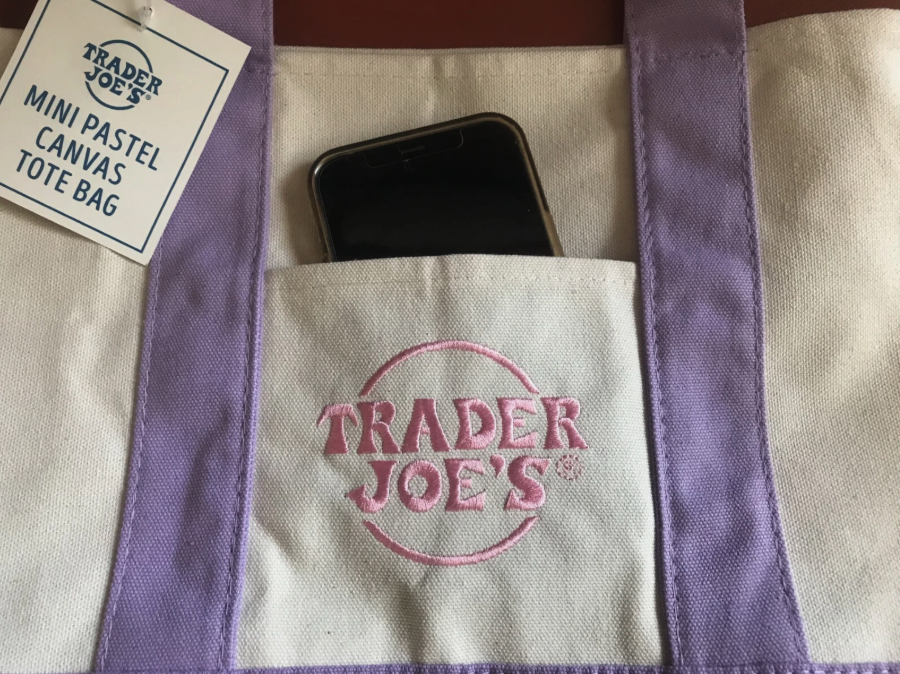
The craze really took off in February 2024, when mini canvas totes were released. They sold out within days. That was when people started paying attention.
Source: eBay
These bags are only sold in physical stores, and designs are often regional. Once a batch sells out, it may never return.
This is where things get interesting from a money perspective.
If you live in New York, you might never see a California design again. If you live in Singapore, there is no way to buy any of them directly. Geography alone limits access, even before demand comes into play.
News features showing long queues of shoppers hunting for the bags sparked strong FOMO. Social media then poured petrol on the fire. When scarcity meets visibility, strange things happen.
Videos on TikTok showing a “rare” mini Trader Joe’s tote can rack up millions of views in days. The comments quickly fill with people asking where to buy it, how much it costs, and whether it is still available. Most of the time, it is not.
Resellers notice this shift almost immediately. Before long, listings start appearing on platforms like eBay. Prices climb, not because the bag has improved or changed, but because more people now want the same small pool of supply.
Why Some Bags Fetch Sky-High Prices
Most Trader Joe’s tote bags still sell for fairly sensible amounts on the resale market. The eye-watering prices tend to cluster around very specific designs, released at very specific moments.
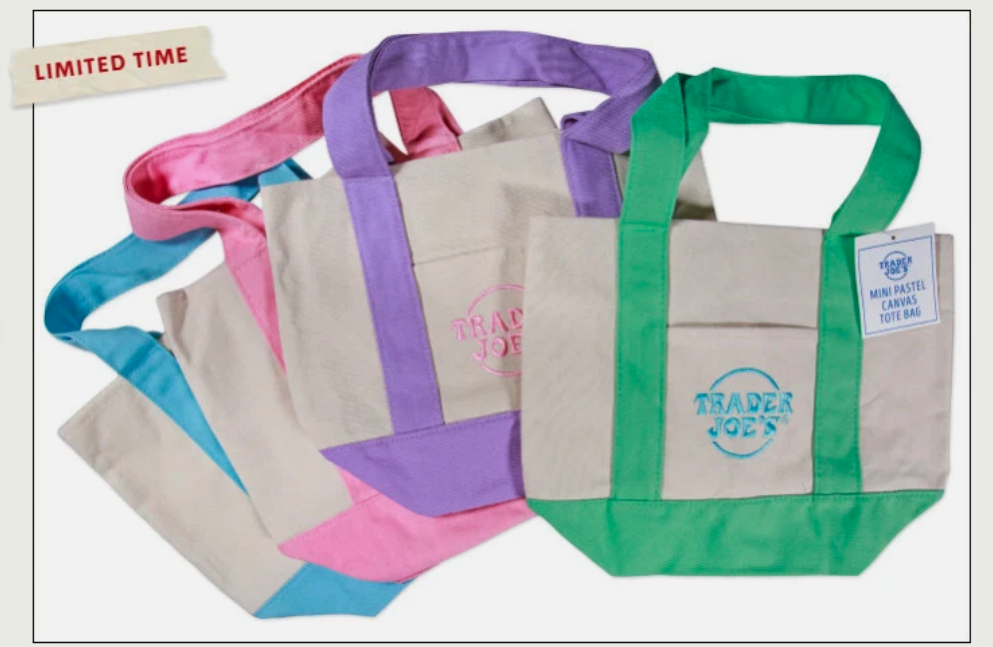
Mini totes are a good example. They were produced in smaller quantities and feel more like accessories than practical grocery bags. You are not buying something to lug milk and vegetables home. You are buying something closer to a fashion item. That alone shifts how people think about value.
Source: eBay
Discontinued designs add another powerful layer. Once people believe a bag is “gone for good”, behaviour changes almost overnight. Shoppers stop asking whether they need it and start worrying about whether they will ever get another chance to own it.
Overseas Demand
If you have never lived in the US, Trader Joe’s will not be a brand you are familiar with, as it does not exist in many countries outside the US. For overseas buyers, including many American expats, the tote bag is simply a cultural souvenir.
It signals familiarity with a very American brand that is otherwise inaccessible. Carrying one is a quiet way of saying, “I know this place, and I belong to that world.” For some expats, it even becomes a symbol of a previous chapter of life.
At that point, practicality no longer matters. Nobody is paying four figures for a canvas tote because the stitching is excellent or the fabric is unusually durable. They are paying for nostalgia, identity, and the emotional weight of something that feels rare and out of reach.
That is often how extreme prices are formed. Not because an object is objectively valuable, but because enough people decide it represents something bigger than what it actually is.
Is This A Good Idea Financially?
In short, no.
From a purely money perspective, paying thousands of dollars for a Trader Joe’s tote is very hard to justify. Even if you manage to sell during a brief upswing, you are still relying on hype rather than fundamentals.
These tote bags behave a lot like meme stocks. Prices are driven by attention, social buzz and the feeling that everyone else wants the same thing. The problem is that attention is fickle. It moves fast and leaves just as quickly.
As of January 2026, demand remains strong. But that does not mean it will last. Once the algorithm on TikTok shifts its focus, interest can dry up almost overnight. A small number of designs may retain some value, especially those tied to a specific moment or story.
The bag itself is almost irrelevant. It could have been a mug, a T-shirt, or a sticker. What people are actually buying is the story around it. And stories powered by hype tend to have a short shelf life.


