

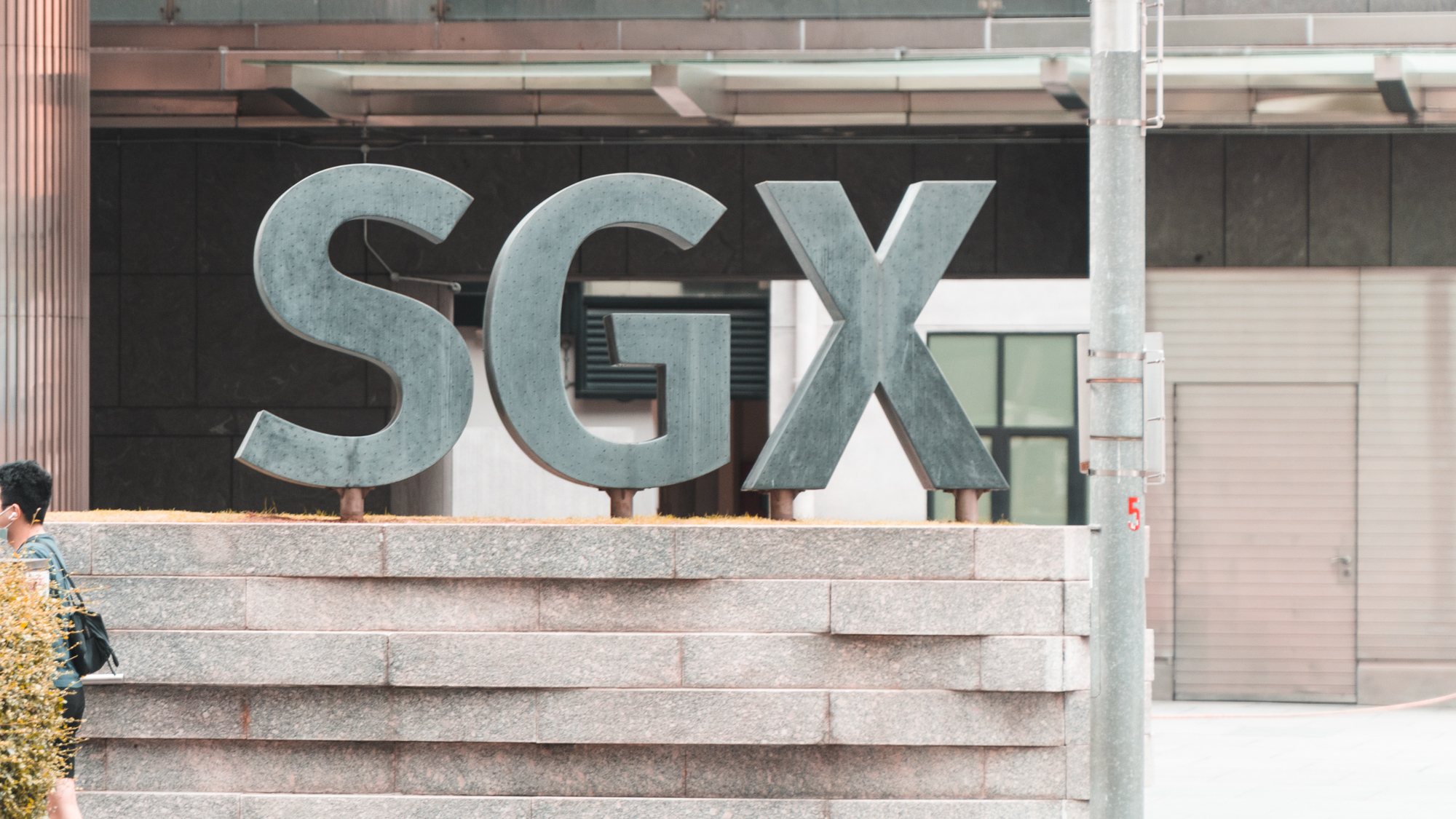
It’s no secret that Singapore’s stock market has faced structural challenges for several years. One of the biggest is the steady decline in the number of companies listed on the Singapore Exchange (SGX), which has fallen from a peak of 782 in 2013 to around 600 in early 2026.
This is not unique to Singapore. Other exchanges, including the London Stock Exchange, have also seen companies leave in favour of larger markets. Smaller exchanges around the world have struggled to compete with the capital, liquidity and global investor base available in New York and, increasingly, Hong Kong.
However, Singapore’s situation has been significant enough that the Monetary Authority of Singapore (MAS) formed the Equities Market Review Group (EMRG) in August 2024 to recommend measures to strengthen the local equities market.
One of the EMRG’s most significant proposals was a partnership between SGX Group and Nasdaq. Announced in November 2025, the collaboration will create a Global Listing Board, a new framework designed to make it much easier for companies to list on both exchanges simultaneously. Here’s what investors should know.
What The Global Listing Board Actually Involves
The headline feature of this initiative is that eligible companies will be able to use a single set of offering documents when pursuing a dual listing on both Nasdaq and SGX.
Today, companies seeking to list on two exchanges in different jurisdictions must navigate separate regulatory processes, prepare two prospectuses and comply with two sets of ongoing listing requirements. This makes dual listings both costly and time-consuming, discouraging many companies from pursuing them.
Under the proposed framework, SGX will establish the Global Listing Board as the Singapore platform for these dual listings. Singapore’s prospectus disclosure requirements will be aligned more closely with those in the US, allowing companies to satisfy both jurisdictions with a single prospectus and a streamlined review process.
Legislative amendments to the Securities and Futures Act are needed before the framework can be implemented. Both SGX RegCo and MAS issued consultation papers in January 2026 seeking public feedback.
The framework is aimed at companies with a market capitalisation of at least S$2 billion that have an Asian presence or connection to the region. This could include companies undertaking an IPO on both exchanges simultaneously, as well as existing Nasdaq-listed firms with significant Asian operations that want a Singapore listing. The Global Listing Board was expected to launch around the middle of 2026, although the final timeline depends on the completion of the regulatory process.
Why Nasdaq Specifically?
Choosing Nasdaq is a deliberate move. As the world’s second-largest stock exchange by market capitalisation, it is widely recognised as the home of technology and high-growth companies. For Southeast Asian technology companies and regional growth businesses, a Nasdaq listing carries considerable prestige and access to a deep pool of global investors.
The partnership also supports SGX’s longer-term goal of changing perceptions of Singapore’s stock market. Today, many investors associate SGX primarily with banks, REITs and other mature dividend-paying companies, rather than fast-growing businesses.
There is also a practical fit between the companies Singapore hopes to attract and those that are already listed on Nasdaq. While Singapore’s IPO market rebounded in 2025, raising more than S$2 billion, much of the activity came from REIT listings. Singapore has continued to struggle to attract growth-stage technology and consumer companies, many of which have instead chosen Hong Kong or New York.
Read Also: MAS Appoints 3 Asset Managers To Invest In Singapore Stocks. What This Means For Local Investors
What This Can (And Cannot) Fix
It would be easy to overstate what the Global Listing Board can achieve. While streamlining the listing process removes a genuine administrative burden, it does not solve the deeper structural issues facing Singapore’s equities market.
One of the biggest challenges remains liquidity. As of May 2026, SGX’s average daily trading value stood at around S$2.4 billion, a 79% increase from a year earlier. While encouraging, it remains far behind the Hong Kong Exchange, where average daily trading value is around HK$293 billion (approximately S$48.3 billion) — more than 20 times larger.
For companies deciding where to list, the depth and liquidity of the market matter because they influence how easily investors can buy and sell shares.
Simplifying the dual-listing process removes an important barrier, but it does not guarantee Singapore will become the preferred venue for Asian technology companies seeking to raise capital. Even with a simultaneous SGX listing, much of a company’s investor base and trading activity is still likely to remain in the US.
Instead, an SGX listing provides access to an Asian trading venue and to regional retail and institutional investors who prefer to trade during Asian market hours. Whether this translates into improved liquidity will depend on factors beyond regulatory changes, including investor demand, analyst coverage and the overall depth of Singapore’s capital market.
Could This Change What Singapore Investors Can Buy?
For most retail investors, the impact of the Global Listing Board is unlikely to be immediate. It is not as though investors will suddenly be able to buy shares in a wave of new technology companies overnight.
However, the longer-term implications are worth watching. If the framework succeeds in attracting more high-growth companies to list in Singapore, it could gradually broaden the range of investment opportunities available on SGX. A more diversified market that includes more regional technology and consumer companies would give local investors easier access to growth businesses without having to invest overseas.
The SGX-Nasdaq partnership represents one of Singapore’s most significant efforts in recent years to strengthen its equities market. Whether it ultimately helps revive the local market will depend not only on making listings easier, but also on attracting companies, investors and trading activity over the years ahead.
Read Also: Revitalising the SGX: 4 Measures To Be Implemented To Help Boost Singapore’s Equities Market


Lifestyle
15 Of The Cheapest EV Cars In Singapore


Budgeting 101
7 Ways Being Frugal Is Different From Being Cheap


Street Smart
Singapore Gym Membership Price Guide (2026 Edition)


Street Smart
Singapore Gym Membership Price Guide (2026 Edition)

Bonds and Fixed Income
Complete Guide To Buying Singapore Savings Bonds (SSB) [2026 Edition]


